![[News] Delay at Samsung’s Taylor Reportedly Slips Mass Production to 2027, Raising Concerns for Tesla](https://www.evshift.com/wp-content/uploads/2026/03/1772514292_Samsung-Taylor-624x419.png "[News] Delay at Samsung’s Taylor Reportedly Slips Mass Production to 2027, Raising Concerns for Tesla")
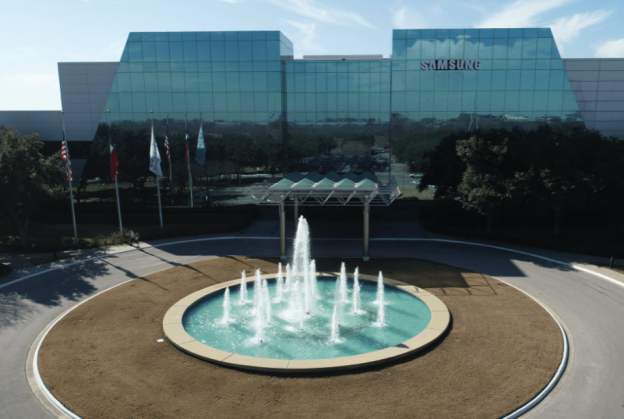
As Samsung accelerates fab approvals and equipment installations, questions are emerging about the pace of mass production at the Taylor plant. Korea JoongAng Daily reports that the start of full-scale production at Samsung’s Texas facility is now expected to slip to early 2027.
If confirmed, the delay at the plant — slated to produce Tesla’s AI5 and AI6 chips — could impact major tech clients, including Tesla, with whom Samsung holds multi-billion-dollar contracts, the report notes.
Sources cited by the report indicate that Samsung’s Taylor plant has started trial operations, but full-scale production is already facing significant delays. While a firm start date for mass production has yet to be set, insiders say there are some issues affecting the plants operating capacity. Samsung is expected to provide a clearer production roadmap by June, the report adds.
In response, Samsung Electronics, cited by the report, clarified that the term “production start” should be understood as completing preparations for mass production by the end of 2026. A company spokesperson added that the plant is expected to be fully operational by then.
As previously reported by Korea JoongAng Daily, Samsung had obtained temporary approval for portions of its facility under construction in Taylor, as it reportedly secured a Temporary Certificate of Occupancy (TCO) for parts of its first fab, covering about 88,000 square feet (roughly 8,175 square meters), in early February. Trial operations, including testing of extreme ultraviolet (EUV) lithography equipment, are reportedly set to begin this month.
Samsung’s 2nm Progress under Scrutiny
As questions mount over progress at Samsung’s Taylor plant, its 2nm schedule is also under scrutiny. During its January earnings call, Samsung had said its second-generation 2nm process (SF2P) would enter production this year, according to Korea JoongAng Daily.
Notably, the report highlights that Samsung’s 2nm process is set to be developed in parallel at the Taylor plant in the U.S. and the company’s Pyeongtaek campus in South Korea, though construction at Pyeongtaek is still ongoing. While its Taylor plant could face delays, some facilities originally planned for the foundry line in Pyeongtaek, as per the report, have been repurposed for memory production to meet surging AI demand.
The pace of Samsung’s 2nm ramp-up will be critical to turning around its foundry business as well. ET News reports that the company aims to return its semiconductor foundry segment to profitability in 2026.
Industry sources cited by ET News indicate that Samsung’s Device Solutions (DS) division is now targeting a Q4 2026 profit turnaround—an acceleration of up to a year compared with last year’s plan, which aimed for profitability and a 20% market share by 2027.
Read more
(Photo credit: Samsung)
Please note that this article cites information from Korea JoongAng Daily and ET News.

Next Article
[News] Israel Unrest Disrupts Tower; Orders Reportedly Shift to Vanguard, PSMC, Lifting Mature-Node Pricing