Support CleanTechnica’s work through a Substack subscription or on Stripe.
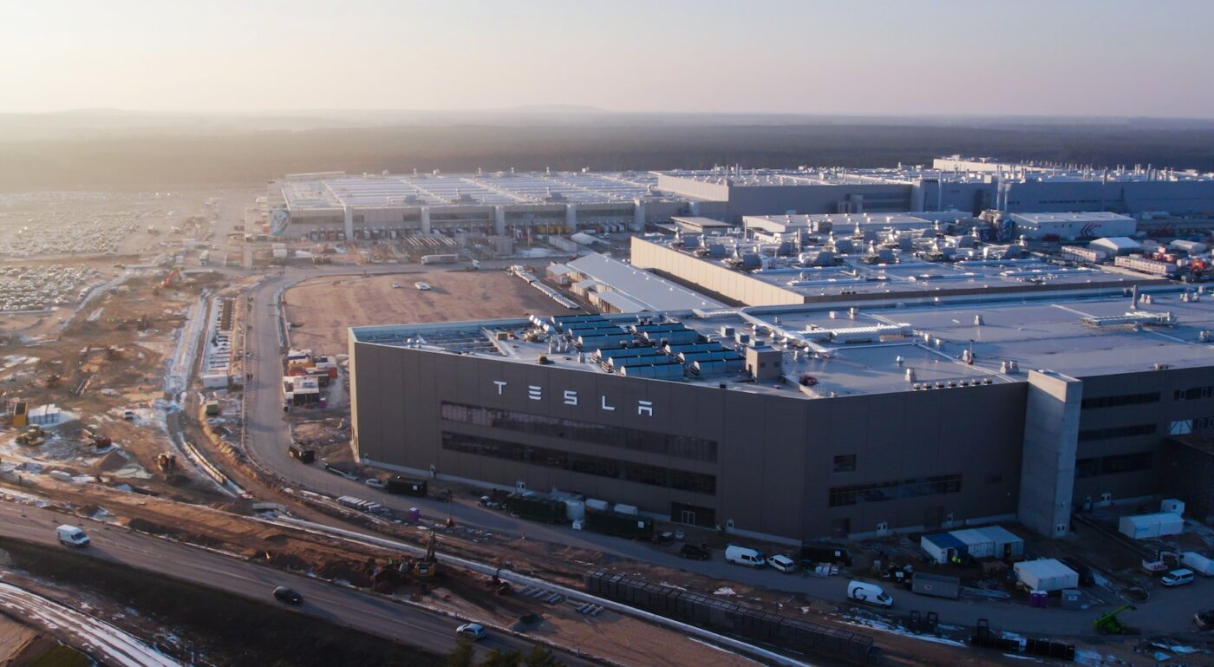
Handelsblatt is a well known and highly respected news organization that specializes in stories about the economy and industries in Germany. On February 27, 2026, reporters Sönke Iwersen and Roman Tyborski wrote that production at Tesla’s Gigafactory in Grünheide outside of Berlin has collapsed to the point that the factory is operating at less than 40 percent capacity. That claim is hotly contested by André Thierig, the plant manager, who has accused Handlesblatt of being a stooge of IG Metall, the trade council that represents many of the workers at the Grünheide facility.
Publicly, management claims the factory is thriving, but figures for 2025 paint a different picture, and the latest numbers for 2026 point to more bad news, Handelsblatt reports. It claims Thierig recently traveled to the US to meet with Musk to discuss the alleged threat to Tesla posed by the union. The concern is that a strengthened IG Metall could undo positive developments at the plant.
“We will not close the factory, but realistically speaking, we will not expand it either,” Musk says in the video, which was shown to employees in Grünheide on Wednesday. Musk’s antipathy to unions is well documented
149,040 Cars Produced In 2025?
According to data from Inovev cited by Handelsblatt, the Gigafactory in Grünheide produced 149,040 vehicles last year. This is a significant decline compared to 2023 and 2024, when output reached 211,235 and 192,801 battery-electric vehicles, respectively.
In its annual reports, Tesla has repeatedly stated that the Grünheide facility is designed for a capacity of more than 375,000 vehicles per year. Based on the reported figures, output in 2025 corresponds to an estimated utilization rate of 39.7 percent, down from 56.3 percent in 2024. The profit margin for the past year is said to have amounted to 0.74 percent.
Handelsblatt points out that Inovev’s dataset may include estimates that could be subject to subsequent revision and the figures are not considered final. However, on Monday, plant manager André Thierig responded to the report. On LinkedIn, he accused Handelsblatt of poor research and unprofessional reporting, claiming it pursued “only one goal — to run an anti-Tesla campaign together with [the workers union] IG Metall!”
Correcting The Record
Thierig said the reported figure of 149,000 Model Y units built in 2025 was incorrect. According to him, production exceeded 200,000 vehicles. “And that despite the fact that in the first quarter we paused production for the switchover to the new Model Y and then ramped back up to 5,000 units per week over several weeks.”
He also rejected the suggestion that he had been portraying developments in Grünheide in an overly positive light for months. “In 2025, we increased production every quarter compared with the previous quarter. Since the start of production in 2022, we have already built more than 700,000 Model Y vehicles in Grünheide! For the first quarter of 2026, we are also planning a further increase compared with the fourth quarter of 2025.” He also denied the reported profit margin of 0.74 per cent, although he did not provide an alternative figure.
Just like his boss, Thierig emphasized the Model Y had been the world’s best selling vehicle for three consecutive years, but the lower production numbers would seem to be in line with declining Tesla sales in Europe. While the decrease in 2024 was modest, the drop in 2025 was more pronounced, with deliveries falling by 9.1 percent to around 1.6 million vehicles worldwide.
Although registrations of the Model Y built in Grünheide increased cumulatively by almost 70,000 units in markets such as South Korea, Thailand, Norway and Turkey, these gains did not offset the decline in the United States, China and Europe, where volumes fell by a combined 155,000 units.
In his video message to workers in Germany, Musk indicated that expansion plans could be reconsidered if the plant were kept “free from outside influence.” He emphasized the strengths of the site, characterizing it as one of the company’s most advanced production facilities. He also described it as having a positive working environment and high production standards.
The video message also touched on future manufacturing plans. Musk said the company had begun ramping up battery cell production in Grünheide. That statement contrasts with reports from mid-December indicating that cell production in Brandenburg was not expected to start before 2027. The project had reportedly been paused since 2022.
Thierig also used his LinkedIn post to underline ongoing investment at the site: “The fact is that we are currently investing almost another 100 million in battery cell production, which will create several hundred additional jobs. Which other car factory in Germany can demonstrate this level of vertical integration?” According to the plant manager, Tesla has invested more than five billion euros in Grünheide since 2020.
A Union Vote This Week
This week, Germany’s powerful IG Metall union seeks to gain control of the works council at the factory in Grünheide. The works council — an elected body of employees that negotiates pay deals and working hours with management — has long been a vital component of German corporate life, especially in the auto manufacturing sector.
Citing a report by AFP, Yahoo! Finance says that in one corner, there is Musk, the world’s richest man and a staunch advocate of libertarian ideals. In the other, there is a century‑old metal workers’ union defending Germany’s tradition of workers’ rights and accusing the US carmaker of engaging in “union busting.” Outside the factory this week, IG Metall has hung a banner calling for “change” next to a giant mural celebrating labor solidarity.
IG Metall has accused the carmaker of poor working conditions and covert redundancies, all enabled by the lack of a collective agreement to protect workers, which is almost unheard of in the Germany automotive industry. The union won the previous elections in 2024 with 39 percent of the vote, but then four non‑union groups seen as more accommodating toward management joined forces to secure a majority.
Tesla “is a real exception” in Germany because of the absence of a union majority in the works council, said Ernesto Klengel of the Hans-Boeckler Foundation, which has close ties to the trade unions. He said that at Tesla “the management has so far not placed any value on constructive cooperation.” Although it is not unusual for various parties to seek to influence works council elections, this “highly confrontational approach” is unprecedented, he said.
For Tesla, the dispute is another headache in Europe, where sales have been impacted by strong Chinese competition. Last month, the BYD Seal U — a plug-in hybrid — outperformed the Tesla Model Y. It’s true that comparing a PHEV and a BEV is not an apples-to-apples comparison, but it gives an idea of the pressures Tesla, with its now 5-year-old Model Y, is facing in the European marketplace.
Worker Complaints
Outside the factory recently, a number of workers spoke to AFP and complained that Tesla management “does not listen to employees,” but that “IG Metall is working hard to represent our interests.” Some complained about discrimination against workers of color and many spoke of harassment on the job. Others were more supportive of the company, saying its pay and benefits were greater than those at other auto factories.
Musk himself has weighed in on the dispute, warning that there will be no further investment in the factory if IG Metall becomes the majority union. Jan Otto, regional manager of IG Metall in eastern Germany, retorted that the US billionaire should “accept the rules of the game of co-determination and democracy in German companies.” He has called on the government of Brandenburg to step in. The regional economy ministry told AFP it “encourages companies in Brandenburg, including Tesla, to conclude collective agreements” and offer “attractive working conditions.”
The union tradition in Europe is very different than it is in the US. Musk’s hostility to labor organizations is well known, but Europe’s embrace of strong representation for workers is also well known. A collision between the two ideologies will take place in Grünheide this week and the results could have a significant impact on the fate of that factory — and Tesla in Europe.
Sign up for CleanTechnica’s Weekly Substack for Zach and Scott’s in-depth analyses and high level summaries, sign up for our daily newsletter, and follow us on Google News!
Advertisement
Have a tip for CleanTechnica? Want to advertise? Want to suggest a guest for our CleanTech Talk podcast? Contact us here.
Sign up for our daily newsletter for 15 new cleantech stories a day. Or sign up for our weekly one on top stories of the week if daily is too frequent.
CleanTechnica uses affiliate links. See our policy here.
CleanTechnica’s Comment Policy