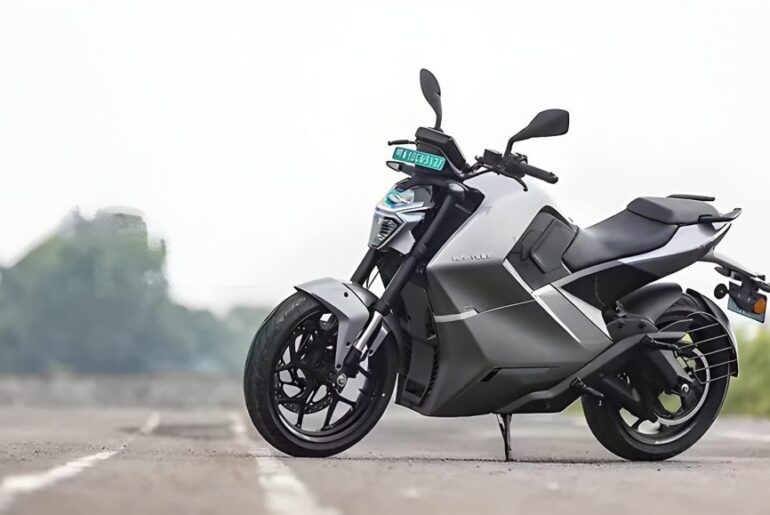
Finnish tech firm Donut Lab has released fresh independent test data for its so-called Donut Battery, and the headline claim is that the solid-state cell doesn’t just survive extreme heat, it thrives.
Donut Lab is the tech firm behind the batteries, motors, and control systems used in Verge electric motorcycles.
You may also like to read our best electric motorcycles guide.
The testing was carried out by the VTT Technical Research Centre of Finland under controlled lab conditions, with the focus squarely on high-temperature performance. That’s important, because heat is the Achilles’ heel of conventional lithium-ion batteries.
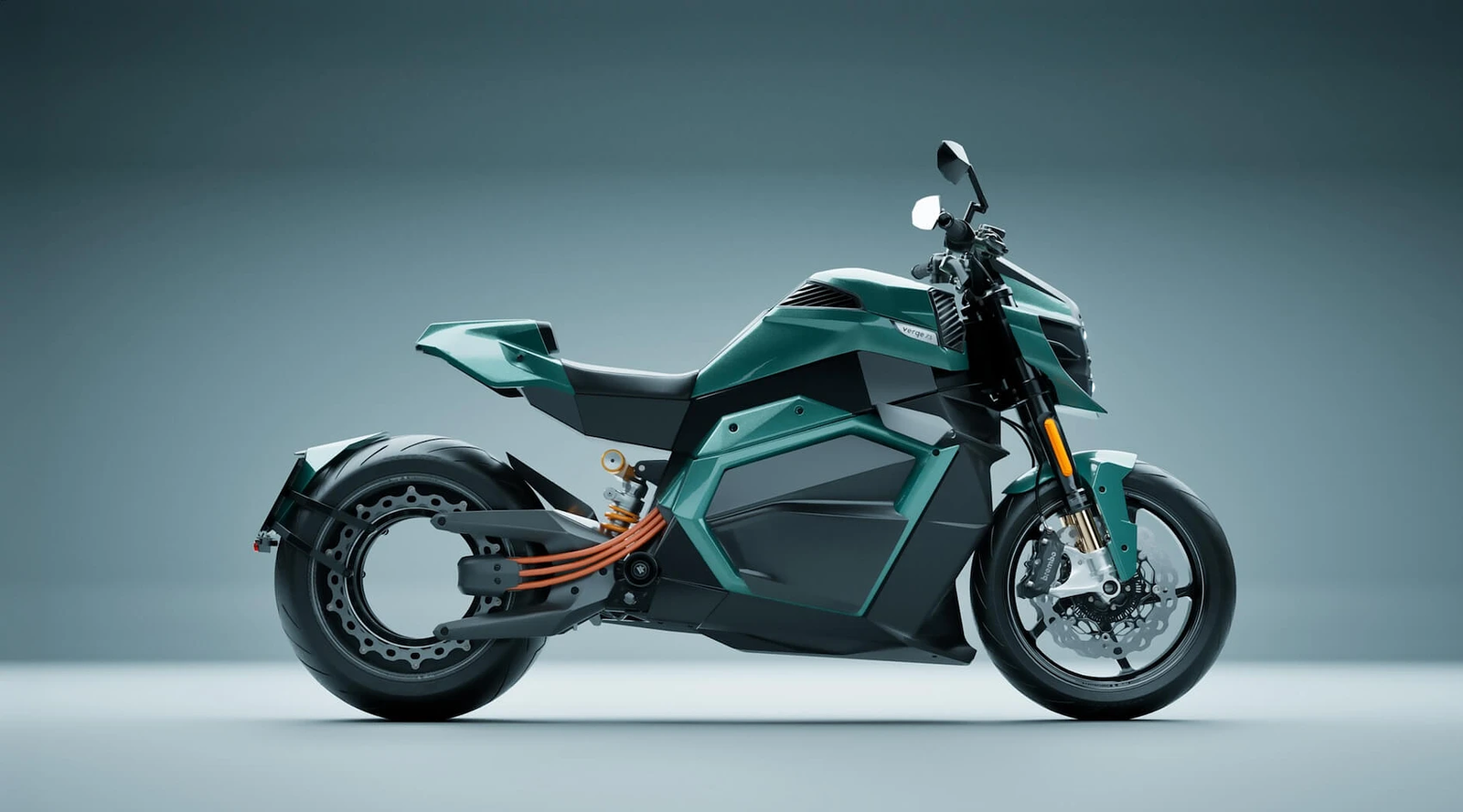
Verge TS Ultra
Article continues below ADVERTISEMENT
Article continues below ADVERTISEMENT
Anyone who’s followed EV or e-bike development will know the problem with traditional lithium-ion batteries. Push them hard, be that thanks to rapid charging, sustained high load, hot weather, aggressive riding, and temperatures climb. Once you’re north of roughly 60 to 70°C, degradation accelerates. Internal resistance rises, capacity drops off, and the worst-case scenario, you’re into thermal runaway territory.
It’s why modern electric bikes and cars are packed with cooling systems, thermal management software and safety buffers. Heat doesn’t just reduce efficiency; it shortens the lifespan of the battery and raises safety risks.
Solid-state batteries, in theory, change that equation, by removing the flammable liquid electrolyte and replacing it with a solid material. Doing so cuts the fire risk and increases thermal stability. The promise has always been greater energy density, better safety, and improved durability. While that all sounds like a win-win, the catch, so far at least, has been scaling them for real-world production. Donut Lab says it’s already there.
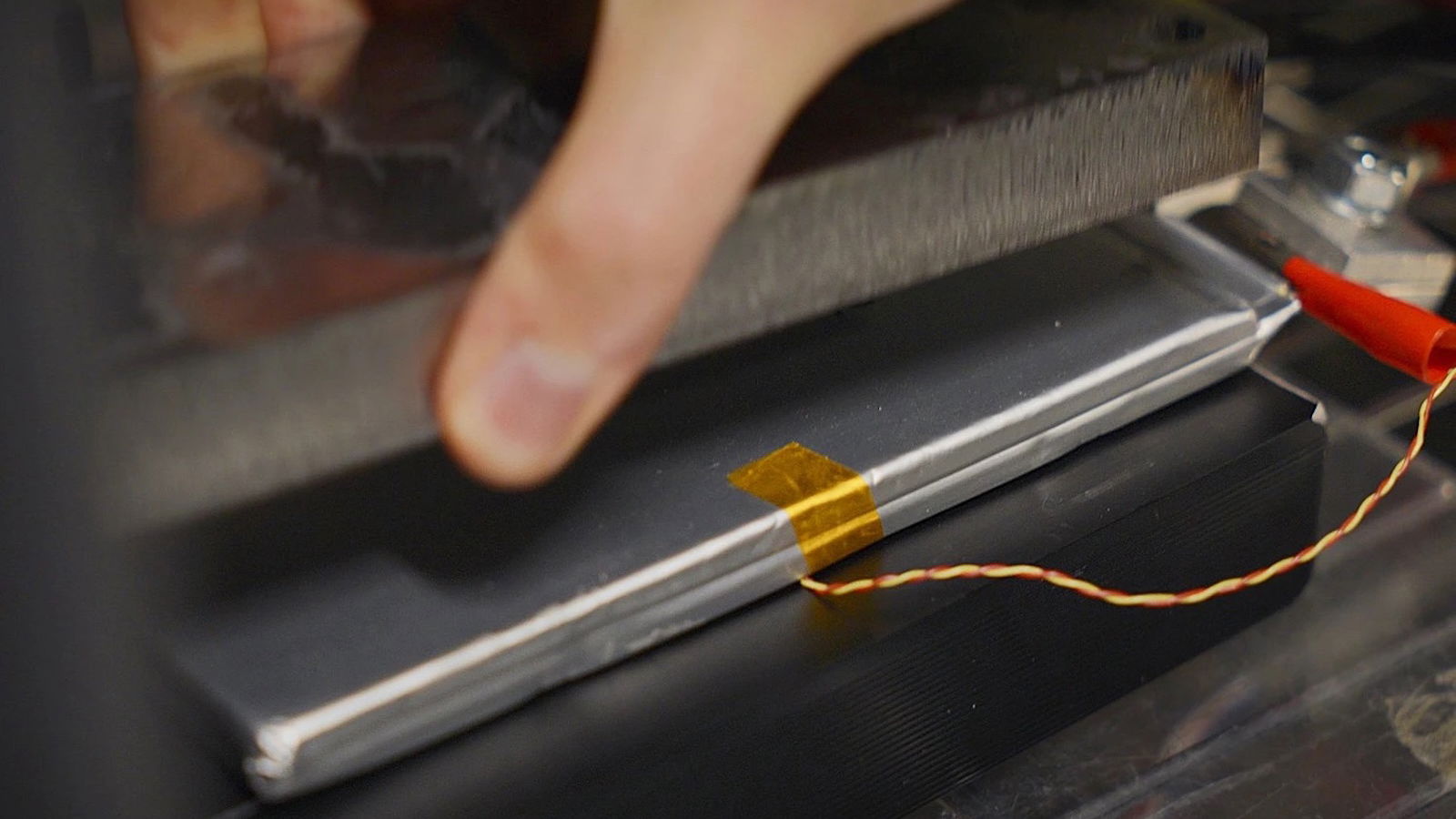
The VTT test itself was straightforward enough, with a single Donut Battery cell which was mounted on an aluminium profile with a steel plate applying light pressure to prevent hot spots. Capacity was then measured at progressively higher temperatures.

Donut Lab’s solid-state battery
Article continues below ADVERTISEMENT
Article continues below ADVERTISEMENT
The baseline was established at room temperature with a standard 1C discharge down to 2.7 volts, followed by a recharge to 4.15 volts. From there, the chamber temperature was raised to 80°C, and the same 1C discharge test was repeated. The process was then taken further to 100°C, this time using a 0.5C discharge rate. Finally, the cell was cooled back to 20°C and recharged to confirm it retained its original capacity.
The press release from Donut Lab claims that at 80°C, the cell delivered up to 110% of its nominal room-temperature capacity and did so more efficiently. At 100°C, it managed roughly 107% of nominal capacity. On paper, that sounds counterintuitive – batteries aren’t supposed to gain capacity as they get hotter – but the explanation lies in internal resistance. As temperature increases, resistance inside the cell drops, which reduces voltage sag under load. Less voltage drop during discharge means more usable energy before hitting the lower cut-off threshold. In practical terms, the battery can access more of what’s already there.
Crucially, the cell showed no functional degradation after being returned to room temperature. It recharged back to 4.15 volts and retained the same charge capacity as before the heat exposure. Even at 100°C, where the outer pouch apparently lost its vacuum, the active materials remained fully operational.
If these results translate from lab cell to full production pack, it’s potentially significant — especially for performance EVs and electric motorcycles.
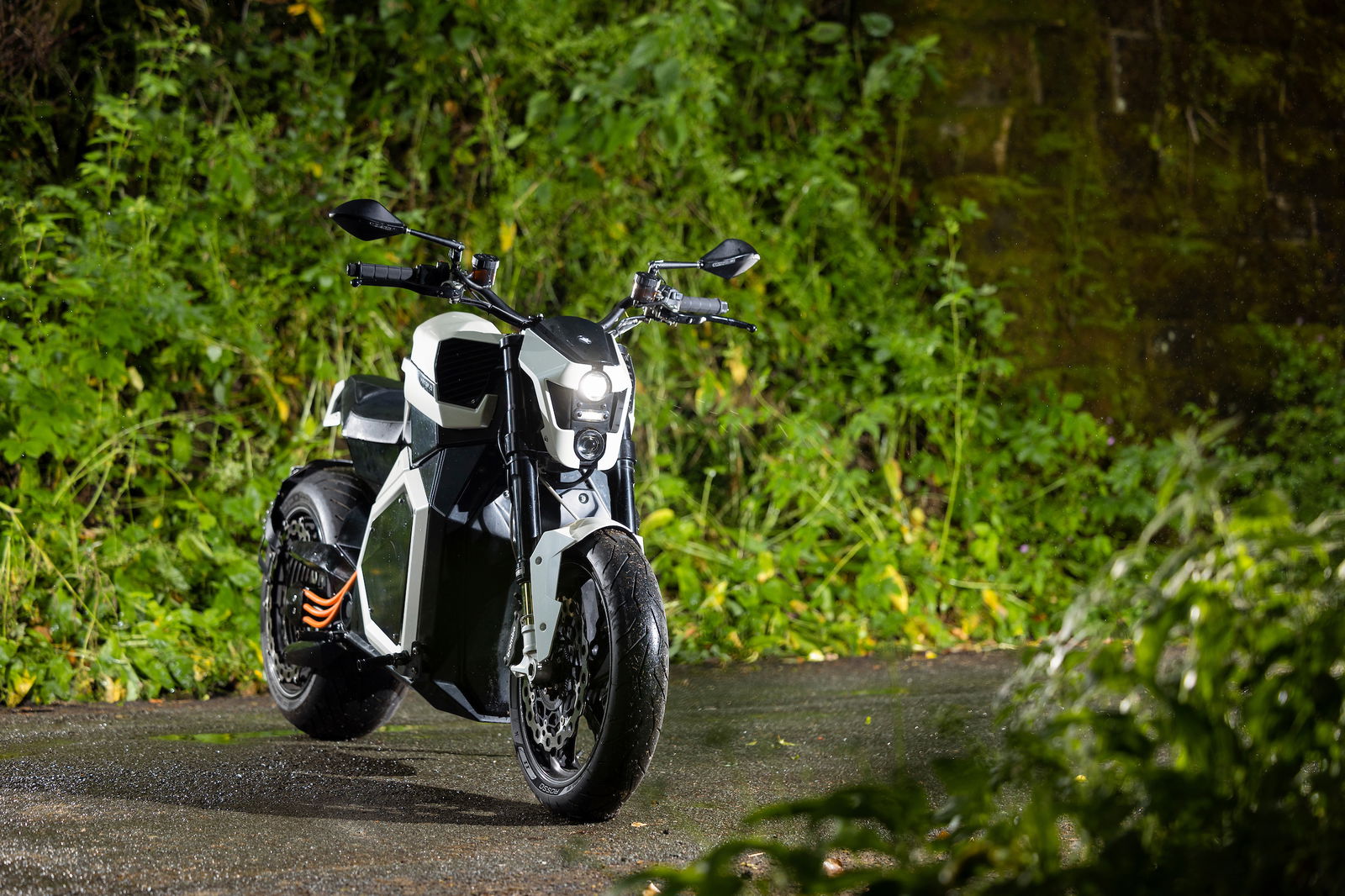
Verge TS. – Rod Kirkpatrick/F Stop Press
Article continues below ADVERTISEMENT
Article continues below ADVERTISEMENT
High-load riding, such as sustained motorway speeds, track sessions, and aggressive acceleration, generate heat. Current lithium-ion packs have to manage that carefully. When temperatures rise, battery management systems reduce output to protect the cells. That’s why some electric performance vehicles will quietly dial back power after repeated hard launches.
For electric motorcycles in particular, packaging and weight are everything. A battery that tolerates heat without elaborate cooling hardware could mean lighter bikes, simpler architecture and potentially sharper performance.
It’s worth keeping perspective that this is still cell-level testing, not a full vehicle pack enduring thousands of cycles in real-world conditions. Longevity data, fast-charging stress tests, crash resilience, and large-scale manufacturability are the hurdles that have tripped up many solid-state hopefuls before.
And while higher temperatures can temporarily reduce internal resistance, long-term exposure to extreme heat is usually a degradation accelerant in most battery chemistries. The key question will be how this cell behaves after hundreds or thousands of high-temperature cycles.
Right now, it’s promising lab data, but the next step will be seeing whether the Donut Battery can scale into real production vehicles and deliver the same resilience when bolted into something that spends its life being ridden hard, not sitting in a test chamber.
Article continues below ADVERTISEMENT
Article continues below ADVERTISEMENT
Find the latest motorcycle news on Visordown.com
Subscribe to our Newsletter