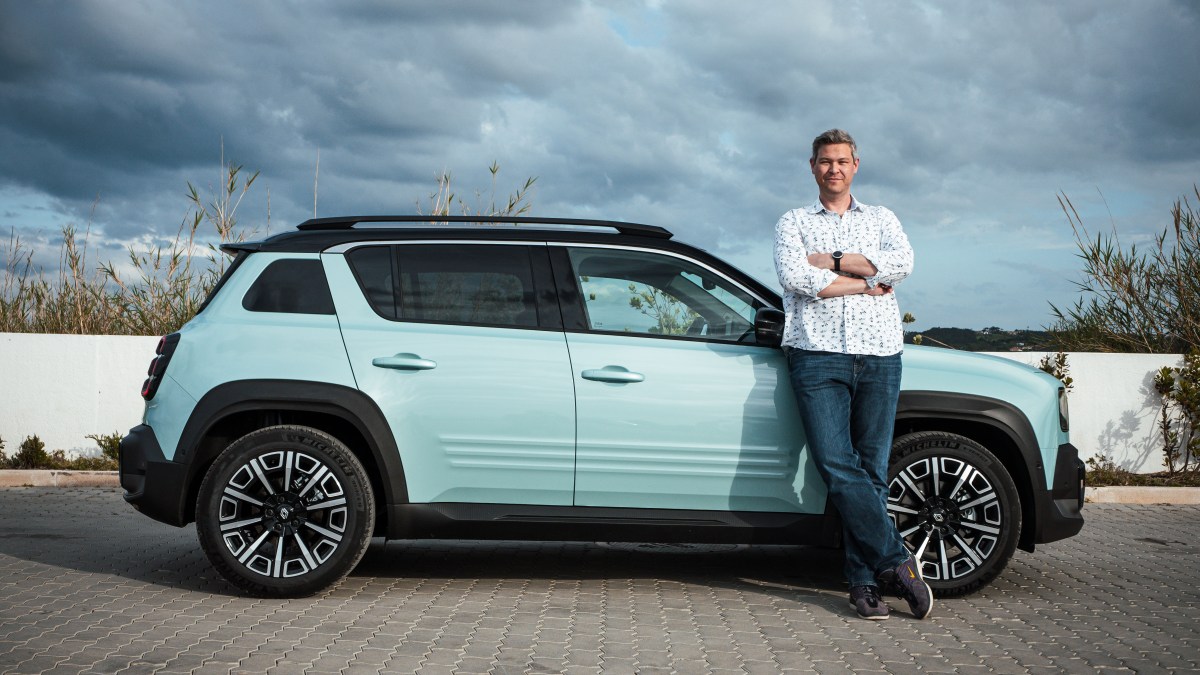
Every country has had a definitive “car of the people” — affordable vehicles for the masses. Germany’s was the Volkswagen (literally “people’s car”) Type 1, which became the Beetle; Italy gave us the Fiat 124; the Soviet Union created Lada (initially variants of the 124, in fact); and Britain brought the Mini to the party. France’s main contribution was the Citroën 2CV, really, but Renault decided to steal some of that car’s thunder in the early 1960s with the introduction of the Renault 4.
Back then the R4 would set a Brit back just over £616, which in today’s money is under £18,000. That made it accessible to the masses, but more importantly the R4 was designed to be suited to both town and country, and go big on ride comfort and practicality. The designers did this by following the 2CV’s example of eschewing the norm of the time, shifting the engine to the front and driving the front wheels; that frees up space in the cabin and boot.
Yet despite the affordability and utilitarian market positioning, the Renault 4 was also meant to be relatively desirable — for men and women alike. The boss of Renault at the time described it as a “pair of jeans” — fashionable, durable and suited to almost every occasion. And like denim trousers it sold extremely well all over the world; 8.1 million R4s were sold globally over the more than three decades it was on sale, making it the bestselling Renault, and the fourth bestselling car of all time.
And so, history lesson over, we arrive at the thinking behind the new Renault 4. It’s based on the electric Renault 5 supermini, launched in 2024, but offers a bit more space, a bit more ground clearance and a bit more interior flexibility. R4 has still got the retro chic that will lure in the many folks who can say, “My dad had one of the originals,” while also appealing to younger car buyers. Which is a clever trick.
• The UK’s 10 most popular cars in 2026 (so far)
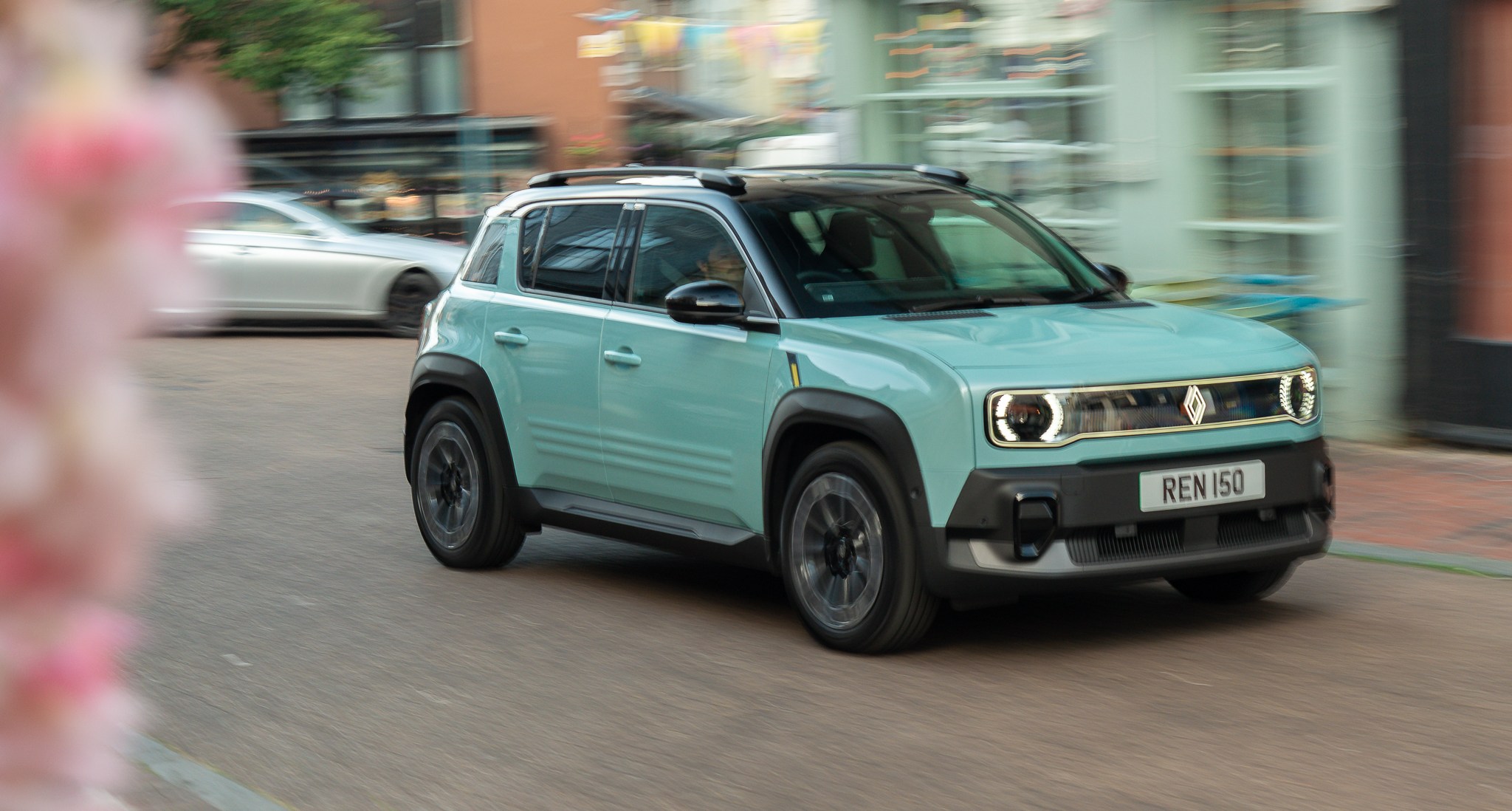
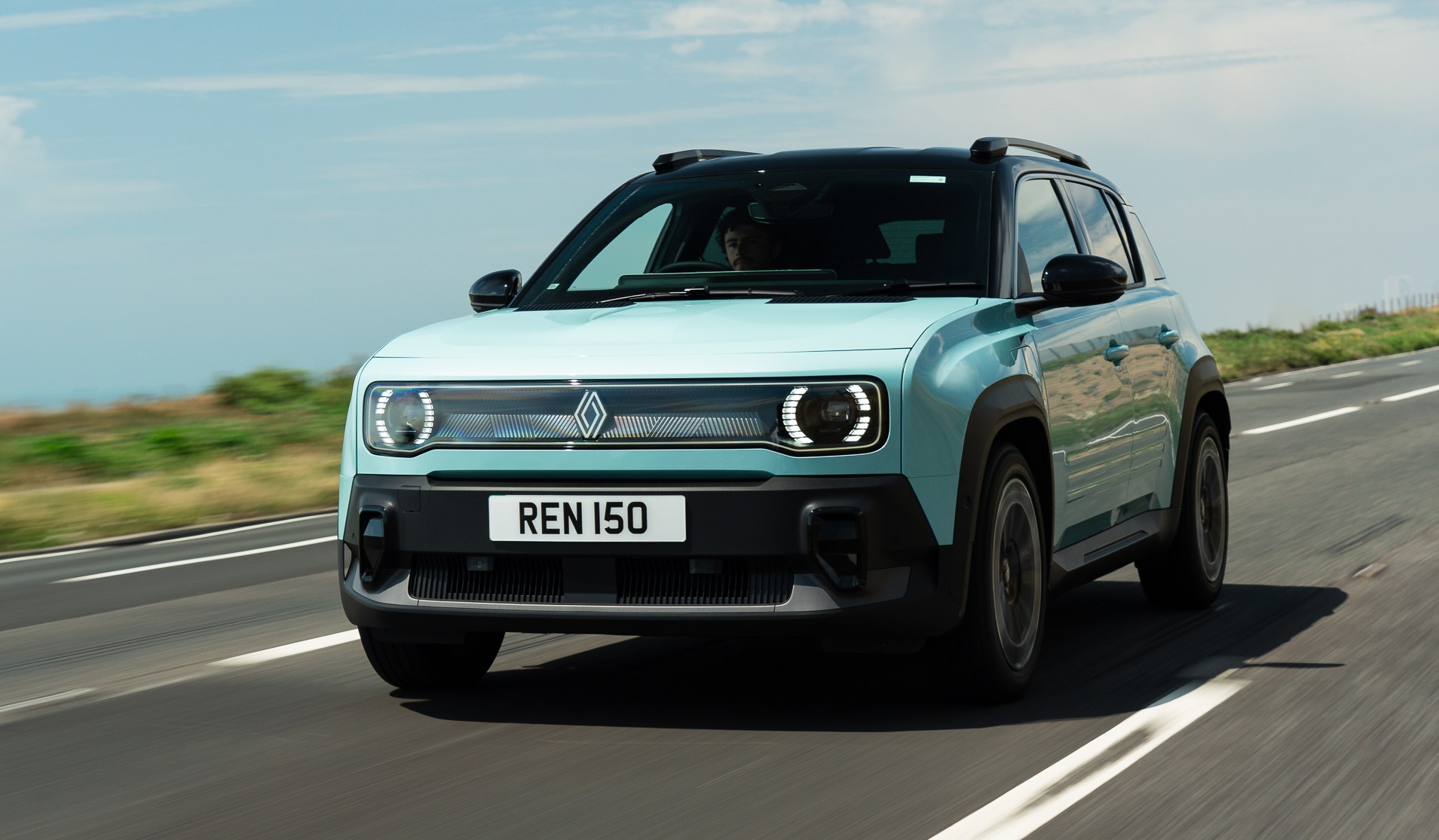
The Renault 4’s design is a modern take on the classic model, complete with the rectangular grille
RENAULT/ JED LEICESTER
The R5 connection also means, of course, that petrol engines have been jettisoned in favour of electric power. This makes the new Renault 4 very simple to drive and maintain, and running costs will be low (if you can recharge at home), though inevitably results in a thoroughly 2025-sized wedge of notes being needed upfront: prices start at £23,445 after the government’s £3,750 electric car grant has been applied. These days we’d call that affordable, but can we still call it people’s car territory?
Mind you, you get a lot more for your money these days. In 1962 the crumple zone included everything between the front and rear number plates, and air conditioning meant sliding the side windows forward. What’s more, the original R4 engine asthmatised its way to a top speed of 65mph, and the time it took to get there could be measured on a sundial. The 2025 model has something called structural integrity and airbags, and reaches the giddy heights of 93mph, having passed 62mph from standstill in 8.2sec. There’s a cost to progress, you know.
• Read more expert reviews, news and insights on cars and motoring
Whether that cost is considered good value is the real question, and against its chief rivals, such as the Fiat 600e (from £26,750), new Mini Aceman (from £29,060), Jeep Avenger Electric (from £29,999) and Ford Puma Gen-E (from £26,245 after the grant), the Renault 4 appears to be great value.
It looks good too, and much better “in the metal” than in photos. The twin round headlights within a rectangular grille is a clear callback to the original model, though brought up-to-date with LED tech and “daylight running light” bling (as is the way). The rear end is cute, as well, with a pair of upright rectangular light clusters a direct nod to its Sixties progenitor.
Of course it’s a bigger machine this time around, but not huge by modern standards and so still suited to weaving in and out of Parisian traffic (or parking at Tesco).
As mentioned, it’s larger than the new Renault 5, but not just in overall length. The front and rear wheels have been pushed further apart, which frees up extra space in the rear of the R4. Actual adults can get in the back of this car, and when they get out won’t feel like rescued battery hens. What’s more, you can fold the rear seats and front passenger seat flat and load long items such flat-pack furniture… or 6ft 5in humans, as demonstrated below.
• The seven best new electric cars to buy — from £20,995
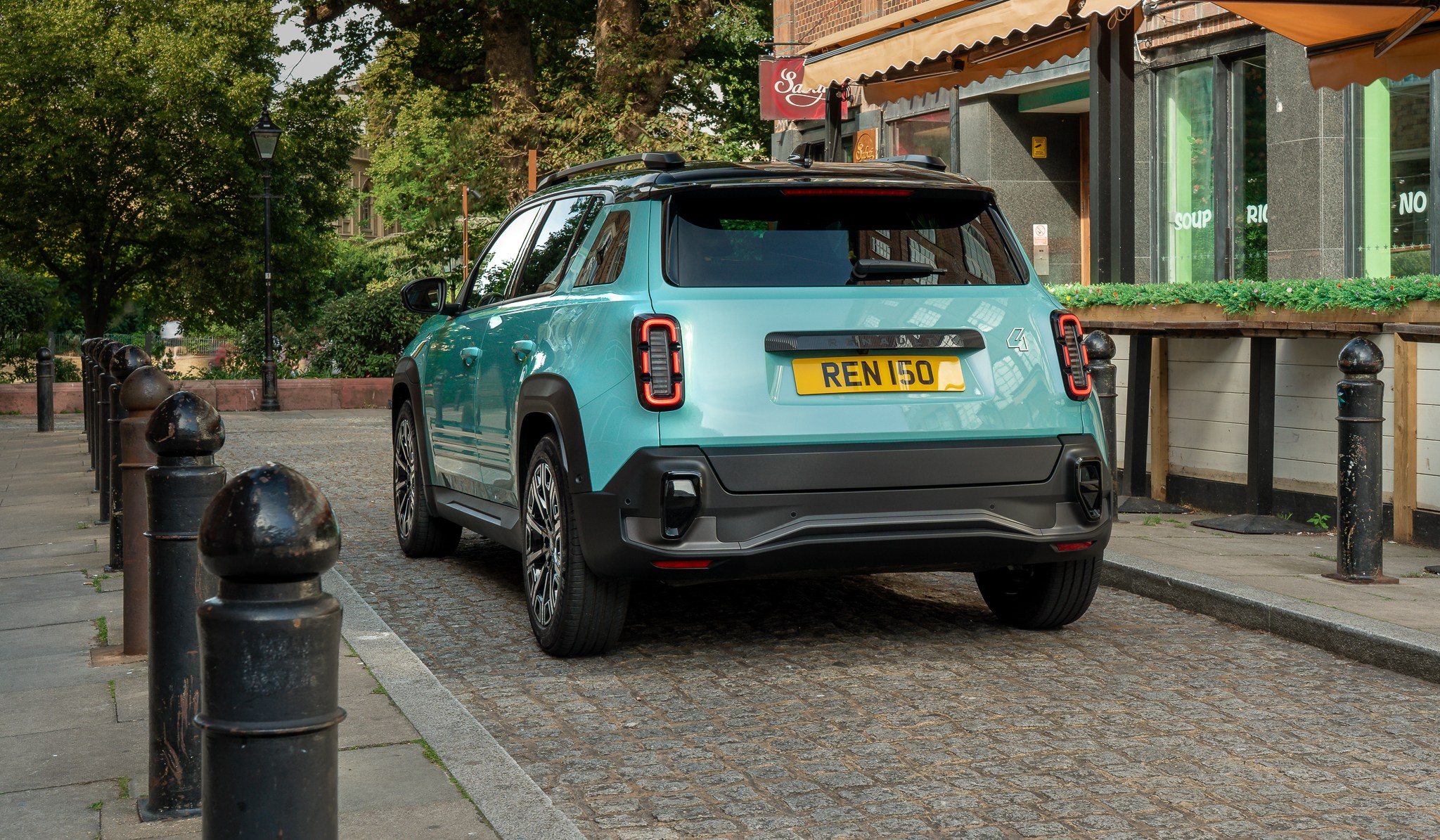
The tail-lights are another nod to the original Renault 4
RENAULT/JED LEICESTER
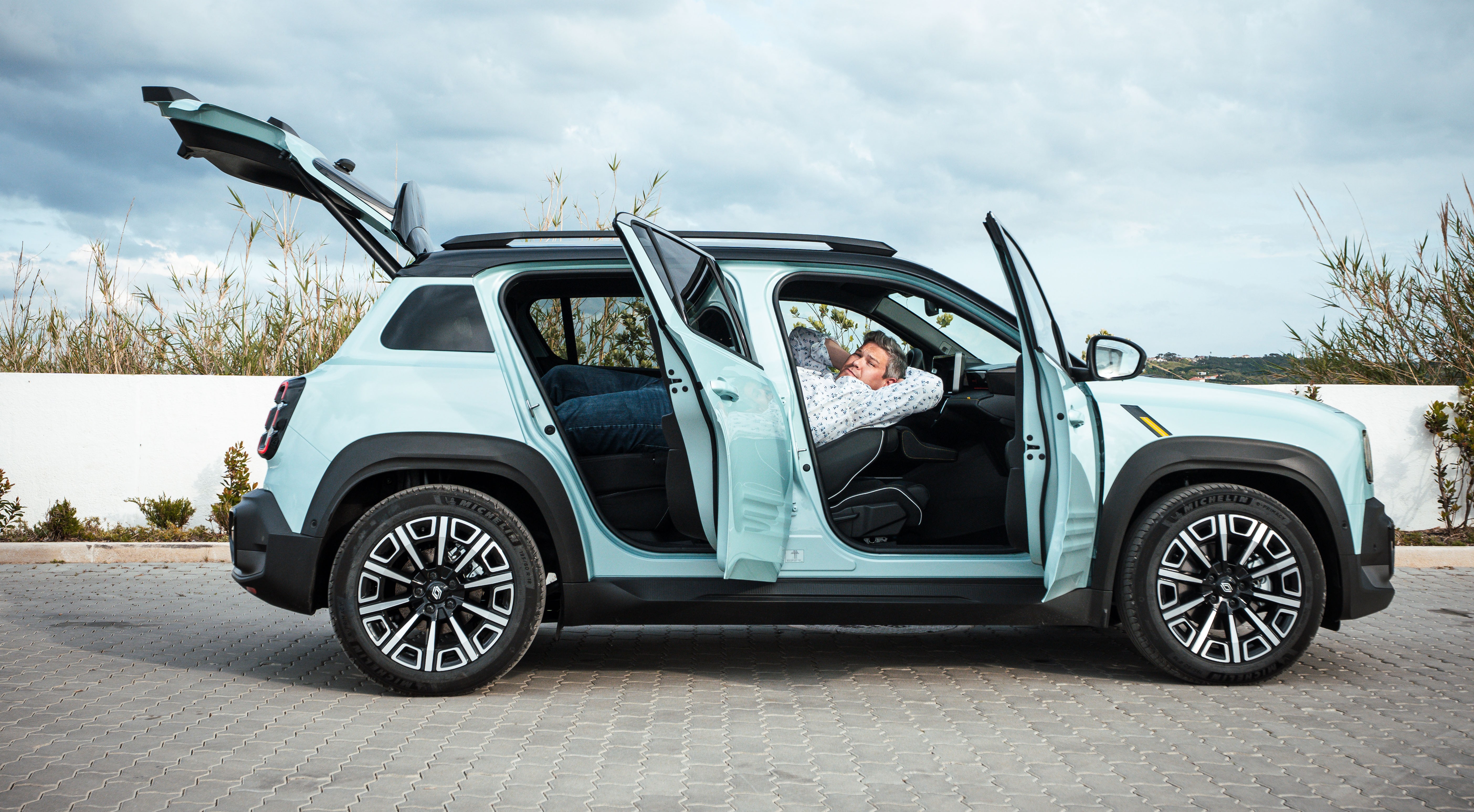
Fold the rear seats and front passenger seat down and you can fit long items — such as flat-pack furniture or a reclining 6ft 5in Will Dron — through the car
RENAULT/ MALCOLM GRIFFITHS
The boot’s a much more useable size too: 420 litres is the same as you get in a Mercedes A-Class, and much larger that the Fiat 600 (360 litres), Jeep Avenger (355 litres) or Mini Aceman (300 litres). It also comes with a feature that made the original R4 such a joy for families — a low sill that makes it easier to load and unload items. Renault claims it’s the lowest sill in the compact SUV segment and equal to most estate cars… but with a shorter overhang than those traditional load-luggers. Not exciting stuff perhaps, but parents will appreciate it.
What’s more, there’s an additional 55 litres of storage under the boot floor for the charging cable (though sadly nothing as clever as the under-parcel-shelf net that Skoda dreamt up for the Elroq).
And while we’re on the subject of charging, one battery size is being made available in the UK with an energy capacity of 52kWh. Officially that’s good for up to 247 miles on a mix of roads, though the real-world range as always is likely to be less, particularity if driving at high speeds or in cold weather, though a heat pump comes as standard, which helps efficiency. During our test drive we set off with a fully charged battery and a predicted range of 254 miles, and after 65 miles we had used just under 25 per cent of the battery, which suggests 260 miles on a full charge. We were impressed at the honesty at least.
• The seven best second-hand electric cars to buy — from £1,500
When you do need to plug in, using a motorway DC rapid charger, 10 to 80 per cent (after which charging speeds slow significantly) takes 30 minutes. Fully charging from flat using an 11kW AC supply takes 4h 51min.
Note, too, that the R4 is the first Renault to offer V2L (Vehicle to Load) technology, which in plain English means you can use the car as a giant power bank to charge other devices such as ebikes, laptops and camping equipment. This is something Hyundai, Kia and a few other EV brands have been offering for a while and it’s not entirely obvious why more brands haven’t made it a standard feature.
Inside it’s much like the Renault 5 — the cabin is very reminiscent of the R4’s smaller sibling, with a 7in or 10in digital driver display (depending on spec) and 10.1in central touchscreen. The car’s built-in operating system and graphics are pretty decent and clear and run Android apps such as Google Maps from the mid-range techno trim upwards, though you can also connect your phone to run Android Auto and Apple CarPlay.

The underfloor storage in the boot
RENAULT/ JED LEICESTER

The cabin is much like that of the Renault 5, though with a roomier second row of seats
RENAULT/JED LEICESTER

But Renault has wisely kept in a lot of physical controls for things like the indicators, air conditioning, wipers, drive modes and gear selection (yes, really, some carmakers thought it’d be better to introduce buttons for those or move them to the touchscreen). Even better, Renault’s system of switching off nannying driver aids such as lane keep assist and speed sign recognition is as simple as a double tap on another physical button behind the steering wheel.
The seats are also beautifully plush while also being supportive. There’s a decent amount of adjustment even for very tall drivers (though the rear-view mirror hampers forward visibility somewhat), and at some point the R4 will be offered with an electrically folding canvas roof, which brings that wonderful open-air driving experience.
This Plein Sud version, as it’s called, wasn’t available for press test drives and hasn’t been available to buy from launch. Renault told us this is because it knows how popular it’ll be and wants to benefit from two marketing “moments”. Those sneaky rascals. We may also get a 4×4 version based on the Savane concept shown last May, so if that’s something that appeals it might be worth holding out a bit longer.
• Seven electric cars with more than 450 miles of range per charge
Whichever wheels are driven on the road, the Plein Sud and hardtop versions shouldn’t feel too different from each other as they were conceived together. It’s not all good news on this front, though. While the ride is pretty decent on the whole and big thumps such as potholes are dealt with very well, the suspension is perhaps a tad firmer than one might expect (perhaps unfairly based on the wallowy R4 of old maybe), and can feel a little skittish over really pockmarked roads. It’s perfectly at home on a nice smooth bit of asphalt though and motorways are a breeze.
The suspension also makes for a stable car while cornering, but again there’s a downside as the steering rack — which is carried over from the Renault 5 — isn’t as suited to the R4 with its extended wheelbase, taller ride height and tweaked suspension. It feels a little oversensitive and inconsistent in this car, whereas its engaging nature is well suited to the little R5.

At the wheel of the left-hand-drive Renault 4 E-Tech at its launch in Portugal
RENAULT/MALCOLM GRIFFITHS
On the plus side the electric motor makes the R4 feel potent at any speed. If anything it feels a little too strong at times, with hard acceleration resulting in the front wheels scrabbling for grip and hints of torque steer while accelerating out of corners. Still, unlike the original car, this R4 is not going to run out of puff on a steep hill or when fully laden and it’s capable of towing up to 750kg, adding further to its family-hauler credentials.
Should the less-than-perfect driving dynamics stop you buying a Renault 4? No, because it’s far from awful and one could argue part of its character. When you consider the original car was — objectively — fairly gutless and had roly-poly suspension, I’d not bet against the new one becoming just as beloved despite its own very different compromises. Its loveable design and plethora of neat, practical touches more than make up for its quirks.
If you can swallow the fact that new cars simply don’t cost what they did back in 1962, the Renault 4 is a very appealing package and might easily follow the mega-popular Renault 5 in helping to bring electric motoring to the masses.