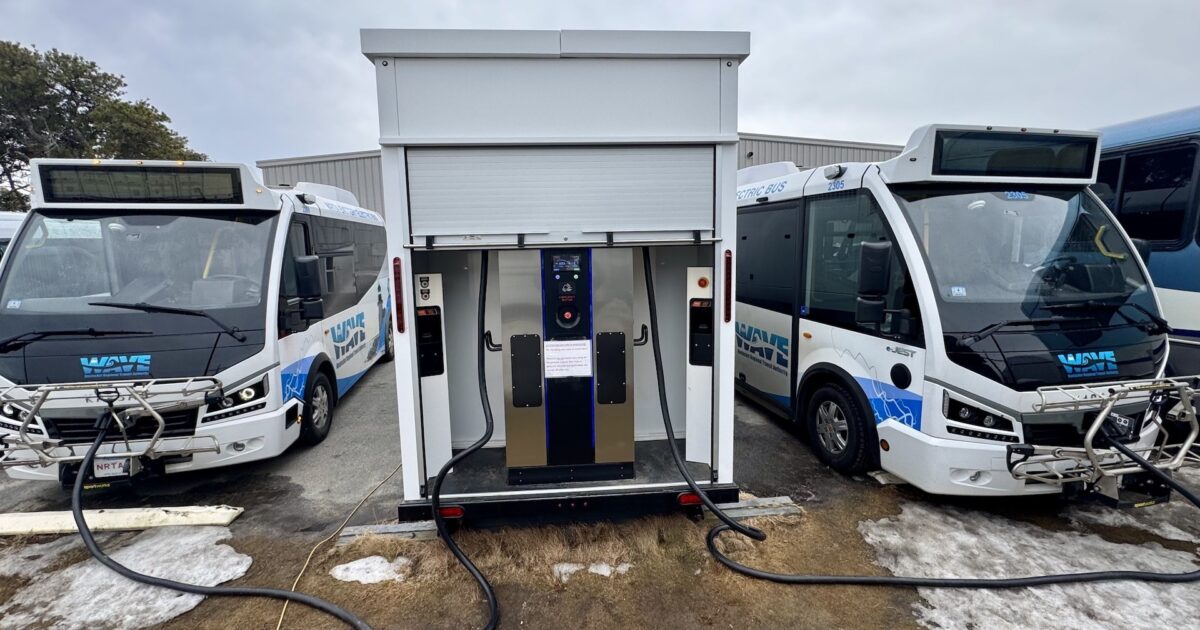
The Nantucket Regional Transit Authority (NRTA) is currently using propane-powered generators to charge a portion of its fleet of new electric buses and vans, reducing the environmental benefits and emissions advantages provided by the vehicles. The NRTA administration claims that the use of the propane-powered generator is a necessary short-term measure as infrastructure construction work proceeds.
“NRTA has been using propane-powered generation of power to charge buses as the fleet grows,” NRTA administrator Gary Roberts told the Current. “The power infrastructure phase at all RTAs has been a struggle getting utilities to engineer on their end and acquiring transformers and switch cabinets needed. Many locations receive buses prior to infrastructure completion.”
NRTA’s electric buses became operational in the summer of 2024. The buses have several advantages beyond their lower carbon emissions. They can navigate Nantucket’s smaller streets more effectively, and are also quieter than traditional buses.
NRTA’s use of a propane-powered generator has drawn increased attention in recent weeks, following comments from Raphael Richter, the owner of Valley Transportation Services of Massachusetts (VTS). VTS managed NRTA’s buses and hired its staff for decades, but was just ousted in favor of the larger international company Keolis, which currently manages the Massachusetts Bay Transportation Authority.
“While a properly planned program would steward public funds wisely, NRTA administration procured electric vehicles with what has appeared to be little or no plan for how to successfully charge them,” Richter said. “The NRTA administrator spent even more money purchasing a massive propane-fired generator to charge the electric buses, thereby negating and making worse the emissions of these ‘clean’ vehicles for nearly 2 years now.”
The Nantucket Select Board serves as NRTA’s board of commissioners. Select Board members referred questions on the propane generators to Roberts.
Roberts said that the planned relocation of NRTA’s maintenance shed has further complicated efforts to charge the electric buses. A new facility is expected to be completed before 2028, when its lease of the current maintenance shed from Nantucket Memorial Airport comes to an end.
“NRTA charging of the fleet is done with one Level 2 charger attached to the Grid at the maintenance facility. This was the max allowable due to the amount of power distribution available at the facility,” he said. “NRTA has the added pressure of relocating and building a new maintenance facility to go along with [other] delays and costs.”
Once NRTA is able to relocate, it will be able to charge all buses directly from the grid and will only use the propane-powered generator as a backup. Roberts framed the use of the propane-powered generator as a necessary short-term stopgap. When asked how much NRTA has spent on the generators and propane, Roberts did not reply.