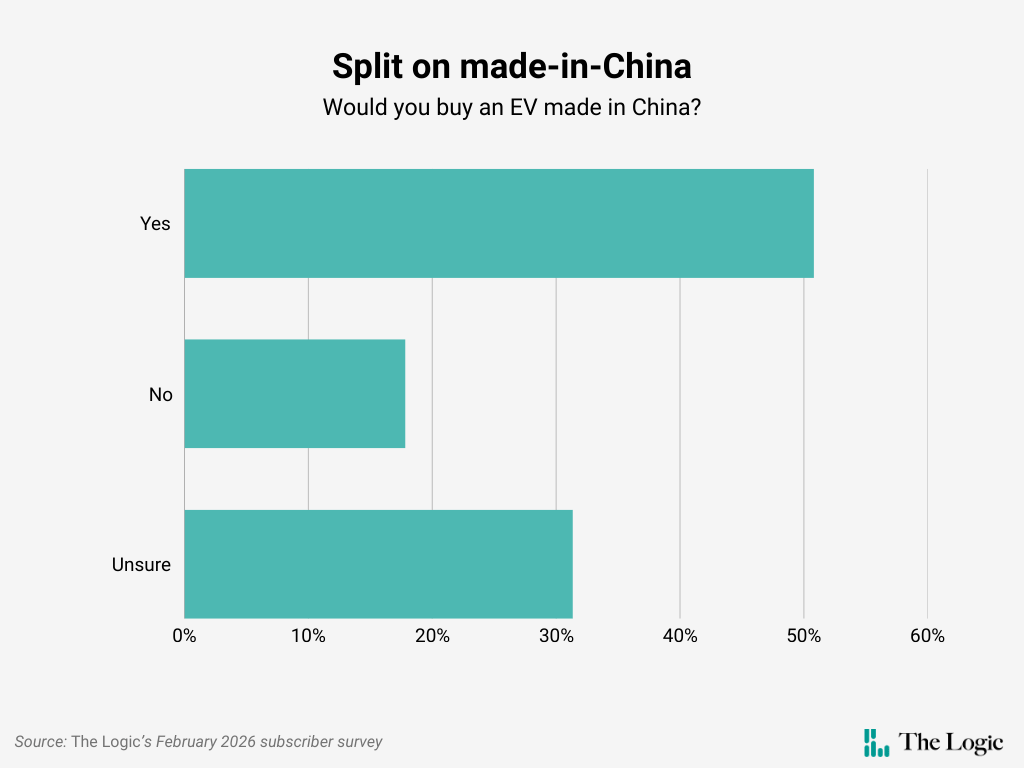
Fifty-one per cent of the respondents to The Logic’s latest subscriber survey said they would buy an electric vehicle made in China, with readers citing cybersecurity as their top concern in making the decision.
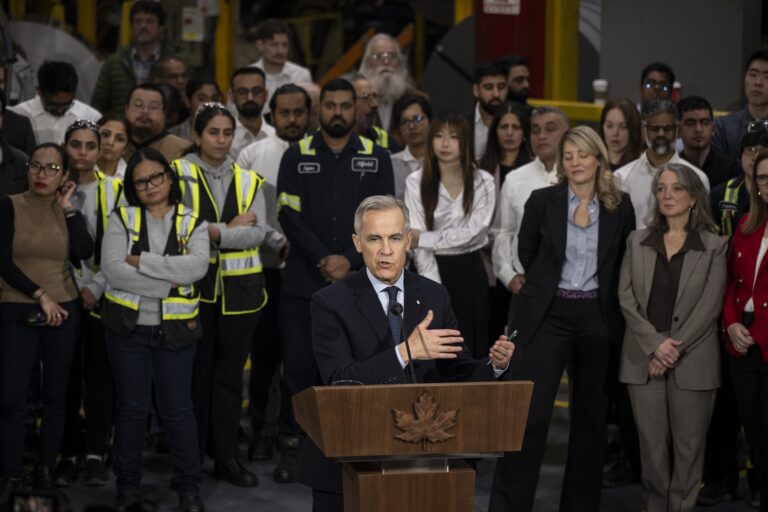
The question suddenly became relevant for many Canadians last month after Prime Minister Mark Carney signed a deal with China’s President Xi Jinping, letting up to 49,000 EVs made in China into the country and dropping tariffs on the cars to 6.1 per cent.
Related Articles

By
Joanna Smith and Laura Osman
One reader said they would have “no issue” with purchasing an EV made in China, calling the country “the world leader” in building EVs at the moment. “I think they are great cars!” said a respondent who has seen made-in-China EVs up close at international dealerships and trade shows.
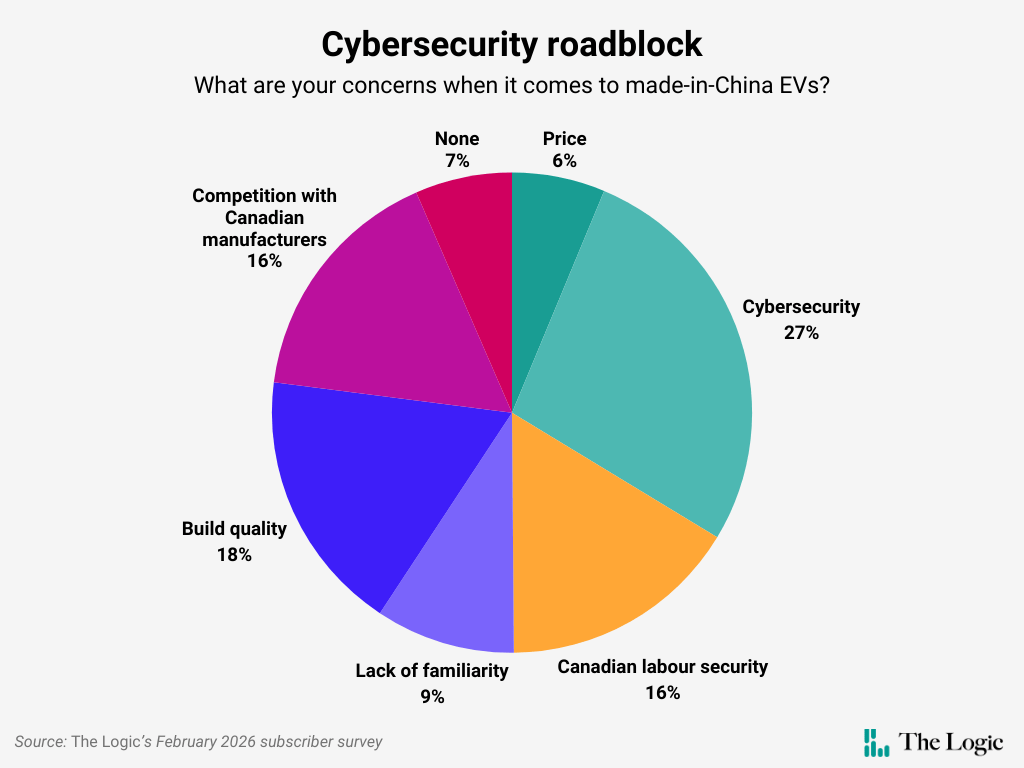
Thirty-one per cent of readers are unsure about buying an EV made in China, however, questioning whether they can be reliable during Canadian winters. Twenty-seven per cent of respondents labelled cybersecurity as their leading worry for buying one.
“I am concerned about data security, and would require our government to ensure my data is safe in Canada and not being transmitted to China or susceptible to interception,” said one subscriber.
Build quality, competition with Canadian manufacturers and labour security for Canadians were other top factors on readers’ minds when considering buying an EV assembled in China.
Under this year’s new EV program, consumers can now get rebates for EVs under $50,000. Battery-electric vehicle purchases are eligible for up to $5,000 back in 2026 and plug-in hybrids can carry a rebate of up to $2,500 this year, with the rebate amount for new purchases gradually scaling back to zero over the next five years. However, 41 per cent of respondents said the program bears no impact on their decision to purchase an EV.
The rebates are available only on cars produced in Canada, or countries with which Canada has free trade agreements, like the U.S. and Mexico. That would exclude made-in-China EVs sold in Canada.
Last March, the Trump administration imposed 25 per cent national security tariffs on all foreign autos, followed by counter-tariffs from Canada in April. EV sales plunged in 2025 due to the pause in the Canadian federal rebate program and the U.S.-led trade war, prompting major manufacturers to halt some EV production in Canada—dealing another blow to the already struggling sector.
Given the actions of the U.S. government, a few respondents said Canada needs to establish partnerships with non-American automakers to diversify the country’s supply chain and manufacturing sector.
One subscriber said Canadian manufacturers should partner with EV makers in China to bring more affordable models to Canadians, as “simple protectionism without building a competitive product will not work in the long run.” Another said that ideally, Chinese vehicles will be built in Canada, adding that “labour in the auto sector currently has no security due to the policies of the American government.”
“The GM/Ford/Stellantis trio have made their choice to hurt Canada,” said one respondent, while another expressed dissatisfaction with the Big Three manufacturers, calling them the “dinosaurs” of the auto industry.
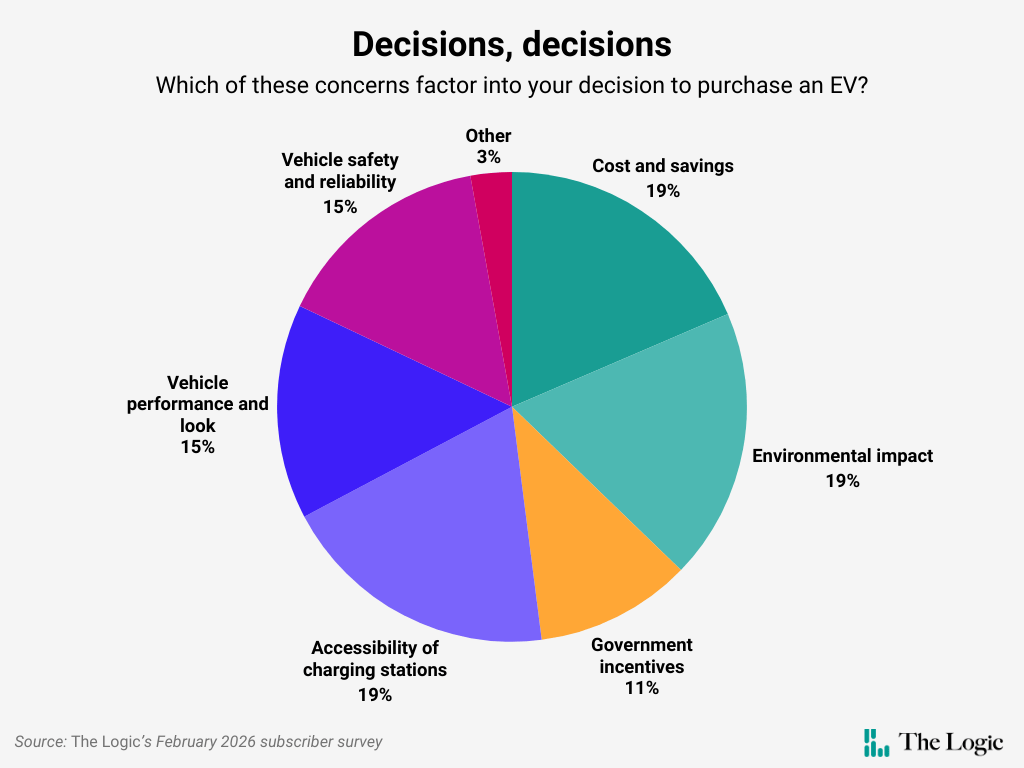
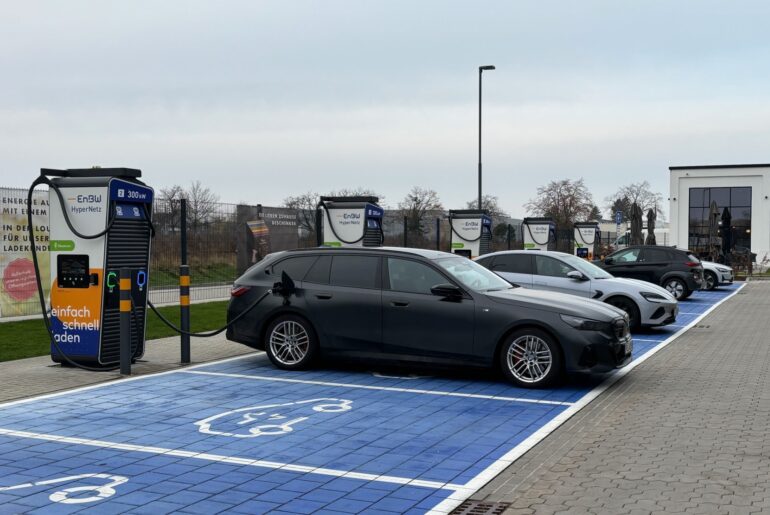
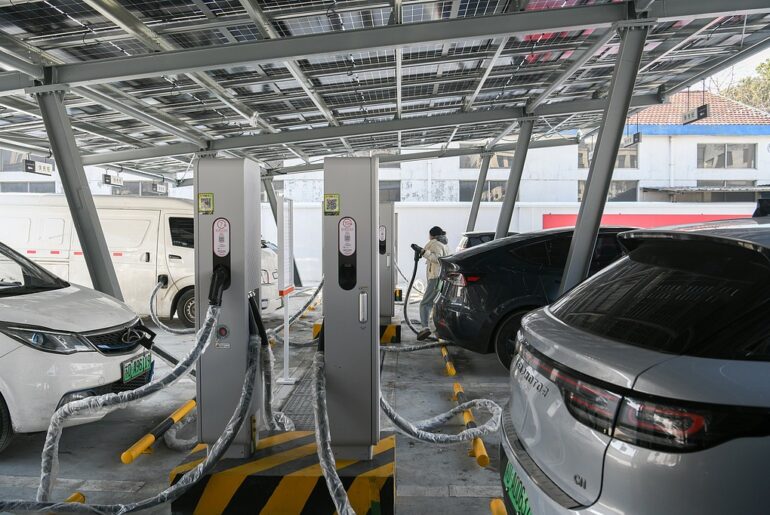
Seventy-nine per cent of readers want to buy or lease an EV in the near future. That’s up from 74 per cent when The Logic asked readers to weigh in 2024, and up from 78 per cent in 2022. When deciding whether to purchase any electric vehicle, charging station availability was the most commonly cited consideration, a concern for more than 19 per cent of respondents.
“This is a huge issue in Manitoba,” said one reader. “There are not enough [charging stations] and [they are not] easily accessible.” Another reader in Ontario shared in the frustration, adding their “biggest concern is the pathetic state of our EV charging infrastructure.”
Subscribers also expressed worry about environmental impact and affordability as factors contributing to the decision-making, with each cited by nearly 19 per cent of respondents. One reader said that balancing EV affordability with building domestic manufacturing capacity will be good for both the environment and the country’s sovereignty.
“It was always about the environment,” said another, adding that once you have an EV, “there is no going back.”