Support CleanTechnica’s work through a Substack subscription or on Stripe.
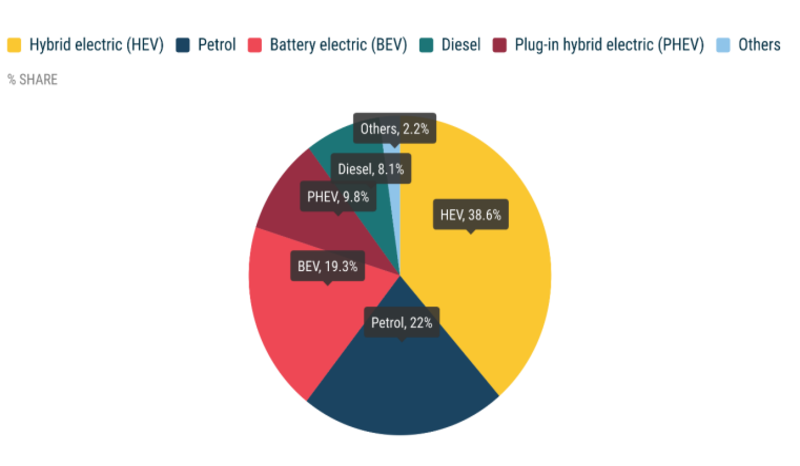
New car registrations in Europe dropped by nearly 4 percent in January, 2026, as compared to the same month last year. 799,625 new cars were registered across the EU, down from nearly 832,000 in January 2025. That’s the bad news. The good news is that sales of battery electric cars accounted for 19.3 percent of new car sales in Europe last month — up from 14.9 percent in January of 2025.
José Pontes will be diving much more deeply into the numbers in coming days in our one-of-a-kind European EV sales deep dives. For now, though, we have some of the top-line numbers from the European Automobile Manufacturers Association (ACEA) to play with.
According to ACEA, “hybrid electric car registrations captured 38.6 percent of the market, making them the preferred choice for consumers in the EU. Meanwhile, the combined market share of petrol and diesel cars fell to 30.1 percent, down from 39.5 percent in January, 2025.”
What Is An HEV?
“Hybrid electric cars” needs some clarification, as the category includes a number of powertrain choices — some true heroes of the EV revolution and some mere poseurs that pretend to be “green” but are not.
ACEA includes varying degrees of electrification in its “hybrid electric vehicles” classification — full hybrids, mild hybrids, 48 volt hybrids, and even vehicles using a small electric motor for start/stop assistance or turbocharging (and nothing more). For must of us in the EV space, we scoff at such vehicles, even if they are a little bit cleaner than non-hybrids.
The ACEA report shows that sales of new fully gasoline-powered cars dropped by 28.2 percent, with the decline affecting all major markets. France saw the steepest drop, with registrations falling by 48.9 percent, followed by Germany — down 29.9 percent, Italy — down 25.5 percent, and Spain — down 22.5 percent. The market share for gasoline-powered cars fell to 22 percent from 29.5 percent in the same month last year. The diesel car market continued its downward trend, with registrations declining by 22.3 percent and reaching a market share of just 8.1 percent.
European BEV Sales
Sales of battery electric cars by country are all over the place. In Europe’s four largest new car markets, which are responsible for 60 percent of all new car sales, France saw an increase in battery electric sales of 52.1 percent, while sales in Germany were up 23.8 percent. In Belgium, however, BEV sales were down 11.5 percent and, the Netherlands saw a decline of 35.4 percent.
Germany remains Europe’s largest market with 42,692 electric car sales, ahead of France with 30,307 BEV sales and the UK at 29,654 BEV sales. Denmark recorded a notable increase of 52.7 percent, with a total of 10,618 electric cars sold in January. The Netherlands, with 7,165 BEV sales, was down from 11,089 the previous year and now lags behind Italy, which recorded BEV sales growth of 40.7 percent with 9,423 cars sold, and even Ireland, where 7,305 new BEVs represented a 48.4 increase over a year ago.
The highest growth was recorded in Poland, with a 216.1% increase. Although, it should be noted that the numbers in that country are small — 1,121 last January and 3,544 this year. Croatia also saw substantial growth, with registrations doubling from 69 to 138 electric cars. Lithuania experienced growth of 65.2 percent — from 161 to 266 BEV sales. In Finland, BEV sales rose from 1,641 to 2,505 — a 52.7 percent increase.
Tesla Sales Decline
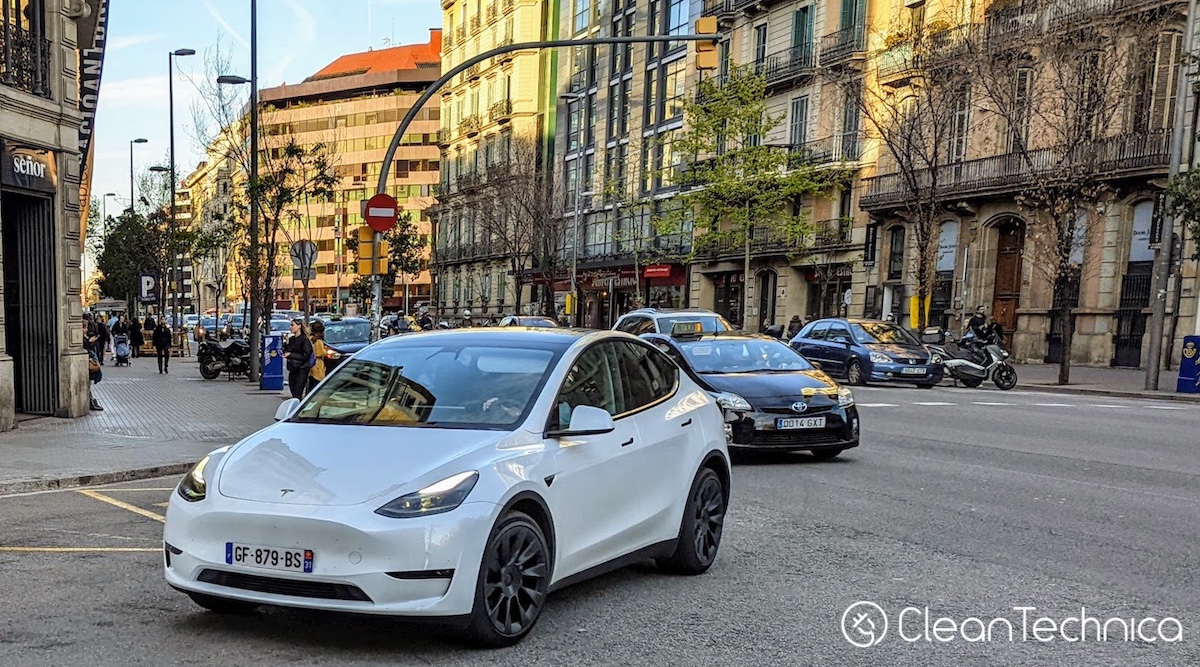
In its statistics for manufacturers, ACEA does not differentiate by powertrain type. Tesla stands alone as the only manufacturer offering only battery electric cars for sale in Europe. According to ACEA, Tesla registered 7,187 new cars in the EU in January 2026 — 1.6% fewer than the previous January in which Tesla sold 7,305 cars. As a result, Tesla’s market share in the overall new car market in Europe in January was just 0.9 percent.
Rico Luman, senior economist for transport and logistics at Dutch bank ING, told CNBC by email that January’s performance marks another “very weak” start of the new year for the company. “Tesla’s image has deteriorated in Europe last year and people have much more choice now with the range of new affordable EVs — from BYD, MG, and ZEEKR — entering the market, while Tesla lacks new models,” he added.
Tesla’s focus on autonomous driving, rather than introducing new vehicles and expanding its range of mass models, is likely a factor too, Luman said. “Another thing in Europe is that large numbers of first generations of Tesla’s are remarketed at the moment (after being leased for 4-6 years), this has driven second hand prices down,” Luman said, adding that there’s an abundance of competitively priced Tesla’s available on the used market.
Tesla has faced challenges in Europe, including robust competition from Chinese car brands. It’s also struggled to shake off reputational damage from Musk’s rhetoric and close relationship with the Trump administration. Protests erupted at Tesla dealerships across Europe last year at the height of Musk’s involvement with the hateful policies foisted off on and from America by the administration.
BYD Shines
BYD continued its rapid growth in Europe at the start of 2026. According to the latest ACEA data, new car registrations for the company rose to 18,242 in January — a 165 percent increase from a year ago. BYD has more than doubled its market share in Europe, hitting 1.9 percent last month, which was up substantially from 0.7 percent in January of last year.
Michael Field, chief equity strategist at Morningstar, told CNBC one of the main problems for companies such as Tesla is that Chinese automakers like BYD have an insurmountable cost advantage. “The big question now is ‘will this trend continue?’ The answer, unfortunately for European automakers and Tesla, is yes,” Field told CNBC by email.
“Even looking 5 years out, we don’t believe the cost advantage will be completely breached because of China’s structurally lower labor costs,” he continued. “There is some good news, however, that European automakers and Tesla are learning. The cost gap in terms of battery and auto production is slowly closing, and these firms are introducing more models at lower price points, which should help reduce the hemorrhage in market share.”
Zachary today has written about Tesla sales in China, where the news is also not good.
Hurray For Cars With Plugs!
There is a lot of slippage in statistics, of course. Government policies can swing wildly from year to year, leaving manufacturers scrambling to catch up. Non-economic forces — such as the well deserved opprobrium for Elon Musk, who has shown his true colors as a white supremacist and advocate for authoritarian governments — can also have a powerful affect on sales.
The takeaway from these numbers for January may well be less about how many cars with plugs were sold and more about how sales of conventional cars with gasoline and diesel engines are steadily declining. Nothing makes us happier at CleanTechnica than news of a reduction in demand for fossil fuels.
If Elon chooses not to press his first mover advantage, that’s on him. But the rest of the world seems slowly but surely to be making the transition to driving on electrons instead of molecules, and that is the best news of all.
Sign up for CleanTechnica’s Weekly Substack for Zach and Scott’s in-depth analyses and high level summaries, sign up for our daily newsletter, and follow us on Google News!
Advertisement
Have a tip for CleanTechnica? Want to advertise? Want to suggest a guest for our CleanTech Talk podcast? Contact us here.
Sign up for our daily newsletter for 15 new cleantech stories a day. Or sign up for our weekly one on top stories of the week if daily is too frequent.
CleanTechnica uses affiliate links. See our policy here.
CleanTechnica’s Comment Policy