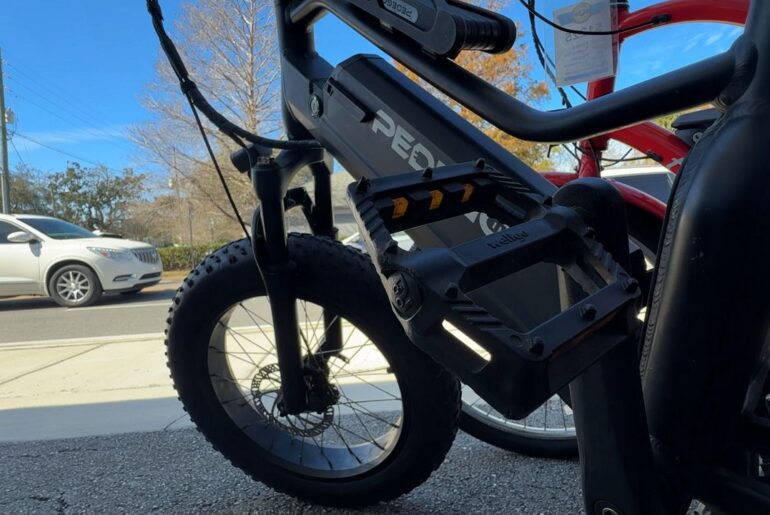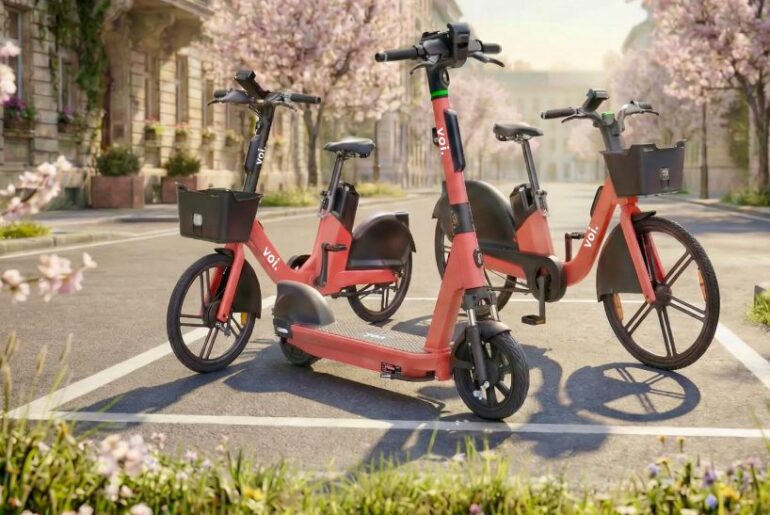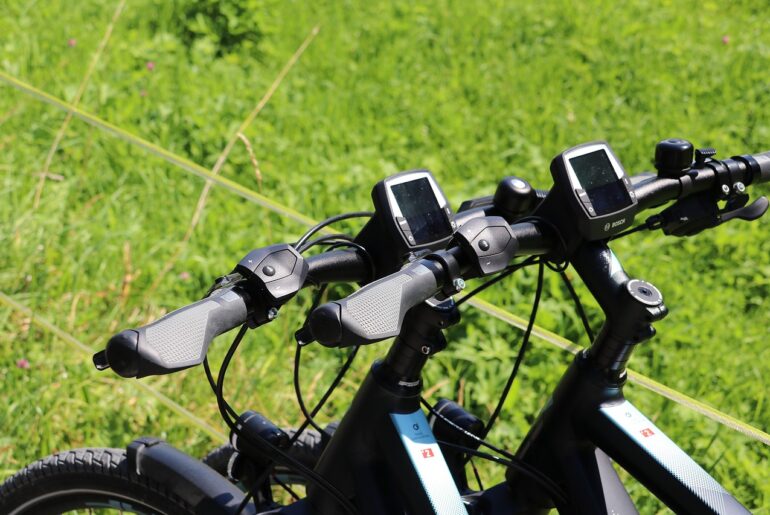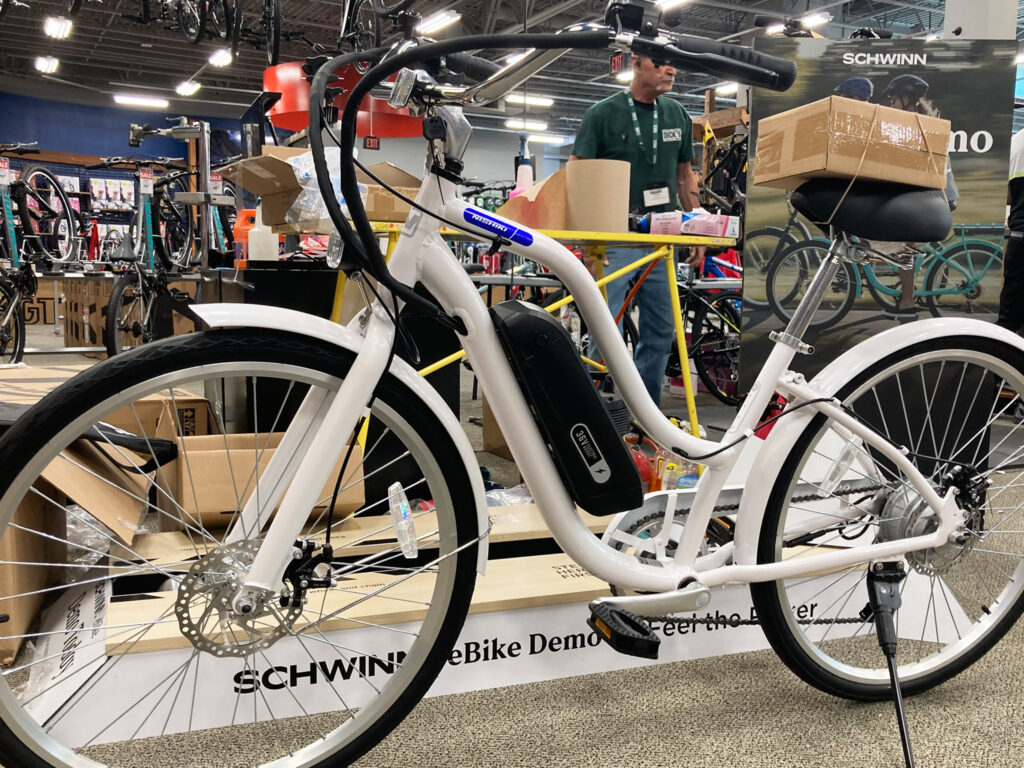
A new California bill would require certain electric bikes capable of reaching 20 miles per hour or faster to be registered with the DMV and display a special license plate.
The legislation, introduced by Democratic Assemblymember Rebecca Bauer-Kahan, comes in response to what she describes as a troubling rise in e-bike-related injuries.
Bauer-Kahan noted during a press conference earlier this month the class 2 and 3 e-bikes targeted in her proposal can be modified to go over 60 miles per hour.
“When you and I drive on the highway, we abide by the speed limit,” she said. “We do it because we could be held accountable for speeding and making people’s life less safe, and the same needs to apply to our e-bike riders.”
But transportation researchers and bike advocates have questioned the data her bill is relying on, calling it misleading.
Misleading injury data
Asha Weinstein Agrawal is a researcher with the Mineta Transportation Institute at San Jose State University. She said injury statistics often lump together legal e-bikes with illegal high-speed devices sometimes referred to as “e-motos.”
“They could be simply an illegal device altogether that doesn’t fit into any category in the California Vehicle Code,” Agrawal said. “They could be an electric dirt bike, which is legal to ride off road, but not legal to ride on city streets.”
Agrawal said combining those categories can skew the numbers and unfairly penalize people riding street-legal e-bikes.
She also questioned whether registration requirements would meaningfully improve safety. She argued that additional barriers like these could discourage teenagers and other riders from choosing bikes over cars.
“I like to ask people: if they had to be hit if they were a pedestrian, would you rather be hit by a crazy reckless teenager on an e-bike or a crazy reckless teenager driving a car?” she said. “I’m pretty sure virtually everybody would take their chances with an e-bike rather than a car.”
Bike advocates echoed those concerns.
Advocates say bill misses larger safety issues
Jared Sanchez with advocacy group CalBike said the legislation focuses on the wrong problem.
“It’s a scapegoat focusing on legal e-bikes and trying to prohibit them further rather than addressing the real issue.”
Sanchez argued that improving infrastructure — including protected bike lanes and safer street design — would do more to prevent injuries than requiring license plates.
He also speculated that the bill was inspired by a New Jersey law that implemented similar requirements, a decision that has drawn criticism from cycling advocates.
“To really change state law around what a bicycle is and turning it into a motor vehicle at least for those set of requirements, is really concerning and alarming to us,” he emphasized.
The national cycling trade association PeopleForBikes is currently working on draft language for a new bill in New Jersey that would redirect the regulatory and safety focus towards e-motos instead.
Author says registration would improve accountability
Bauer-Kahan said she wasn’t aware of the New Jersey law when drafting her proposal. Still, she said she wants legal e-bikes included because registration would help authorities determine whether a bike is compliant with state law.
“It will give us the opportunity to do things like educating people about the proper helmet to wear,” she said, referring to research findings that conventional helmets are not as effective at higher speeds. “Right now it feels like the Wild West and our goal here is to bring some control over this so we can start to ensure that kids are on the safe bikes.”
Lawmakers will consider the bill in the coming months.
CapRadio provides a trusted source of news because of you. As a nonprofit organization, donations from people like you sustain the journalism that allows us to discover stories that are important to our audience. If you believe in what we do and support our mission, please donate today.