Tesla’s premium market valuation has long been anchored to the promise of a driverless future. However, recent data reveals a significant disconnect between that vision and present reality, casting doubt on the company’s ambitious timelines and putting pressure on its core business.
A Regulatory Roadblock in a Key Market
According to a Reuters analysis of California Department of Motor Vehicles (DMV) data, Tesla reported zero miles driven in autonomous testing mode on public roads in the state during 2025. Since 2016, the company has logged a mere 562 test miles in California. This stands in stark contrast to competitor Waymo, which accumulated over 13 million miles before securing its permit for fully driverless operations.
The issue is fundamentally regulatory. Tesla currently holds only a beginner’s permit, which mandates a safety driver behind the wheel. Proposed regulations for a genuine robotaxi license, however, would require demonstrating 50,000 supervised test miles first. With Tesla’s progress effectively at a standstill in this critical jurisdiction, the foundation of its robotaxi-driven valuation is being questioned.
Operational Headwinds and Share Price Pressure
Beyond its futuristic projects, Tesla’s core automotive operations are showing signs of strain. European new vehicle registrations plummeted by 17 percent in January, marking the 13th consecutive month of declines. The company’s market share in the region has dwindled to a modest 0.8 percent. The contrast with Chinese rival BYD is particularly stark; BYD boosted its registrations by 165 percent and doubled its market share to 1.9 percent.
Should investors sell immediately? Or is it worth buying Tesla?
This climate of uncertainty is reflected in the stock’s performance. Shares are currently trading at 351.30 euros, representing a slight daily decline of 0.61 percent. Since the start of the year, the equity has retreated by approximately 6 percent.
Institutional Investors Retreat as Legal Issues Mount
The current situation has triggered a notable divergence in investor behavior. Data from JPMorgan indicates retail investors poured over $300 million into Tesla in mid-February alone. Meanwhile, major institutional players are executing a large-scale exit. UBS Asset Management slashed its position by about 74 percent, with Nomura and Goldman Sachs also offloading millions of shares.
Compounding these challenges are ongoing legal conflicts. Tesla is engaged in a lawsuit against the California Department of Motor Vehicles over allegations of false advertising related to its “Full Self-Driving” terminology. Simultaneously, the robotaxi pilot project in Austin reported five new accidents in December and January, bringing the total number of incidents since the fleet’s launch to 14.
A Ticking Clock for “CyberCab”
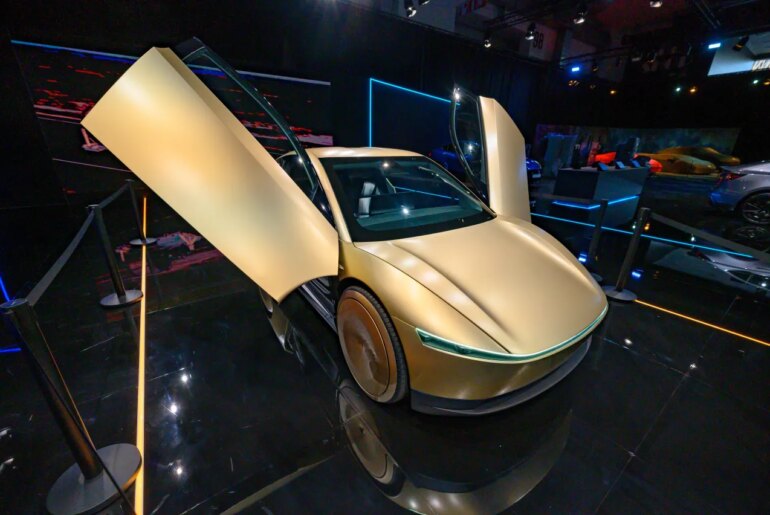
The timeline pressure on Tesla is intensifying. Official production of the “CyberCab” is scheduled for April 2026, accompanied by planned capital expenditures exceeding $20 billion this year. Yet, without the necessary test mileage and regulatory approvals in California, this entire schedule is at risk of unraveling. Investors will be watching closely to see if the company executes a drastic pivot in its testing strategy in the coming months, or if regulatory hurdles will further delay the launch of its robotaxi service.
Ad
Tesla Stock: Buy or Sell?! New Tesla Analysis from February 26 delivers the answer:
The latest Tesla figures speak for themselves: Urgent action needed for Tesla investors. Is it worth buying or should you sell? Find out what to do now in the current free analysis from February 26.
Tesla: Buy or sell? Read more here…