Waymo is finally starting up its long-awaited robo-taxi service in Central Florida after months of test runs — and its first official rider was Orlando Mayor Buddy Dyer.
Dyer took an eight-minute driverless trip on the streets of downtown Orlando Tuesday morning, ushering in a new era of autonomous vehicle, or AV, rides in the region. Waymo will run just a few dozen vehicles at first, however, so for now it is available only by invitation.
“It’s an exciting day here in the city of Orlando,” Dyer said before getting into the passenger seat. “We like to think of ourselves as a future ready city, so embracing new technology is important.”
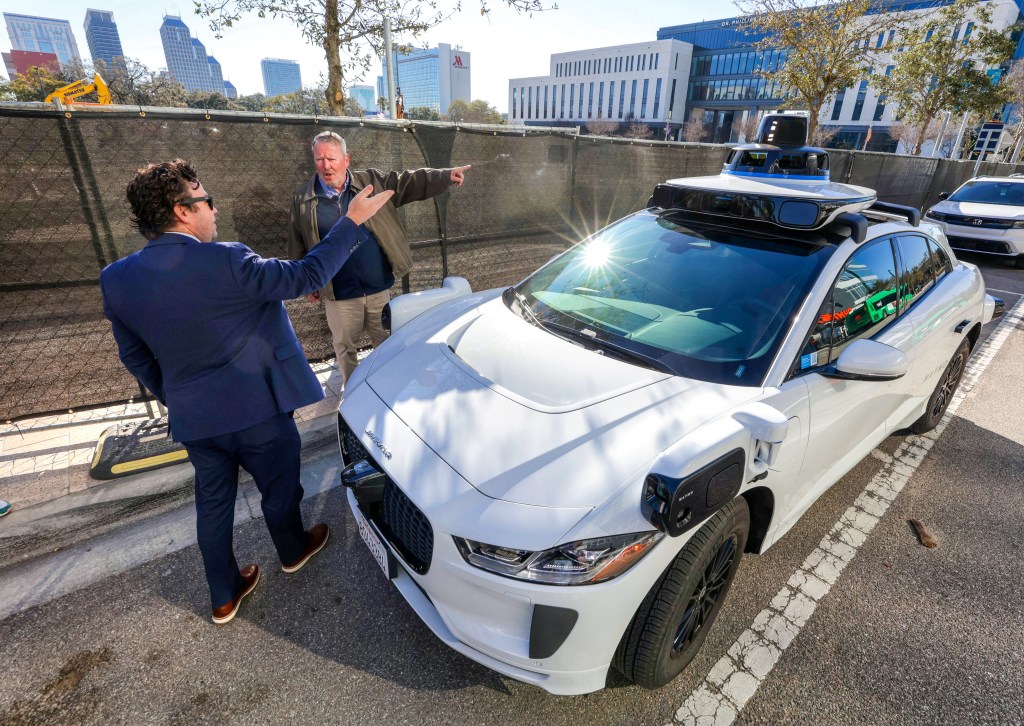
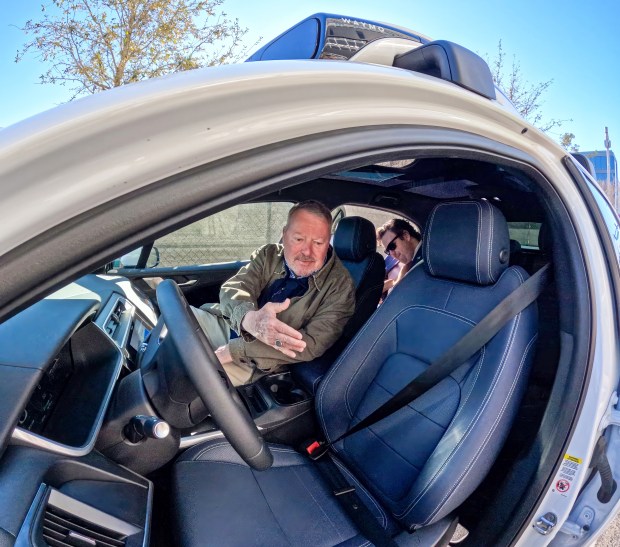 Orlando mayor Buddy Dyer and Waymo southeast policy manager John Tupps, right, prepare to ride in the fully-autonomous robotaxi vehicle to on the first official day of service in Orlando, Tuesday, Feb. 24, 2026. Orlando joined Dallas, Houston and San Antonio with the Waymo service debut on Tuesday, bringing the total to 10 U.S. cities that have the driverless ride-hailing service. (Joe Burbank/Orlando Sentinel)
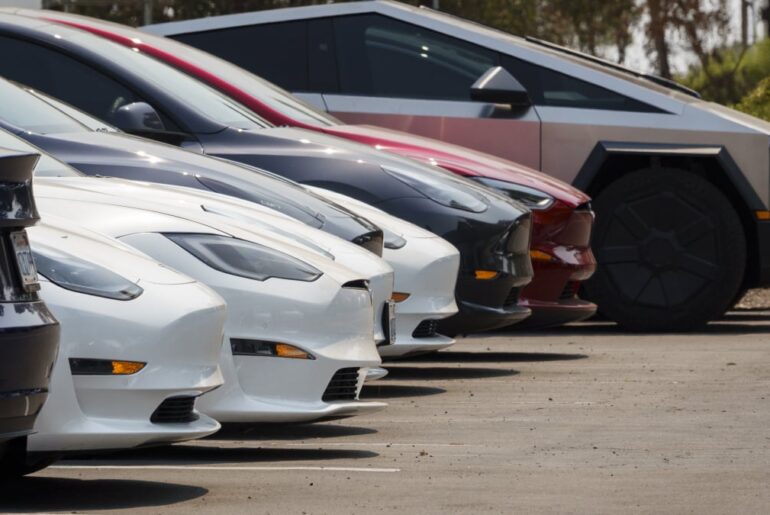
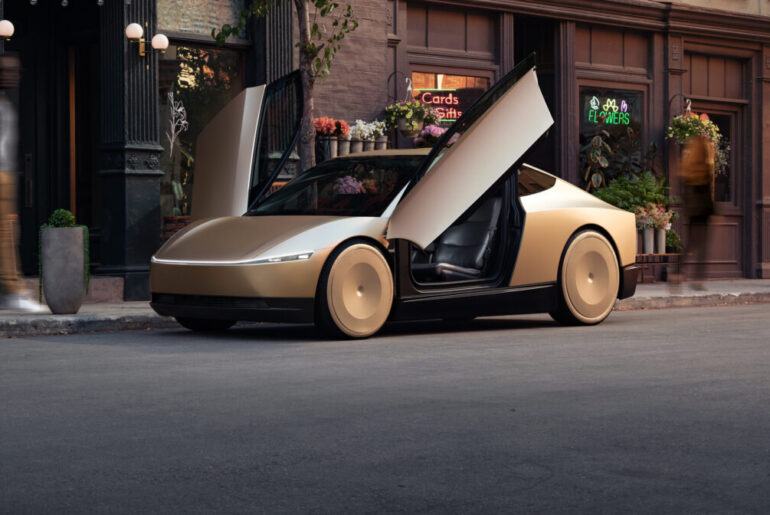
Tesla recently announced its own robo-taxi service is coming to the region as well. In a post on X last month, the company said its driverless cars will be available to both Orlando and Tampa residents by June. Tesla’s Model Y robo-taxi, which runs similarly to Waymo via an app, is currently only operational in Austin, Texas.
Along with the City Beautiful, Waymo welcomed riders to use its so-called ride-hailing service in Dallas, Houston and San Antonio on Tuesday, the company said in a press release, bringing the total commercial markets to 10.
Select riders who have downloaded the Waymo app have begun getting invitations to take their first local rides in one of the dozens of vehicles in rotation, the company said. To get on the waitlist, residents must first download the Waymo app, after which they will receive an email with an invitational code.
“As soon as we’re ready to invite more and more people day by day, week by week, it’ll go to your email and there will be a code that you put into your app,” said Waymo spokesperson Mark Lewis. “So we don’t have 10,000 people fighting for just two dozen vehicles.”
Initially, the vehicles will not drive on any expressways and interstate highways and will only service a 60-mile area that extends from west of downtown southward along the I-4 corridor and Florida’s Turnpike. But the Google subsidiary plans to expand the service later this year.
A 2019 state law paved the way for the AVs. On Florida roads, AVs are not required to have a human inside, as some other states mandate, and local governments may not implement any tax, fee, or restriction on these vehicles.
Waymo’s white Jaguar SUVs are affixed with 29 cameras, six radars, five lidar laser-scanners and four audio receptors to map the streets around them and get riders to their chosen location, Lewis said.
The AV company has been testing its fleet on Orlando’s streets for the last few months. The cars can see their route as they go using AI technology and advanced radar detection systems, but the effort to map out the city’s streets is an extra step for added safety, Lewis said.
A reporter for the Orlando Sentinel boarded a Waymo Tuesday afternoon and began a 10-minute ride through downtown Orlando, experiencing the powerful acceleration electric vehicles are known for.
Upon entering, riders are greeted with low-volume zen music, a large touch display in the back seats and a cool 68-degree temperature that can be programmed before entering the vehicle. During the reporter’s trip, two fire trucks with lights and sirens blaring passed the Waymo in the opposite travel lane. The Waymo stopped briefly to let them pass before continuing the trip, while leaving enough room for a nearby bicyclist.
Incidents across the country have ignited conversations about AV safety and prompted legislation elsewhere to regulate how the vehicles can operate. One of the most infamous events occurred in October when a Waymo hit and killed a beloved San Francisco feline named KitKat, sparking community backlash and national attention.
But Waymo says its vehicles have proven to be safer than humans. In the five cities where it already operates — San Francisco, Los Angeles, Phoenix, Austin, and Atlanta — its vehicles have caused 11 times fewer serious injury collisions than human drivers, it claims.
Tesla’s robo-taxis have attracted unwanted attention for their recent safety record. Since their launch in June in Austin, Tesla’s 45 AVs have been involved in 14 accidents, according to reporting from Electrek citing data from the National Highway Traffic Safety Administration.
The Elon Musk-led company submitted five crash reports from incidents in December and January, including a collision with a fixed object at 17 mph while the vehicle was driving straight, a collision with a heavy truck at 4 mph, two incidents when the robo-taxi backed up into a pole or tree and another into a fixed object.
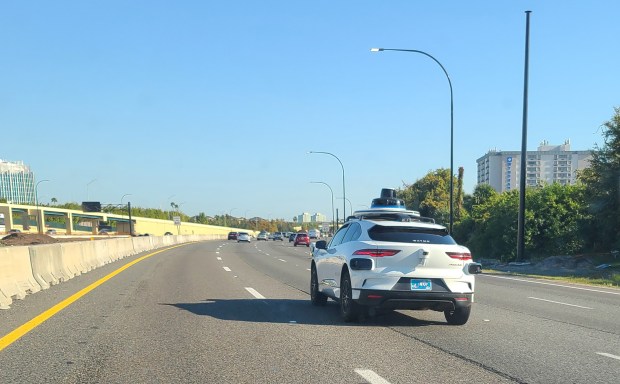 A Waymo car heads north on Interstate-4 on Wednesday, Nov. 19, 2025. Waymo said it was testing its autonomous vehicles with employees in the Orlando area. (Steven Lemongello/Orlando Sentinel)
But Dyer said he felt comfortable and safe riding in the Waymo. He argued the reported collisions of AVs are put in a spotlight that normal accidents are not.
“We hear anytime there’s an accident and it’s a self driving car, but there’s far more accidents with people driving cars than self-driving cars,” Dyer said.