 Image source: Getty Images
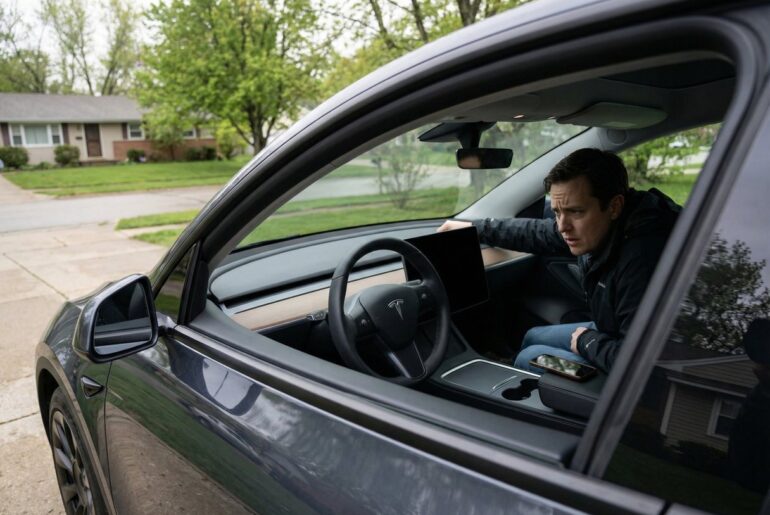
Tesla (NASDAQ:TSLA) stock has had a strange few years. Despite all the noise, it’s actually only up a couple of percent from its 2021 peak. That’s quite a remarkable statistic for a company that commands one of the most loyal investor bases on the market.
It’s also an incredibly unique stock because it trades with a valuation that makes little sense. It’s completely detached from the fundamentals.
The market has essentially made a bet. It’s looked past the automotive business — which faces real margin pressure and intensifying competition from Chinese manufacturers — and is pricing in what comes next.
Autonomous vehicles and humanoid robots are the two pillars holding up that premium. And progress on both has been slower and lumpier than Elon Musk’s original timelines suggested.
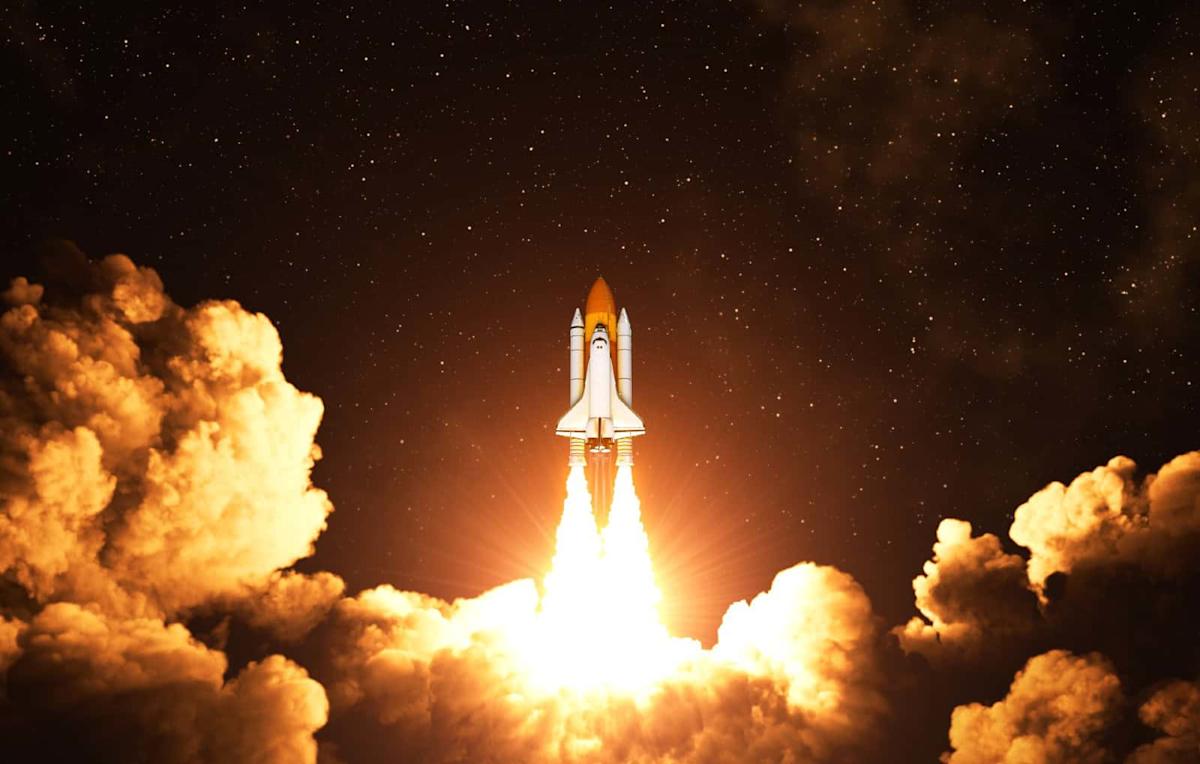
But something shifted recently. Musk announced in February 2026 that SpaceX is now prioritising the Moon over Mars. He’s targeting an uncrewed lunar landing as early as March 2027, with Optimus robots doing the groundwork ahead of any human presence. If Optimus can function autonomously in a lunar environment, it would be the most demanding proof of concept any robotics product has ever had.
But there’s got to be some business sense behind it. Robots on the Moon… it would be a great advertisement for Optimus, but surely there’s something else behind it?
The business case is real. Lunar regolith contains helium-3, a potential fusion fuel, and the south pole holds water ice convertible into rocket propellant — whoever controls that controls the economics of deep space travel. SpaceX is already on contract for NASA’s Artemis lunar lander, so the infrastructure pipeline exists.
For Tesla, every Optimus unit deployed on the Moon is revenue, and if the lunar economy scales — propellant production, construction, mining — it’s hard to see another company with a humanoid robot anywhere near production-ready at scale.
Remember, this is still the company that makes electric vehicles.
I have no doubt that if the lunar economy really kicks forward, investor interest will heighten generally. But what makes Tesla’s position unusual is the vertical integration across the Musk empire — SpaceX builds the transport, Tesla builds the labour force. Those are the two biggest cost lines in any off-world economy, and one person controls both.
Investing in a stock that trades over 200 times forward earnings is inherently risky. What’s more, the price-to-earnings-to-growth (PEG) ratio still sits around 4.8. Both these figures are huge for the automotive sector and highlights the valuation risks that exist if Tesla fails to deliver on autonomous driving dominance and robotics.
Personally, I’m a big fan of the Tesla brand — I appreciate it’s a bit marmite. I’d also much rather see an American winner in this sector than Chinese. However, I’m still a little cautious about the stock because of the risk noted above. It might be worth considering, but personally I’d rather gain exposure to SpaceX.
The post Robots on the Moon: will this kick Tesla stock forward? appeared first on The Motley Fool UK.
More reading
James Fox has no position in any of the shares mentioned. The Motley Fool UK has recommended Tesla. Views expressed on the companies mentioned in this article are those of the writer and therefore may differ from the official recommendations we make in our subscription services such as Share Advisor, Hidden Winners and Pro. Here at The Motley Fool we believe that considering a diverse range of insights makes us better investors.
Motley Fool UK 2026