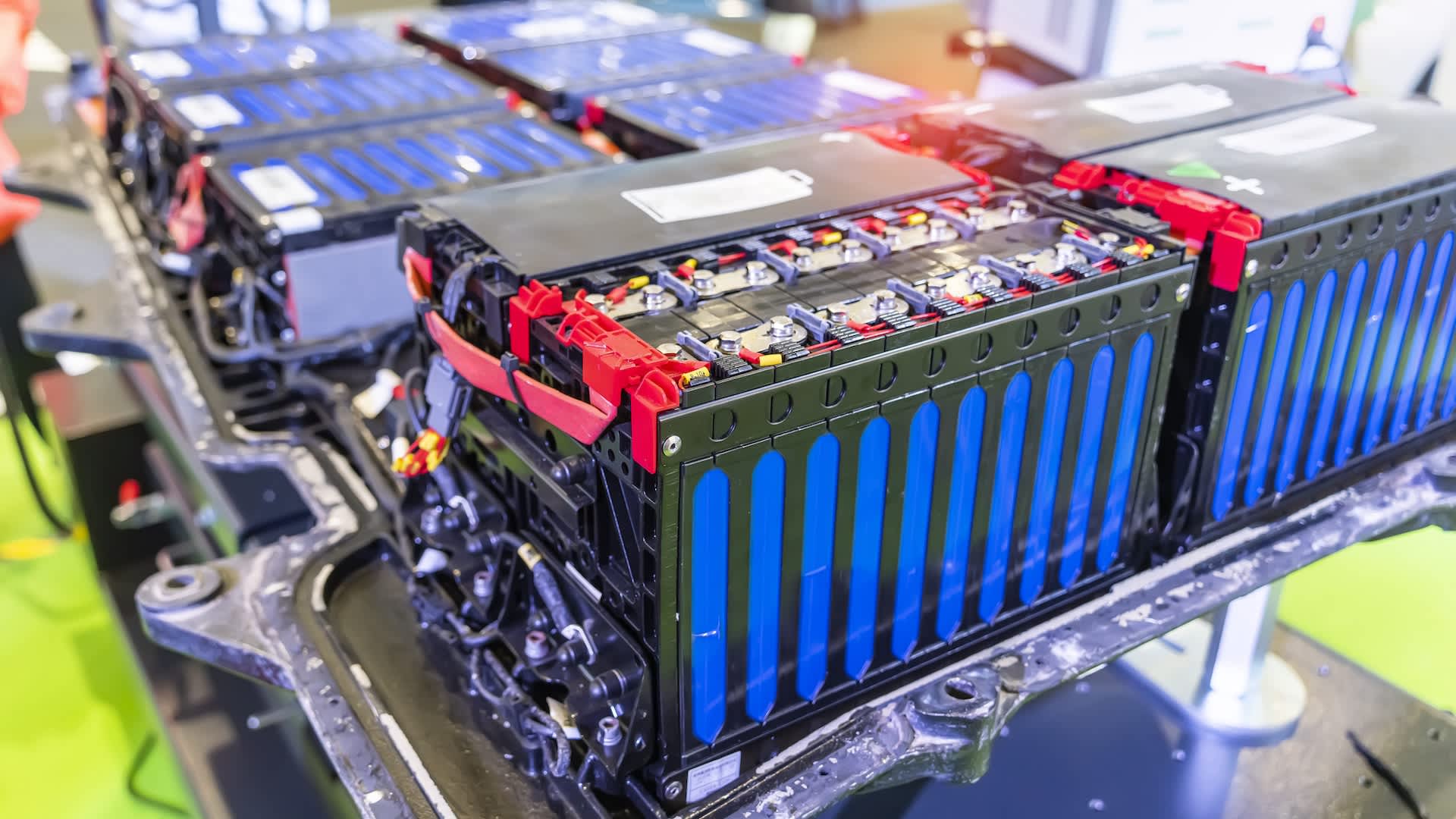
A team of scientists from South Korea may have addressed one of solid-state battery development’s biggest conundrums — high production costs — in a way that saves money.
The battery type is often billed as a next-generation pack with exceptional safety, including nonflammable parts.
A news release published by the National Research Council of Science and Technology detailed how the team used a special coating to cut costs to one-tenth of conventional methods, thanks partly to eliminating the use of an expensive substance called “mother powder.” That’s huge, as manufacturing expenses have held back the promising battery type.
The experts are from the Korea Research Institute of Standards and Science.
“By dramatically reducing production costs, our technology is expected to significantly accelerate the commercialization … and drive technological innovation in the energy storage systems and electric vehicle markets,” Baek Seung-Wook, principal researcher at KRISS, said.
The race to bring cost-effective solid-state packs to market is ongoing in battery labs around the world. As Seung-Wook suggested, success could translate to lower-cost electric vehicles with batteries that charge faster, last longer, and don’t catch fire.
Solid-state batteries have a firm electrolyte, or middle portion, where ions travel between the two electrodes during operation. Firm versions aren’t flammable like common liquid ones, providing a huge safety gain. But overall, EV fires are less common than blazes in gas-powered cars, according to multiple reports.
The KRISS team is working with oxide-based solid-state batteries. They can store more energy per pound and don’t release toxic gases like sulfide-based ones. It experimented with a stable, high-performing garnet-type electrolyte.
While a chemistry book is needed to decode some of the material types, the key factor for the breakthrough is that the electrolyte membranes require sintering at 1,832 degrees Fahrenheit, according to the release. The process results in lithium loss, causing ionic conductivity drops and degradation, among other problems. Lithium evaporation had been remedied with mother powder during sintering. But the process is highly wasteful, with loads of discarded powder, creating a costly production barrier.
In answer, the team developed a technique that thinly coats the solid electrolyte powders with a lithium-aluminum-oxide compound. The surface provides lithium during sintering and prevents evaporation while enhancing “interparticle bonding through a soldering-like effect,” all according to the release.
TCD Picks » Upway Spotlight
💡Upway makes it easy to find discounts of up to 60% on premium e-bike brands
The team hit a “record-high density” of more than 89.2% without mother powder, while meeting key performance metrics.
Postdoctoral researcher Kim Hwa-Jung said the process could help to remedy South Korean battery material supply issues, as well.
“This technological breakthrough is expected to open the door to domestic production of high-value next-generation battery materials,” the expert said.
While not common yet, solid-state packs are already being included in vehicles, including Verge motorcycles. KRISS’ research could help to propel the tech into the EV market faster.
For their part, common batteries already do a great job powering EVs, helping motorists limit reliance on gas cars that fume harmful tailpipe exhaust. Edmunds has a list of more than 50 quieter, cleaner EVs that can travel over 300 miles on a charge, with many more close to that mark. Switching can also lock in gas and maintenance savings of about $1,500 a year. And Kelley Blue Book has a handy guide of state incentives to make sure you get the best price.
Home solar can add to the savings by providing cheap, abundant energy via the sun to charge your ride. The Cool Down’s Solar Explorer can help you find the right panel setup for the best price for your home with trusted partners who provide curated quotes and vetted installer recommendations. The insight can save you up to $10,000.
Get TCD’s free newsletters for easy tips to save more, waste less, and make smarter choices — and earn up to $5,000 toward clean upgrades in TCD’s exclusive Rewards Club.