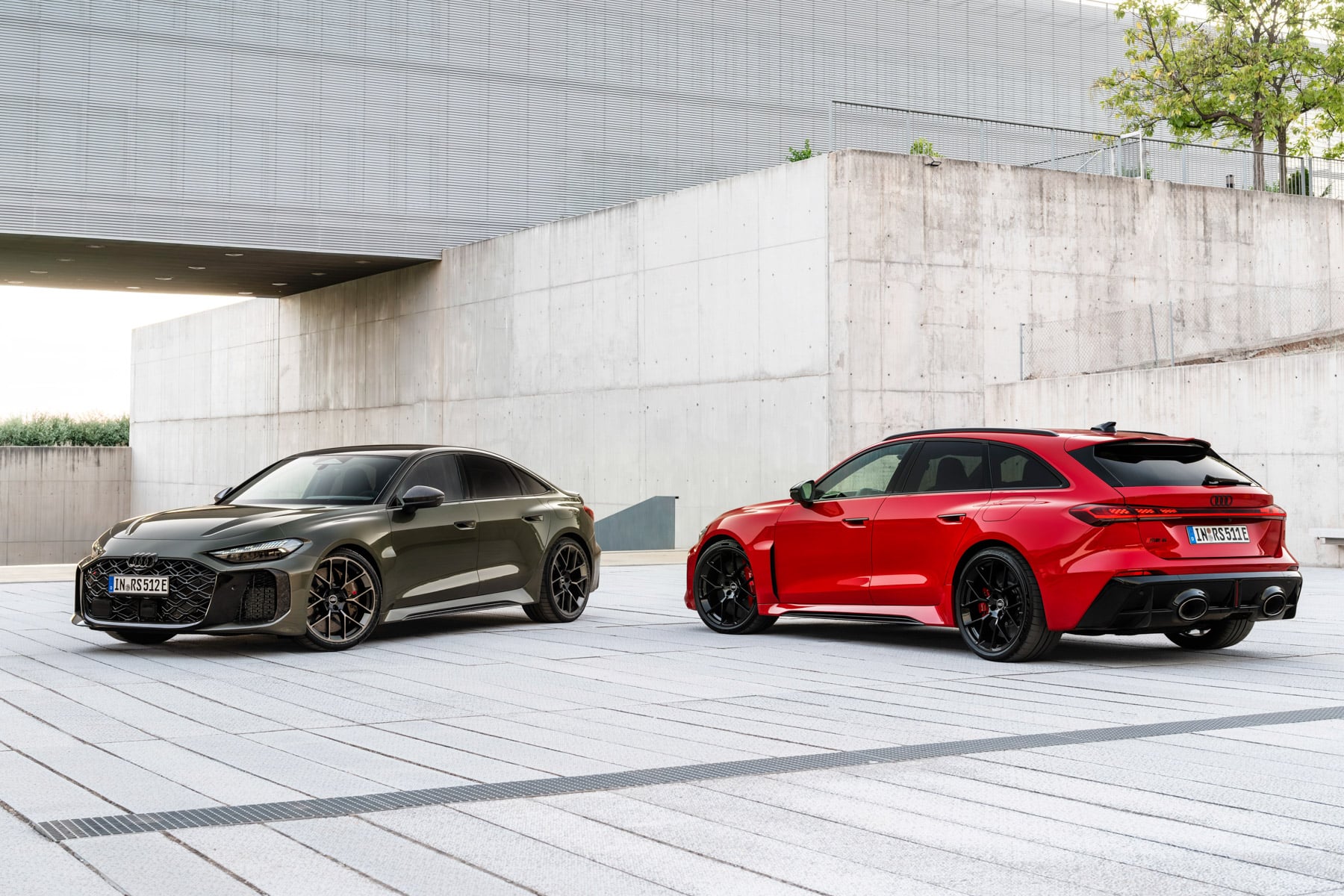
The A5 remains the only model series at Audi to have undergone a temporary renaming under an interim nomenclature. The rule that reserved even-numbered designations for electric models and assigned odd numbers to combustion vehicles was reversed by the board before the launch of the new A6 generation, which had briefly been slated to debut as the A7. However, the former A4 – rebranded as the A5 during that phase – was not renamed again.
Audi is now completing that step. Just as the A5 designation replaced the A4, the former range-topping RS4 now becomes the RS5. The new generation is therefore not only the first RS5 to be offered as an estate, but also the first high-performance plug-in hybrid from Audi Sport.
The drivetrain combines a 2.9-litre V6 biturbo petrol engine, familiar from the RS4 and other Group models, delivering 375 kW, with a 130 kW electric motor. System output totals 470 kW. Audi integrates the electric motor into the hybridised eight-speed transmission.
The V6 has been further developed with a focus on performance and now delivers 44 kW more than before. On paper, however, the larger contribution comes from the electric motor, which adds up to 460 Nm of torque. Together with the combustion engine’s 600 Nm, the system produces a maximum of 825 Nm.
“When taking performance and fuel consumption together, the Audi RS 5 sets benchmarks in its class and offers sportiness and high efficiency without compromise. Furthermore, the electric motor enables even better throttle response and acceleration off the line. It also starts the engine, meaning a 12-volt starter motor is no longer needed,” says Audi.
Audi Sport did not adopt an off-the-shelf electric motor from within the Group or from an external supplier for the RS5. Instead, it developed the e-machine specifically for this model.
The unit is designed as an external rotor motor, in which the rotor rotates around the stationary stator. By contrast, most electric motors used in EVs and plug-in hybrids are internal rotor designs, where the rotor spins inside the stator. The RS5’s external rotor design ‘the two to interact over a wider area for increased torque, better cooling, and higher efficiency overall,’ according to Audi.
With a gross battery capacity of 25.9 kWh (22 kWh net) in a 400-volt system, the RS5 can cover up to 84 kilometres on electric power alone, or up to 87 kilometres in urban driving. However, in this performance-focused plug-in hybrid, the emphasis is likely to lie on hybrid operation, combining electric boost with combustion power rather than purely electric driving. According to Audi, the battery forms ‘the basis for electric propulsion in the RS 5.’
“They contribute to acceleration from 0 to 100 km/h in an impressive 3.6 seconds. The electrical system furthermore plays a key role in torque distribution via electro mechanical torque vectoring,” explains the manufacturer.
This refers to the new rear-axle transmission, which enables electromechanical torque vectoring in combination with all-wheel drive for the first time at Audi. The system variably distributes drive power between the left and right rear wheels to improve cornering dynamics. Up to eight kilowatts of battery power feed into the permanently excited synchronous motor within the torque vectoring unit.
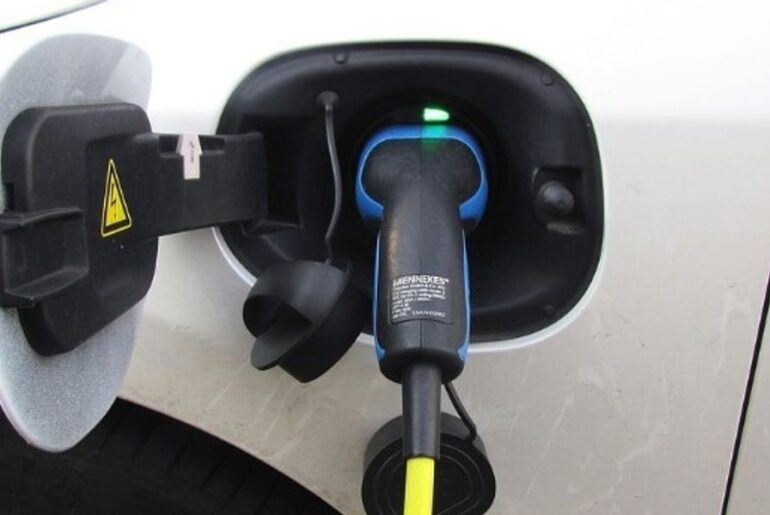
The RS5’s battery is charged using alternating current at up to 11 kW; Audi does not mention a direct current charging option. At 11 kW, the battery can be fully charged in 2.5 hours. A high state of charge is not only important for extended electric driving ranges but also ‘to achieve the characteristics of RS-specific driving modes such as RS sport and RS torque rear.’
“When they are activated, performance comes first. To ensure full electric support is available – for example for torque vectoring – the vehicle holds the state of charge at a high 90 per cent in the modes RS sport and RS torque rear,” says Audi. An intelligent thermal management system keeps the battery within the ideal temperature range—20 degrees Celsius in the two mentioned RS driving modes.
In addition to the performance-optimised drivetrain, the RS5 features an RS sports suspension with two-valve damper technology, a uniquely tuned steering system, and large 20- and 21-inch wheels with specifically adapted tyres, as well as steel and ceramic brake systems. And, of course, the RS5 also boasts the distinctive design typical of Audi RS models—with its new wings, the RS5 is a full nine centimetres wider than the A5.
“The A5 model series’ new pinnacle is our first high-performance plug-in hybrid. Our newly developed quattro drivetrain with Dynamic Torque Control is the world’s first electro mechanical torque vectoring system in a production car,” said Audi CEO Gernot Döllner. “The sophisticated technical interplay between combustion engine and electric power brings performance and efficiency together in a new way at Audi. Customers can experience both peak sportiness and every-day comfort.”
The Audi RS5 is available in Germany as a saloon from €106,200. The RS5 Avant starts at €107,850. The new models, produced in Neckarsulm, Germany, will be available for order in Europe in the first quarter of 2026, with market launch planned for summer 2026.