
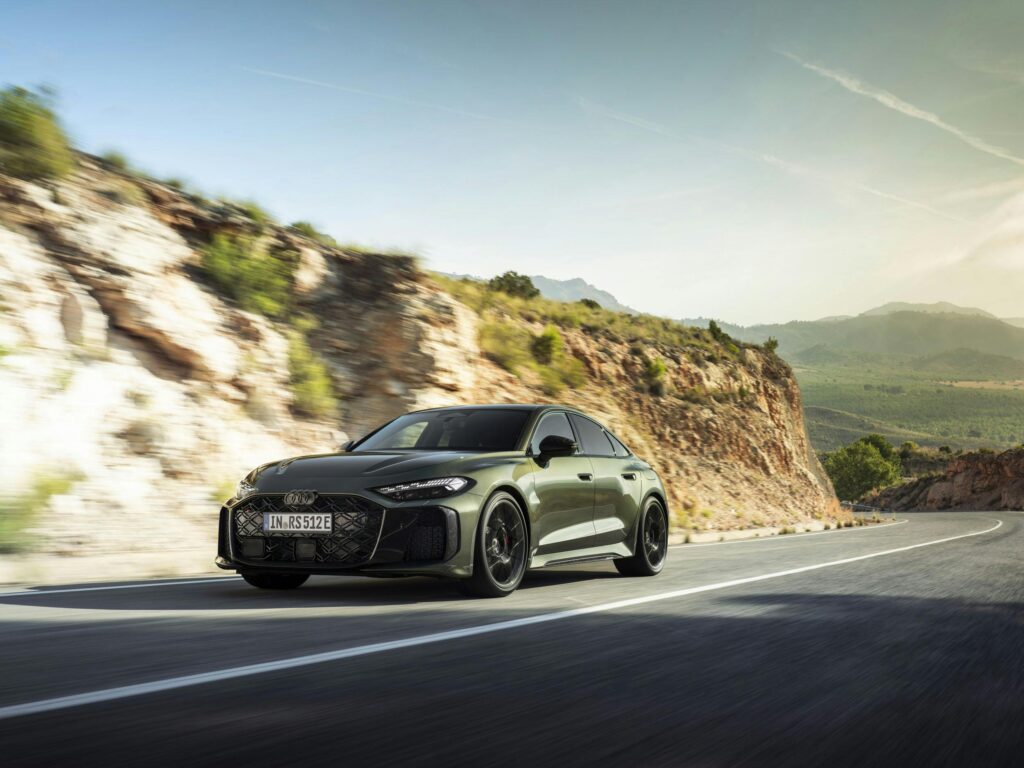
Audi is playing a game of musical nameplates. The A4 and the S4 became the A5 and the S5, respectively, for the 2025 model year, and the new Audi RS5 replaces the outgoing RS4. It’s a totally different car than its predecessor, even beyond the new name: It keeps Quattro all-wheel drive, but it gets a plug-in hybrid drivetrain that’s built around a V-6, and it’s now available as a sedan. Better yet, it’s headed to our market.
While the RS5 nameplate has been part of Audi’s American range for years, the RS4 hasn’t been sold here since the B7-generation model retired after the 2008 model year. Its successors were exclusively offered as wagons, and Audi chose not to ship them across the pond, so the brand’s hottest compact sedan was the mid-range S4. Audi hopes to take on the BMW M3 and the Mercedes-AMG C63 with the new RS5.
Power comes from an evolution of the last-generation RS5’s twin-turbocharged, 2.9-liter V-6 that’s linked to a plug-in hybrid system. It’s the RS sub-brand’s first plug-in hybrid model, though it likely won’t be the last, and Audi stresses that electrification allowed its engineers to unlock more performance. The system consists of an electric motor integrated into the eight-speed automatic transmission and linked to a 25.9-kilowatt-hour lithium-ion battery pack. The total output checks in at 630 horsepower and 608 pound-feet of torque, up from 464 and 442, respectively, in the most powerful version of the last-generation RS4.
 Audi
Audi
 Audi
Audi
 Audi
Audi
 Audi
Audi
 Audi
Audi
The numbers only tell part of the story; jaw-dropping figures are par for the course when we’re talking about a performance-oriented plug-in hybrid system. Electrification adds weight, too, and it sounds like there’s plenty of it in the RS5. Audi hasn’t published how much the model weighs, but it quotes a zero-to-62-mph time of 3.6 seconds. That’s about a tenth of a second less than the far less powerful last-gen RS4.
Of course, there’s more to the RS formula than straight-line speed. Enthusiasts associate the “RS” logo with agile handling, and the RS5 shouldn’t disappoint on a twisty road. Audi added a limited-slip center differential that can send up to 85% of the available torque to the rear wheels and, for the first time in a production car, an electro-mechanical torque vectoring system on the rear axle. This technology uses an electric motor, overdrive gears, and a conventional differential to quickly shift torque between the rear wheels using the driveshafts. The outer wheel gets more torque when the car exits a corner, for example.
Steel brakes, an RS-specific suspension system, and RS-tuned steering come standard, and Audi offers a carbon-ceramic braking system at an extra cost. The long list of tech features packed into the RS5 allows it to offer several personalities: Hit the “Boost” button on the steering wheel, and the hybrid system gives it all for 10 seconds and opens up the exhaust valves. At the other end of the spectrum, the EV mode shuts off the twin-turbo V-6 and lets the RS5 travel on battery power for up to 54 miles. There are several other driving profiles in between, including RS Torque Rear Mode, Dynamic Mode, and RS Sport Mode.
 Audi
Audi
 Audi
Audi
 Audi
Audi
 Audi
Audi
 Audi
Audi
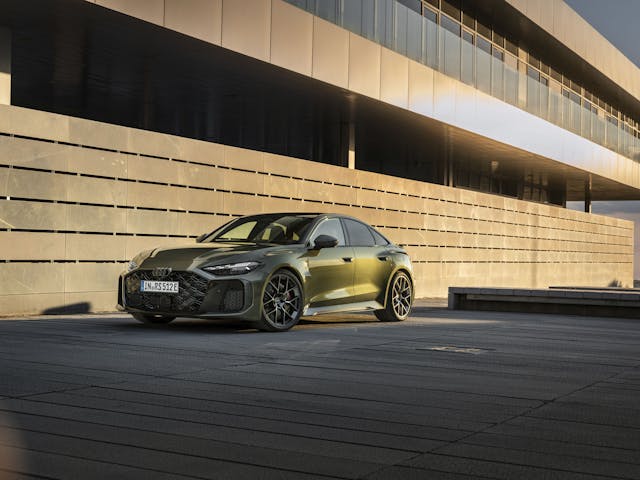
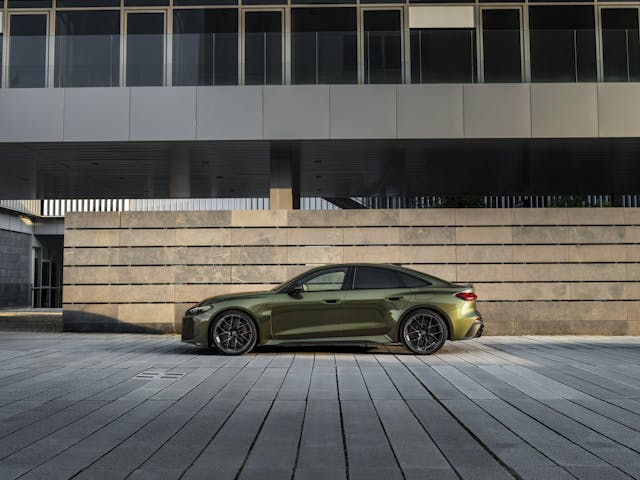
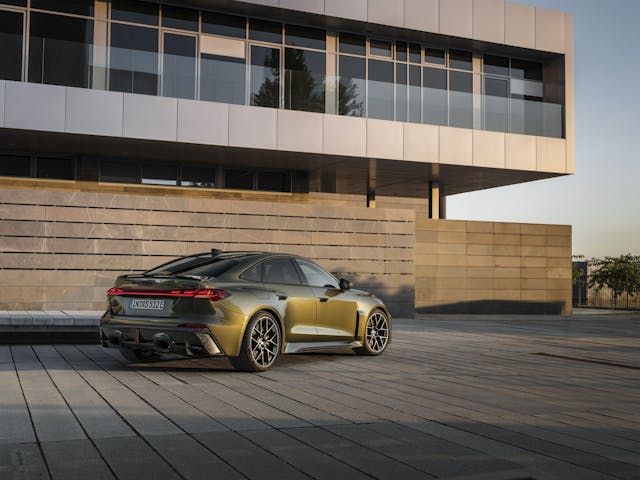
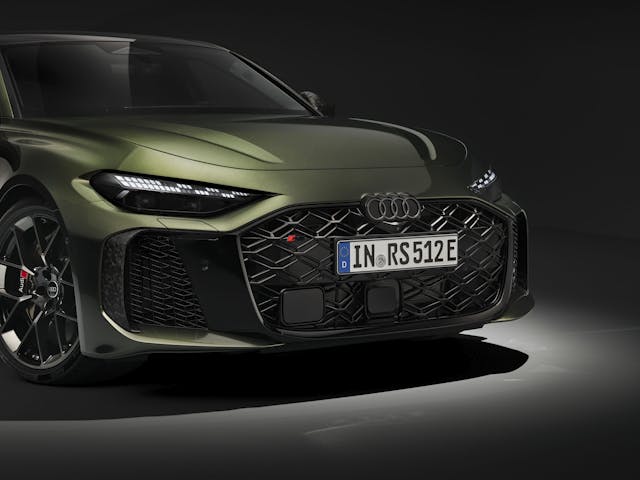
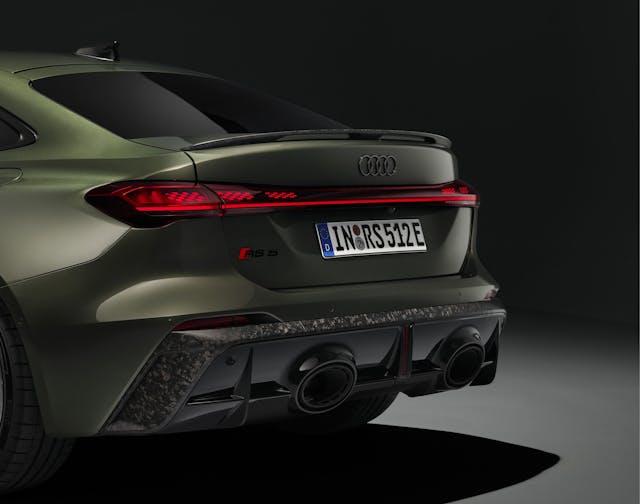
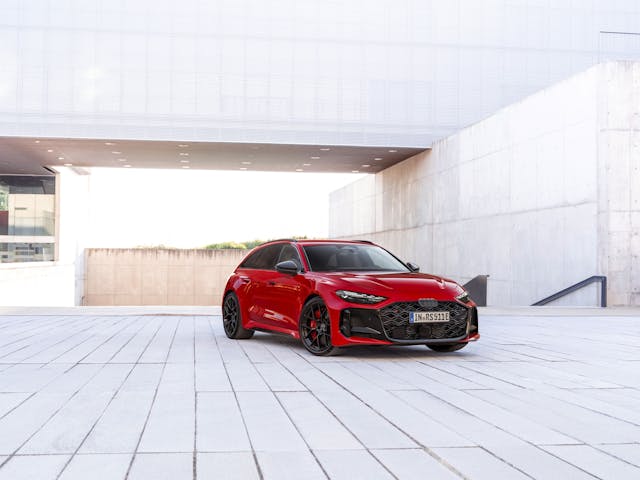
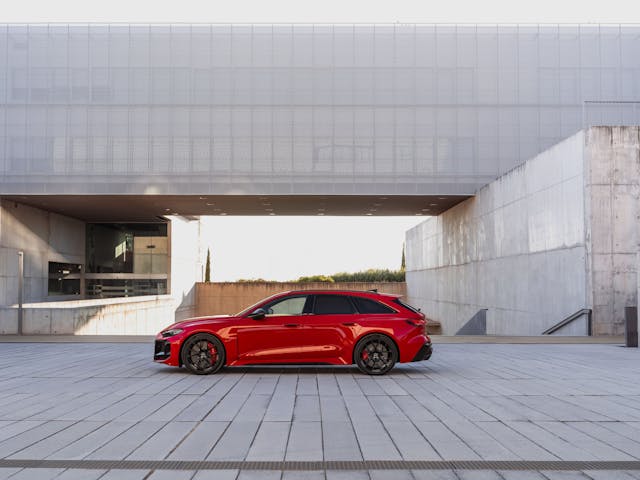
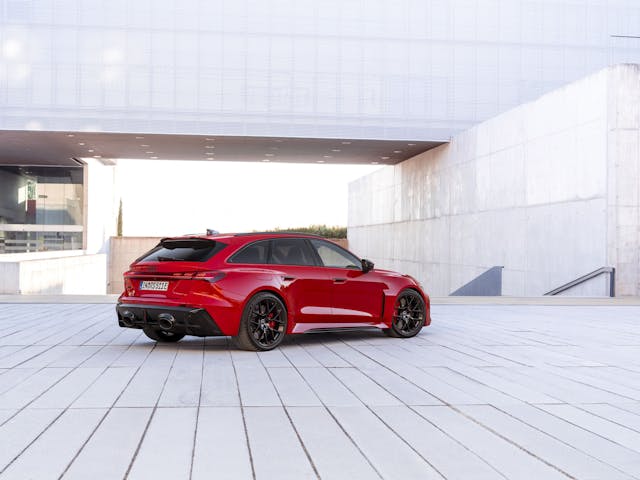
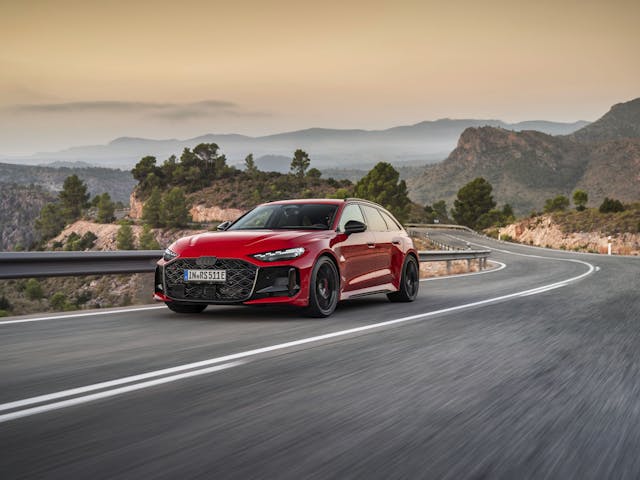
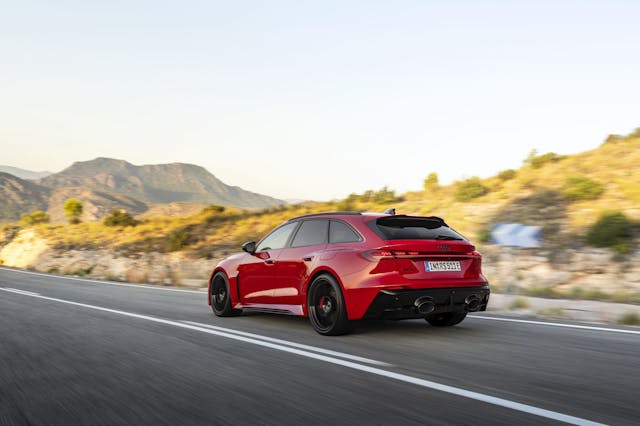
Visually, the RS5 is characterized by more muscular-looking styling than its predecessor. Up front, there’s a bigger grille flanked by upsized air intakes as well as RS-specific headlights. The wheel arches are flared, which is a tribute to the Quattro that dominated the rally scene during the 1980s, and the back end gets a massive diffuser with a pair of oval exhaust outlets. You can’t mistake the new Audi RS5 for a standard A5.
The range will include sedan and wagon variants. Audi told Hagerty that it hasn’t decided if we’ll see the Avant wagon here.
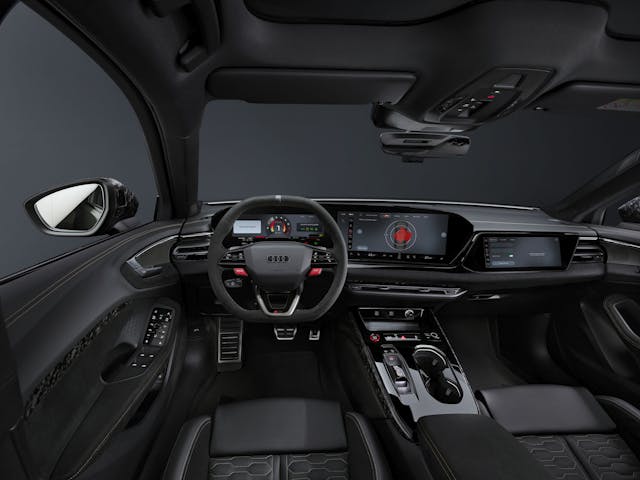
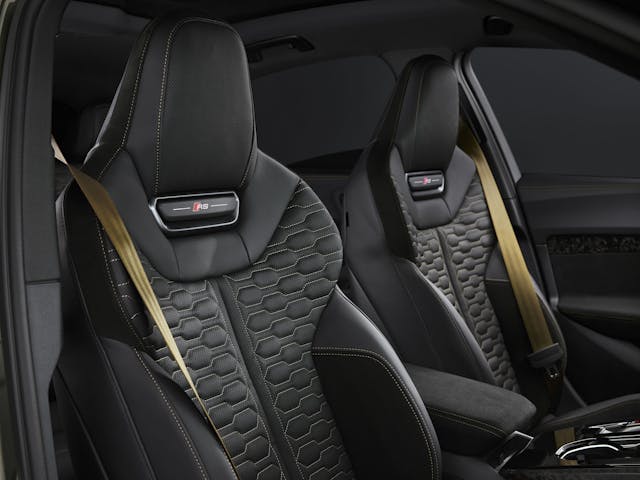
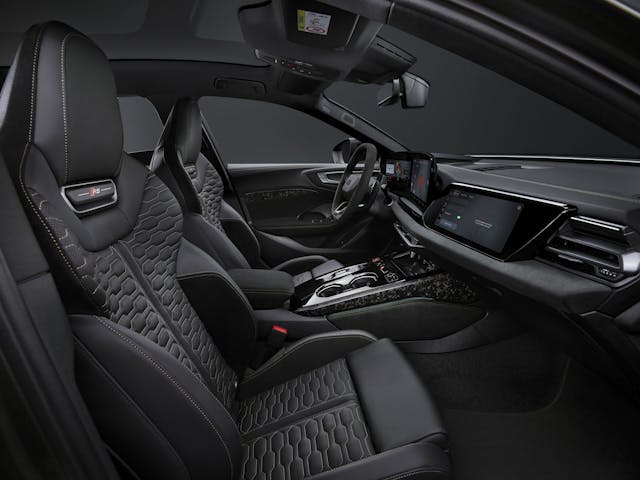
Both body styles are pretty much identical when you’re sitting behind the steering wheel. Screens take up a lot of real estate on the dashboard: There’s an 11.9-inch digital instrument cluster called Virtual Cockpit in Audi-speak, a 14.5-inch touchscreen for the infotainment system, and a 10.9-inch display for the front passenger. The front passengers travel on well-bolstered heated sport seats with a massage function. In spite of the power, the RS5 remains firmly pegged in the luxury segment; It’s not a stripped-out track car.
 Audi
Audi
 Audi
Audi
 Audi
Audi
Made in Germany, the 2026 Audi RS5 will go on sale in select European markets during the first quarter of 2026, and deliveries will begin shortly after. Details about the American-market model, such as pricing and availability, haven’t been released. For context, the 2026 S5 starts at $64,595 including destination.
The list of options includes the Audi Sport Package, which adds an RS Sport exhaust system, a 177-mph top speed, 21-inch two-tone wheels, even wider front air intakes (shown on the sedan above; the Avant wagon wears the standard air intakes), and Serpentine Green stitching throughout the cabin, among several other features. The package also gives buyers access to additional customization options.
Audi’s decision to pelt its compact sport sedan into plug-in hybrid territory puts BMW in an interesting position. AMG’s C63 is a hybrid as well, though it sounds like big changes are on the horizon for it. That leaves the M3 as the only non-electrified entry into the segment. It won’t stay that way for long: The next-generation model due out by the end of the decade is expected to adopt some degree of electrification.