February 18, 2026
By Nehal Malik
Tesla is officially in the clear to keep selling cars in its biggest market. According to a new Bloomberg report, the company has successfully avoided a potential 30-day sales suspension in California after the state’s Department of Motor Vehicles (DMV) confirmed that the automaker has taken “corrective action” regarding the way it markets its driver-assistance technology.
The controversy centered on allegations that Tesla was exaggerating the capabilities of its systems, specifically with its Autopilot and Full Self-Driving (FSD) branding. California regulators had been prepared to suspend Tesla’s sales license following a judge’s ruling in December, but the state gave the company a window to come into compliance. Late Tuesday, the DMV announced that Tesla has modified its language to clarify that these features are not fully autonomous and require constant supervision.
The End of an Era for Autopilot
To satisfy regulators, Tesla has essentially retired the “Autopilot” name in California. This isn’t entirely a surprise, as Tesla discontinued Autopilot for new vehicle orders in the United States and Canada just last month. New deliveries now only include Traffic Aware Cruise Control (TACC) as the standard offering.
For years, every Tesla came with the Basic Autopilot suite, which included TACC and Autosteer — the feature that keeps the car centered in its lane. Now, if you want those advanced lane-keeping abilities, you have to look toward a paid FSD subscription. The company also retired its iconic Autopilot steering wheel symbol last fall, moving toward a more unified look across its autonomy suite.
Supervised vs. Unsupervised
A big part of the “corrective action” involves how Tesla sells its top-tier software. The company has increasingly shifted to using the term Full Self-Driving (Supervised) to describe its current tech. By adding “Supervised” directly into the name, Tesla is making it much harder for someone to claim they thought the car could drive itself while they took a nap in the back seat.
This branding shift is a bridge to the company’s ultimate goal: a truly unsupervised version of Full Self-Driving. While the current tech still needs a human safety net, Tesla is betting everything on a future where the steering wheel becomes optional. For now, the focus is on keeping the legal peace in California, which is the leading state for EV adoption in the U.S. and a massive piece of Tesla’s revenue puzzle.
It is a bit of a bummer to see the classic Autopilot name go, as it was basically synonymous with the brand for a decade. But if it means the company can keep the lights on and the factory lines moving in Fremont, it’s a trade-off they had to make.
Ordering a New Tesla?
Use our referral code and get 3 months free of FSD or $1,000 off your new Tesla.
February 17, 2026
By Nehal Malik
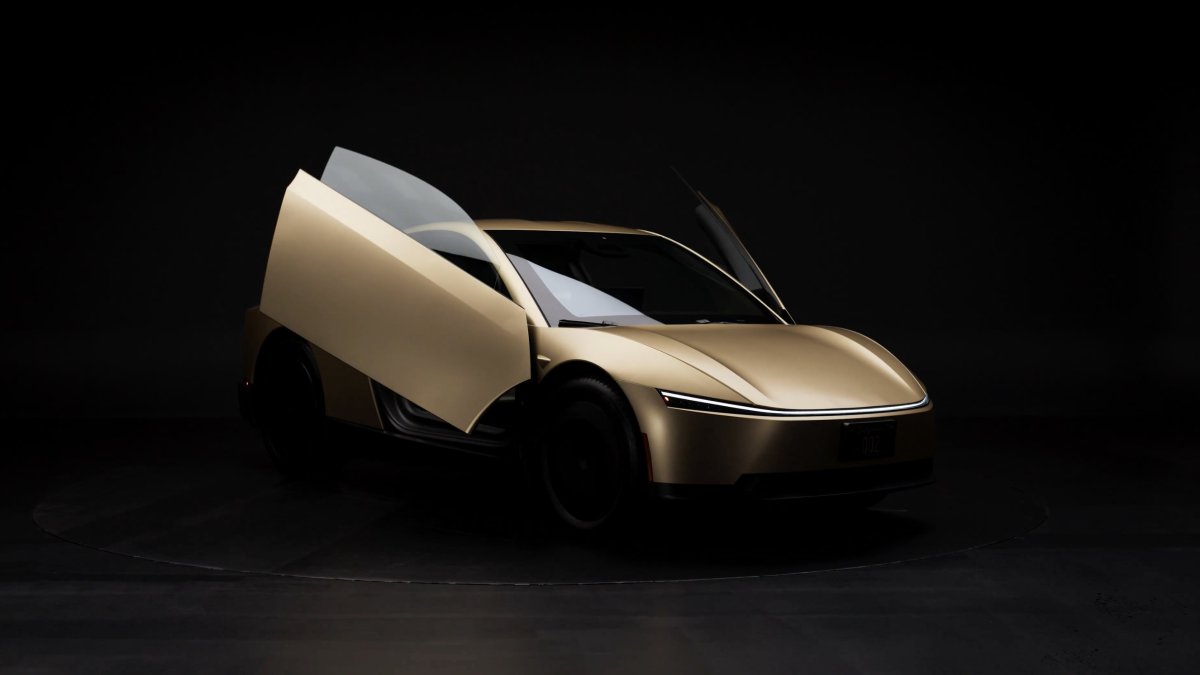
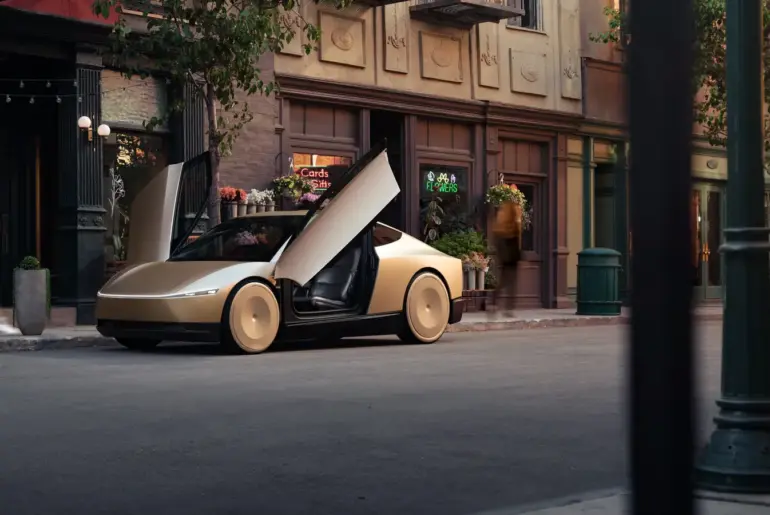
Tesla is officially one step closer to its autonomous future as the first Cybercab has rolled off the production line at Gigafactory Texas. The company shared the milestone on X today, posting a photo of the vehicle at the end of the manufacturing line with the caption: “First Cybercab off the production line at Giga Texas”.
First Cybercab off the production line at Giga Texas pic.twitter.com/kY8vCqtrCA
— Tesla (@Tesla) February 17, 2026
This achievement marks a major transition for the purpose-built robotaxi, moving it from the trial phase into initial production. Tesla is now expected to slowly ramp up manufacturing as it prepares for volume production, which is currently slated to begin in April.
The Backbone of the Robotaxi Network
The Cybercab is Tesla’s highly anticipated two-seat, all-electric vehicle designed specifically to anchor the company’s Robotaxi network, which recently started offering fully unsupervised rides in Austin. Unlike the rest of Tesla’s lineup, this vehicle is built for high-utilization ride-hailing rather than traditional personal ownership.
While owners will eventually be able to add their own Tesla vehicles to the Robotaxi fleet, the Cybercab will act as the core platform for scaling the service quickly. Because it is optimized for autonomy, Tesla engineers have previously noted that the vehicle will have roughly half as many parts as a Model 3, which should help keep costs low and production fast.
Real-World Testing and Validation
Before reaching the production line, the Cybercab has been undergoing extensive real-world validation testing. Prototypes have been spotted driving on public streets in several states, including Texas, California, and New York. Tesla even pushed the vehicle through harsh winter testing in Buffalo and Alaska to ensure its camera-based system can handle snow, ice, and freezing temperatures.
One interesting detail about these test units is that they currently feature traditional driving controls. However, the final version rolling off the production line is expected to ship without a steering wheel, pedals, or even side mirrors. Instead, the vehicle will rely entirely on Tesla’s Vision-based Full Self-Driving system.
Unlike other Tesla vehicles, the Cybercab is equipped with washers for all cameras (excluding the interior cabin camera) to ensure unhindered FSD functionality. The list includes the front bumper camera, repeater and B-pillar cameras, the rear camera, and the front cameras underneath the windshield.
That said, Tesla has kept a “Plan B” on the table. The company has confirmed it is willing to ship the Cybercab with a steering wheel and pedals if required by regulators to get the fleet on the road at scale. For now, the focus remains on the innovative “unboxed” manufacturing process at Giga Texas as April approaches.
February 17, 2026
By Karan Singh
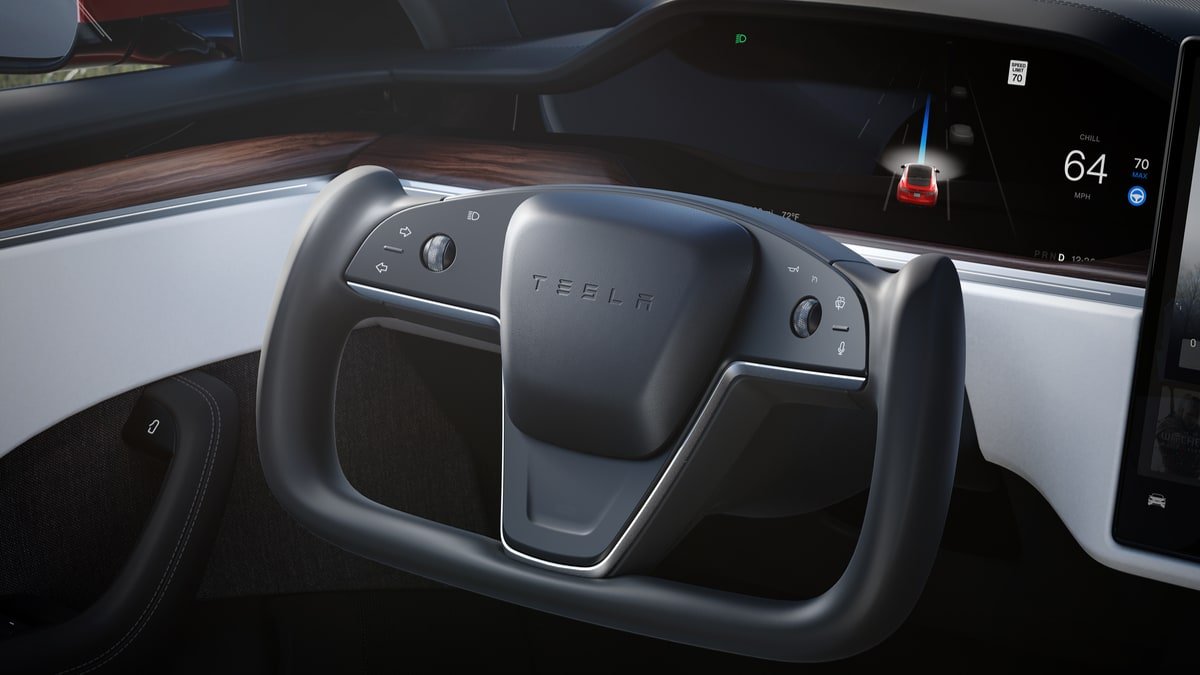
China is taking a heavy-handed approach to automotive design, both on the exterior and interior of vehicles. Now, the latest set of changes from the country might just spell the end for the ultra-minimalist, screen-dominated cabins that have defined the modern EV era.
In a push for increased safety, regulators are stepping in to mandate the return of physical buttons and effectively outlaw the yoke-style steering wheel.
Turn Signal, Gear Selector and More
According to newly drafted regulations from China’s Ministry of Industry and Information Technology (MIIT), automakers like Tesla have taken the touch-screen focus too far. Starting in 2027, essential safety and driving functions must be controlled by physical buttons or switches that are easily accessible by drivers. The list currently includes gear selectors, turn signals, hazard lights, and emergency calling (eCall) features.
These are not just loose guidelines either. The mandate requires these essential controls to have a minimum surface area of 10mm by 10mm (⅜ inch x ⅜ inch) and provide clear tactile or auditory feedback to the driver when used.
This effectively bans burying critical functions in touchscreen submenus or relying on flat, haptic-capacitive panels that provide no physical feedback. It is a challenge to the interior design philosophy that has been popularized by Tesla, and heavily adopted by many other automakers, as well as Chinese giants like BYD and Xiaomi.
The Physics of the Yoke Ban
While the return of physical gear selectors and turn signals will please many drivers, the most dramatic casualty of these new regulations is the yoke steering wheel.
The Chinese government isn’t banning these on pure aesthetics, but instead, as a matter of physics and crash test dynamics. The new safety standard (GB 11557-202X) strictly updates the rules for protecting drivers from steering mechanism injuries. To pass compliance, a steering wheel must now undergo testing at 10 specific points around its rim.
For a yoke, the top half of the rim simply does not exist. This missing physical structure makes it impossible to conduct the mandated upper-rim impact tests, automatically resulting in a failure to comply. Regulators highlighted severe safety risks, beginning with the fact that a traditional round wheel acts as a large buffer zone.
That means that without a full upper rim, a driver’s body can slip past the wheel during a collision and strike the dashboard. Regulators also noted that the yoke’s irregular shape and support structure create unpredictable, potentially dangerous airbag deployments.
Global Ripple Effect
Because China is the world’s largest automotive market, these localized regulations will undoubtedly force a global design reset. Automakers simply cannot afford to design and manufacture entirely separate China-only dashboard architectures at scale.
For Tesla, which arguably started both the minimalist trend and the yoke trend, the impact of the ban might be surprisingly muted. Tesla already brought back turn signal stalks, and we could see a return of the gear stalk (although the backup PRNDL buttons (near the dome lights on the Model 3/Y and near the phone chargers in the S/X) may comply with regulations).
With the Model S and Model X production ending, the original yoke is already headed for retirement. As for the Cybertruck, its squircle steering wheel should theoretically pass the new Chinese standards. Unlike a yoke, it features a fully enclosed, continuous rim that provides the necessary physical impact points for crash testing.
While this regulation is still in the draft phase, we expect that auto manufacturers, including Tesla, are likely already beginning preparation for the changes to come online within the next couple of years.
China recently banned electric-only door handles, which will affect the design of the Model 3 and Model Y.