1. E-bikes are only for seniors and lazy people
When someone says an e-bike is just for retirees, I usually reply, “By the time I’m retired, I might not even have the strength to fully use what it can do.”
Yes, the motor assists your ride and brings seniors or less sporty riders back into the saddle. But it only works if you pedal, as it doesn’t go on its own.
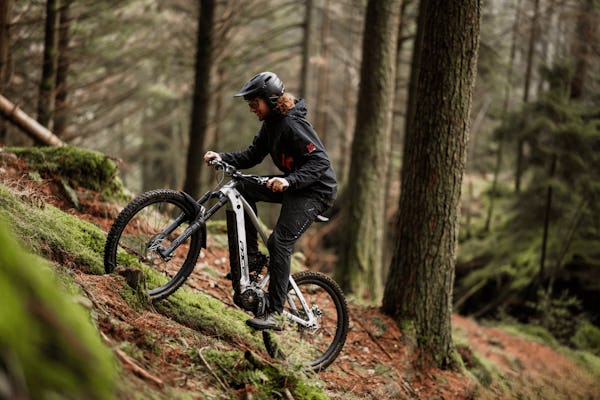
The level of assistance always depends on the rider. From my own experience, I ride more kilometres on an e-bike because I’m not worried about “running out of steam”. The motor motivates me, especially on climbs, because uphill riding actually becomes fun. I’ve also measured it; when I want to, I can keep my heart rate high on an e-bike and turn the ride into a very intense workout.
2. I won’t buy an expensive e-bike because I won’t have time to use it
Time is a scarce commodity these days. Very few people of working age can regularly break away from work and family for long rides. Realistically, how much time do you have once you change and head out? An hour? Two?
That’s exactly where an e-bike makes sense. In the same amount of time, you can do more. Instead of one climb and one descent, you can manage two or three. You stop obsessing about where exactly to go and start exploring new routes instead. Personally, I’ve never enjoyed cycling as much as I do now on an e-bike.
3. All e-bikes are basically the same
They’re not. The differences are huge. Motors vary in power, batteries in capacity – with the battery capacity having a major impact on range. Safety features differ as well.
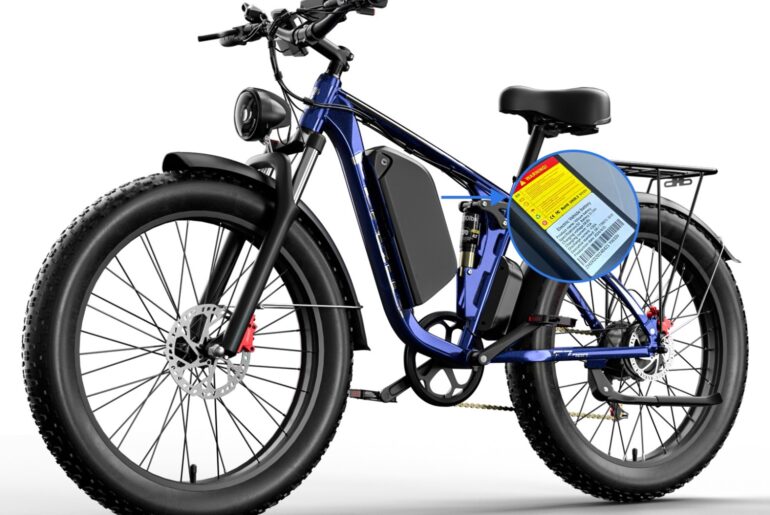
Batteries from reputable manufacturers include protective mechanisms that minimise the risk of fire. With drive systems from established brands, you can also fine-tune riding modes and navigation via a mobile app. The app enables wireless updates for the motor, battery, and other components, ensuring the bike always performs at its best.
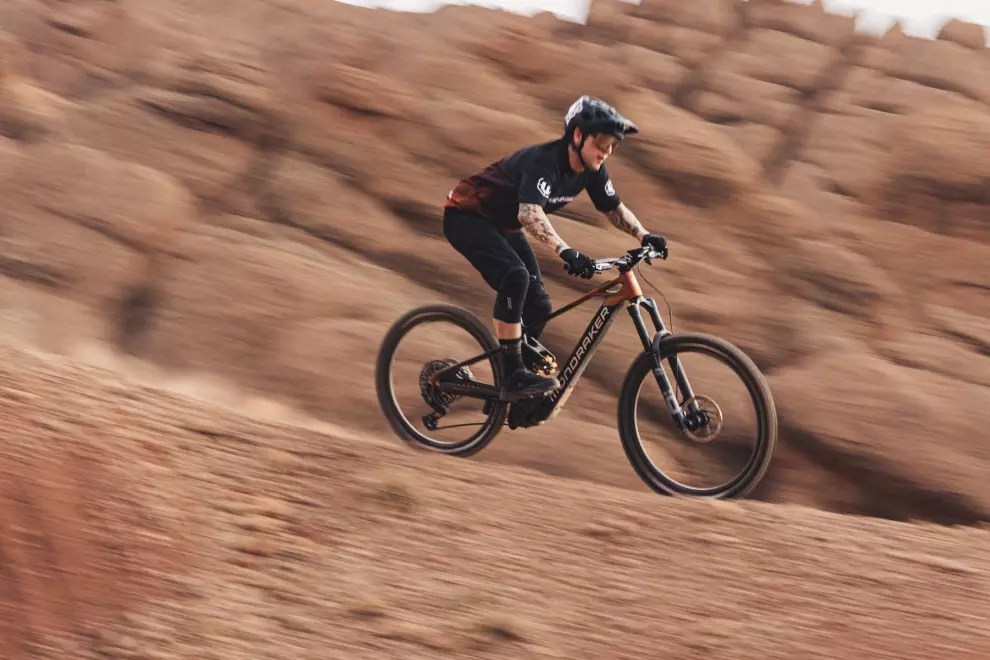 Gaspi e-biking in the Moroccan dunes.
A strong service network is equally important. If something breaks, an authorised service centre will typically secure a replacement part within three days, so you don’t lose weeks or months of riding time.
4. I won’t buy an expensive e-bike because it’ll just get stolen
Modern e-bikes come with multi-level theft protection. Through a mobile app connected to the bike, you can lock both the motor and the battery. Once switched off, the motor locks automatically and can only be reactivated after pairing with the app.
The app also stores all bike details, including the serial number, which can be used for identification in case of theft or when dealing with police or insurance. If you equip your e-bike with a GPS module, you can track it even if it’s stolen. And there’s now an option to mark the bike as stolen in the app, effectively making it unsellable.
5. An e-bike is too heavy for me
Yes, an e-bike is heavier because it includes a motor and battery. But thanks to them, you can climb hills that would otherwise be impossible without assistance.
A common concern is that a heavier bike will be hard to push uphill or up the stairs. What many people don’t realise is that there’s a walk assist button on the handlebars.
Press it while walking, and the motor will help move the bike forward under its own power. The same function is useful when manoeuvring the bike, for example, when lifting it onto the rear wheel to get it into an elevator. For added safety during braking, riders can also use ABS, which works similarly to car or motorcycle systems by preventing wheel lock-up and reducing the risk of critical situations.
6. I’ll buy an e-bike with a weaker motor so I can “stay a real cyclist”
Many cyclists think this way when switching to an e-bike. Instead of choosing a powerful 85 Nm motor, they opt for a weaker 50 Nm version, and end up somewhere in between a regular bike and an e-bike.
In my view, a weaker motor is a compromise that doesn’t make much sense. Even a strong motor can be set to lower assistance levels, but when you need more power, it’s there. Experience also shows that a stronger motor easily compensates for any increase in weight.
I see it again and again: people buy a weaker motor and, within their first season, start eyeing a more powerful setup. That’s why I usually tell people to go straight for the stronger option.