The S-Works 3.1 motor in the Specialized S-Works Turbo Levo 4 gets a power update and aims to impress not only with its trail performance, but above all with its strong ecosystem. But how does the S-Works motor stack up against tough competition? And what exactly does the new update bring to the table?
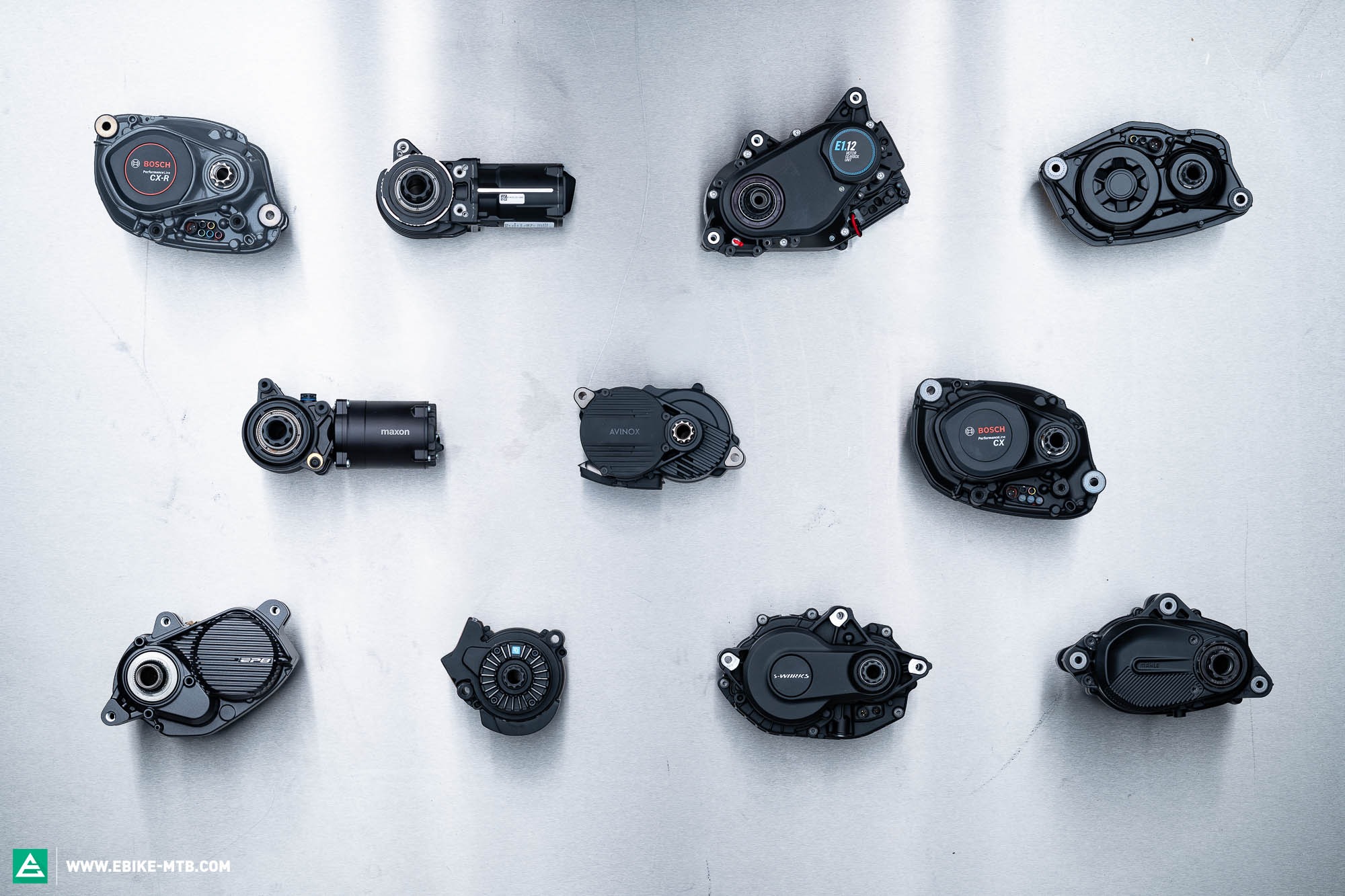
This article is part of our big 2026 motor group test. Click here to read about all 11 systems we tested, discover the latest trends and dive into detailed results from both the lab and real-world testing.
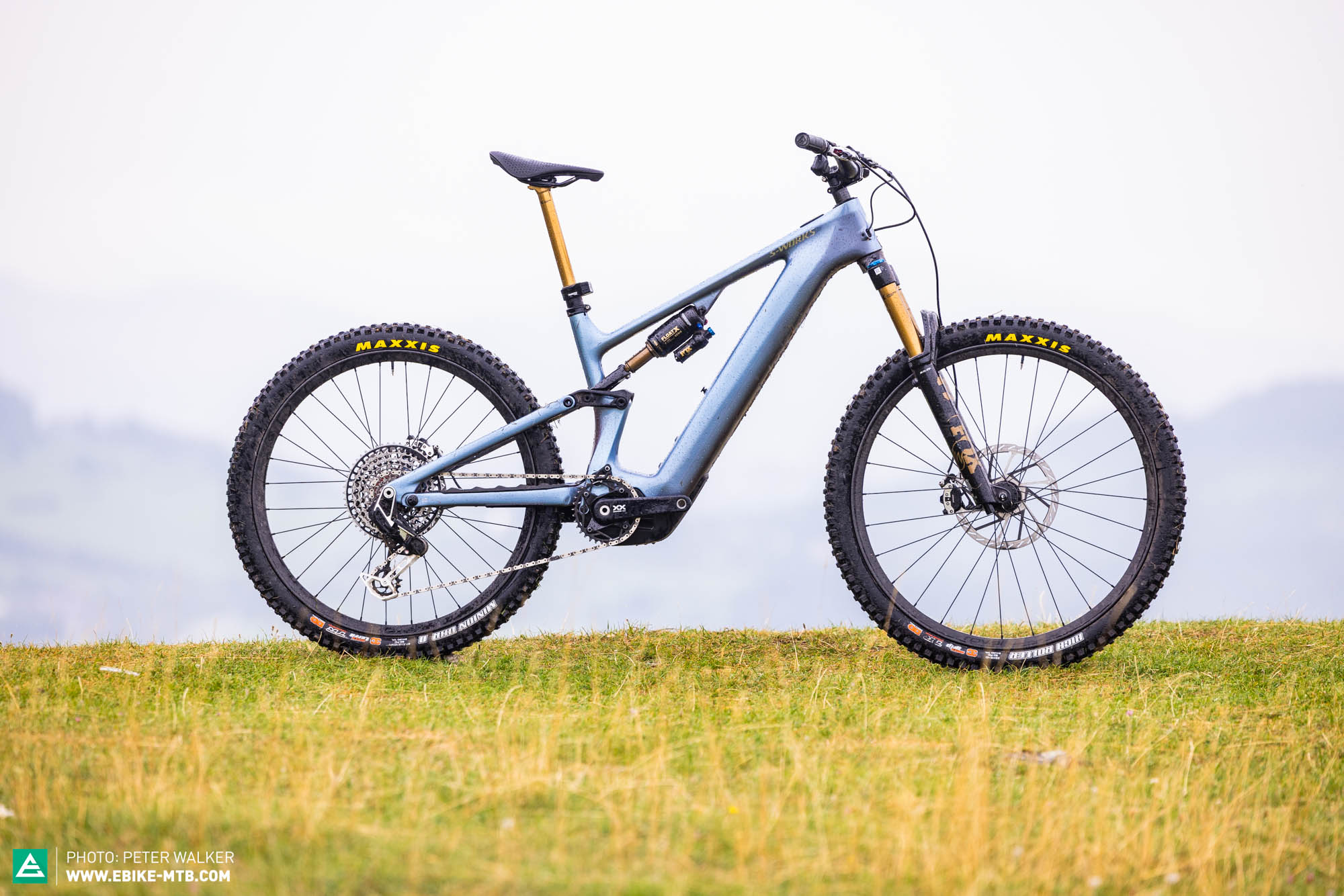
 S-Works 3.1 | 111 Nm | 850 W | 3.09 kg | Manufacturer’s website
Specialized appear to live by one rule: if you’re rolling out a new bike, you’d better bring a new motor, too. With the launch of the new Turbo Levo 4, the Californian manufacturer has also presented their latest drive unit: the S-Works 3.1. As with its predecessor, the 2.2 motor, the new system was developed in close collaboration with Brose. One major change: the troublesome belt from the previous generation has been dropped, which should make the system more reliable overall.
For the first time, the motor is available in two versions: the Specialized 3.1 and the S-Works 3.1. Mechanically, both versions are identical and differ only in terms of software. And with the latest software update, Specialized are taking things up a notch, delivering more peak power and a more refined ride feel on both versions. But is that enough to set a new benchmark? Read on to find out how the motor from the American bike colossus stacks up against the top dogs of the e-bike motor world.
The S-Works 3.1 motor in detail – Watt ever it takes
What changed with the power update?
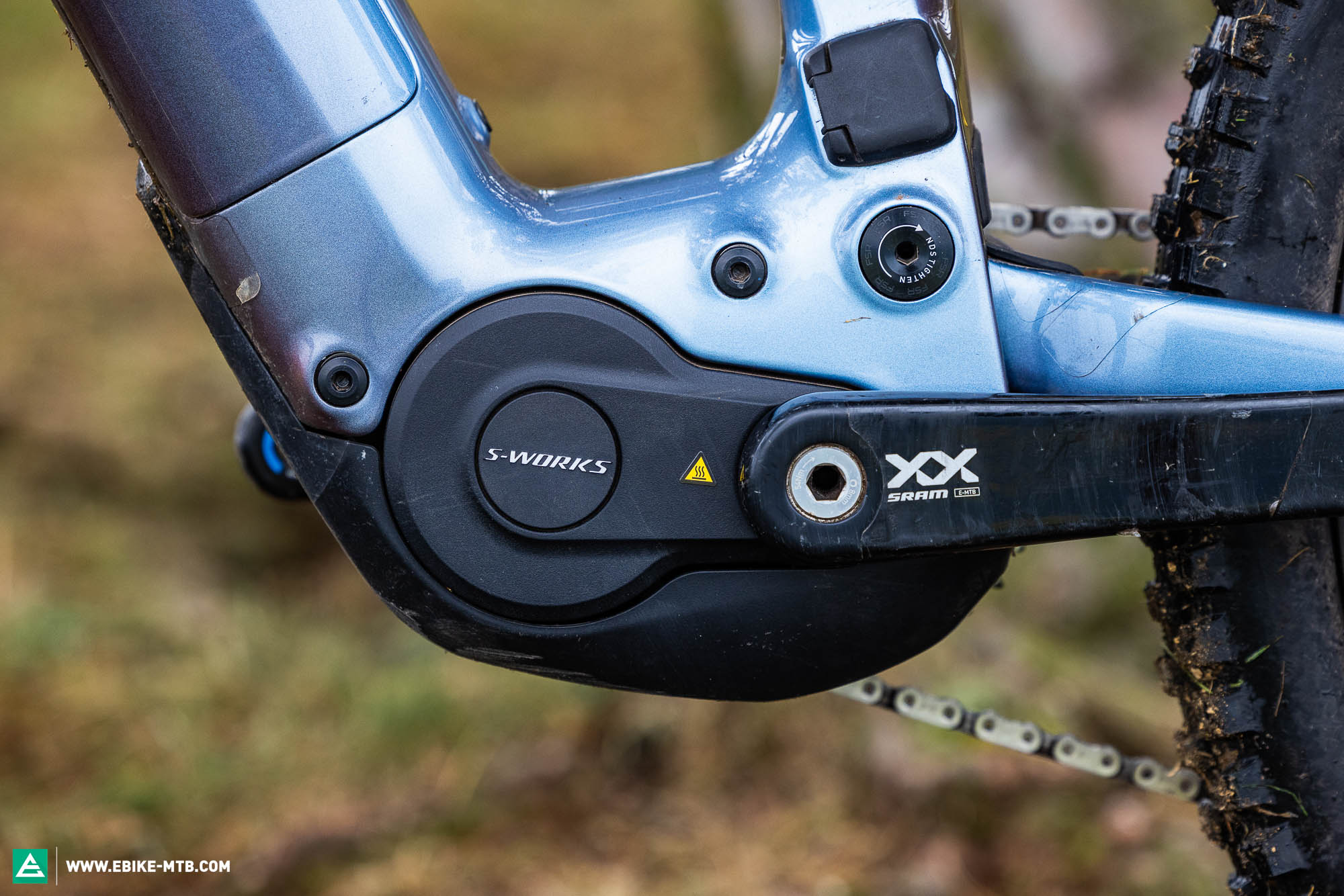
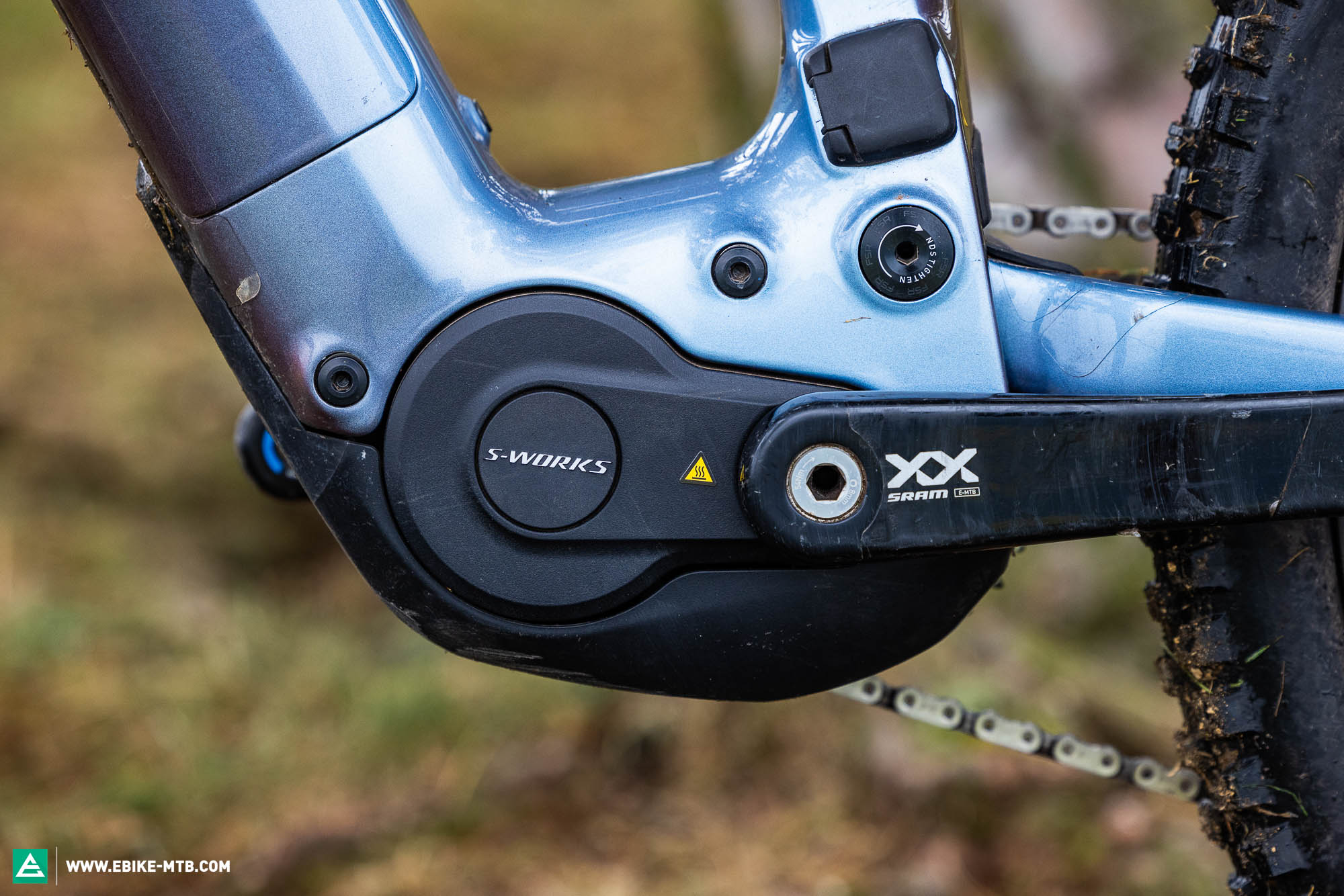
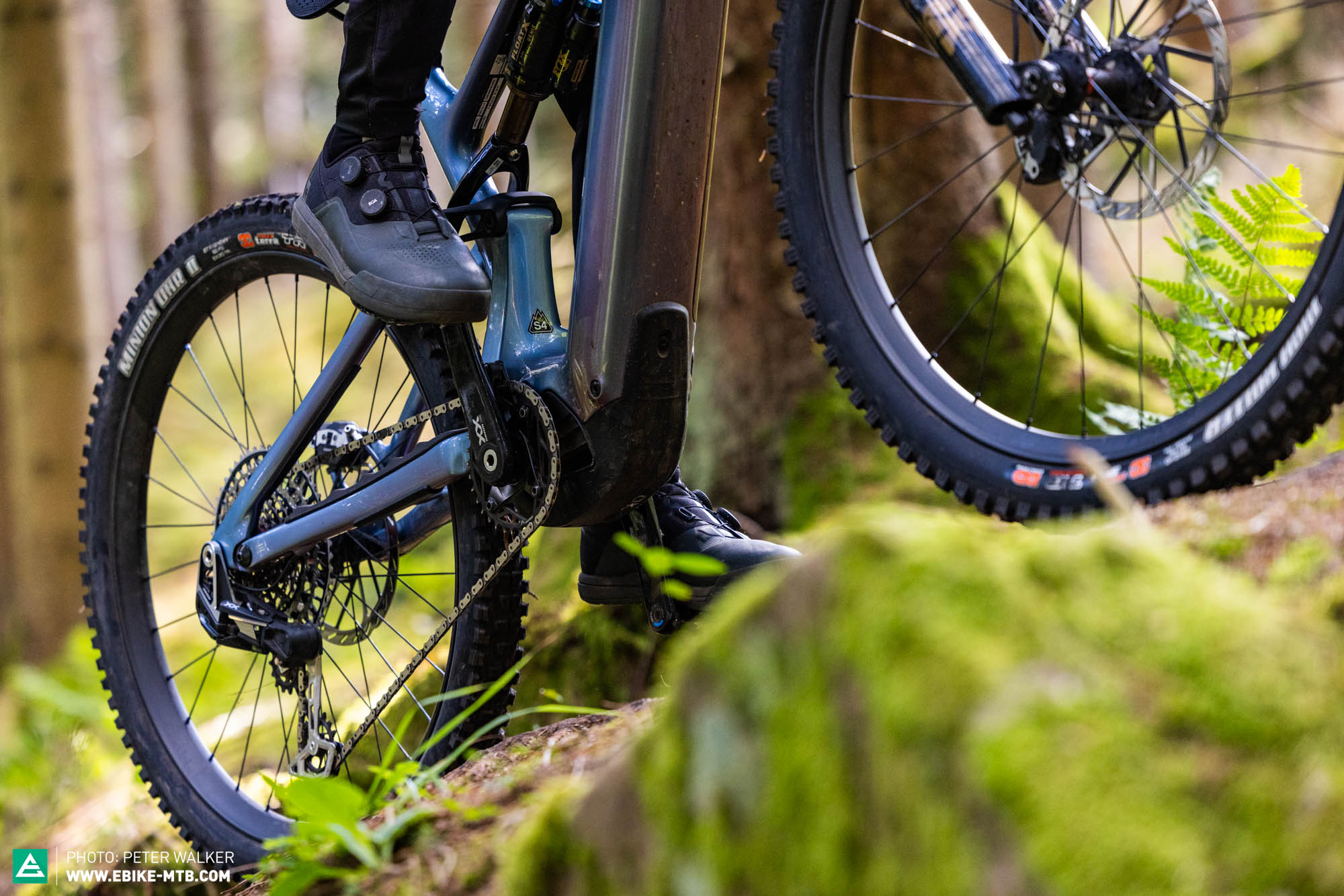
Unsurprisingly, the S-Works 3.1 motor specced exclusively on the new Specialized S-Works Turbo Levo 4. The drive unit adds serious volume to the bottom bracket area, making it visibly larger than a Bosch CX, Avinox M1, or even the compact MAHLE M40. That said, it’s still far more compact and seamlessly integrated than the hefty Pinion MGU.
Following the recent power update, the S-Works 3.1 delivers the second-highest output in the entire test field, just behind the Avinox M1. Peak power has jumped from 720 W to 850 W, while maximum torque remains unchanged at 111 Nm. The lower-spec Specialized 3.1 motor also benefits from the update, with power increasing from 666 W to 810 W and torque values climbing slightly from 101 Nm to 105 Nm.
But the update isn’t just about brute force. Specialized have also fine-tuned the motor’s behaviour. Alongside the increased output, the support levels within the so-called Dynamic Micro Modes have been recalibrated. The motor now fades out more smoothly when you stop pedalling, ensuring a more natural ride feel. They’ve also reworked the motor speed signal filter to reduce vibrations and high-frequency noises at cadences above 75 rpm. On top of that, they’ve improved the responsiveness of the motor during overrun, making it feel more refined and reactive in all situations.
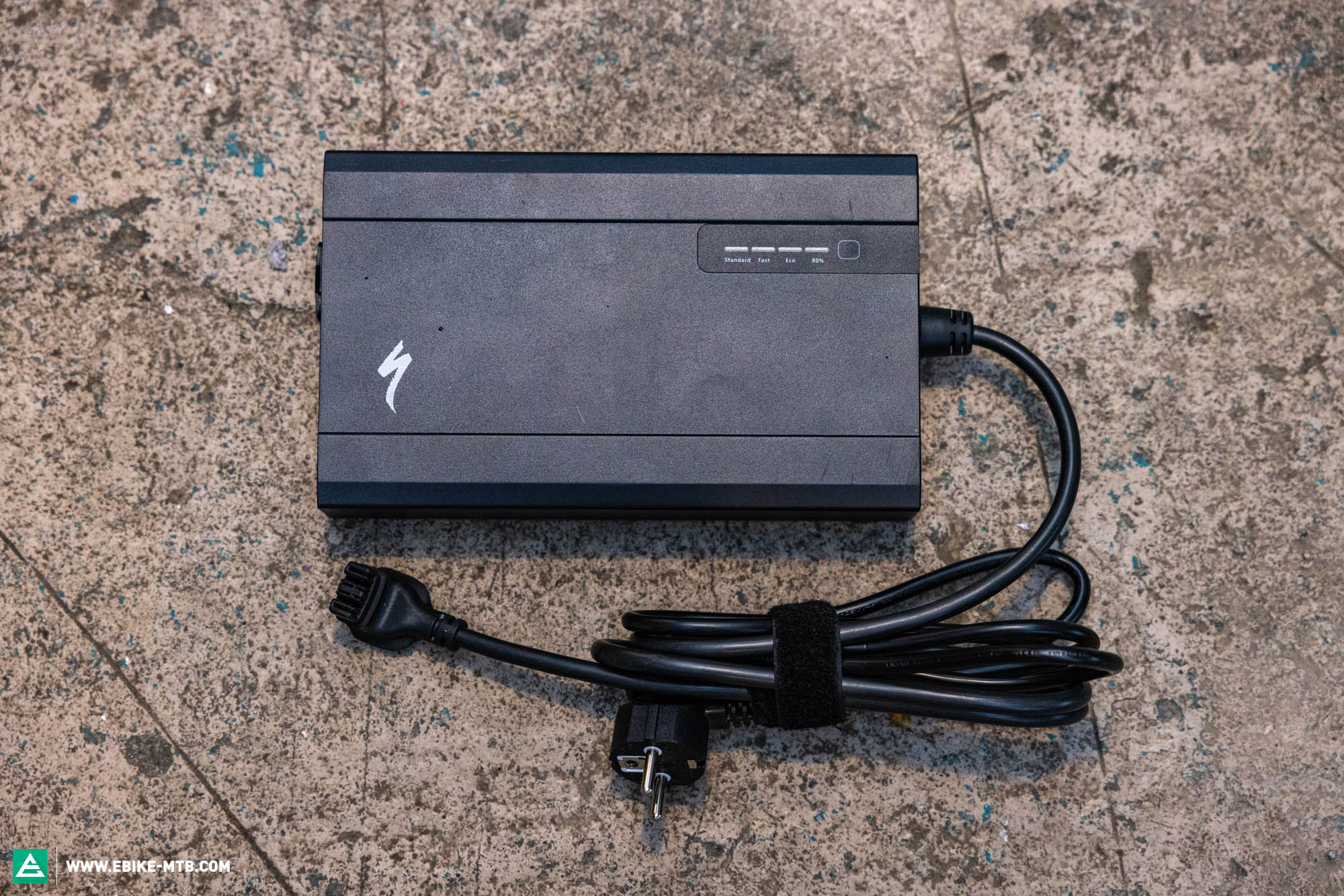
At 3.09 kg, the S-Works 3.1 may be one of the heavier full-power motors in this group test – only the Pinion MGU tips the scales even further – but it’s still just about 200 g heavier than the Bosch Performance Line CX. The motor is fitted in the Turbo Levo 4, which comes with two battery options: a big 840 Wh pack and a smaller 600 Wh version. Both can be easily removed from the side, which is super practical for charging and swapping batteries while out and about. There’s also an optional 280 Wh range extender, which significantly boosts the total capacity and can even be used as the bike’s sole power source. Perfect if you’re just heading out for a quick evening spin and don’t want to haul around the full battery setup.
Charging is handled by an S-Works 12 A fast charger. It’s bulky and heavy, sure, but it’s the only charger in this test that lets you adjust both the charging speed and target capacity. You can choose between Fast, Standard, Eco and an 80% mode designed to extend battery life. In “Fast” mode, the charger tops up the 840 Wh battery in just 2 hours, achieving an average charge rate of 7.3 Wh/min – the fastest in this test, ahead of both the Avinox and TQ chargers. For all other Turbo Levo models, Specialized offer a smaller and lighter 5 A charger. It may not be quite as fast, but compared to rival systems like Bosch’s charger, it still delivers solid performance.
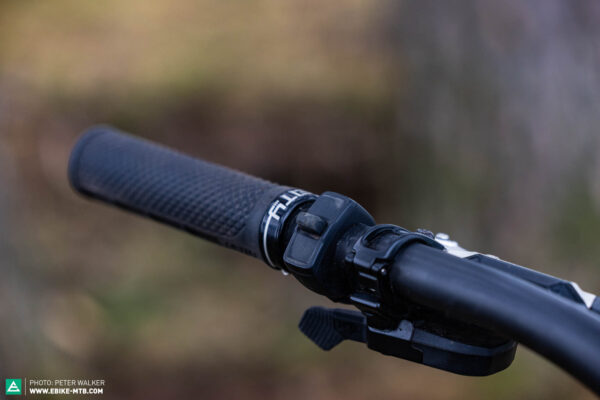
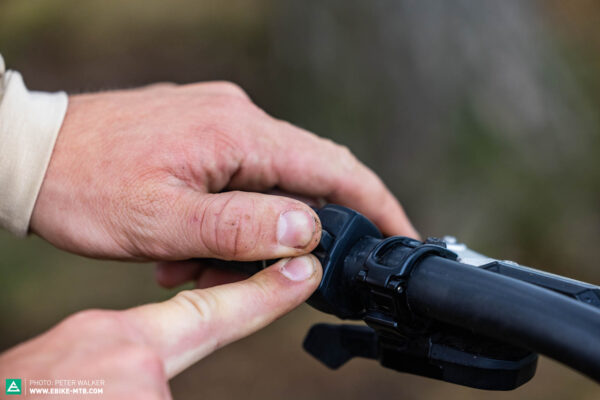
For the cockpit, Specialized opted for a minimalist, wired remote with a grippy rubberised surface. It feels solid, well-made and sits nicely under the thumb. On the plus side, it’s compact and packed with functionality. The downside? The minimal labelling. A lot of features aren’t immediately clear, so you’ll need to spend a bit of time getting to know it.
You can use the remote to toggle between the four support modes, Eco, Trail, Turbo and Auto. The Auto mode can be further fine-tuned to Auto or Auto +, depending on how reactive you want the system to be and how closely it should adapt to your riding style.
Then there’s Micro Tune and Dynamic Micro Tune. Micro Tune lets you adjust motor output in precise 10% increments, while Dynamic Micro Tune automatically adapts the support to your pedalling input. So if you slam on the pedals for a sprint, the motor instantly delivers full power. On the trail, this works surprisingly intuitively and gives you loads of control over how the motor behaves.
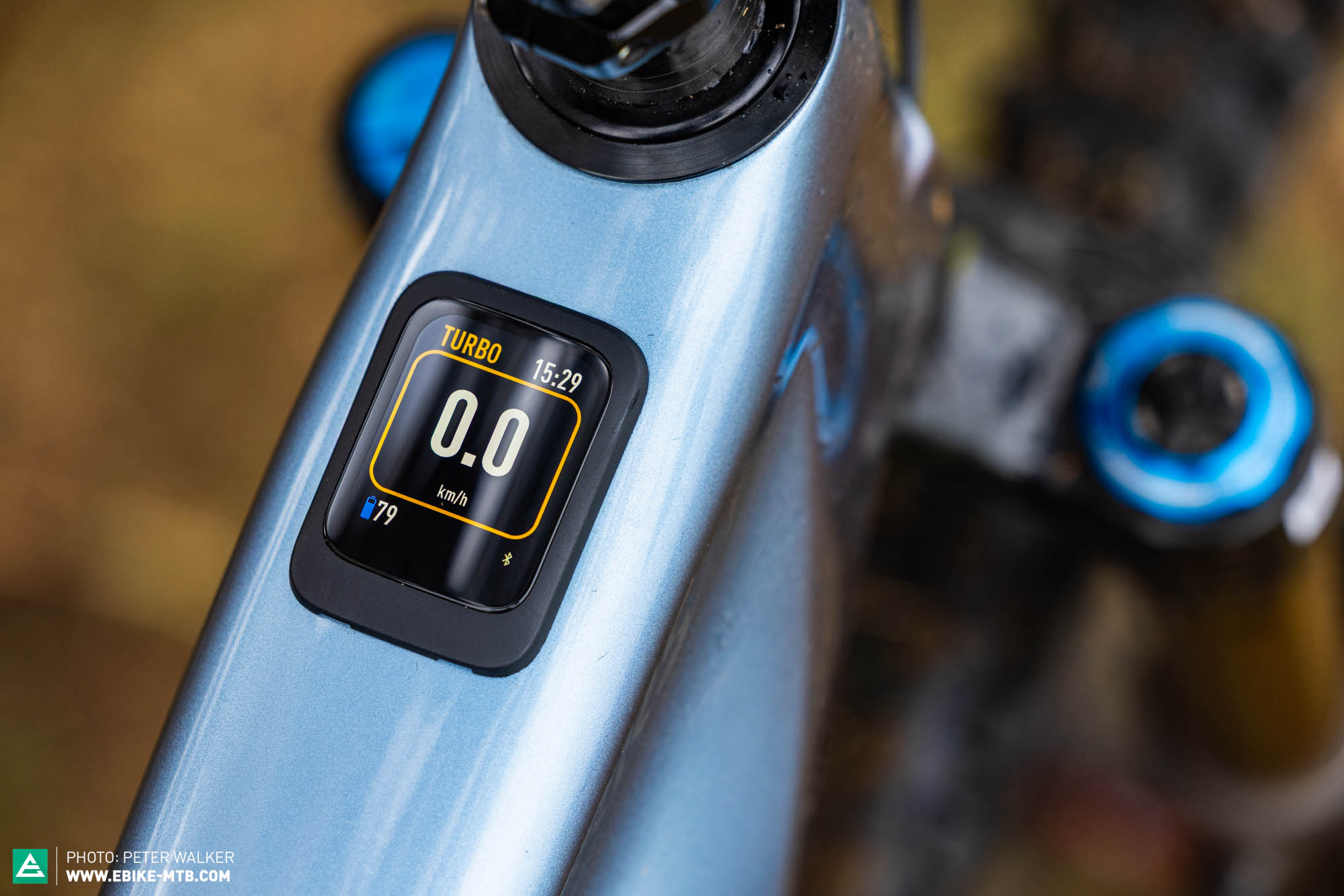
The display is sleekly integrated into the top tube, and also one of the best in the entire test field. It offers razor-sharp visuals and an impressive range of functions. Through the app, it’s almost endlessly customisable, with countless data pages and layouts that you can tailor exactly to your preferences.
Specialized’s own app sets the benchmark and, alongside the Avinox Ride app, ranks as the best in this test: intuitive, logically-structured and packed with useful features. The digital motor lock works reliably and can be secured with a PIN or set to unlock automatically when you approach the bike. The built-in alarm is audible, though it could do with being a bit louder.
There’s no navigation feature, but the ride tracking functions are extensive and work flawlessly, with freely configurable data fields. Every riding mode can be fine-tuned individually for torque, power output, responsiveness and overrun behaviour. And if custom tuning isn’t your thing, you can simply choose from one of three pre-set profiles: Universal, No Time to Waste or Battery Friendly.


You also get features like GPS tracking with Find My integration, range prediction, and full compatibility with Strava, Komoot, Garmin, Wahoo and Apple Health. Heart rate sensors and even the Apple Watch can be paired directly, complete with live data display. Software updates can be performed wirelessly over the air, and even diagnostics and service info – such as charge cycles, battery health or total mileage – are all easily accessible.
In short: no other app in this test offers this level of control, depth and clarity. Specialized deliver the most well-thought-out and feature-rich app on the market.
Parameter
Our measurement
Manufacturer’s spec
Motor weight (kg)
3.09 kg
–
Battery capacity (nominal, Wh)
814,9 Wh
840 Wh
Charge time (0–100%)
2 h
–
Support ratio (%)
–
400 %
Max power output (W)
–
850 W
Max torque (Nm)
–
111 Nm
Range* (km)
21,8 km/h
–
Vertical range* (metres climbed)
1751 hm
–
*All values were measured on the same test track with an average incline of 8.5%, using the maximum support mode, a consistent rider output of 150 watts, rider weight of 72 kg, and standardised tyres: MAXXIS HighRoller (DD, MaxxGrip) up front and MAXXIS Minion DHR II (DD, MaxxTerra) on the rear.
S-Works 3.1 motor on test
The S-Works 3.1 motor on the trail
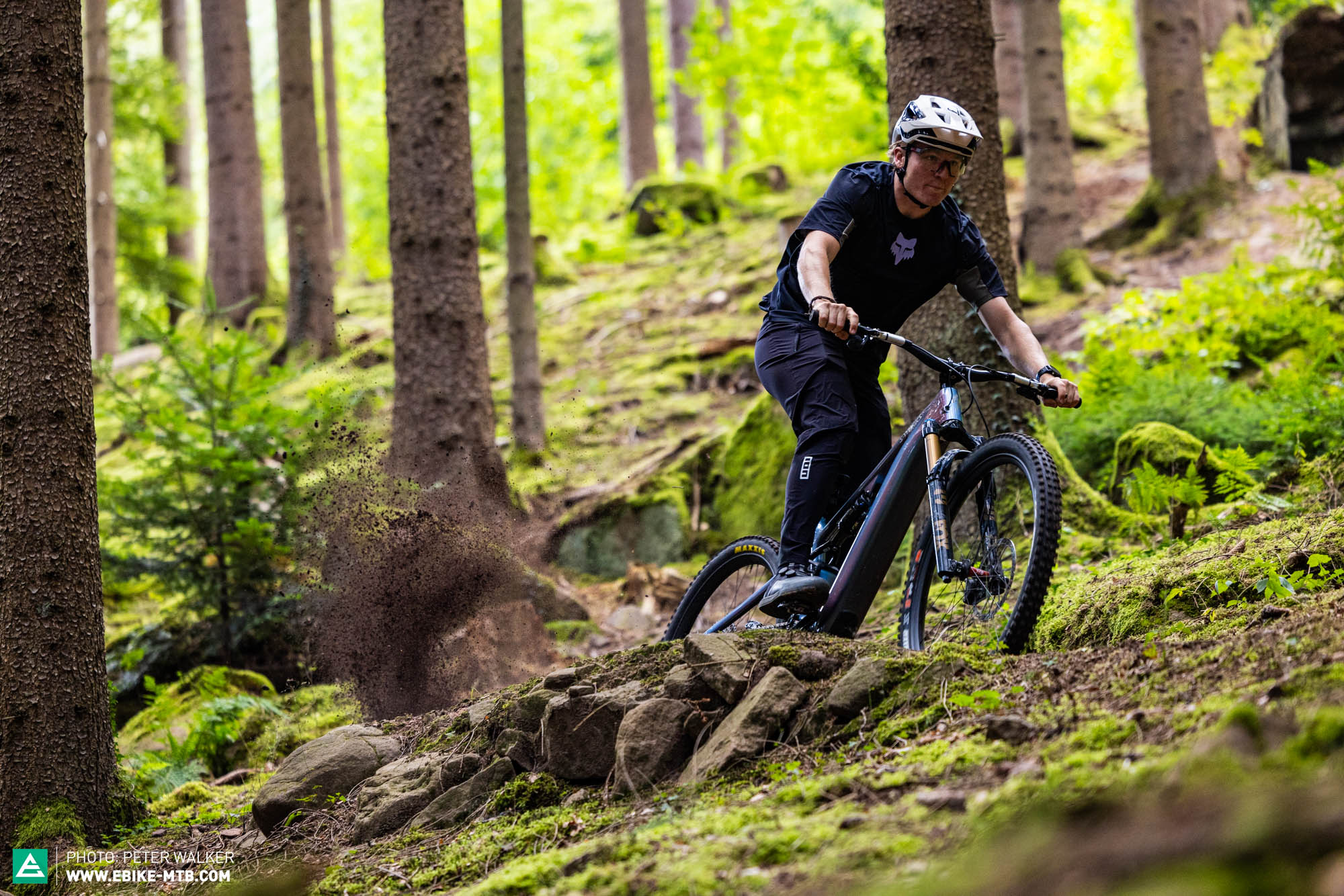
In this group test, the S-Works 3.1 positions itself as one of the most refined all-rounders in the field. Out on the trail, the motor feels powerful yet composed, delivering a smooth and controlled ride. Its character is best summed up in three words: consistency, control and strength. Forget the jittery racehorse vibes; this thing behaves like a steady powerhouse, delivering torque smoothly, predictably, and with serious grunt.
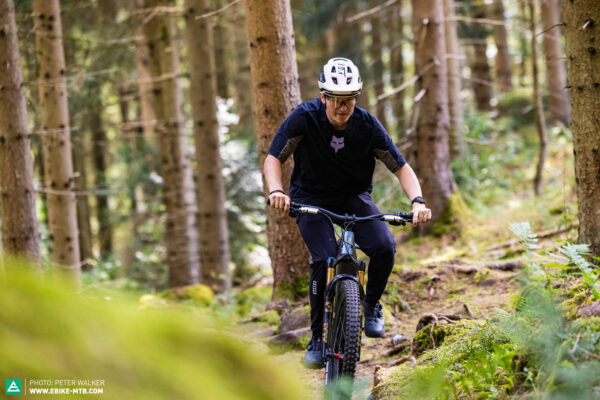
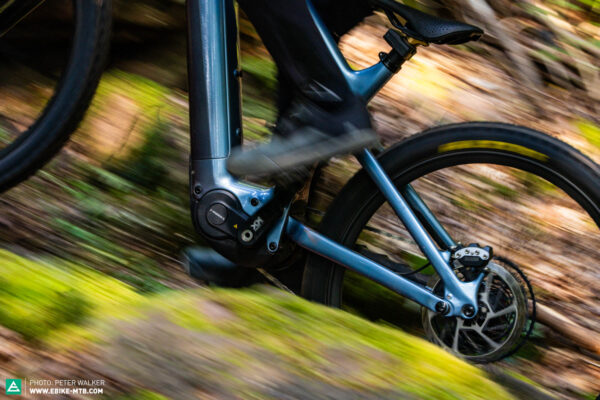
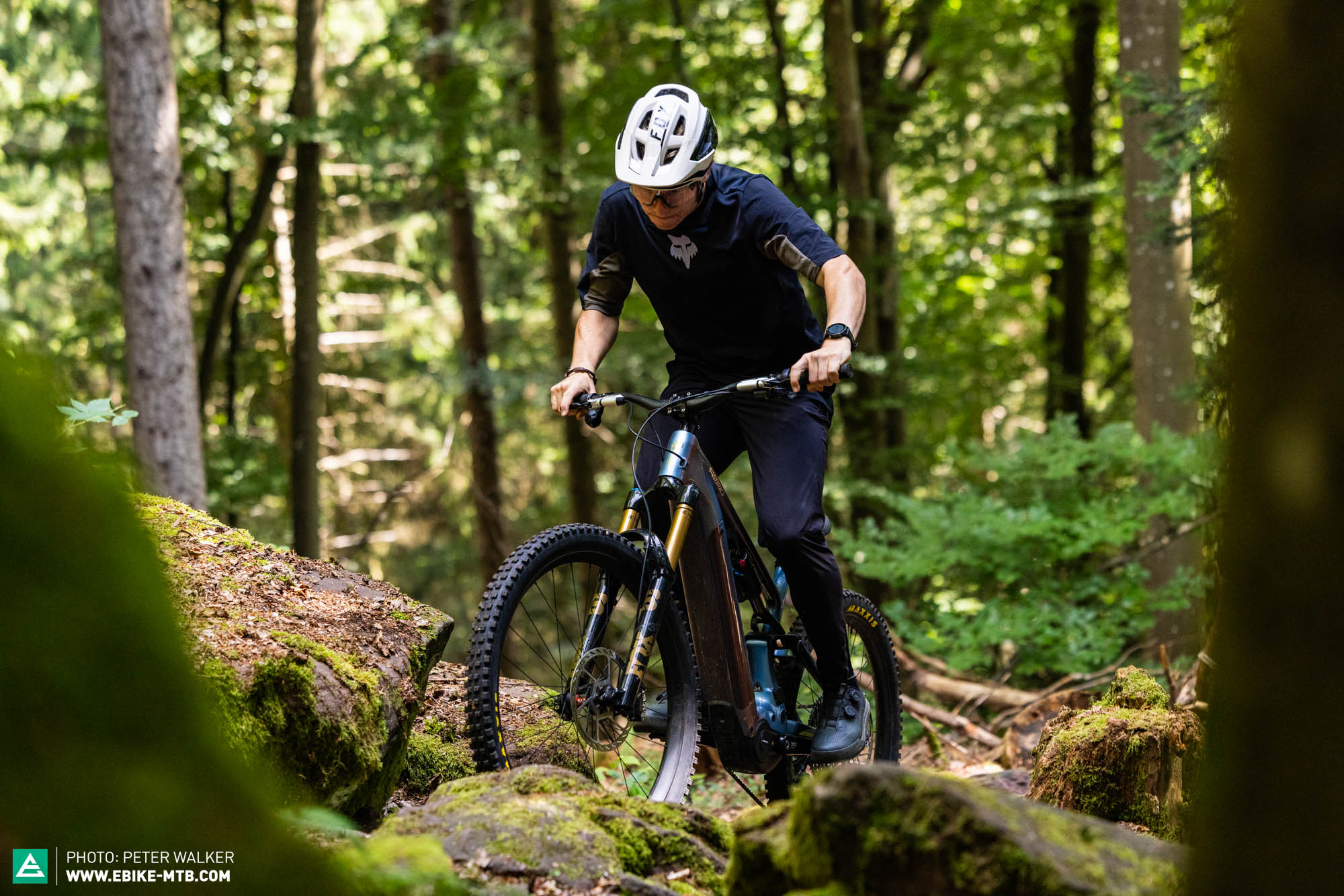
At low speeds, the S-Works 3.1 delivers torque-rich performance similar to the Pinion MGU. It responds sensitively to pedal input and reacts with a refined touch. Rather than dumping its power all at once, it builds it steadily and smoothly. Compared to the Avinox M1, which releases its power more eagerly and with greater punch, the Specialized feels more composed. It pushes forward with authority, but never in a frantic way.
This results in a controlled ride and excellent traction, especially on loose terrain and technical climbs. On long ascents and extended tours, the S-Works 3.1 shines with great endurance. Even when the battery level drops, the motor keeps delivering full support, giving you the confidence that it’s not going to let up or leave you gasping for air. The only time you’ll need to chip in with a bit of your own muscle is when starting on steep ramps – the motor needs a moment before kicking in, regardless of which mode you’re in.
The overrun is particularly effective on technical sections, providing strong and predictable follow-through that can be finely adjusted via the app. With the latest update, the fade-out of assistance at the 25 km/h limit feels significantly smoother.When it comes to traction, the motor really plays to its strengths. Your foot feels locked to the pedal, and even on wet or loose surfaces, the system delivers reliable drive with every push.
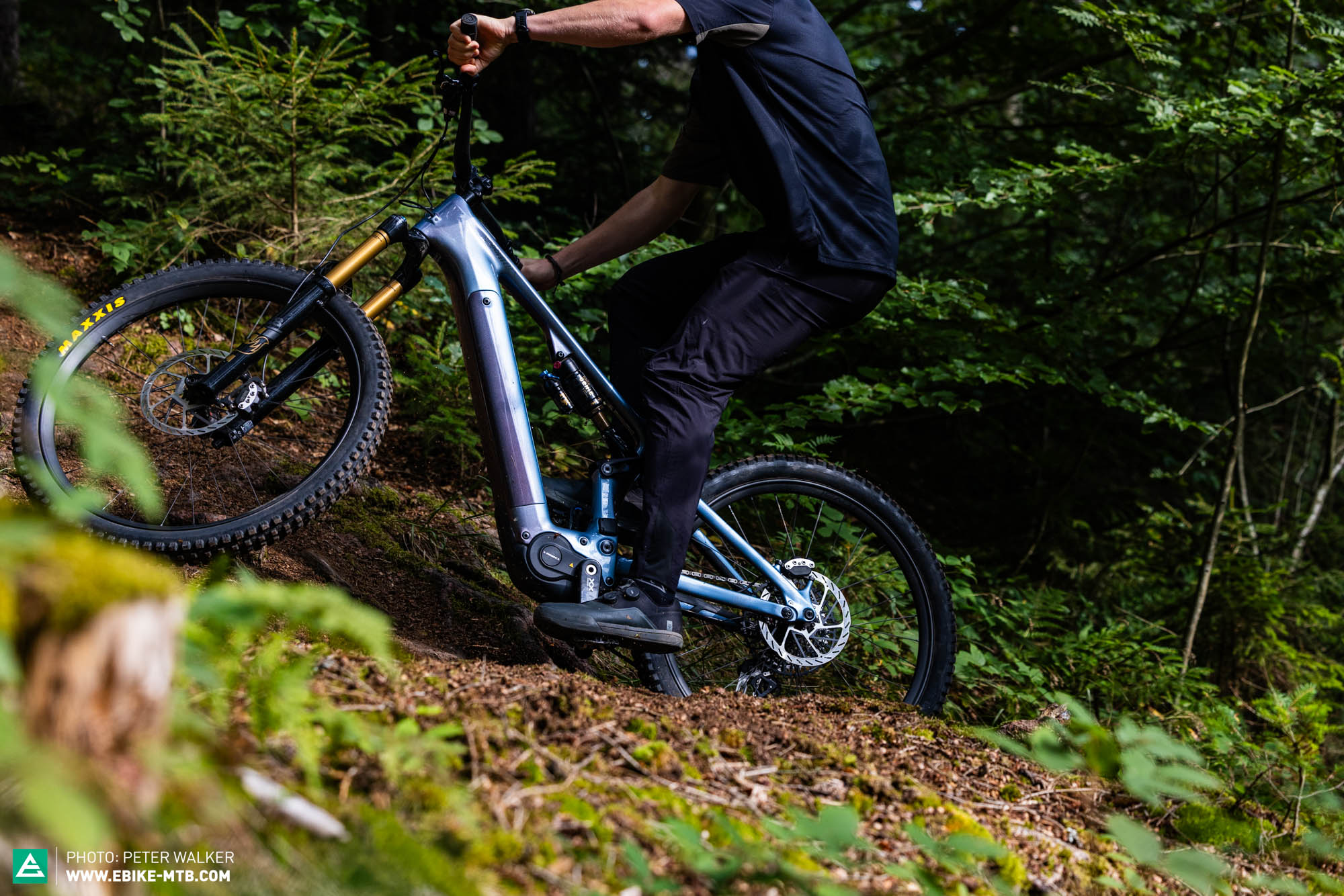
The only real drawback – even after the update – appears when approaching a climb at high cadence. In this scenario, the S-Works 3.1 has to dial back its support slightly towards the upper end. It’s far less noticeable than with the Shimano and MAHLE drives, which tend to drop off more abruptly, but it’s still there if you’re riding aggressively with a fast cadence.
In terms of noise, the S-Works 3.1 is relatively quiet, though it’s a touch louder than the Bosch CX. The latest update has helped reduce noise levels further. Under light load, the motor emits a low, pleasant hum; when pushed hard, it becomes more audible but never crosses the line into annoying. On descents, it’s practically silent and doesn’t interfere with the ride experience at all.
The S-Works 3.1 motor on the test bench
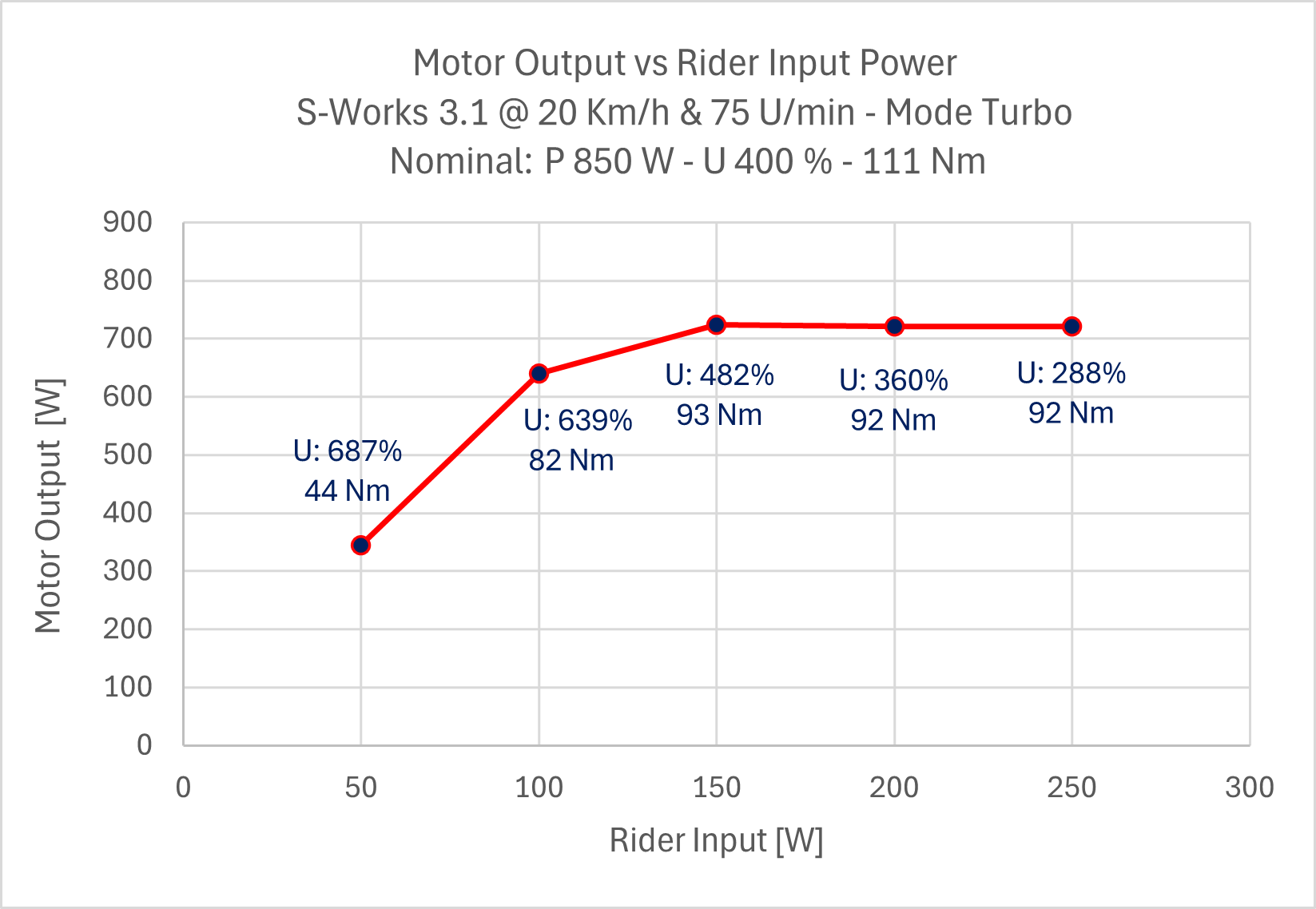
On the test bench, we were only able to extract 92 Nm of torque and 724 W of power from the motor at a cadence of 75 rpm. It’s likely that the motor only reaches its full 850 W output at higher cadences. Interestingly, the support ratio wasn’t the limiting factor, ranging from a whopping 690% at 50 W rider input down to 290% at 250 W.
What stood out, however, was the torque curve. From a rider input of 150 W onwards, the motor refused to go beyond 92 Nm, which falls well short of the manufacturer’s claimed 111 Nm.
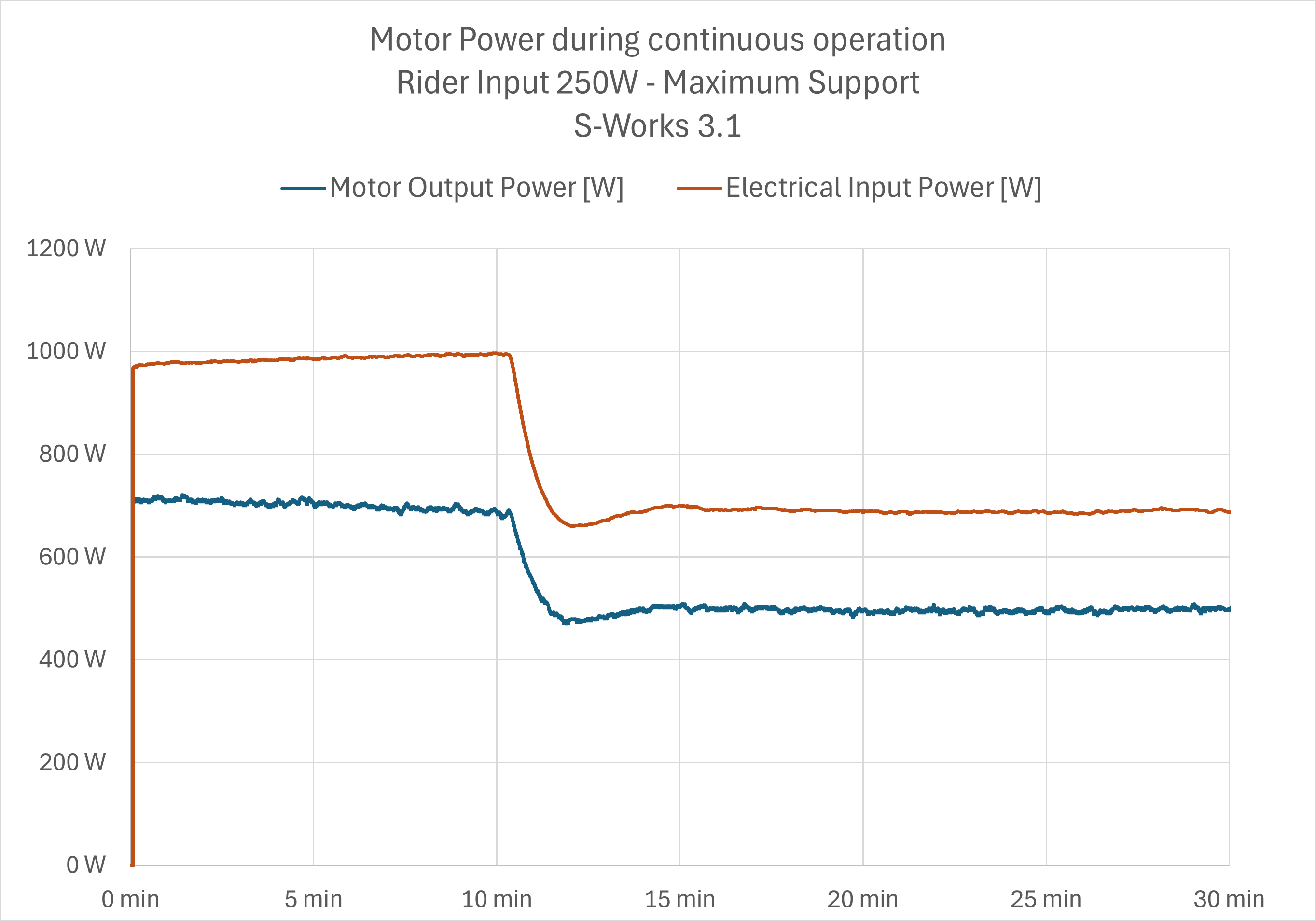
In our de-rating test, the motor’s electronics reduced output from just over 700 W to 500 W within a minute after 10 minutes of sustained load – and held it there for the remainder of the test.
In our open-field noise test, the S-Works 3.1 motor ranked among the quieter systems on climbs at higher cadences, emitting a pleasantly low background hum. However, on flat terrain at moderate cadence, it emitted a noticeable tonal hum around 600 Hz, making it relatively loud in this specific scenario.
Tuning tip for the manufacturer: Improve responsiveness when setting off on steep climbs.
Who should take a closer look at the S-Works 3.1 motor – and who’s better off steering clear?
The S-Works 3.1 motor is an ideal option for riders looking for a powerful yet controlled all-rounder with a highly customisable support system. If you value a natural ride feel, strong traction, and an intuitive motor response this motor will suit you perfectly – especially on long tours and technical trails. The deep integration with Specialized’s excellent app and the smart ecosystem make it particularly attractive for tech-savvy riders who enjoy fine-tuning their setup.
However, if you’re regularly tackling super steep climbs from a standstill and expect immediate, punchy acceleration with little rider input, you might find that it’s lacking initial responsiveness. Riders who prefer ultra-light systems or a minimalist, silent motor experience on flat terrain might also want to look elsewhere.
Conclusions about the S-Works 3.1 motor
The S-Works 3.1 stands out above all for its incredible adaptability, and thanks to a range of smart features, you can fine-tune the motor’s character to suit your riding style. Out on the trails, it delivers impressive traction, consistent power delivery and confident control. In everyday use, it’s backed up by a fast charger, range extender and the best app in the entire test field. Minor weaknesses only become noticeable when riding aggressively, and while they cost it a few points in the final ranking, they don’t take away from its overall performance. All in all, it’s a well-thought-out, practical and extremely versatile motor system with a strong ecosystem, built into an outstanding bike.
 TopsEnormous adjustability of the motor systemExcellent tractionBest app and connectivity in the testFast charger
 FlopsSlightly delayed response on technical uphillsFairly bulky motor area
For all further details, head to the Specialized website.
The test field
For an overview of the test field head to Our big eMTB Motor Comparison – 15 eMTB Motors on Test
All motors in test:
Avinox M1, Bosch Performance Line CX Gen5, Bosch Performance Line CX-R, Bosch Performance Line SX, FAZUA Ride 60, Mahle M40, maxon Air S, Pinion MGU E1.12, Shimano EP801, S-Works 3.1, TQ HPR60

Words: Benedikt Schmidt Photos: Peter Walker