Penske Automotive Group, which has a heavy presence in the premium-luxury market, was counting on a typical year-end sales boost from German luxury brands. However, the boost didn’t fully materialize due to tariff-related disruptions, customers pulling ahead purchases of battery-electric vehicles and a “weak operating environment” in the United Kingdom, company executives said in an earnings report Feb. 11.
“For example, our new sales of the German luxury brands were down 20% in the U.S. and 22% in the U.K., including the decline of over 2,800 units when compared — these are BEV units — when compared to Q4 of the prior year,” said Roger Penske, Penske Automotive CEO and chair of the board, in an earnings conference call.
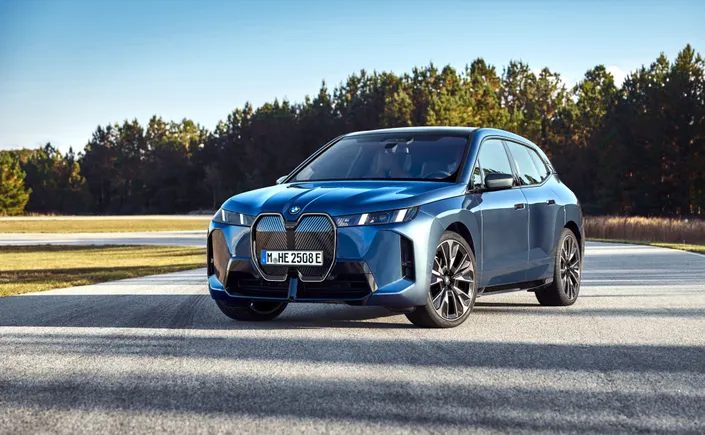
Premium-luxury brands accounted for 71% of Penske Automotive Group’s worldwide dealership revenue in 2025, led by luxury brands BMW at 25%, Porsche at 10%, Audi at 9%, and Mercedes-Benz at 8%, the company said. Toyota’s Lexus brand represented another 6%.
Meanwhile, in the fourth quarter, BMW of North America reported its U.S. sales overall were 117,506 units, down 3.4% versus Q4 of 2024. Mercedes-Benz USA reported its fourth-quarter 2025 passenger-car sales — including light trucks but not counting Mercedes-Benz Vans USA commercial vans — were 79,350, down 12% versus Q4 2024.
For the full year, both BMW and Mercedes-Benz increased U.S. sales compared with 2024. BMW of North America had a U.S. sales record of 388,897 vehicles, up 4.7%. Mercedes-Benz USA had U.S. sales of 303,200 in 2025, up 1%.
For the U.S. market, Roger Penske blamed the drop in luxury-brand EV sales in the fourth quarter on a pull-ahead of vehicle purchases. Q4 sales suffered because customers rushed to beat the cutoff for federal tax credits for EV purchases at the end of Q3.
Overall, Penske Automotive reported net income attributable to common shareholders of $186.7 million in the fourth quarter, down 25.4% compared with the same quarter a year ago.
For the full year, net income attributable to common shareholders was $937.9 million, down 3.6%. That’s on a consolidated basis including all markets and all business lines, such as commercial trucks.
On the parts and service side, for its retail automotive segment, Penske Automotive had record Q4 and full-year revenue and gross profit. In the fourth quarter, retail automotive parts and service revenue was $831.9 million, up 5.1% versus a year ago. For the full year, it was $3.2 billion, up 5.3% compared with 2024.
Those numbers are on a same-store basis, and include U.S., U.K., and some other, smaller overseas dealership operations.
Looking ahead to 2026, Roger Penske said Penske Automotive expects an increase in the number of lease maturities for 3-year-old cars coming back into the market, and an increase in lease penetration for new vehicles.
Richard Shearing, chief operating officer of North American Operations for Penske Automotive, said in the call that lease penetration for the group’s new-vehicle sales is in the low- to mid-40% range for premium luxury brands, down from a historical average between 50% and 55%.
“They’re going to have to get back in the game from a leasing standpoint rather heavily,” Shearing said, referring to automakers and their captive finance companies. The OEMs cut lease incentives during the pandemic and the new-vehicle shortage, which led to the current shortage of lease returns today.
But leases and lease incentives started to make a comeback in 2023, and that’s expected to lead to an increase in lease maturities in the second half of 2026. Off-lease vehicles are a favorite source of late-model used vehicles that can be reconditioned and retailed as profitable Certified Pre-Owned units.
“The U.S. market typically has been a leasing market,” Shearing said.