“I would love that”: How one sentence changed everything
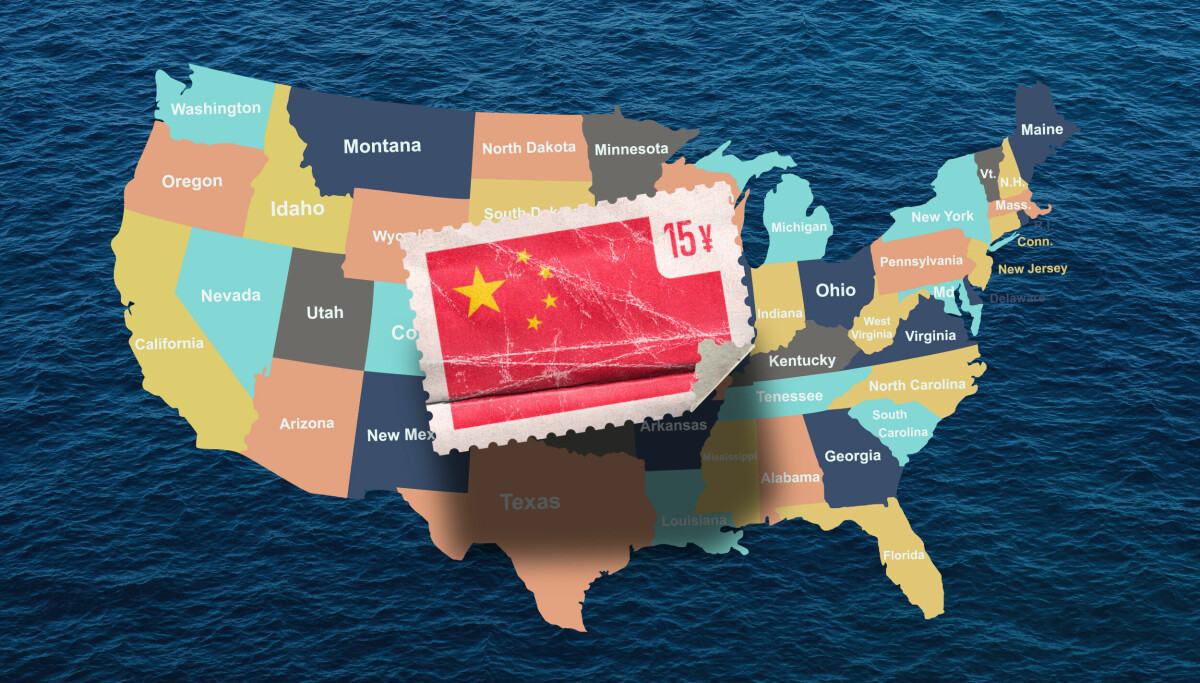
When the president of the United States tells a room full of Detroit auto executives that he would “love” for Chinese carmakers to build plants in America, hire local workers and compete in the world’s most profitable automotive market, it is not a throwaway remark. It is, for the industry’s leadership, an potentially globally transformative signal, dressed in casual phrasing. Donald Trump delivered precisely that message during a visit to Detroit last month, and its aftershocks have not yet stopped reverberating.
The statement cut across the prevailing policy logic in a manner that industry executives had not anticipated. Both the Biden and Trump administrations had, until that moment, maintained 100% tariffs on Chinese electric vehicle imports – a blunt instrument designed to keep Chinese brands from exploiting their formidable price and technology advantages in the world’s wealthiest car market. Those tariffs remain in place.
Labour costs and tariffs squeeze automotive manufacturers
New survey reveals energy, materials and tariffs create perfect storm for global automotive production as industry races to balance cost control with technological transformation and electrification targets
But a president who openly courts the idea of Chinese factories on American soil is a president who may not consider those tariffs permanent. The gap between what policy currently says and what political signals now suggest is exactly the kind of uncertainty that makes long-cycle capital allocation, the essential business of automotive manufacturing, nearly impossible to conduct rationally.
“Assuming that the Chinese are given the opportunity to come into the US, they will bring a very competitive model that will challenge not just the Detroit original equipment makers, but also the Japanese, European and Korean OEMs in this market,” said David Dauch, CEO of AAM Corp, the auto supplier formed from the merger of American Axle and Manufacturing and the UK’s Dowlais. “If there is a level playing field, that’s fantastic. If not, then I don’t think [the US] will allow China in this market to impact jobs here.”
The Alliance for Automotive Innovation, the trade group representing America’s largest automakers, has warned in its February 2026 report that the entry of Chinese state-backed vehicles could constitute “an extinction-level event for the US auto sector,” after BYD unveiled a fully electric crossover SUV priced at just $14,000. That figure is not a typo. The cheapest American EV currently on sale is the Chevrolet Equinox EV, which starts at $33,600. The price gap alone defines the competitive asymmetry that Detroit faces. Everything else is detail.
The Geely question, and what it reveals about the depth of the crisis
The most revealing recent development in this narrative is not Trump’s Detroit speech. It is what Ford Motor Company has been doing quietly while that speech was being processed. Ford and China’s Geely are in discussions about a potential partnership, eight people with knowledge of the ongoing talks confirmed. The companies are in talks to have Geely use Ford factory space in Europe to produce vehicles for the region. They have also discussed the potential framework for shared vehicle technologies, including for automated driving. Ford sent a delegation to China to intensify discussions, which followed meetings in Michigan between senior Geely executives and Ford leaders.
Ford has also explored collaborations with BYD about using its European facilities, and the Financial Times reported that Ford had held talks with Chinese electronics and electric vehicle maker Xiaomi regarding a joint venture to manufacture EVs in the US, a report both companies later denied. Ford’s standard-issue response – “We have discussions with lots of companies all the time on a variety of topics. Sometimes they materialise, sometimes they don’t” – is the kind of non-denial that experienced industry observers read with considerable care.
China speed reshapes global vehicle manufacturing
Chinese EV entrants and legacy OEMs are redefining vehicle manufacturing through gigacasting, vertical integration and faster product cycles, forcing global rivals to adapt
The strategic logic behind engagement with Geely specifically is not hard to trace. Geely posted a 39% jump in sales in 2025 to just over 3 million vehicles. Including affiliate brands like Volvo Cars and Lotus, Geely is the second-largest Chinese automaker behind BYD. Under founder Li Shufu, Geely has also been an active dealmaker in seeking out foreign partners, having bought Volvo from Ford itself in 2010 for $1.8 billion. The irony of Ford potentially re-entering a relationship with its own former Swedish subsidiary, now Chinese-owned and industrially transformed, as a mechanism for accessing Chinese manufacturing competence, is not lost on those watching the talks.
Geely already produces cars in Europe under the Volvo Cars brand, and is far from the only Chinese automaker to be building a manufacturing presence on the continent. BYD has plants under construction in both Hungary and Turkey, with the former slated to commence mass production in early 2026. Leapmotor is joining up with majority backer Stellantis to produce vehicles at an existing plant in Spain, while GAC and Xpeng are leveraging local contract manufacturing via Magna International to make cars in Austria. The pattern is consistent: Chinese manufacturers are not waiting for tariff walls to fall. They are building inside them.
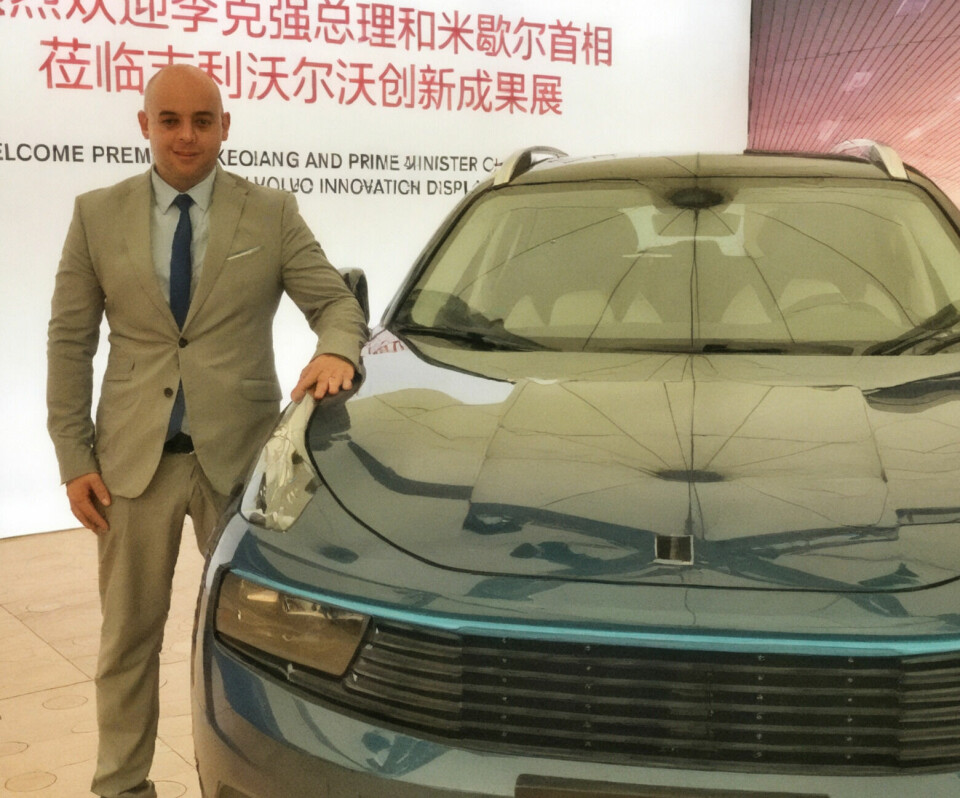
Ash Sutcliffe, global communications chief, Geely
Official LinkedIn Profile
At CES 2026, Geely’s global communications chief Ash Sutcliffe reiterated that the group is always looking at expanding into new global markets, including the United States, and confirmed that an announcement on the US entry of Zeekr and Lynk and Co is expected within the next three years. Zeekr and Lynk and Co vehicles could be produced at the Volvo factory in South Carolina, which is currently undergoing a $1.3 billion expansion. The phrase Geely’s leadership has begun using publicly – that US entry is a question of “when and where” rather than “whether” – is a studied escalation in communication. It is also factually accurate.
Canada opens the door, and Detroit feels the draught
While the US debate about Chinese automotive access remains geopolitically suspended between Trump’s welcoming rhetoric and the tariff wall his own administration inherited and retained, Canada has moved. On 16 January 2026, Canadian Prime Minister Mark Carney announced a trade deal with China that will allow up to 49,000 Chinese-built electric vehicles into the Canadian market each year at a tariff rate of 6.1%, down from 100%, in exchange for China reducing its tariffs on Canadian canola oil. The quota is expected to rise by approximately 6% annually, reaching 70,000 within five years.
The deal has specific structural conditions. Within three years, China is expected to increase joint-venture investment in Canada with trusted partners to protect and create new auto manufacturing careers for Canadian workers and ensure a robust build-out of Canada’s EV supply chain. The Canadian Vehicle Manufacturers’ Association has warned, however, that at 49,000 vehicles a year, the deal could generate approximately C$980 million (approximately $718 million) annually in zero-emission vehicle credit generation for Chinese-headquartered companies, at the direct expense of their Canadian competitors.
BYD’s 880% UK surge exposes gaps in the region’s EV strategy
BYD’s record UK sales in September, despite being shut out of subsidy schemes, underline a wider reckoning for UK auto manufacturing strategy. An industry built on incentives and protection needs fresh foundations in design, export and resilience.
For Detroit, the implications reach further than the Canadian market itself. “The worst case scenario is GM and Ford effectively lose the Canadian market,” said Tu Le, managing director of Sino Auto Insights. “The countdown clock is on in the United States. It just got louder with Canada’s announcement.” Le’s phrase – “we are literally surrounded by Chinese cars” – captures the geographical logic precisely. China’s share of the Mexican EV market grew from 24% in 2023 to 80% in 2024 and 89% in 2025. BYD was the market leader, accounting for about two-thirds of all EVs sold in Mexico last year. Canada to the north, Mexico to the south, and a US administration whose trade posture on this issue has become fundamentally ambiguous.
Speed, price and the mathematics of disruption
The tariff conversation, important as it is, risks obscuring the deeper competitive challenge that American and European manufacturers face. The price advantage Chinese automakers hold in electric vehicles is the product of structural factors – state subsidy, vertical integration across the battery supply chain, and a domestic manufacturing base generating extraordinary scale – that tariffs can delay but cannot eliminate.
In the year leading up to October 2025, three bestselling Chinese electric vehicle brands – BYD, Wuling, and Geely – received approval for 83 new passenger car models collectively in China’s domestic market. Volkswagen was approved for six, and Nissan for two. Development velocity of that magnitude reflects an industrial architecture that Western manufacturers have not built and cannot quickly replicate. Chinese EV models reach the market two to three years faster than non-Chinese brands, according to a 2024 report by AlixPartners. Chinese EV firms typically take 20 months to develop a new car, compared with 40 months for Chinese legacy carmakers – who are themselves faster than their Western counterparts.
Register now for the Livestream:
Digitalisation – Smarter automation
This livestream will provide a reality check on smart factory tech – what’s truly delivering on the shopfloor and where automation is finally paying off.
The average price of a car exported from China last year was about $19,000, while the average price of a new car sold in the United States is around $50,000. That arithmetic explains what Mark Wakefield, global automotive market lead at AlixPartners, has observed among senior US carmaker leadership: that they are feeling “quite paranoid and concerned” about the prospect of Chinese rivals entering the US market, and are actively trying to work out how to replicate Chinese development processes while simultaneously deciding whether to resist China’s entry or to use it as a “beachhead” into the US market.
Sean Tucker, a managing editor at Kelley Blue Book, has identified the specific vulnerability that a Chinese market entry would most immediately exploit. “If the Chinese suddenly show up tomorrow, then they will serve that need before any other automaker can respond to the opening,” Tucker said, referring to the gap at the lower end of the American vehicle market that the Detroit manufacturers have progressively vacated in their long-term shift towards larger, higher-margin models. That gap is real, it is large, and it is currently undefended.
Defend, partner or capitalise
The response strategies currently being pursued by Western manufacturers fall into three broad categories, and the industry is simultaneously pursuing all three, sometimes within the same company. The first is lobbying for the preservation and extension of tariff barriers. The second is seeking to acquire Chinese technology and manufacturing competence through partnership. The third – more implicit than explicit – is attempting to accelerate internal development fast enough to close the gap before the walls come down.
Stellantis has made the most explicit bet on the partnership model. The company took a 20% stake in Leapmotor in 2023 and is now producing Leapmotor vehicles at a plant in Spain, using its own distribution infrastructure to bring Chinese product to European customers. Renault has struck equivalent arrangements with Geely in South Korea and Brazil. Renault-branded car sales outside Europe rose 11% in 2025 from a year earlier, compared with a 0.6% decline in 2024, suggesting the strategy is beginning to yield measurable returns.
Why Chinese carmakers are rethinking Russia and turning to Central Asia for growth
As sanctions, investor pressure, and rising import fees reshape the Russian market, Chinese OEMs are pulling back and redirecting investment to Kazakhstan and Uzbekistan.
Ford’s situation is more complicated, in part because its CEO Jim Farley has been simultaneously one of the most vocal public advocates for understanding the Chinese threat and one of the most politically proximate US auto executives to the current administration. In 2024, Farley’s daily driver was a Xiaomi SU7, a car he openly admitted he “didn’t want to give up.” He has been speaking about Chinese automakers both in fawning terms and as an existential threat for some time. That combination of admiration and alarm is not contradictory. It is, in fact, the most accurate reading of the competitive situation available.
Tu Le of Sino Auto Insights was characteristically direct about the due diligence obligation: “US executives would be neglecting their fiduciary duties if they weren’t talking to companies like Xiaomi, given the imminent nature of the threat.” Ford’s reported conversations with Geely, BYD, Xiaomi and others are, on that framing, not a sign of weakness or confusion. They are evidence of a management team that has internalised the scale of the challenge.
The last wall standing
The United States remains, for now, the only major automotive market in which Chinese domestic automakers have not yet established a significant commercial presence. Forty years ago, China produced 5,200 cars per year. As of 2025, the country has made over 34.5 million vehicles – more than the US, Japan, India, Germany, and South Korea combined. The arc of that industrial transformation has swept through every major global market. Europe is already feeling it: one in every ten cars sold in Europe is now made by a Chinese brand.
An executive at a leading Chinese electric vehicle company, speaking to the Financial Times, offered the clearest-eyed assessment of the timeline uncertainty from the Chinese side. “Building a factory is long-term planning, while Trump is a businessman whose policies are subject to change.” That observation cuts two ways. It accurately reflects the Chinese industry’s caution about committing to US manufacturing capacity based on a political statement that could be revised. But it also captures, with unintended clarity, the core problem for American manufacturers: that the policy framework governing their most consequential competitive challenge is itself subject to the whims of a single individual whose stated position changes from speech to speech.
Chinese vehicle makers look to international markets for growth, but domestic government pressure and trade barriers may slow expansion.
The number of domestic vehicle manufacturers in China has increased rapidly in recent years. Some are spin-offs from previous joint ventures with foreign companies, others entirely new. A few, notably BYD, Geely and Chery, have become significant global players, as well as gradually overhauling the foreign players in their domestic market.
Volvo Cars CEO Håkan Samuelsson, whose company sits at the exact intersection of this debate as the Swedish brand owned by Geely and manufacturing in South Carolina, offered the most diplomatically balanced verdict. “If we’re going to have a strong car industry in the US, I think it would be good if there would be new technology and new competitors entering the market,” he said. He added, however, that co-operation with Geely in assembling vehicles at the South Carolina plant would be conditional on available capacity, and cautioned specifically against collaboration in software.
That software caveat is not incidental. The Trump administration has retained Biden-era restrictions on the use of Chinese software and hardware in vehicles with built-in internet connectivity – restrictions that reflect a national security judgement about data sovereignty and infrastructure vulnerability that is unlikely to soften regardless of trade negotiations. For Chinese manufacturers whose competitive advantage is embedded in vertically integrated digital systems, that constraint may prove more durable and more significant than any tariff.
The US is now the only major market where Chinese domestic automakers haven’t established a significant presence. Whether it remains so depends on variables that no market participant can currently price with confidence: the outcome of Trump’s planned April visit to Beijing, the durability of existing tariffs, the pace of Chinese factory construction either inside or adjacent to the US border, and the speed at which Western manufacturers can narrow a technology and cost gap that has been widening for the better part of a decade.