We just had a really warm spring-like week, with temperatures reaching over 50 degrees in parts of Minnesota and Wisconsin. Some places even got close to 60 degrees
That caused some melting, and in southern portions of the region, some vehicles went through the ice, including a post I saw about a Tesla car that broke through. It brings up an important point for EV drivers when it comes to driving on frozen lakes.
Tesla and other EVs are obviously different than traditional internal combustion engines, because they are all electric. That comes with its own pros and cons, and in the winter, one of those cons is the shortened battery life. So, you definitely want to make sure you don’t get stuck in the middle of the lake in your Tesla if it runs out of charge.
But here’s a safety warning that you may not have considered: Electric vehicles are very heavy. It’s because their batteries weigh so much. So traditional ice thickness guides for small cars don’t apply to electric vehicles.
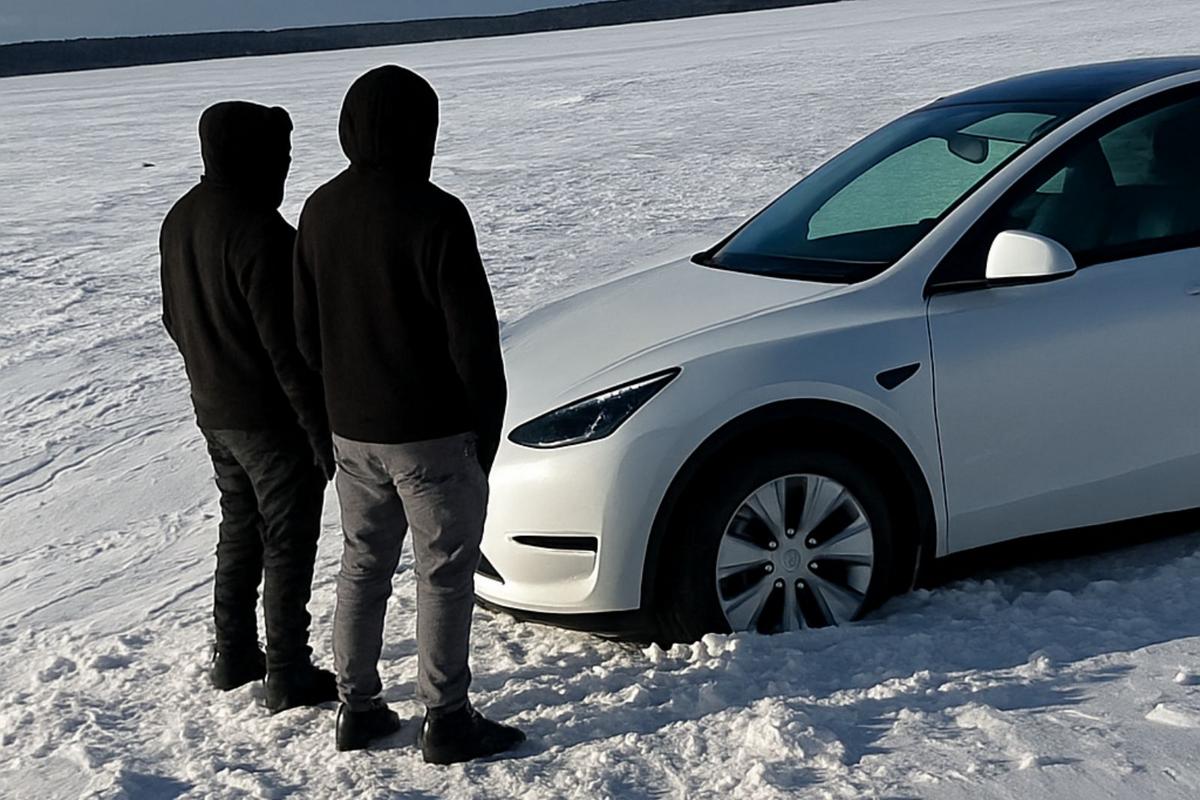
Also, the heavy weight makes it easier to get it stuck in snow, like this poor guy.
Normally, it’s recommended that for a small car, you should wait until there is at least 8-10 inches of clear, new ice. But, for EVs, that goes up to over a foot for a car, and even more for an EV pickup. If it’s a large EV, you should have at least 15 inches of good ice.
Consider this: the battery for the Hummer EV is the same weight as a Toyota Prius. That’s just the battery! So make sure you have enough ice if you go out with your EV.

Now, if there is enough ice, you definitely can ice fish with your Tesla. As this YouTuber points out, maybe future technology will allow your Tesla to also power your fish house?
LOOK: See how much gasoline cost the year you started drivingTo find out more about how has the price of gas changed throughout the years, Stacker ran the numbers on the cost of a gallon of gasoline for each of the last 84 years. Using data from the Bureau of Labor Statistics (released in April 2020), we analyzed the average price for a gallon of unleaded regular gasoline from 1976 to 2020 along with the Consumer Price Index (CPI) for unleaded regular gasoline from 1937 to 1976, including the absolute and inflation-adjusted prices for each year.
Read on to explore the cost of gas over time and rediscover just how much a gallon was when you first started driving.
Gallery Credit: Sophia Crisafulli