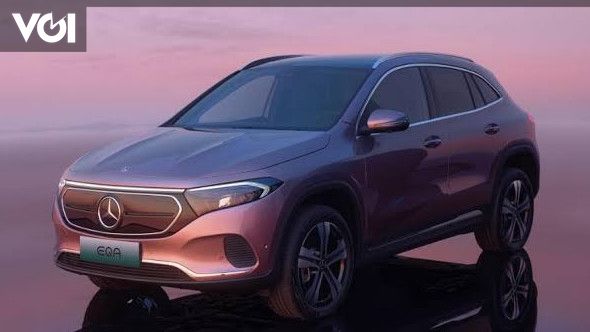
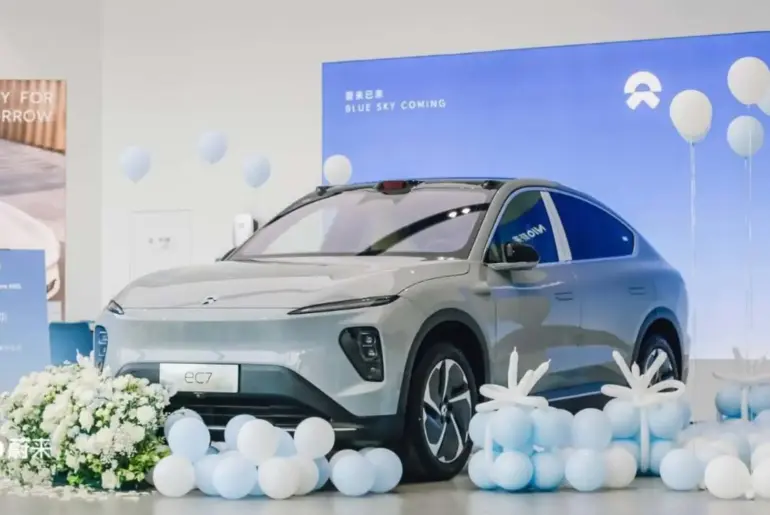
Ford $F ( ▲ 1.95% ) CEO Jim Farley and Trump administration officials have reportedly been discussing ways Chinese car companies could enter the U.S. market.
The details: During the Detroit Auto Show last month, U.S. trade representatives and cabinet members met with Farley to talk about possible partnership frameworks, including joint venture agreements, sources told Bloomberg.
Under these JVs, Chinese automakers would be required to produce the cars in the U.S.
American partners would retain a controlling stake as well as share profits and technology made with Chinese carmakers,
Sources indicate that Farley did not specifically advocate for the joint venture, but he has been adamant about the need for U.S. automakers to be more proactive in protecting the American auto industry against China’s ever-expanding global footprint.
What they’re saying: “Their cost, their quality of their vehicles is far superior to what I see in the west,” Farley said last summer at the Aspen Ideas Festival, where he revealed he had visited China a half dozen times in the last year. “We are in a global competition with China and it’s not just EVs. And if we lose this, we do not have a future at Ford.”
Already at play: Ford is reportedly already exploring a partnership with the electric car company Geely in Europe, where the two automakers would look to share technology and manufacturing costs at one of Ford’s European facilities.
Why it matters: Chinese brands like BYD, Geely, and NIO operate on thinner margins and excel in software‑defined vehicles. Their entrance could pressure U.S. automakers to accelerate cost reductions, streamline EV production, and update their digital interfaces.
OUTSMART THE CAR MARKET IN 5 MINUTES A WEEK
Get insights trusted by 55,000+ car dealers. Free, fast, and built for automotive leaders.
Between the lines: Despite safety and security concerns with Chinese cars, American consumers appear to have an appetite for Chinese vehicles, which could help drive their entry into the U.S. market if the joint venture idea starts to materialize.
According to a recent study from AutoPacific, 65% of surveyed consumers said they were familiar with Chinese brands, up 12% year-over-year in 2025.
And 51% said they’d consider one for their next vehicle, a 10% rise against 2024.
Still, 77% of those surveyed said they were worried about their privacy, and 79% said they were concerned about the national security risks of Chinese connected cars.
One of the biggest appeals of Chinese vehicles is the digital integration, which is often described as more advanced and intuitive than what many U.S. vehicles offer, especially for tech-forward, younger buyers.
What they’re saying: “Aside from the responsiveness of screens… I feel like people hate screens here because they’re not done very well,” said Kevin Williams, an automotive journalist who has spent considerable time with Chinese vehicles (via Ars Technica). “Versus in China, it just seems so intuitive,” he said. “Not just how easy it is to use, and I barely understand any sort of Chinese characters… [but] just like the support it has for popular apps.”
Bottom line: The question for many isn’t whether Chinese automakers will come, but under whose terms, and whether U.S. companies like Ford can shape that entry to their advantage before it’s forced upon them.
A quick word from our partner


ChatGPT can write emails, plan trips, even tell jokes…
But it can’t tell you which VINs are at risk of sitting too long, how your dealer performs against your competition, or how to improve your VDPs.
That’s where LotGPT comes in. It’s the only chatbot built exclusively for car dealers. It knows your market, dealership and inventory.
Fueled by Lotlinx’s decades of VIN and Shopper data, plus your live inventory, Google Analytics and CRM, it delivers relevant answers and guidance to help you sell cars faster and more profitably.
LotGPT is free for dealers, but invite-only.