According to IMARC Group’s latest research publication, The global on-board charger market size was valued at USD 8.8 Billion in 2025. Looking forward, IMARC Group estimates the market to reach USD 31.4 Billion by 2034, exhibiting a CAGR of 15.13% from 2026-2034.
How AI is Reshaping the Future of the On-Board Charger Market
Intelligent Charging Optimization: AI algorithms optimize charging speed, voltage, and current based on battery condition, temperature, and grid stability. This improves charging efficiency, reduces energy loss, and protects battery health. Smart on-board chargers can adapt in real time to different charging stations and power sources, helping extend battery lifespan and enhance overall electric vehicle (EV) performance.Predictive Maintenance and System Reliability: AI-enabled monitoring systems track charger components such as power modules, thermal systems, and converters. Machine learning detects early signs of overheating, voltage fluctuation, or component degradation. This reduces unexpected failures, lowers warranty costs, and ensures safer vehicle operation. Predictive diagnostics are especially important as EV adoption accelerates globally.Smart Grid Integration and Energy Management: AI supports vehicle-to-grid (V2G) and bidirectional charging by managing energy flow between EVs and power grids. Intelligent on-board chargers can decide when to charge or discharge based on electricity prices and grid demand. This improves energy efficiency, supports renewable energy integration, and strengthens grid stability, making AI a key driver in the future EV ecosystem.

Explore Updated 2026 Market Trends & Analysis
On-Board Charger Industry Overview
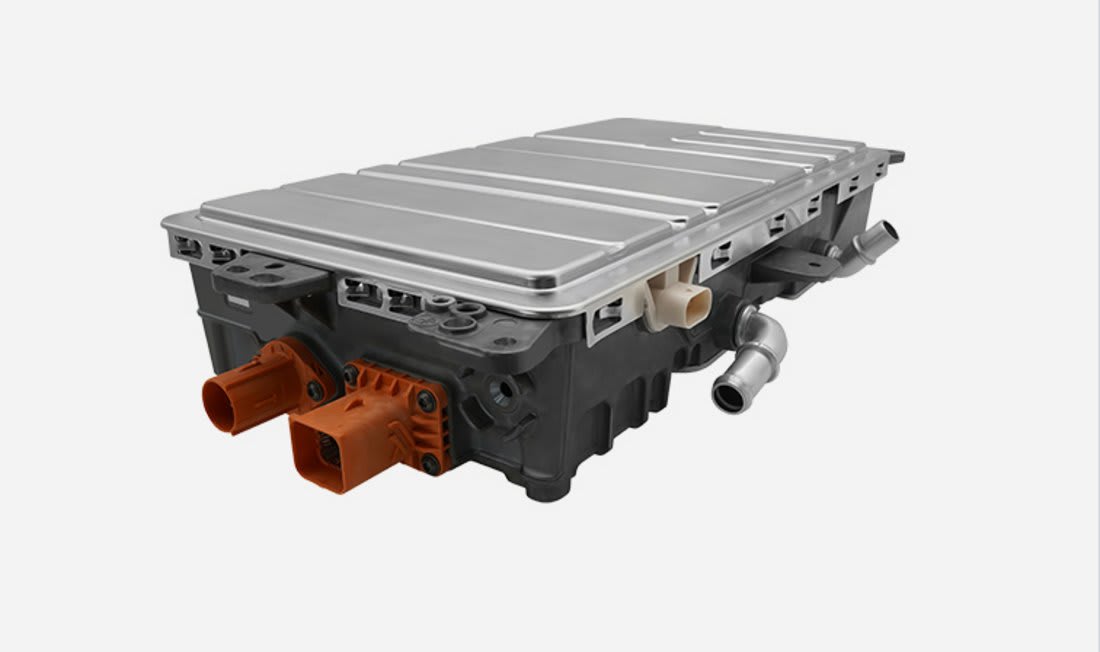
The On-Board Charger (OBC) Industry focuses on developing systems that convert external AC power into DC power to charge electric vehicle batteries safely and efficiently. OBCs are a critical component of electric and plug-in hybrid vehicles, directly affecting charging speed, energy efficiency, and battery life. Market growth is driven by rising EV adoption, expansion of charging infrastructure, and stricter emission regulations. Technological advances such as high-voltage systems, fast charging, and AI-enabled energy management are shaping the future of the industry globally.
On-Board Charger Market Trends & Drivers
The increasing global shift toward electric and plug-in hybrid vehicles is a key market driver for on-board chargers. Stricter emission regulations, government incentives, and expanding charging infrastructure are encouraging consumers and manufacturers to invest in EVs. As more EVs hit the road, demand for efficient, reliable OBCs that support faster, safer charging grows, making this segment essential in the overall EV ecosystem.
Advances in power electronics, high-voltage architecture, and semiconductor materials are enhancing OBC performance. Manufacturers are developing compact, lightweight chargers with higher efficiency and reduced energy losses. Integration of advanced cooling solutions and wide-bandgap semiconductors like SiC and GaN is improving thermal stability and charging speeds. These technological upgrades help extend battery life, reduce vehicle weight, and support next-generation EV designs.
The rise of smart charging and grid-interactive solutions is reshaping the OBC market. On-board chargers with AI-enabled energy management can support vehicle-to-grid (V2G) and bidirectional charging, allowing EVs to store and send energy back to the grid during peak demand. This improves energy efficiency, balances load variability, and enhances integration with renewable power sources. As utilities and automakers adopt intelligent charging strategies, the market for advanced OBC systems continues to expand.
Leading Companies Operating in the Global On-Board Charger Industry
Bel Fuse Inc. BRUSA Elektronik AG Delta Energy Systems Ficosa Internacional SA innolectric AG KOSTAL Automobil Elektrik GmbH & Co. KG Robert Bosch GmbH Semiconductor Components Industries LLC Stercom Power Solutions GmbH STMicroelectronics N.V. Texas Instruments Incorporated Toyota Industries Corporation
On-Board Charger Market Report Segmentation
By Power:
Less Than 11 kW 11 kW to 22 kW More Than 22 kW
11 kW to 22 kW holds the largest market share in 2025, offering the ideal balance of charging speed and compatibility with home and public infrastructure.
By Vehicle Type:
Passenger Car Buses Vans Medium and Heavy Duty Vehicles Boats Others
Passenger car leads the market with around 56.8% of the market share in 2025, driven by widespread consumer EV adoption across diverse vehicle segments.
By Propulsion Type:
Battery Electric Vehicle (BEV) Plug-in Hybrid Electric Vehicle (PHEV)
BEV leads the market with around 68.8% of the market share in 2025, reflecting growing consumer preference for fully electric vehicles and zero-emission mandates.
By Distribution Channel:
OEMs hold the dominant share, driven by the integration of OBCs directly into newly manufactured EVs at the production stage.
Regional Insights:
North America (United States, Canada) Asia Pacific (China, Japan, India, South Korea, Australia, Indonesia, Others) Europe (Germany, France, United Kingdom, Italy, Spain, Russia, Others) Latin America (Brazil, Mexico, Others) Middle East and Africa
Asia-Pacific dominates the on-board charger market with over 43.2% share in 2025, fueled by strong EV adoption, government incentives, and a dense base of EV manufacturers and battery producers.
Recent News and Developments in the On-Board Charger Market
September 2025: Forvia Hella partnered with Tau Motors to develop a new virtually isolated On-Board Charger (viOBC) with high energy efficiency and reduced size, aiming for series production in the next two to three years.January 2025: innolectric unveiled its Compact Efficient Charger (CEC) platform, a high-power, flexible OBC that supports both AC and DC charging standards and boosts power density.August 2024: Coulomb Solutions Inc. began producing a combined 40 kW onboard charger and EVSE (electric vehicle supply equipment) system enabling heavy EV fleet charging using standard outlets.June 2024: Texas Instruments announced a collaboration with Delta Electronics to create next-generation lightweight 11 kW onboard chargers with improved efficiency and reduced size.February 2024: Vitesco Technologies revealed its High Voltage Box, integrating key power components including the OBC, DC-DC converter, and power electronics into one modular unit designed for 800 V EV architectures.
Note: If you require specific details, data, or insights that are not currently included in the scope of this report, we are happy to accommodate your request. As part of our customization service, we will gather and provide the additional information you need, tailored to your specific requirements. Please let us know your exact needs, and we will ensure the report is updated accordingly to meet your expectations.