This Miami-based team believes AI – not hardware – will determine the future of EV infrastructure
As electric vehicle adoption accelerates across the U.S., the pressure on charging infrastructure is shifting. The constraint is shifting from how many chargers can be installed to how well they can be operated.
That’s the thesis driving Monta, a Danish EV charging software company that has planted its U.S. headquarters in Miami. Since launching locally, Monta has hired around 10 Miami-based employees and signed more than 25 customers across North America. Its focus is clear: help charge point operators run, monitor, and scale networks without letting operational costs spiral out of control.
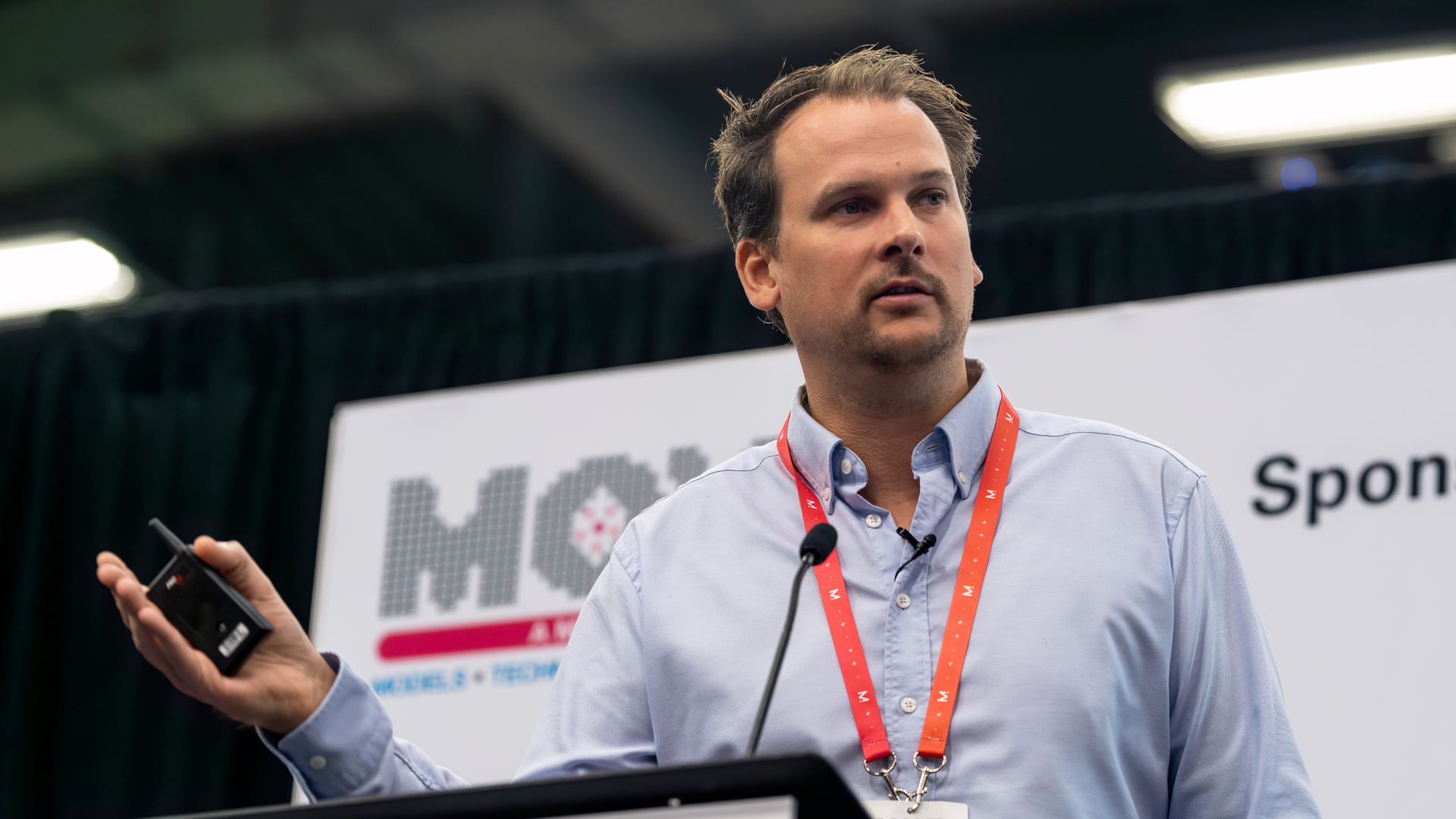
“The industry has focused heavily on deploying hardware, but the real constraint is operations,” said Casper Rasmussen [pictured above], Monta’s CEO and co-founder, in an interview with Refresh Miami.
The hidden bottleneck in EV charging
For years, the narrative around EV infrastructure has centered on physical deployment. More stations. More ports. Faster chargers.
But behind the scenes, charging networks are becoming complex software-driven systems. Operators must manage thousands of charging sessions, multiple hardware vendors, different firmware versions, payment systems, energy constraints, and customer support tickets – all at once.
Today, when something goes wrong, troubleshooting often requires digging through backend logs, firmware data, payment records, and hardware documentation. That work is typically handled by a small group of specialists who understand the technical nuances of each charger model.
That operating model works at small scale. It starts to crack as networks grow.
“What works at 50 chargers becomes inefficient at 500 and unsustainable at 5,000,” Rasmussen asserted. “Support teams grow linearly, costs increase, uptime suffers, and margins disappear.”
In fast-growing EV markets like Florida, Texas, and California, network growth is often measured in triple digits annually. The gap between scale and operational capacity is widening.
Enter Monta AI
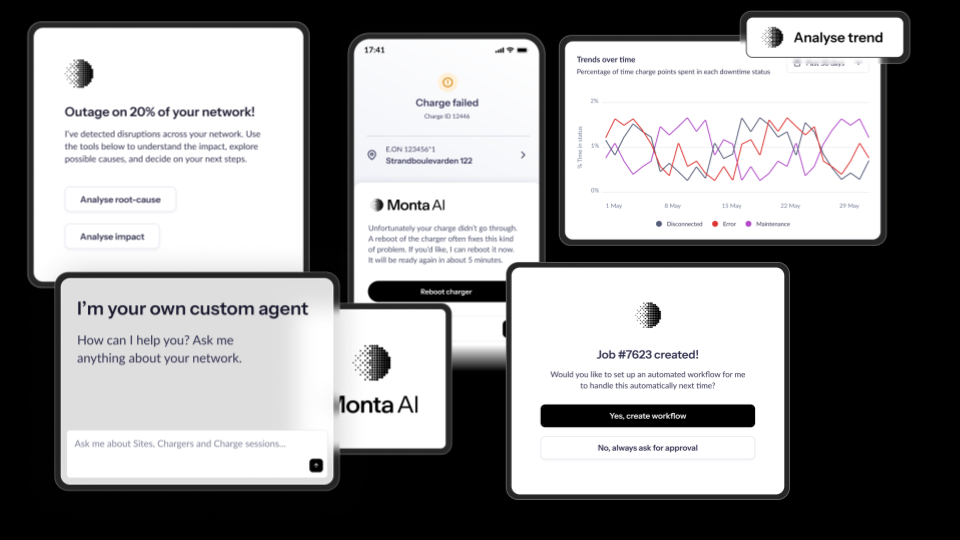
To address that gap, Monta recently launched Monta AI, an intelligence layer embedded directly into its platform. Rather than functioning as a separate add-on, Monta AI runs continuously in the background, analyzing operational signals across charging sessions, firmware updates, payments, energy usage, and support data.
The goal is to move from reactive to proactive operations.
Monta AI detects anomalies, explains root causes, and recommends concrete next steps. Operators can also interact with the system in plain language, asking questions about network performance, pricing strategies, utilization trends, or potential new expansion sites.
A simple analogy: imagine if your home internet router could detect a fault, attempt to fix it automatically, generate a clear report if it couldn’t, and book a technician with a detailed briefing – all before you made a call to customer support.
That’s the shift Monta is aiming for in EV charging.
Changing the economics of uptime
The economic implications are significant.
In one early production example, Monta AI identified a firmware mismatch that was causing repeated failures at a DC fast charger. Within 25 seconds, the system diagnosed the issue and recommended a fix. According to the company, the charger’s success rate improved from 31.2% to 98.3%.
For operators, that restores revenue to an asset that may have been underperforming. It reduces repeat driver complaints. It avoids costly technician dispatches. And it strengthens driver trust.
Multiply that impact across hundreds or thousands of chargers, and the economics of a network begin to change.
“If one operator can manage thousands of chargers with the same quality that previously required a full team, the unit economics fundamentally change,” Rasmussen said.
Beyond diagnostics, Monta AI supports dynamic pricing based on utilization patterns, site selection analysis using competitive and equipment data, and energy intelligence that helps prevent peak-load failures. The platform is trained on operational data from more than 260,000 connected charge points and roughly 3 million monthly charging sessions across Monta’s global footprint.
Unlike many AI initiatives that remain in pilot stages, Rasmussen emphasizes that Monta AI builds on systems already running in production, including automated support resolution and AI-powered diagnostics tools. The difference now is accessibility: making those capabilities available across an organization, not just to engineers.
Why Miami?
Monta’s decision to establish its U.S. headquarters in Miami was strategic.
The time zone allows tight collaboration with its European headquarters in Copenhagen. The Wynwood office provides space for testing chargers and vehicles – an advantage for a company operating at the intersection of software and physical infrastructure.
More importantly, Miami places Monta close to fast-growing EV markets and operators that are scaling now. Florida’s EV adoption continues to rise, and public and private investment in charging infrastructure is accelerating.
“Proximity matters,” Rasmussen said. “It allows us to build for real production challenges, not theoretical ones.”
The company’s U.S. team is entirely locally hired to date, reinforcing its commitment to growing its North American footprint from South Florida.
Toward autonomous charging networks
Looking five years ahead, Rasmussen believes reliable charging infrastructure will increasingly resemble autonomous systems.
In the near term, AI will continue to assist with diagnostics, pricing decisions, firmware management, and customer support. Workflows such as maintenance actions or pricing adjustments can be partially automated while keeping humans in control.
Over time, the ambition is more ambitious: networks where software orchestrates fault resolution, optimization, and coordination across thousands of chargers with minimal human intervention.
For drivers, the end goals are straightforward. The charger works every time. Payment is seamless. Issues are resolved before they are even noticed.
Behind the scenes, AI systems would monitor network health in real time, predict failures, optimize utilization, and maintain reliability without constant firefighting.
Installing chargers, Rasmussen argues, is not the hardest part of building EV infrastructure. Operating them sustainably at scale is.
READ MORE IN REFRESH MIAMI:

I am a Miami-based technology researcher and writer with a passion for sharing stories about the South Florida tech ecosystem. I particularly enjoy learning about GovTech startups, cutting-edge applications of artificial intelligence, and innovators that leverage technology to transform society for the better. Always open for pitches via Twitter @rileywk or www.RileyKaminer.com.
Latest posts by Riley Kaminer (see all)