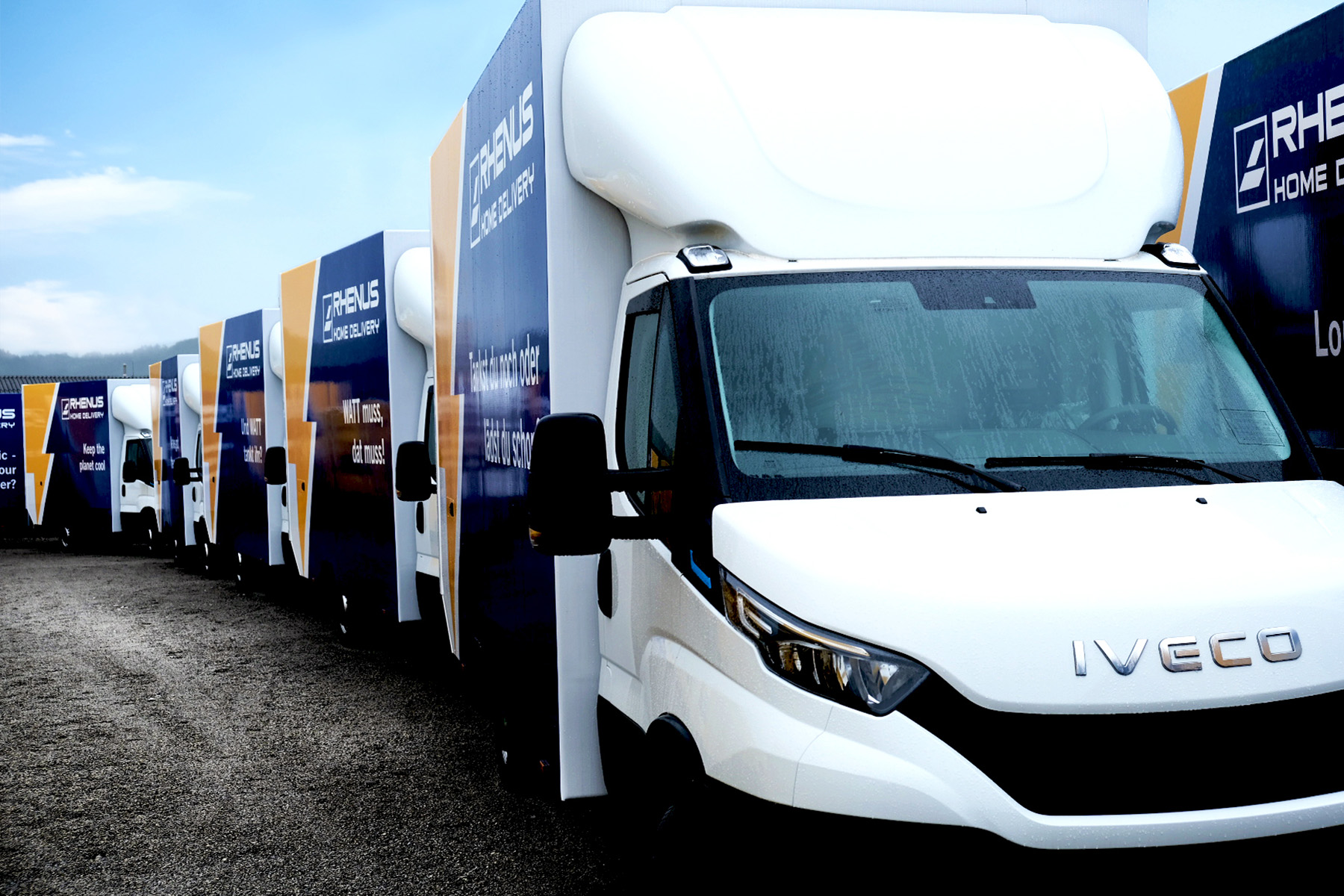
The Shift2Zero consortium is refining six electric vehicle prototypes based on the Iveco eDaily and Alkè ATX platforms. The partners will test the vehicles under real-world operating conditions at six pilot sites across Europe, focusing on urban logistics and municipal applications. The project brings together research institutes, universities, industrial companies, logistics providers and municipalities to accelerate the deployment of zero-emission commercial vehicles. Core partners include the AIT Austrian Institute of Technology, Fundació Eurecat, Vrije Universiteit Brussel, Alkè Electric Vehicles, Gruber Logistics, Iveco S.p.A. and Michelin. The European Union funds the project under the Horizon Europe framework programme. The consortium operates with a total budget of €12 million, including €10 million in EU funding.
Through this broad-based consortium, Shift2Zero aims to cover the entire value chain and ‘paves the way for the widespread introduction of zero-emission N1 e-LCVs in Europe,’ as stated by the AIT in a press release. The vehicles will be tested in Bergen, Oslo, Thessaloniki, Bologna, Brussels, and Wrocław to reflect real delivery conditions and assess their adaptability to diverse urban environments. In parallel, the project will conduct market analyses, develop business scenarios, provide training, and align policies to ‘ensure that the concepts can be quickly put into practice,’ as emphasised by the consortium.
So, what do these concepts entail? The AIT highlights the following features:
A modular cargo space that can be flexibly adapted to various transport tasksA multi-temperature cargo space for the simultaneous transport of fresh goods, frozen products, and dry goodsErgonomic and safe driver workstations to enhance comfort and occupational safetyEnergy efficiency through bidirectional charging, regenerative braking, optimised tyre and braking technologies, and intelligent thermal managementDigital control strategies and IoT integration to operate vehicles efficiently and intelligently manage supply chains
These features are designed to equip electric light commercial vehicles to meet the growing demand for fast and partially temperature-sensitive deliveries in major cities. “Inefficiencies in fleet sizes, load factors and energy consumption, as well as stricter urban access regulations, clearly show that conventional vehicles are reaching their limits. Europe urgently needs emission-free, cost-efficient and flexible solutions for urban logistics,” the AIT underscored.
The Austrian partners are contributing innovative components such as infrared cabin heating, intelligent thermal management, and energy-optimised control strategies for the vehicles. “By developing infrared cabin heating systems and intelligent heat management, we are helping to optimise vehicle performance while reducing energy consumption,” explained Mirza Popovac, Project Manager at AIT.
In addition, the AIT is responsible for simulations, prototype development, pilot preparations, and dissemination to ensure these innovations can be integrated into the vehicles. Special focus is placed on cold chain logistics, the return of goods (‘reverse logistics’), and so-called ‘multi-mission vehicle concepts,’ which enable the transport of both goods and passengers.
presse.ait.ac.at, shift2zero-project.eu