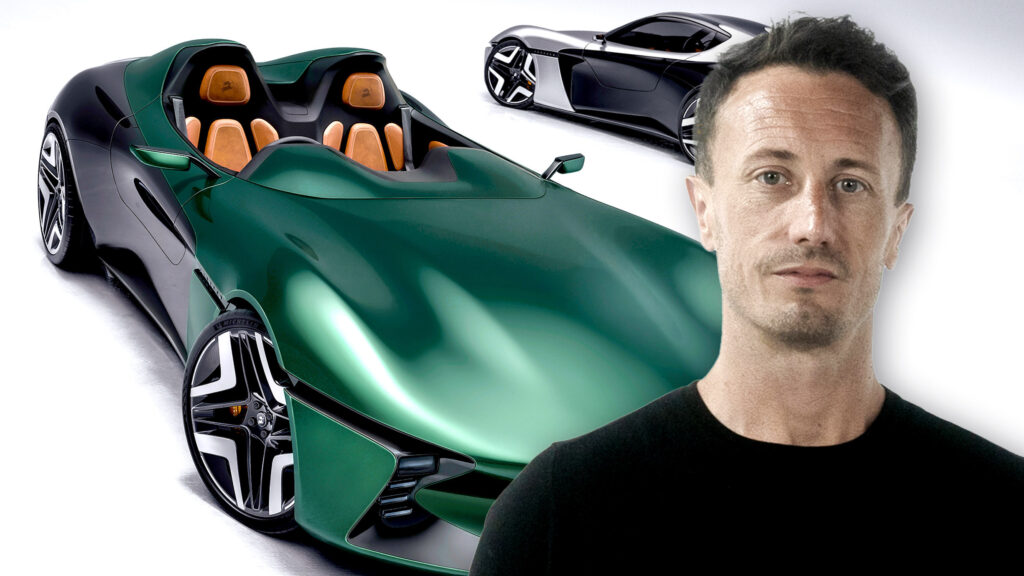
Longbow rejects vertical integration for proven supply chains.
Additive manufacturing reshapes low volume customization locally.
The company wants EVs to feel like sports cars not tech showcases.
For many modern electric vehicles, progress has come to mean more. More batteries, more screens, more driver aids, and more weight. Longbow doesn’t see that as a requirement, or even desirable, for that matter.
The company was founded in 2023 by Daniel Davey and Mark Tapscott, both veterans of Tesla and Lucid, so they have seen firsthand how ambitious EV concepts hold up once they leave the presentation slide. At the end of 2025, former X Shore CEO Jenny Keisu joined the leadership team, bringing experience from the electric marine world into the mix.
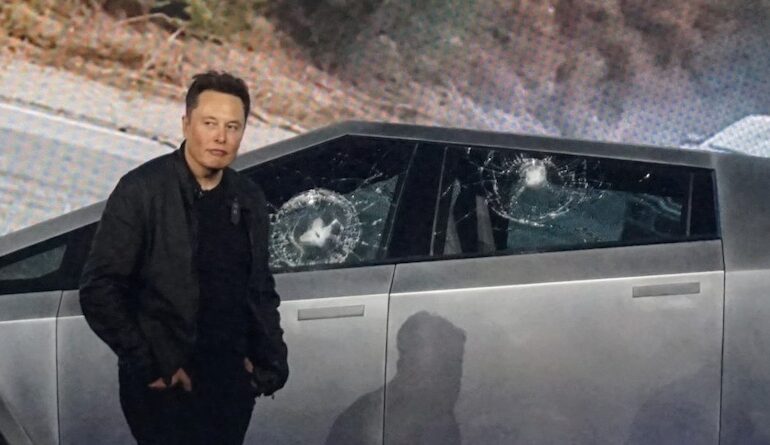
More: This Company Just Built A Speedster Before Elon Finished His Roadster
Speaking exclusively with Carscoops, Tapscott outlined an engineering philosophy rooted in first principles, lightweight design, and a rejection of the idea that electrification must automatically lead to oversized, tech-heavy vehicles.
Does Every EV Need To Be Built From Scratch?
“I think it’s just a strengthening of resolve, to be honest,” Tapscott said when asked whether shifting industry conditions had forced a rethink. Rather than chasing vertical integration or speculative future technologies, Longbow is focused on building a sports car using proven components that already exist.
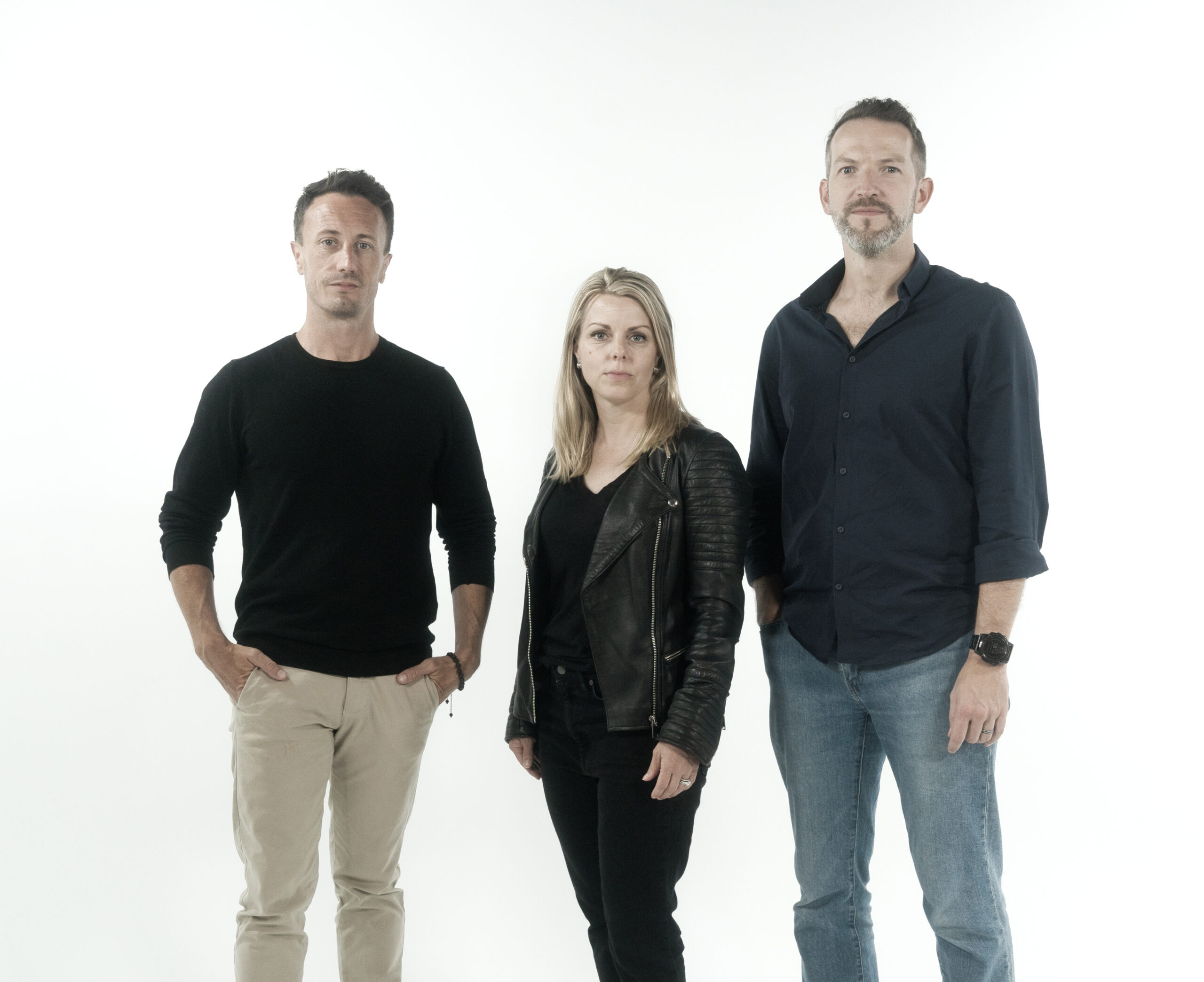
Fom left to right: Mark Tapscott, Jenny Keisu, and Daniel Davey.
That mindset was reinforced early on through conversations with one of Tesla’s original co-founders, Tapscott told us, though he did not specify which one. Tesla was founded in 2003 by Martin Eberhard and Marc Tarpenning. “He sort of explained to us… that it’s exactly how they wanted to build Tesla 15–20 years ago,” Tapscott said. Back then, the supply chain simply wasn’t ready. Today, it is.
Instead of pouring resources into building motors or factories from scratch, Longbow is deliberately sourcing components with millions of miles of validation behind them. “There are so many suppliers making incredible products that we can take advantage of,” he explained. “The industry is helping us in what it’s doing.”
Physics First, Always

Tapscott says Longbow didn’t need to “unlearn” much when forming the company, largely because its founders came from motorsport, startups, and consultancy work rather than traditional OEM bureaucracy. What they did adopt, and continuously return to, is physics-based thinking.
“We always come back to that, which is the ‘why’ every single time,” he said. “It’s always ‘why this, ok, why that,’ until we get to that physics first-principle reason. And very often, there isn’t a reason—it’s just a choice.” A clear example is Longbow’s battery architecture. Instead of layering cells inside multiple cases and mounts, the company questioned whether those layers were truly necessary.
“Cells go into a case. That case is in another case. And then it goes into the vehicle, which is another case,” Tapscott explained. “So you end up having these extra layers of unnecessary weight and volume.”
By stripping those layers away and integrating the battery structure directly into the chassis, Longbow says it has achieved significant stiffness gains. According to Tapscott, the resulting structure is “at least twice as stiff as the Lotus chassis,” often cited as a benchmark for lightweight aluminum sports cars.
Clearing The Air On In-Wheel Motors
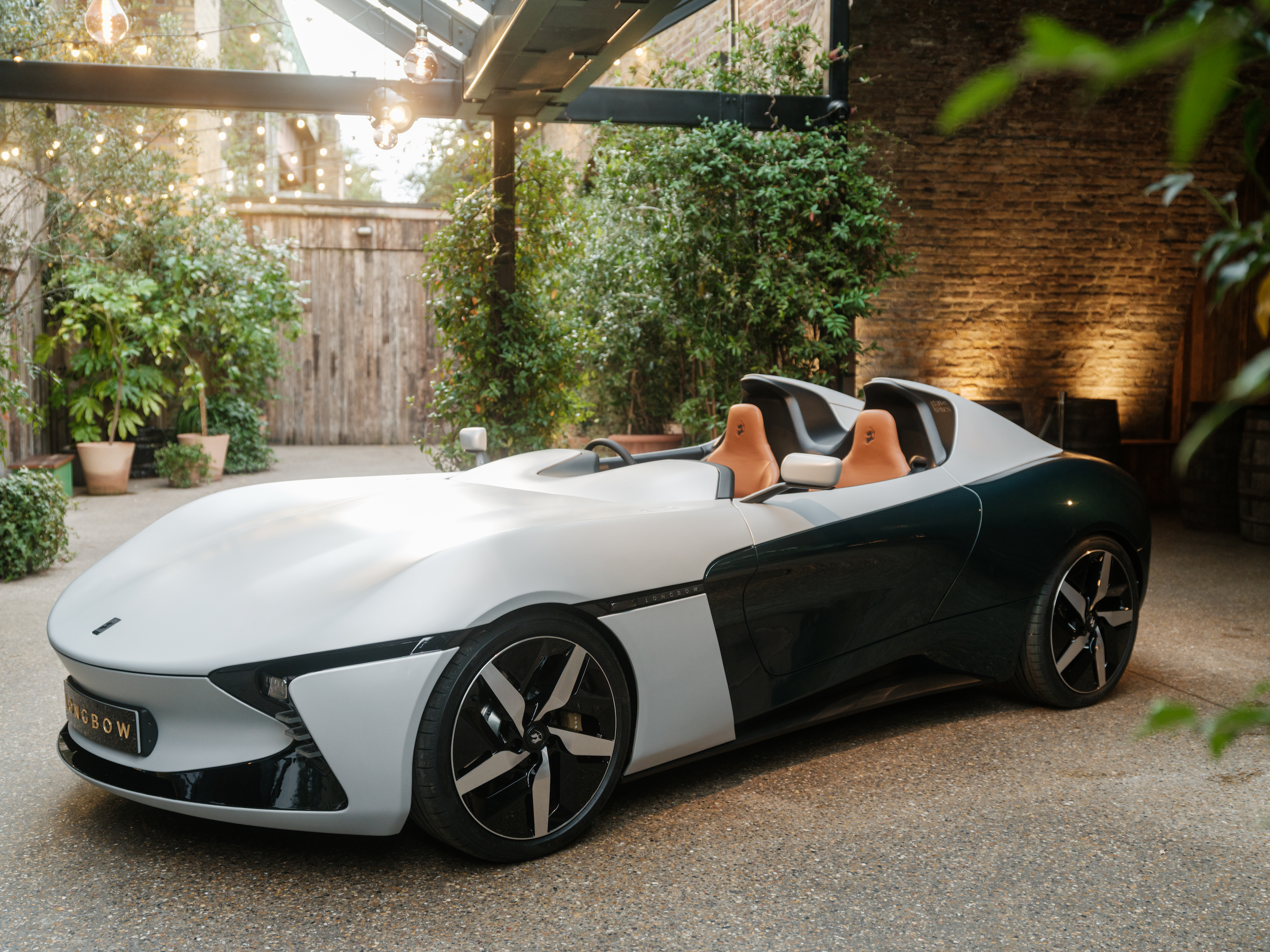
Longbow’s CES appearance sparked plenty of conversation around in-wheel motors. The brand touted a potential output of 900 horsepower, but it left us wondering how those motors would affect unsprung mass. Tapscott was quick to clarify that what was shown was a demonstration, not a production specification.
“The vehicle that we showed at CES… was really a demonstration,” he said. The goal was to highlight the flexibility of the underlying chassis rather than preview a finalized drivetrain. For production, Longbow is sticking with what Tapscott described as a “beautifully engineered, tiny little watchmaker’s motor” mounted within the vehicle. Still, he sees long-term potential in hub motors, particularly as technology matures.
“There is development work to be done on in-wheel motors,” he said. “We do think there is definitely a future for them… because it gives you so much more opportunity within the vehicle.” So for now, put a pin in the hub motors, but don’t forget them. They could pop back up in a future Longbow product.
Weight Loss As A Daily Discipline
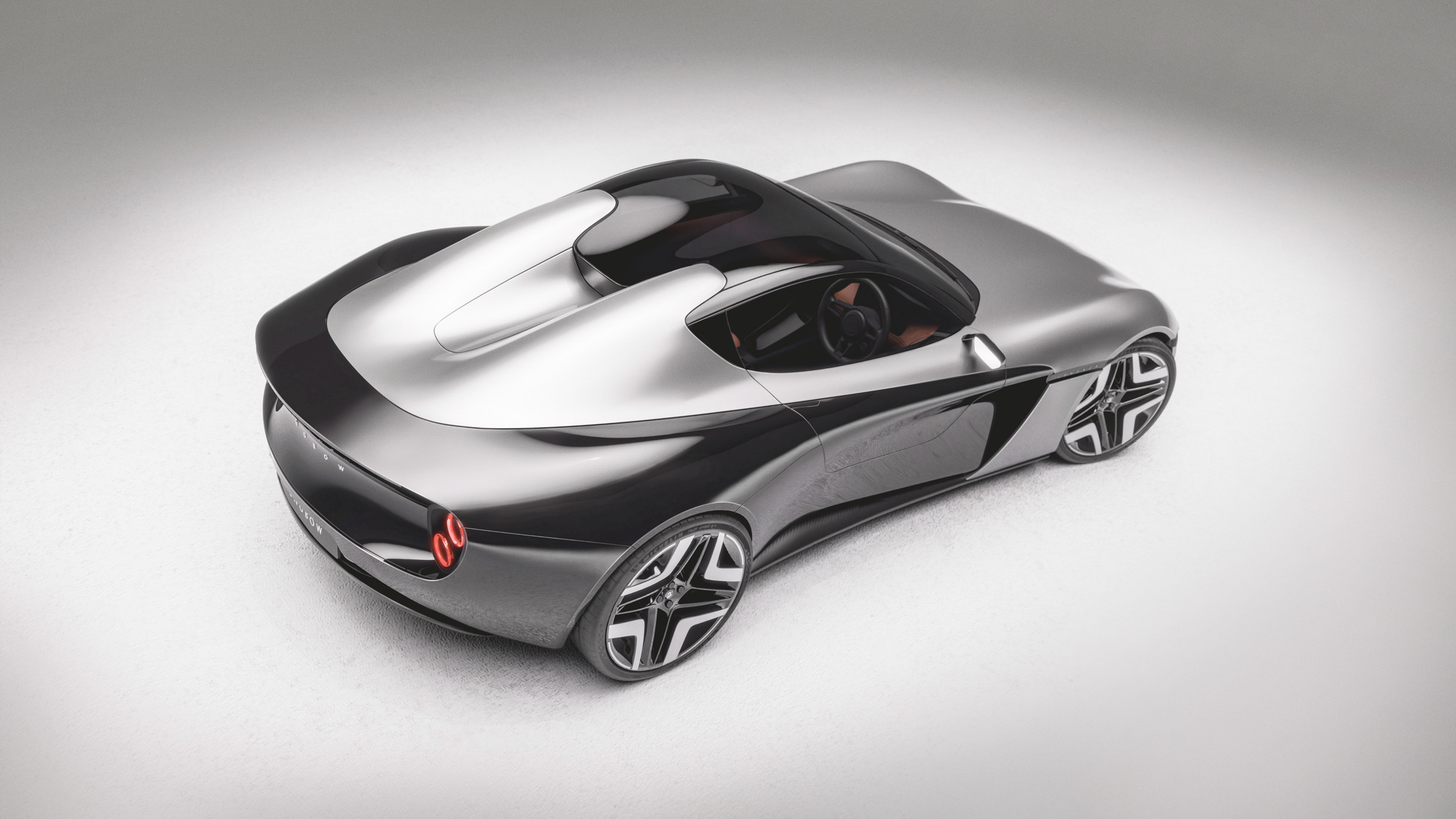
Ask where weight was spent most reluctantly, and Tapscott doesn’t point to a single component. Instead, he describes an internal philosophy that governs every decision. “Our engineers are given two tasks,” he said. “Every day, they need to lose at least one gram from anything they’re designing. And the second is the best design they can do is no design at all.”
That ethos borrows heavily from Colin Chapman, whose influence Tapscott freely acknowledges. Still, Longbow isn’t pursuing minimalism at all costs. Some elements, like a physical shifter, exist purely to enhance the experience. “There are things we’re adding… for the theatrics,” he said. “Customer enjoyment is important.”
Additive Manufacturing And A Different Production Model
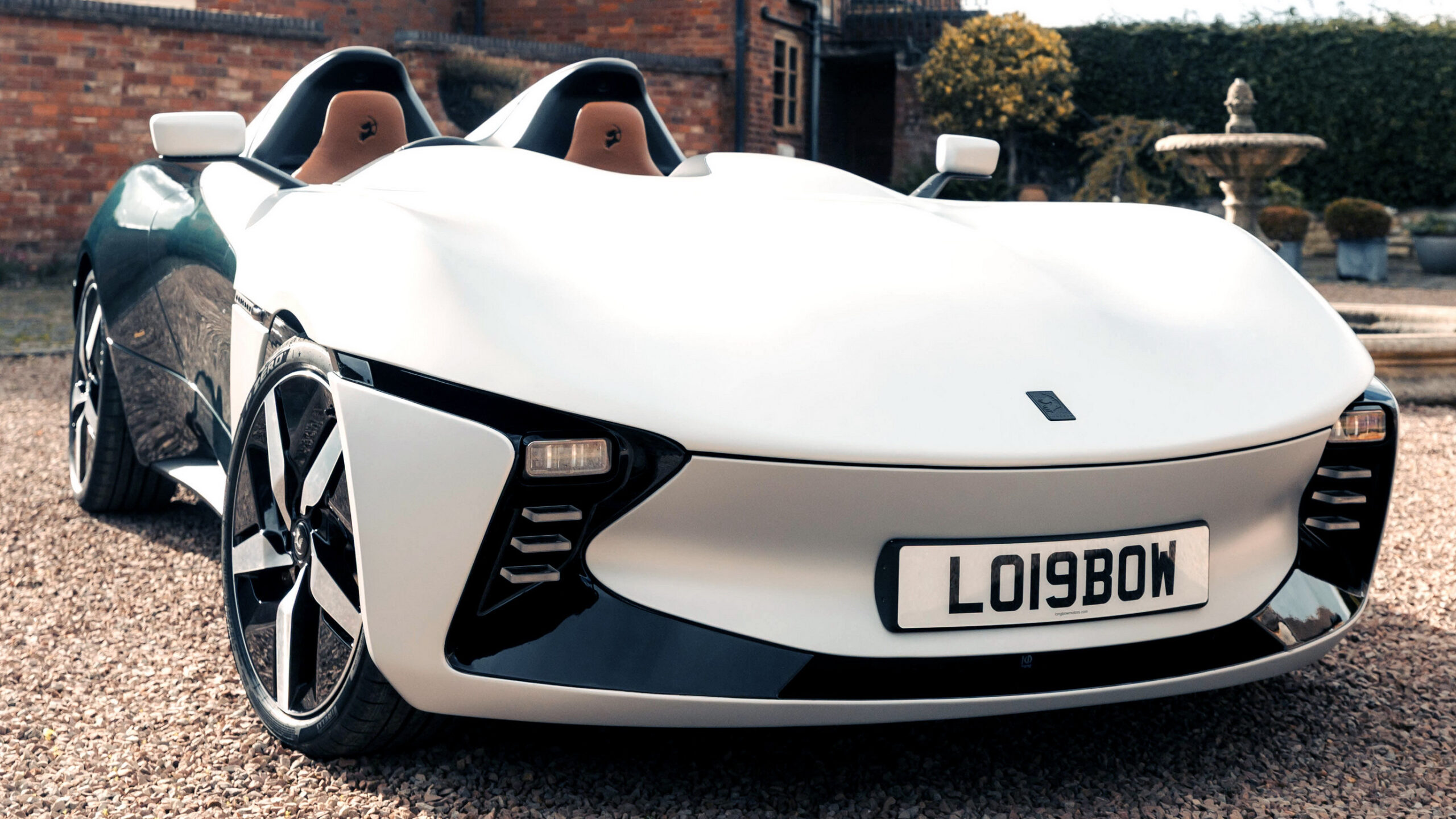
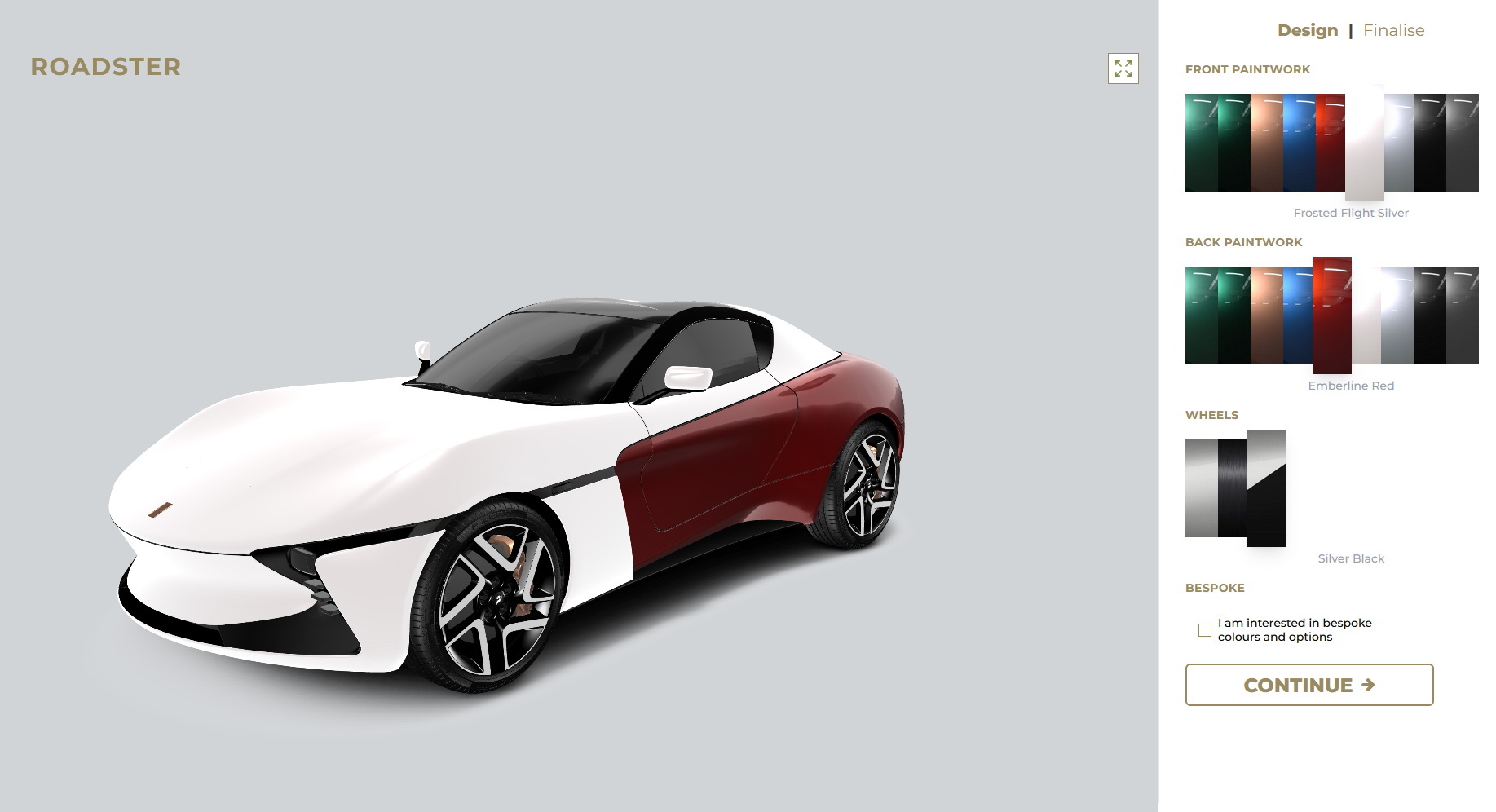
One of the most under-the-radar aspects of Longbow’s approach may be how it’s using additive manufacturing beyond prototyping. “At the moment, a lot of the development prototype cars we’ve been producing have been fully 3D printed on the exterior,” Tapscott said, noting how it enables rapid iteration during development.
Looking ahead, he sees additive manufacturing changing how low-volume cars are supported and customized. Instead of maintaining warehouses full of body panels across different markets, parts could be printed locally, on demand.
Read: 8 Years Later, Tesla’s Still Taking $50K Roadster Reservations Musk Promised For 2020
“You can actually just have one printer that can print off that part in that country immediately, without any delay,” he said. The same approach could also enable personalization without the cost typically associated with bespoke programs. “It could be entirely personalized to you,” Tapscott added. “That’s something that hasn’t been explored as much in production automotive.”
An EV That Puts The Driver First
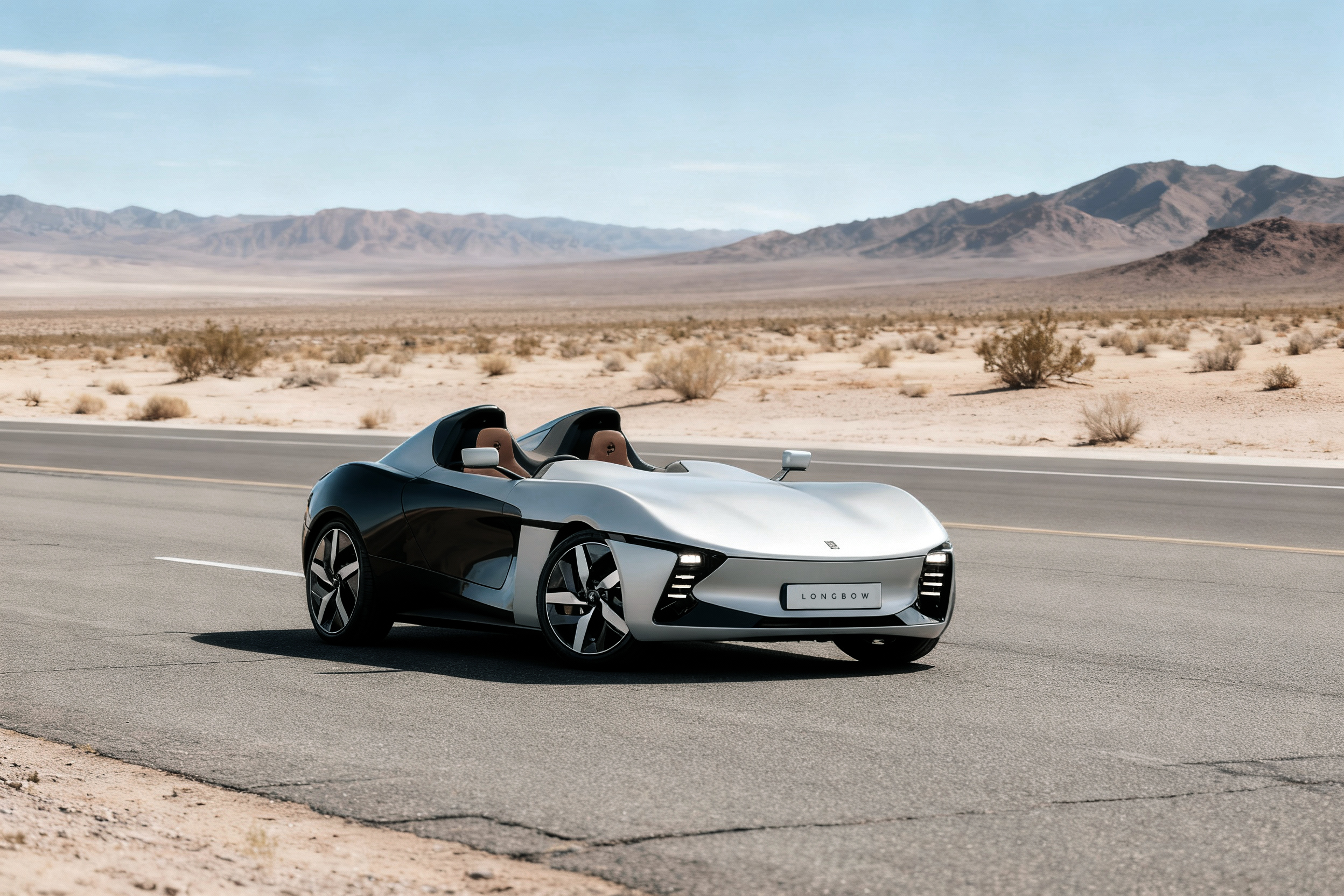
Ultimately, Longbow’s message is that electrification doesn’t have to erase driver engagement. “An EV powertrain doesn’t mean a D-segment SUV with all of the extra cameras and weight and everything else,” Tapscott said. “Those two things are different.”
Longbow wants its car to be a tool – powerful, precise, and rewarding- but only when paired with an engaged driver. Or, as Tapscott put it, borrowing from the company’s own name: the weapon matters, but the archer matters more. Modern EVs are often defined by their tech-heavy approach, but that leads directly to just being outright heavy. Longbow’s approach to cutting out the fat might be its sharpest edge in the market.