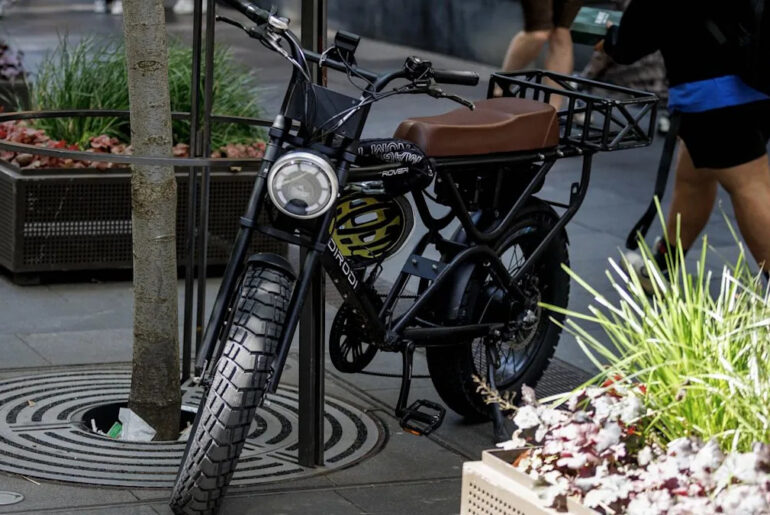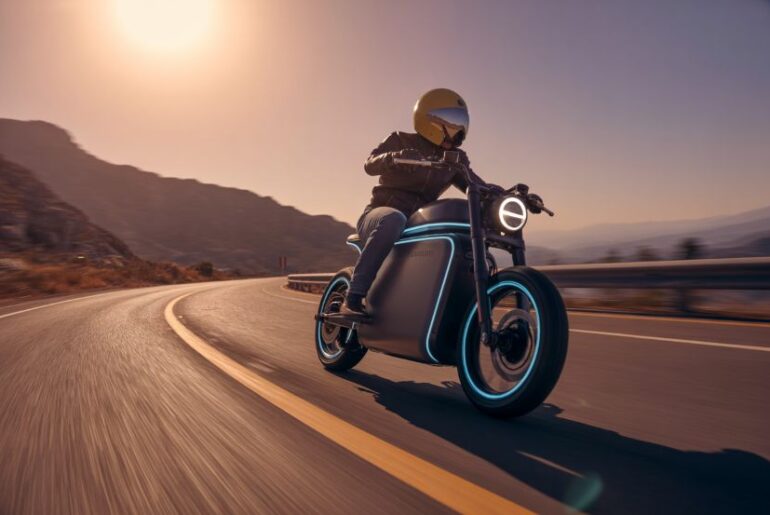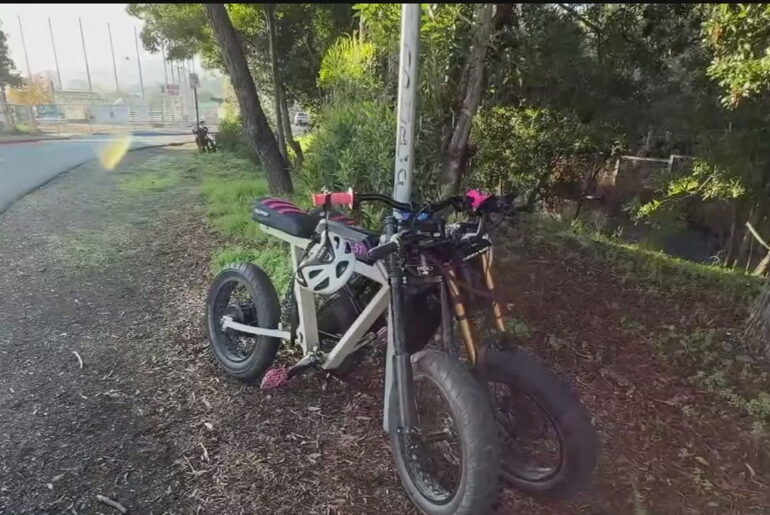
Bicycle advocates have spent decades trying to make the Bay Area more bike-friendly. But one aspect of the two-wheeled revolution has government and health officials increasingly concerned. Electric bicycles, or e-bikes, have changed a lot since the pandemic shutdown and may be posing a serious threat to kids.
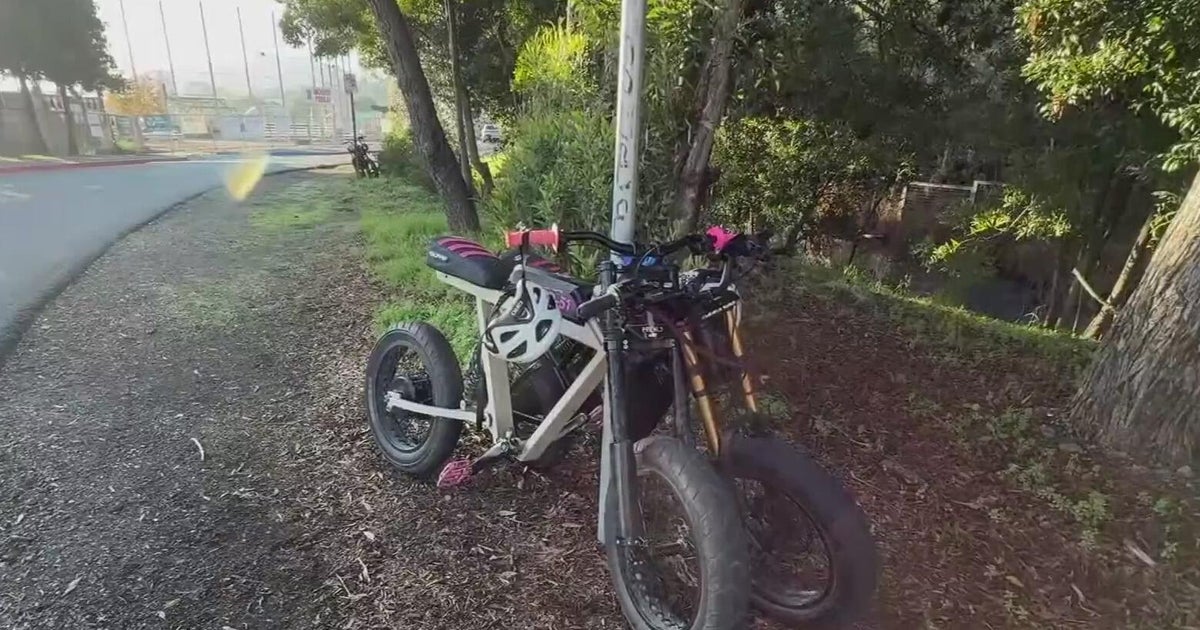
Pedal-assisted e-bikes were originally marketed to seniors as a way to get them out and about. But then, a throttle was added, and you didn’t have to pedal at all. Those machines were soon embraced by the younger generation and as they got bigger and faster, emergency trauma surgeon John Maa said he began seeing injuries that were similar to accidents involving motorcycles rather than bicycles.
“What we have is a condition which was largely unheard of prior to the pandemic,” said Dr. Maa. “It’s now the number one leading condition being treated in children’s emergency rooms. Can you imagine that? That a single mechanism of injury just rose all the way to become number one?”
Dr. Maa has become a prominent voice in the fight to regulate e-bikes in the state. And he’s getting more help. On Friday, local officials gathered in Walnut Creek to support legislation that would require registration of Class 2 and 3 e-bikes, to hold dangerous riders accountable.
“During school commute times, in the mornings and afternoons, it’s an everyday occurrence to see kids riding the wrong way down streets, on sidewalks, and blowing through stop signs,” said Walnut Creek mayor Kevin Wilk at the news conference. “Add to that, the sun in the eyes of drivers, and we have a tragedy waiting to happen.”
Tragedy has already happened. On Monday, 16-year-old Kash Justin Krawetz died in Half Moon Bay when his e-bike slammed into a truck parked on the street.
“And that’s what people are buying 11, 12, 13 and 14-olds,” said Alan Kalin. “And as most people know, how many 12-year-olds have a driver’s license? Yet, they’re riding a 100-pound electric motorcycle that will go 30-plus miles per hour.”
Kalin is a well-known cycling advocate in Contra Costa County. But lately his time has been spent gathering data on the safety problems posed by kids and e-bikes. In May, he was welcomed onto the Stone Valley Middle School campus to count e-bikes in the school bike lot.
“I was here in February,” said Kalin, back in May, “and counted 51 electric motorcycles, known as e-motos. Today, there are 70. That’s in only three months.”
He counted only 12 regular bikes in the rack area. And since then, the Class 3 e-bikes have only gotten more popular.
These days, the Iron Horse Trail in Contra Costa County is humming with electric motorcycles, most purchased by parents who consider them bicycles simply because most have some rarely-used pedals added to them. Class 3 e-bikes are restricted to a max speed of 28 miles per hour, but it’s common knowledge that the speed governor can be overridden by simply downloading an app.
As a result, other regulations are being proposed, including one to limit the peak power of the motors, currently about 750 watts.
“Every e-bike sold in California would be unlawful for sale as an e-bike in Europe,” said Dr. Maa. “Our motors are allowed 750 watts, but in Europe they’re only 250. So the U.S. motor is three times too powerful.”
As the injuries increase, along with potential legal liabilities, state and local officials are considering a host of new rules.