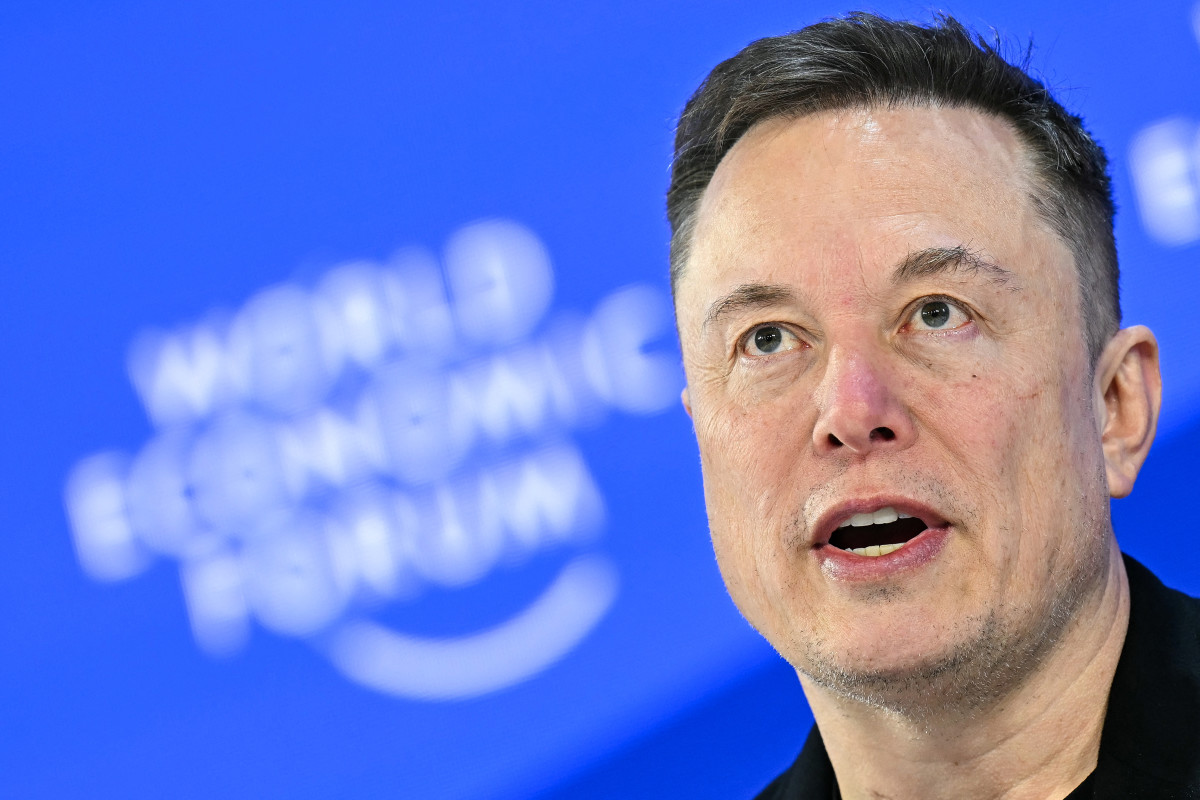
I never understood the consternation surrounding Tesla CEO Elon Musk‘s pay package. If Tesla investors voted to pay him a gazillion dollars, who are we to go against their wishes?
If you are an investor who doesn’t like it, sell. If you aren’t an investor, it’s really none of your business anyway.
Still, it’s fair to wonder why Tesla investors don’t insist on more specificity from their leader.
Musk tends to give very mundane answers when asked about what’s going on with the company currently, but he really shines when the topic turns to the distant future. That’s when he gets to make his bold predictions.
Take Tesla’s most recent earnings call, for example.
Elon announced that Tesla is updating its mission to “amazing abundance” to prepare for the AI-induced utopia he envisions.
“We’re going to keep improving safety, driving down the cost of goods, and getting people access to anything they need, without compromise,” Musk said. “And still making sure that the environment is great, nature is great, and people can have whatever they want.”
It sounds almost too good to be true. And while it would be easy to dismiss this vision as the dreams of an optimist, if you are a Tesla owner, it may worry you that the company’s mission is now serving that future.
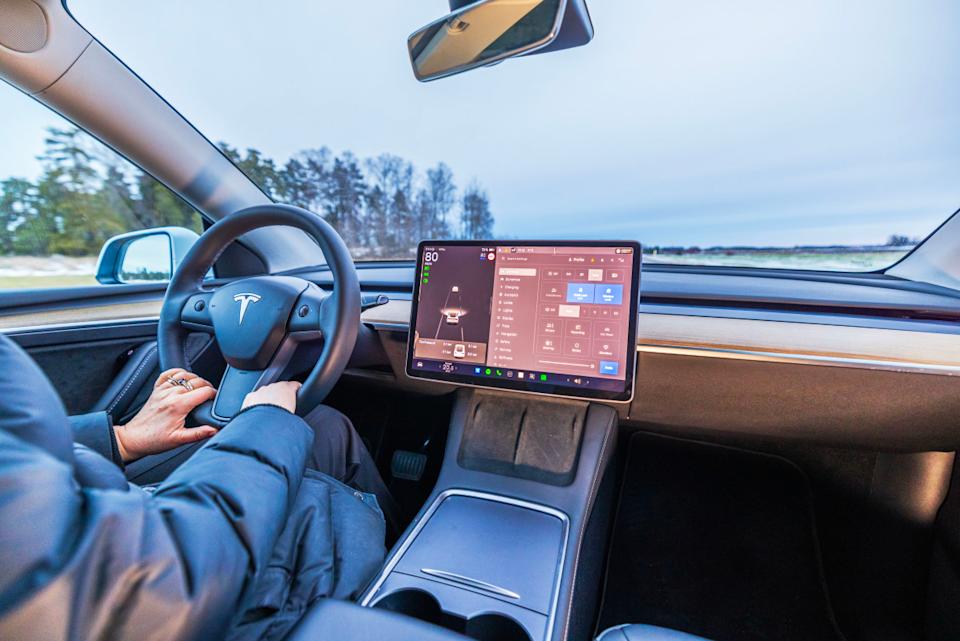 Tesla CEO Elon Musk tends to make bold promises about the distant future.ShapovalovGetty Images · ShapovalovGetty Images
Autonomous driving is Tesla’s future, perhaps even more so than Musk’s future Garden of Eden. But the company’s grasp of reality here also seems faulty.
Ashok Elluswamy was the first engineer hired to Tesla’s AI team in 2014; today, he is the company’s vice president of AI software.
Related: Tesla proves it truly is a tech (not car) company with latest move
During the earnings call, he revealed that the latest FSD update was a variant of the tech being used in its autonomous Robotaxis in Austin.
“A variant of the software that’s used for the robotaxi service was shipped to customers with V14, and customers saw a huge jump in performance, like a lot of, you know, happy feedback from customers,” said Elluswamy.
But just a quick perusal of X (formerly Twitter) — you know, Elon Musk’s home turf — shows the opposite of a lot of “happy feedback from customers.”
In fact, just typing “FSD v14” into the search bar brought up many Tesla owners complaining, and at least one looking to switch back to the previous version of the software (though other owners and fans were enjoying their FSD v14 update).
In any case, it doesn’t seem as if Elluswamy has a strong grasp of what his actual customers are experiencing. During the call, he said his team was “laser focused” on solving unsupervised FSD, seconds before he also said, “I think some customers took rides last week.”
Investors might assume that someone who is laser-focused on solving a problem would not only know for sure whether paying customers used the technology unsupervised the week prior to the earnings call, but would also have follow-up information on how their experience went.
While Tesla CEO Elon Musk thinks of his company as much more than just an electric vehicle maker, more than 90% of Tesla’s revenue comes from cars.
Still, after years of the Model S and the Model X not selling, Tesla announced earlier this month that it is mothballing them.
Related: Tesla is left out of latest White House Trade deal
Even analysts are looking past the company’s struggling automotive business to the software Tesla has been developing.
“While the autos business at Tesla may underperform in 2026, we think more attention is directed towards the company’s robotaxi expansion and efforts at humanoid development,” Deutsche Bank analysts said in a recent note.
“To the extent that the macro regime doesn’t change materially, we think investors will continue to look beyond weakness in the autos business.”
The year 2025 marked Tesla’s second consecutive year of falling car deliveries. Tesla delivered 1.64 million vehicles last year, down from 1.78 million in 2024 and 1.81 million in 2023.
Tesla’s operating income dropped dramatically in 2025 to $4.86 billion from $7.76 billion in 2024, and its gross profit declined to $16.2 billion from $17.4 billion.
Related: Tesla rival inspires Ford CEO Jim Farley’s push for EV profitability
This story was originally published by TheStreet on Feb 14, 2026, where it first appeared in the Automotive section. Add TheStreet as a Preferred Source by clicking here.