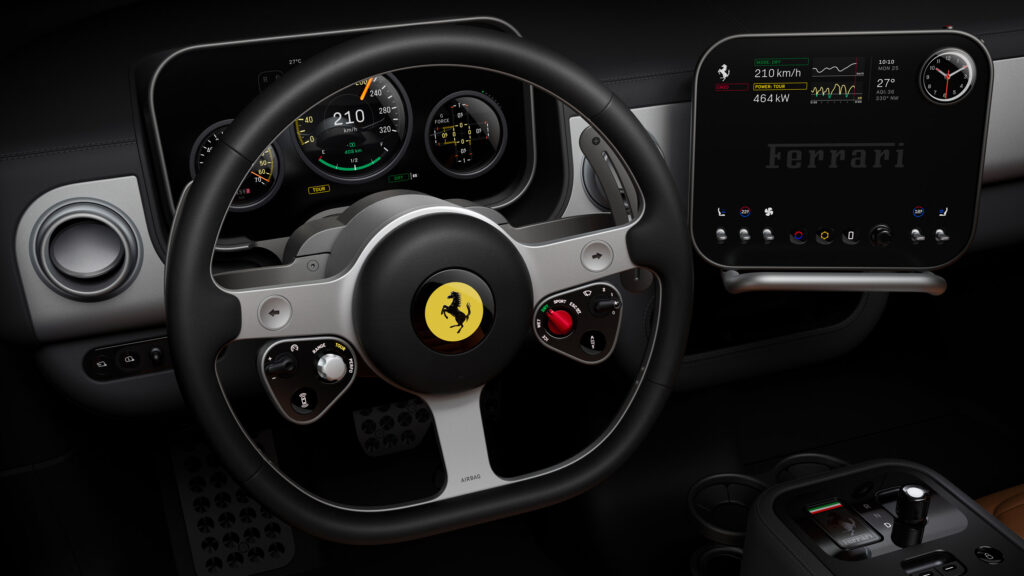
Carmaker Ferrari has released preview images of the interiors for its first electric car, Ferrari Luce, designed with Jony Ive, Marc Newson and their design studio LoveFrom.
Mechanical buttons, dials, toggles and switches abound across the car’s interfaces, unveiled this week ahead of the exterior reveal in May.
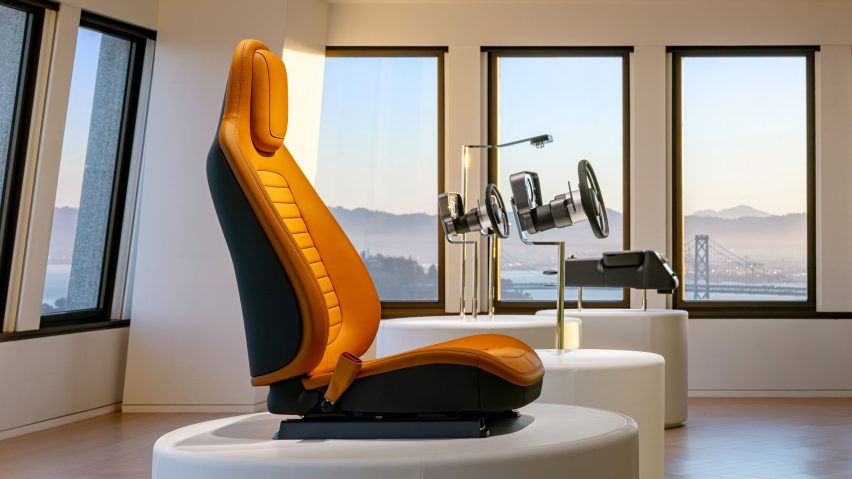 LoveFrom has designed the interiors and interfaces for the Ferrari Luce
LoveFrom, the collaborative studio of former Apple design boss Jony Ive and Australian industrial designer Marc Newson, conceived the interior to defy the convention that “electric cars must be dominated by large touchscreens”.
Instead, the design team prioritised physical controls, inspired by the design of classic sports cars and Formula One single-seaters.
“Many of the Ferrari Luce controls are mechanical and precisely engineered to be intuitive and satisfying by making every interaction simpler and more direct,” the design team explained.
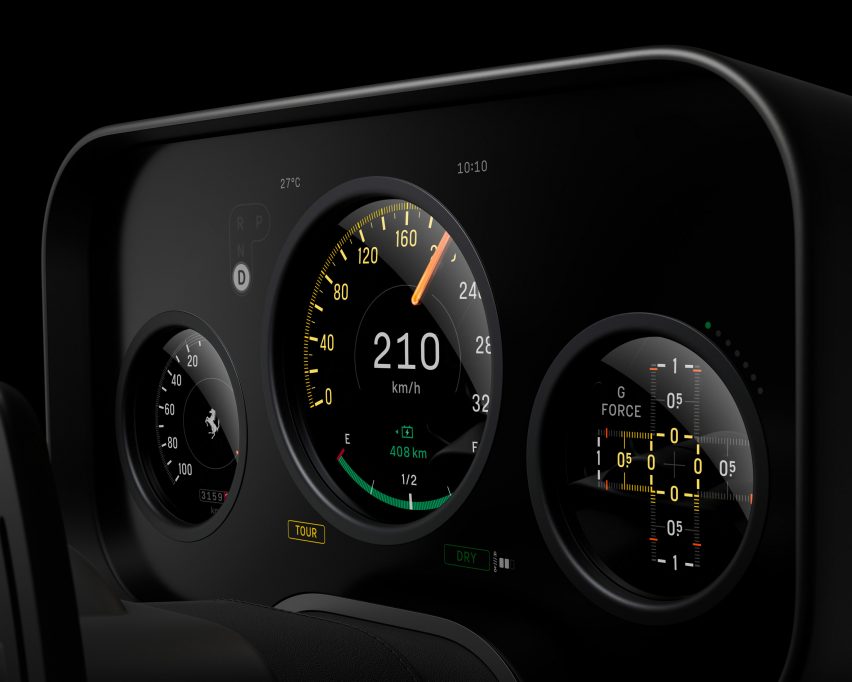 The instrument panel combines analogue and digital features
The three-spoke steering wheel, CNC-machined from 100-per-cent recycled aluminium, integrates buttons for indicating alongside several dials used to control the car’s drive modes, wipers and cruise control.
“Every button has been developed to provide the most harmonious combination of mechanical and acoustic feedback based on more than 20 evaluation tests with Ferrari test drivers,” the design team said.
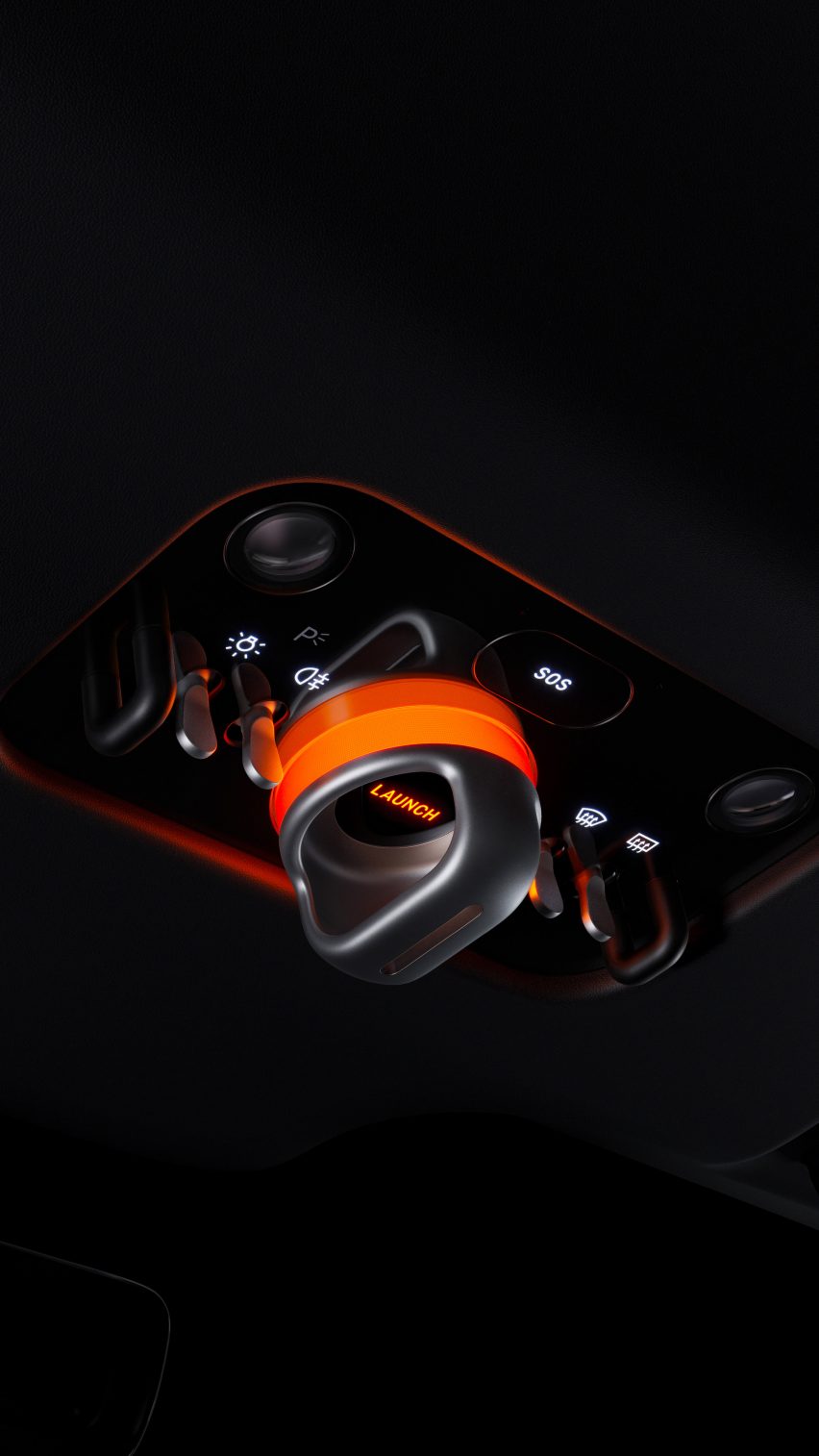 A launch button on the ceiling is used to aid acceleration
Another control panel on the ceiling, reminiscent of helicopters and other aircraft, includes toggles for the lights and a satisfying aluminium pull switch that activates launch mode for quicker acceleration.
The instrument panel, displaying data about the car’s speed and battery status, is mounted on the Luce’s steering column so it moves in sync with the wheel.

Jony Ive and OpenAI join forces to create “new family of products”
This data is displayed using a combination of analogue features – such as the needle on the speedometer – and two overlapping OLED displays, with circular cutouts in the top one revealing the information on the screen below to create a sense of visual depth.
“By referencing the simplicity of analogue watch dials, where time can be read at a glance, the designers aimed to make the car’s controls and displays equally intuitive,” Ferrari said.
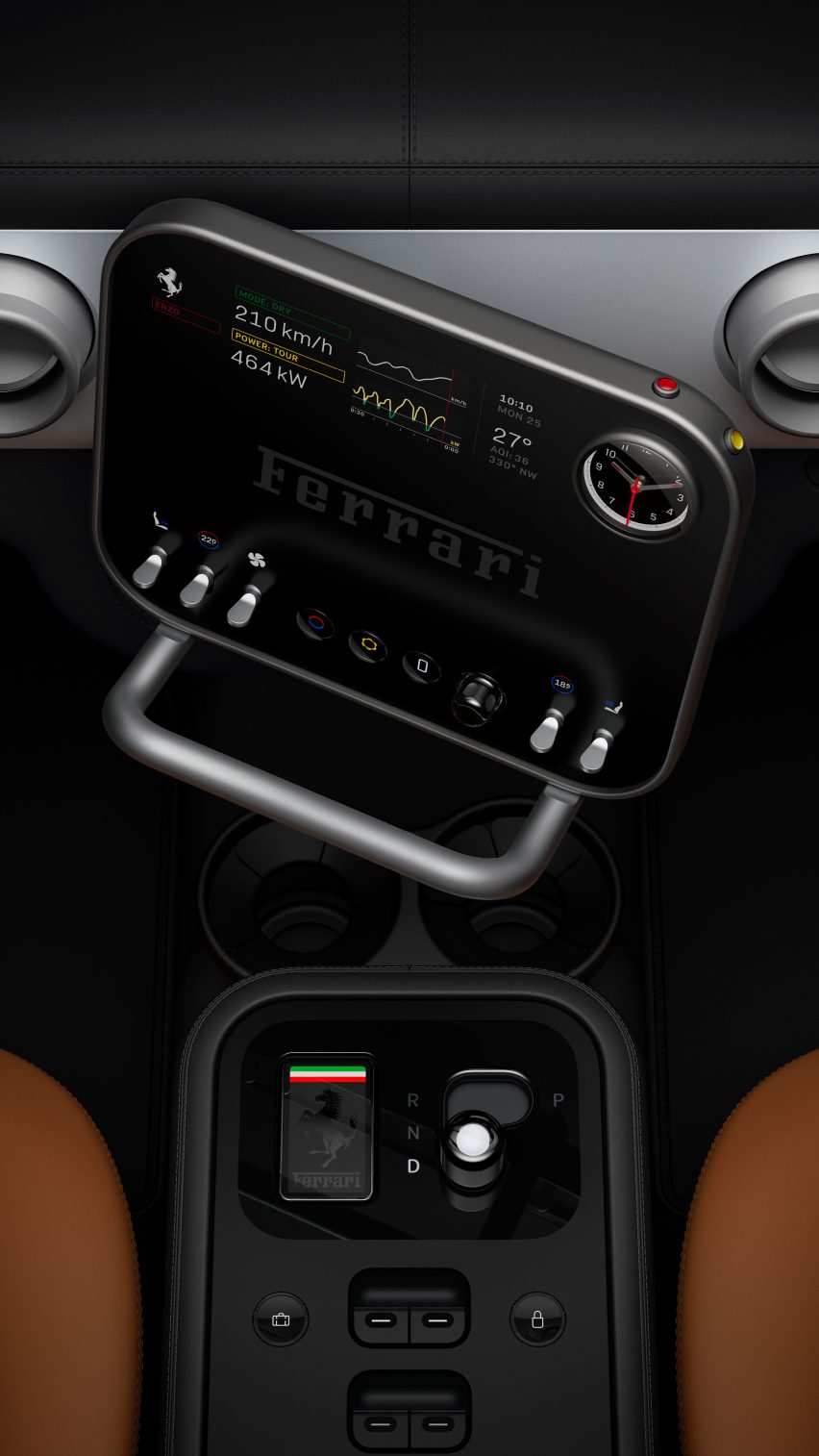 The central touch screen is paired with buttons and toggle switches
The car does still feature a touchscreen control panel for navigation and running CarPlay, but a series of toggle switches underneath the display are used to adjust the car’s temperature, fan speed and underseat heating.
In the right-hand corner, Ferrari installed what it calls a “multigraph” with a digital display and an analogue hand that functions as a clock, stopwatch, compass and launch control.
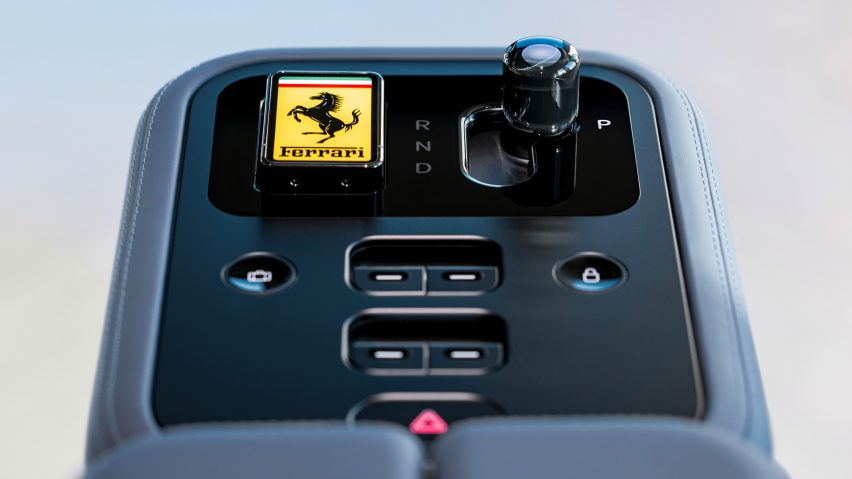 Ferrari Luce’s key fob fades from yellow to black when inserted into its dock
LoveFrom wanted the act of starting the car to be as “theatrical and memorable” as possible.
With this aim, the studio integrated a colour-changing E Ink display into Luce’s glass key fob, that fades from yellow to black when placed into its dock in the car’s centre console. At the same time, the gear selector and control panel light up to signal the car is ready to drive.
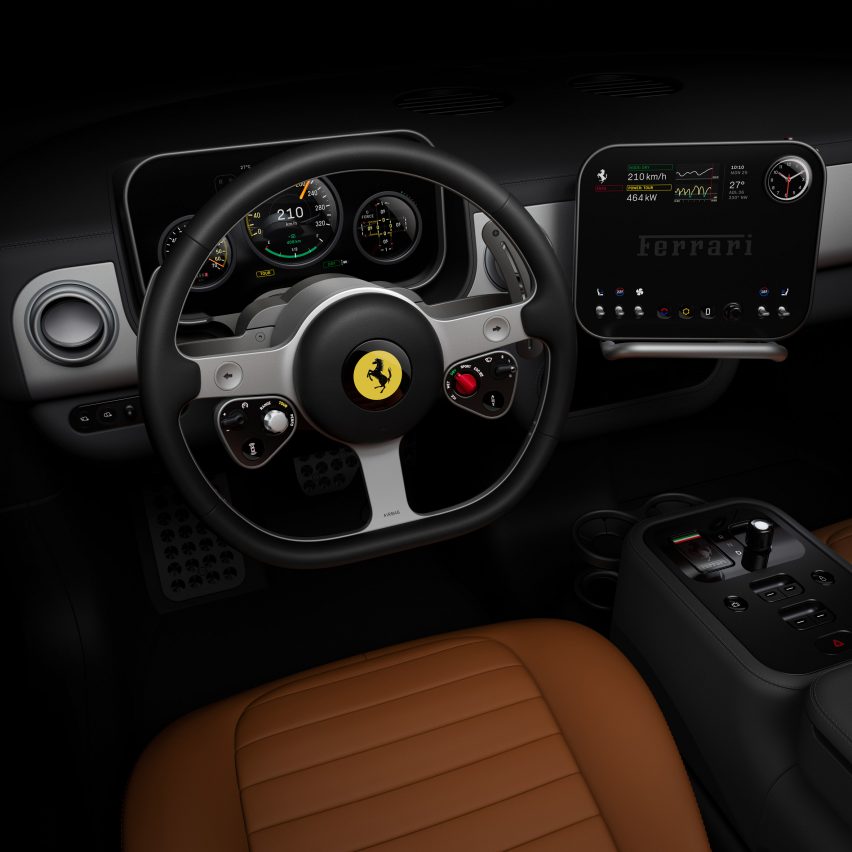 The car’s exterior will be unveiled in May
LoveFrom also shunned the industry’s existing, plastic-heavy material palette in favour of scratch-resistant glass and a recycled aluminium alloy, developed especially for the Ferrari Luce.
“LoveFrom was given the creative space to define the project’s design direction from the outset to translate a new, cross-disciplinary design language into an authentic Ferrari experience,” the carmaker said.
Other carmakers that have sought to redefine the visual language of electric vehicles in recent years include Jaguar with its controversial Type 00 concept car and Slate’s “radically customisable and affordable” electric truck, which is only available in grey.