Support CleanTechnica’s work through a Substack subscription or on Stripe.
Or support our Kickstarter campaign!

Electricity consumption from customers connected to Kenya Power’s E-Mobility tariffs surged 188% in 2025. Consumption rose from 2,922,692 kWh in 2024 to 8,433,437 kWh in 2025. This led to an increase in revenue from EVs charging to KShs. 190,800,016 ($1,479,069.89) from KShs. 64, 843,181 ($502,660.32) in 2025. Kenya Power says that to date, 205 customers have been onboarded to its E-Mobility tariff platform. Kenya’s E-Mobility tariff sees users billed KShs. 16/kWh ($0.12/kWh) during peak times and KShs. 8/kWh ($0.06 kWh) during off-peak times. Of course, the actual consumption from electric vehicles could be much higher, as not all drivers of electric vehicles are connected to the E-Mobility tariff.
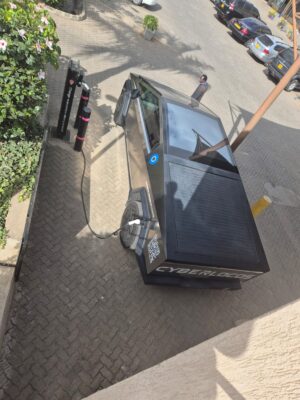 At the moment there are just over 35,000 electric vehicles registered in Kenya, with about 33,000 of them being electric motorcycles. The overall motorcycle market in Kenya was up 145% from 68,804 motorcycles sold in 2024 to 168,286 in 2025. With 25,277 of the motorcycles registered in Kenya in 2025 being electric, it means 15.3% of all new motorcycle registrations in Kenya in 2025 were electric. How cool is that!
With over 2 million internal combustion engine motorcycles registered in Kenya, the opportunity to electrify the sector is massive. Consumption from these motorcycles is probably the most well documented as the majority of them access charged batteries from battery swap networks from the key players in Kenya’s electric motorcycle sector. These swap stations are mostly connected to Kenya Power’s E-Mobility tariff. Electric buses operated by fleets are most likely to be part of the statistics as well. Electric cars used by private buyers may not be well represented as some will probably not have had their homes connected to meters linked to the E-Mobility tariff.
Kenya Power itself is playing a key role in supporting the adoption of electric vehicles and currently has a fleet of 11 electric cars and pickups, along with 30 electric motorcycles. Kenya Power plans to increase this fleet to 20 and 100 respectively. Kenya Power has also installed charging stations at its Stima Plaza offices, Donholm, Ruaraka, Electricity House Nairobi, and Ragati. Kenya Power is currently installing more chargers in Voi, Mombasa, Nyeri, Nakuru, and Eldoret. Kenya Power’s efforts are complementing private companies such EVChaja and Knights Energy Kenya that are rolling out charging stations in Kenya.
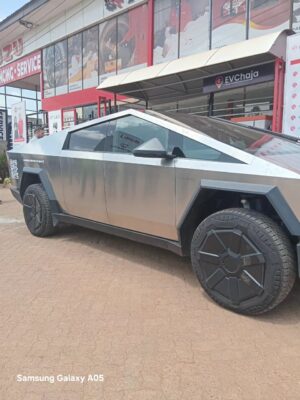 It is also important to accelerate the adoption of electric vehicles in Kenya to reduce emissions. Kenya’s grid is already exceptionally clean. Renewables provide around 90% of Kenya’s electricity generation. By gradually increasing the penetration of electric vehicles in Kenya, significant savings in CO2 emissions can be achieved. This can be achieved by incentivizing purchases of new electric motorbikes, and more importantly, supporting all the active companies in Kenya’s electric motorcycle sector. So, Kenya is making good progress. However, all the action seems to be concentrated on the electric motorcycle market. Government needs to incentivize growth in the electric car segment as well as the rest of the prominent vehicle segments in Kenya. Funders and investors now also need to look at the key players in the electric car space support and invest in them, especially those that are rolling out electric vehicle charging infrastructure for cars, which is a very capital intensive exercise.
Images by Remeredzai and Ben Masila
Support CleanTechnica via Kickstarter
Sign up for CleanTechnica’s Weekly Substack for Zach and Scott’s in-depth analyses and high level summaries, sign up for our daily newsletter, and follow us on Google News!
Advertisement
Have a tip for CleanTechnica? Want to advertise? Want to suggest a guest for our CleanTech Talk podcast? Contact us here.
Sign up for our daily newsletter for 15 new cleantech stories a day. Or sign up for our weekly one on top stories of the week if daily is too frequent.
CleanTechnica uses affiliate links. See our policy here.
CleanTechnica’s Comment Policy