Support CleanTechnica’s work through a Substack subscription or on Stripe.
Or support our Kickstarter campaign!

The idea seems simple enough. Scale the popular battery-operated kiddie car up to adult size, make it street legal, and sell a limited quantity to the high-end luxury market. When that catches on, start mass-producing more EVs at a more affordable cost. Lather, rinse, repeat. That worked for Tesla — up to a point — and now the US startup Faraday Future is doing something similar, only without the ever-growing baggage of US President Donald Trump to drag along.
New EVs, Without The Name Brand Baggage
With the somewhat sideways exception of Slate Auto investor Jeff Bezos, US automakers usually don’t expose themselves to instant name recognition by the general public (for the record, the CEO of Slate is Chris Barman).
So it is with Faraday Future. YT Jia, FF Founder and Co-CEO, has been doggedly pursuing a variation on the Tesla business strategy since 2014 in comfortable anonymity except among automotive circles, where auto industry watchers have watched the company roller-coaster through a series of heartstopping financial adventures (see more FF background here).
Faraday Future’s answer to the Tesla Roadster was a sort of pre-Roadster, the FFzero1, introduced with an MSRP of $309,000. Faraday unveiled the new bells-and-whistles EV at CES 2016, billing it as a showcase for AI-centered technology that can scale into a more marketable luxury vehicle, as a stop along the way to a truly affordable, mass-produced iteration.
Next steps began materializing over the ensuing years. In 2024 CleanTechnica noted that the company’s FF 91 2.0 Futurist Alliance EV was being shipped “one by one” to high-profile people in the fashion, film, and entrepreneurial worlds. The company also nailed down $30 million in new funding towards the development of its more modestly priced Faraday X (FX) lineup.
In April of 2025, Faraday affirmed that the FX will sport technology similar to the FF 91 2.0, aiming for a broader audience. How broad remains to be seen, but the company did put it in writing. “FX currently plans for up to three models: an AI-MPV product — named the Super One, the FX 5, and the FX 6, focusing on the $20,000–$80,000 base price segment,” the company stated.
Here Comes The Faraday Super One
Faraday did not let the grass grow under its feet. In December of last year, Faraday emphasized that the Super One is its flagship model for AI-forward technology. In a press release marking the first roll-off of a pre-production Super One MVP at its Hanford, California, factory, the company asserted that it is ready to take on other EV makers in its class.
Notably, Faraday did not name-check Tesla. In a six-point outline of its marketing plan, Faraday, billed the Super One as “the disruptor of the Cadillac Escalade in the EAI era,” added that the “FX Super One will fundamentally change the long-standing lack of product diversity in high-end business and family mobility in the U.S. market — where consumers have had little choice beyond the Escalade.”
That seems rather over-ambitious in a day and age when US President Donald Trump has successfully ramped down the EV transition, an achievement directly attributed to the support — financial and otherwise — of Tesla CEO Elon Musk (he’s still at it, by the way).
Still, it appears that Faraday is determined to render Tesla irrelevant. In a new press release dated February 10, the company notes that its US credentials provide it with an edge, listing domestic AI R&D, engineering, compliance, and ecosystem development as levers that will help close “structural gaps” in the domestic market.
The company also announced a substantial new joint development collaboration with Hebei Huanzhou Automobile Sales Co., Ltd., aimed at producing the Super One for the US market. “The two parties will work together to ensure the timely development, production and delivery of FX Super One remains on time and hit every milestone of the Company’s multi-stage start of delivery (SOD) goals this year,” Faraday stated.
“With the signing of these agreements with our valuable partner, we have now successfully reached the most important cooperation milestone for FX Super One to reach our eventual mass production goal for this vehicle,” emphasized Jia.
Reading between the lines, the Super One will launch in the US as a pure BEV, not a hybrid or a range-extended vehicle. The agreement also leaves room to move up the affordability ladder into the FX 4.
The EV Revolution Is Coming To The US, Trump Or No Trump
Faraday used the same press statement to reiterate its commitment to a “bridge” strategy, in which the Super One represents the culmination of an R&D-to-mass-production sequence that can be repeated across multiple future models.
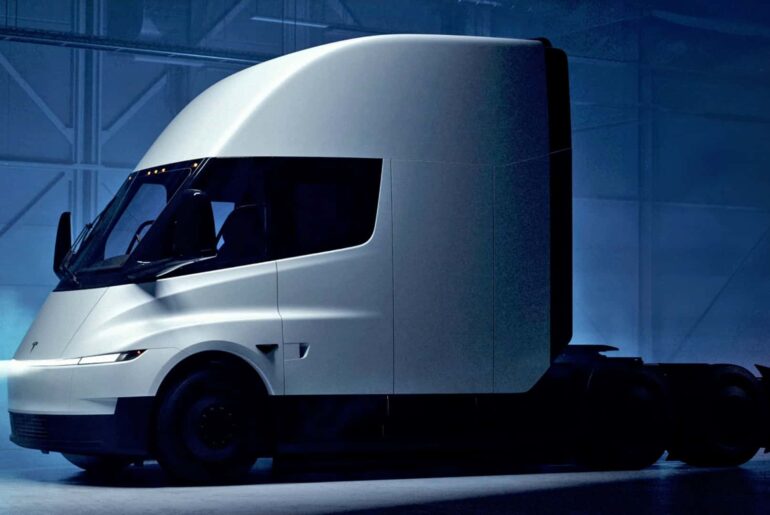
That’s where Faraday diverges most completely from Tesla. The idea of building onto a successful platform presents a sharp contrast with a seat-of-the-pants vehicle development “strategy” leading to misfirings like the Tesla Cybertruck. Then there’s also the long delayed Tesla Semi. The Class 8 truck finally seems to be hitting its stride this year, after other, non-Tesla class 8 electric trucks have already hit the market.
As for Tesla CEO Elon Musk, the bad news just keeps piling up. Aside from his role in the Trump presidency, Musk’s earlier attempt to whitewash his connection with the deceased sexual predator Jeffrey Epstein keeps tripping over the facts, and now another member of the Musk family has surfaced in the scandal as well.
Meanwhile, Musk has been focusing on other, non-EV ventures while Tesla keeps bleeding senior staff. The latest to jump ship was Raj Jegannathan, 13-year Tesla veteran and VP of AI infrastructure, business apps and information security.
“Last year, Jegannathan was tasked with leading the electric vehicle maker’s sales team after previous North America sales leader Troy Jones was dismissed,” CNBC reported on February 9.
“Tesla’s core automotive sales were in decline, with its brand reputation falling partly due to its aging lineup of EVs, along with a consumer backlash against CEO Elon Musk over his incendiary political rhetoric, work for the Trump administration and backing of far-right figures and parties around the world,” CNBC added, taking another jab at the EV maker.
Perhaps that explains why Jegannathan declined to mention his boss, Elon Musk, in his farewell post on LinkedIn.
After noting that it has been a “privilege to serve” Tesla, Jegannathan expressed his gratitude to “the teams” at Tesla. “You are exceptional. Thank you for being partners and for teaching something new every day,” he wrote.
“As I move on, I do so with a full heart and excitement for what lies ahead. Thank you Tesla for this wonderful opportunity!” he concluded. What, no thank-you to Elon? It will be interesting to see where Jegannathan lands next. If you have a guess, drop a note in the comment thread.
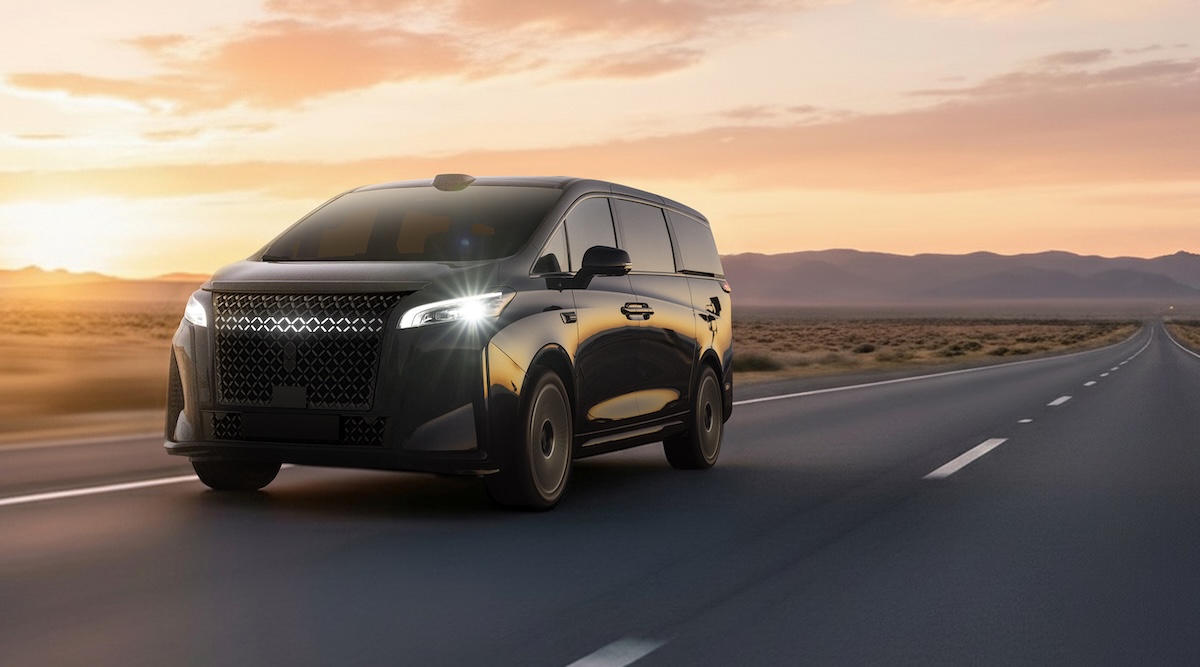
Photo: The US startup Faraday Future is positioning its new Super One BEV as a stepping-stone to more affordable EVs, targeting the domestic market among others (cropped, courtesy of Faraday Future via Businesswire).
Support CleanTechnica via Kickstarter
Sign up for CleanTechnica’s Weekly Substack for Zach and Scott’s in-depth analyses and high level summaries, sign up for our daily newsletter, and follow us on Google News!
Advertisement
Have a tip for CleanTechnica? Want to advertise? Want to suggest a guest for our CleanTech Talk podcast? Contact us here.
Sign up for our daily newsletter for 15 new cleantech stories a day. Or sign up for our weekly one on top stories of the week if daily is too frequent.
CleanTechnica uses affiliate links. See our policy here.
CleanTechnica’s Comment Policy