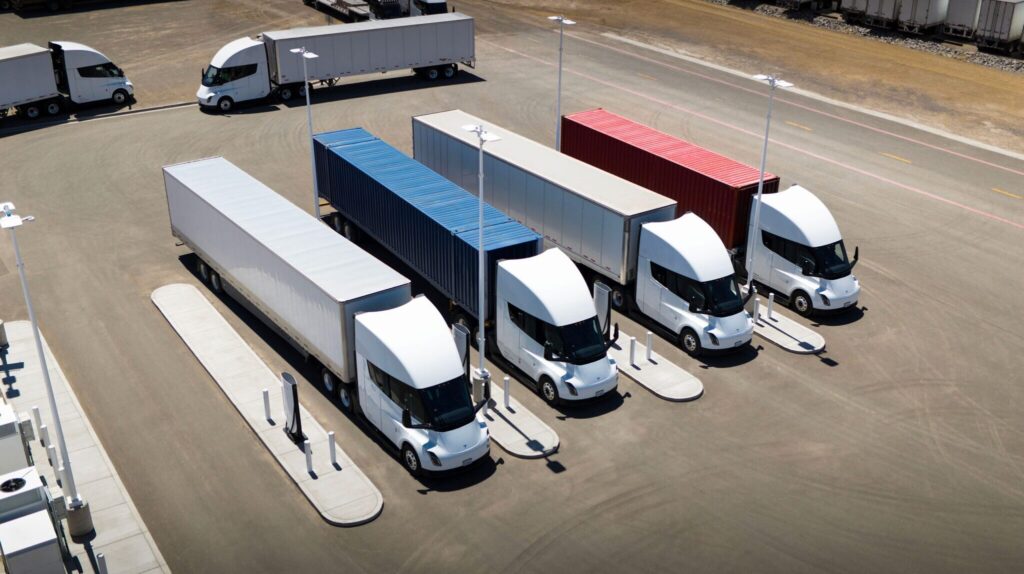
While Tesla’s Semi e-truck in appreciably more expensive than the prices first quoted in 2017, it substantially undercuts existing competitors. By Stewart Burnett
Tesla is quoting customers US$290,000 for the 500-mile Long Range version of the Semi electric truck, according to pricing documents obtained by electric vehicle news outlet Electrek. The figure represents a roughly 60% increase from the US$180,000 price tag Tesla advertised when it unveiled the vehicle back in 2017, although the company never officially updated that original estimate.
The pricing would appear to more or less match data from California’s Hybrid and Zero-Emission Truck and Bus Voucher Incentive Project—reviewed and reported on by LA Times back in 2024—which listed the Semi at approximately US$260,000 for the Standard Range trim and US$300,000 for Long Range before destination fees and taxes. Tesla still undercuts the US$435,000 industry average for Class 8 electric trucks by about US$145,000, although it should be noted that competitors have been known to inflate their prices to maximise available government incentives.
The development comes shortly after Tesla officially revealed final production specifications for the Semi, confirming two trim levels after years of withholding concrete details. The Standard Range offers 325 miles at 82,000 lbs gross combination weight with a curb weight under 20,000 lbs, while the Long Range delivers up to 500 miles with a 23,000 lbs curb weight. Both versions share 1.7 kWh/mile efficiency—some tests have it as low as 1.55kWh/mile—and three e-motors producing 800 kW in combined power. Both models are also designed for autonomous operation, although little information is currently available about these capabilities.
Both trims support MCS 3.2 charging and can restore 60% of their range in 30 minutes, with the Long Range capable of 1.2 MW peak charging speeds. Tesla added 64 Megacharger locations marked “coming soon” to its public navigation map alongside two operational sites, with Texas leading the rollout at 19 locations followed by California with 17. The company partnered with Pilot Travel Centers in January to build charging stations at roughly 20 truck stops along Interstates 5 and 10.
Chief Executive Elon Musk reconfirmed several days ago that the Semi will enter mass production this year at Tesla’s dedicated site in Nevada, which can build 50,000 units annually when at full capacity. The automaker embarked on a hiring spree last year in preparation for the big launch, increasing on-site staff tenfold to roughly 1,000 workers.
To be sure, the Semi has, like many Tesla products, experienced lengthy delays before entering series production. The e-truck was originally slated for market entry in 2019 but has faced repeated delays, with only a small number of pre-production units delivered to date including 36 to PepsiCo’s California fleet. In September 2025, it was announced that Semi e-trucks would serve as the anchor product of Uber’s freight accelerator programme.
California has allocated nearly US$165m in vouchers specifically for Semi purchases, drawing criticism from some competitors who argue that Tesla receives preferential treatment for a vehicle still unavailable at meaningful scales.