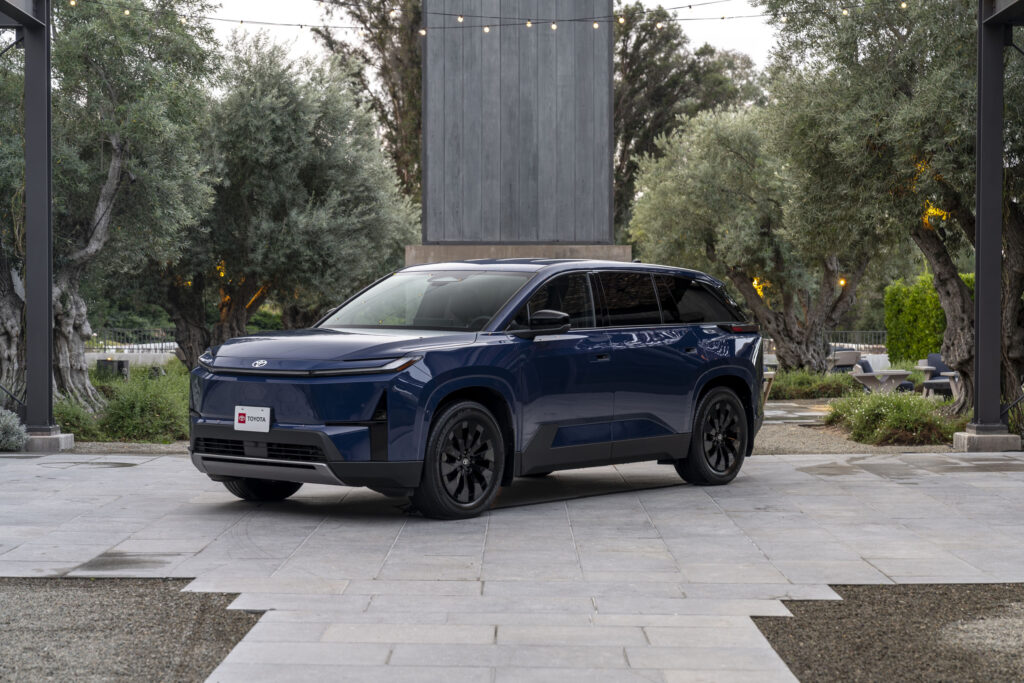
Toyota is nearing the end of its massive product turnover, a corporate play that, over the past half-decade or so, has seen nearly every major model—from Tundra to 4Runner, RAV4 to Camry—welcome in its next generation. However, the Highlander, Toyota’s stalwart three-row SUV, has soldiered on since December of 2019.
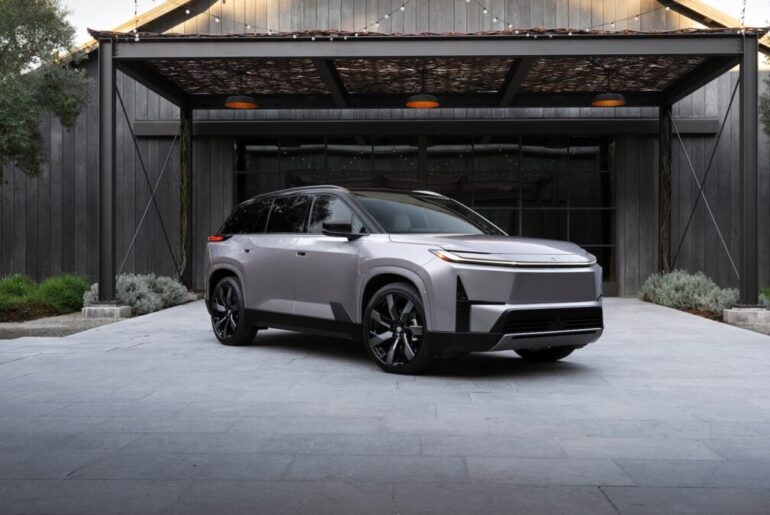
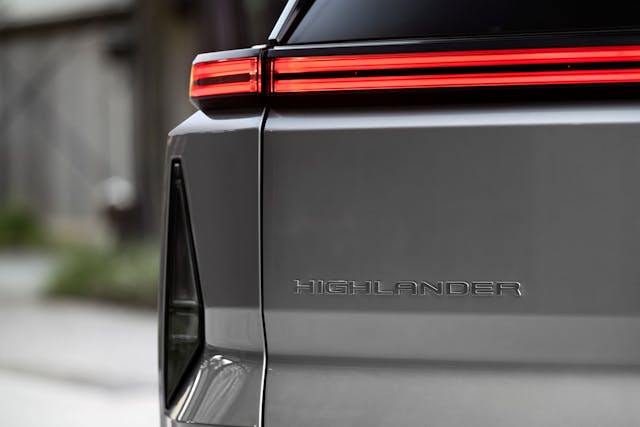
That changes now, with our first look at the all-new 2027 Toyota Highlander, and the headline update is an entirely new powertrain—one without a gasoline-burning engine. The new Highlander will be the fourth battery-electric vehicle (BEV) from the Toyota Brand, joining the Toyota bZ, the bZ Woodland, and the recently reborn C-HR. Unlike those other models, which are imported, the 2027 Highlander will be built here in the U.S. at Toyota’s manufacturing facility in Georgetown, Kentucky. The battery modules are U.S.-made, too, coming from nearby at Toyota’s new battery plant in Liberty, North Carolina.
 Toyota
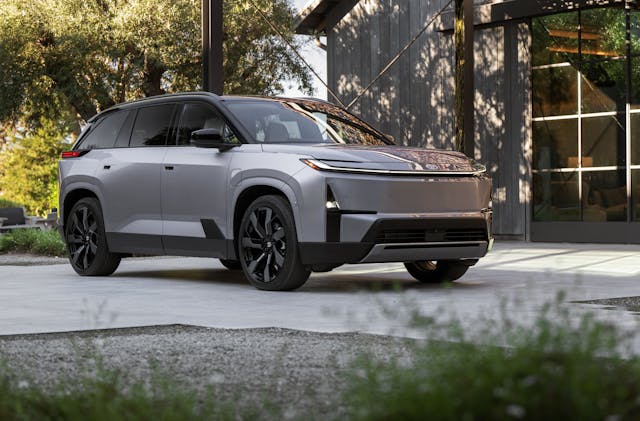
The 2027 Highlander will ride atop a modified version of Toyota’s TNGA-K platform that’s been altered to accept one of two very large batteries. The first battery rings in at 77.0 kWh, while the upgrade pack measures 95.8 kWh. Just two trims will be offered, XLE and Limited. The XLE grants you a choice between the smaller or larger battery packs as well as front-wheel drive or all-wheel drive, though it’s not an either-with-either situation. If you want an XLE with front-wheel drive, you can only choose the smaller of the two packs. Opting for AWD gives you the choice of batteries. Meanwhile, the Limited grade will come standard with the larger battery pack and AWD.
 Toyota
A quick numbers rundown: Power here is fairly modest across the drivetrains and trims; a front-wheel-drive XLE model puts out 221 hp and 198 lb-ft of torque through a single electric motor, while all-wheel-drive XLES and Limiteds get 338 hp and 323 lb-ft of torque from a pair of electric motors, regardless of battery size. Manufacturer-estimated ranges are as follows: XLE FWD, 287 miles; XLE AWD with the smaller battery, 270 miles; XLE AWD with the larger battery, 320 miles; and Limited AWD, 320 miles.
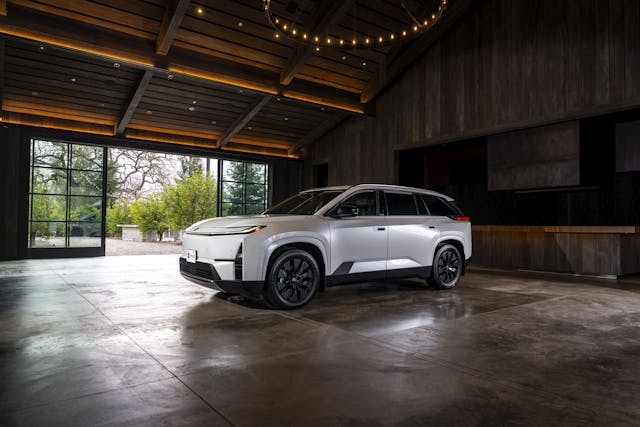
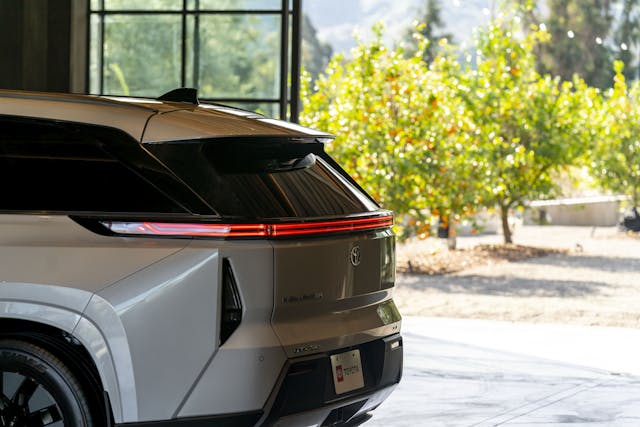
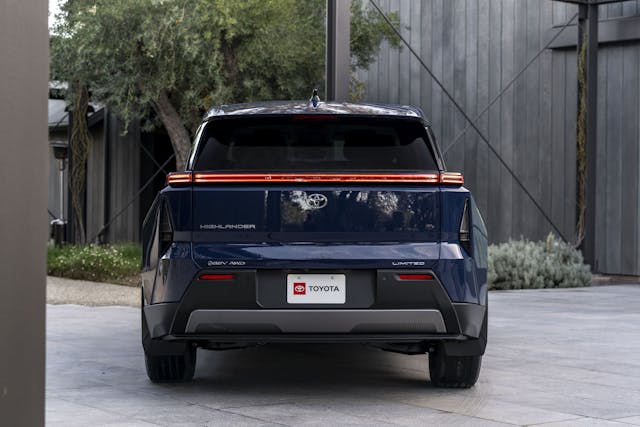
Relative to the outgoing Highlander, this one is wider, lower, and has a notably longer wheelbase. Width is up 2.3 inches, now to 78.3 inches. Height rings in at 67.3 inches, nearly an inch stouter than the one it replaces. The wheelbase, meanwhile, grows to 120.1 inches, up from 112 inches, which is a significant increase, likely made possible by smaller drivetrain components that allow engineers to push the wheels out to the corners of the car, noticeably changing the stance.
 Toyota
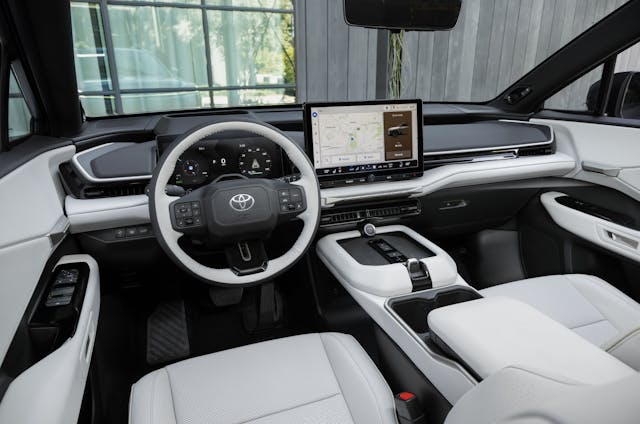
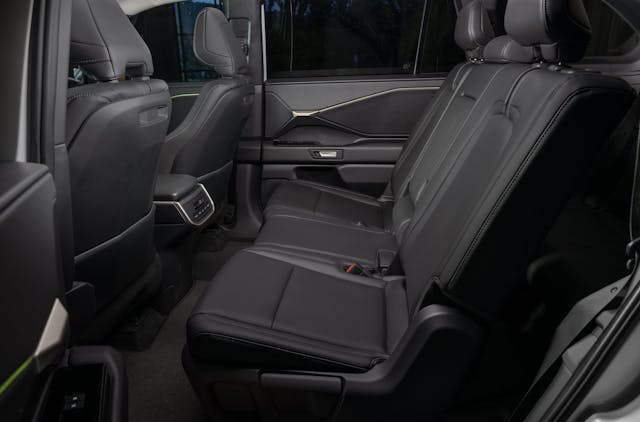
The cabin looks smart and tech-forward, with a large central screen and a digital instrument cluster that floats atop a very low dashboard line. You’ll get heated front seats standard on every model, with vented front seats and heated second-row seats as added-cost options. If you want a bench seat for the second row, you’re confined to just the XLE AWD version; captain’s chairs come standard in row two. Peep the door card panel with the pyramid-like surfaces that seem to push back into the cabin—that might take some getting used to, but we’ll wait until we’ve had a chance to see this in person before we make a call one way or the other there.
 Toyota
 Toyota
The new Highlander can also serve as a mobile power source thanks to vehicle-to-load (V2L) technology, which can use the juice in the vehicle’s battery to power other devices, such as tailgating appliances or power tools. The vehicle can also act as a power backup at home if you lose power. This will be the first Toyota product to offer such capability.
 Toyota
Pricing information will arrive at a later date, but Toyota says that the new 2027 Highlander will go on sale late this year.
A bit of speculation on this new Highlander: Toyota’s sportier variants of normal models, the SE and the XSE trims, are nowhere to be seen. Could gas-burning versions of the new Highlander come in the future? It’s not as crazy as it might seem; that TNGA-K platform, though modified for this application, still supports gas-burning cars such as the Camry, the current Highlander, the Sienna, the RAV4—pretty much all the big-volume nameplates from Toyota that aren’t a body-on-frame design. The newest generation of the RAV4 debuted mid-year in 2025, and that model offered multiple hybrid powertrains, including a plug-in variant. It’s not too much of a stretch to imagine sportier versions of the new Highlander, maybe an XSE (or, whisper it, some sort of GR-trimmed model) with a plug-in hybrid powertrain in the future.
We asked Toyota about this, and got the predictable “no comment on future product plans,” but the spokesperson did note that if you lump in Grand Highlander under the “Highlander” family, you can have three rows of seating, unibody construction, and a gas-burning powertrain—if that’s your thing.
At this point, that’s just heavy speculation, but the prospect of two markedly different vehicles sharing a nameplate going forward would be fascinating to watch play out.
 Toyota