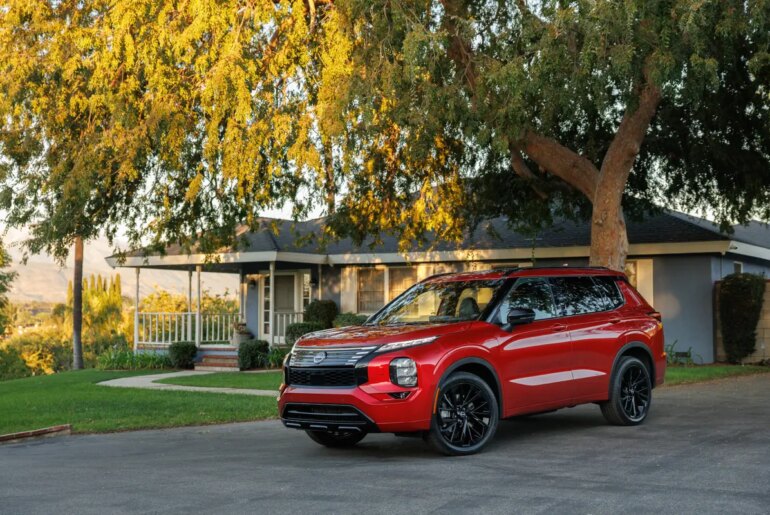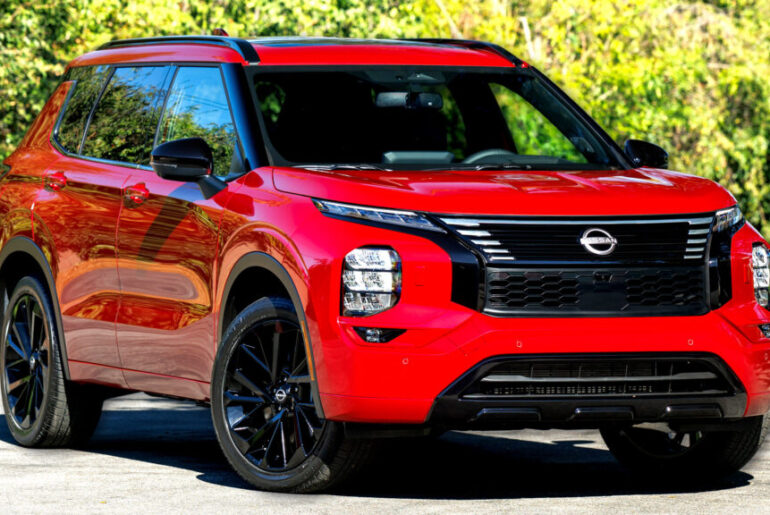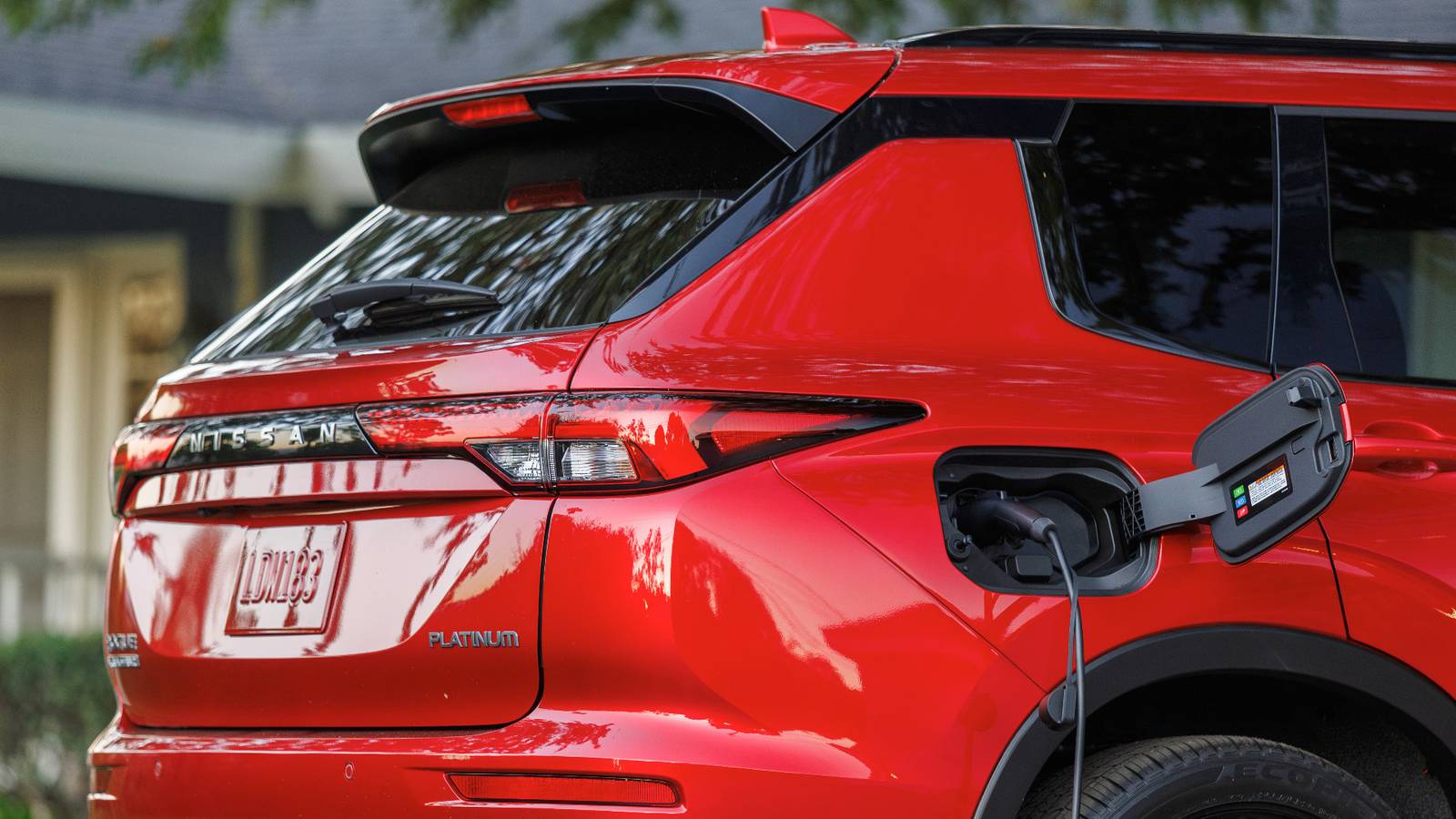
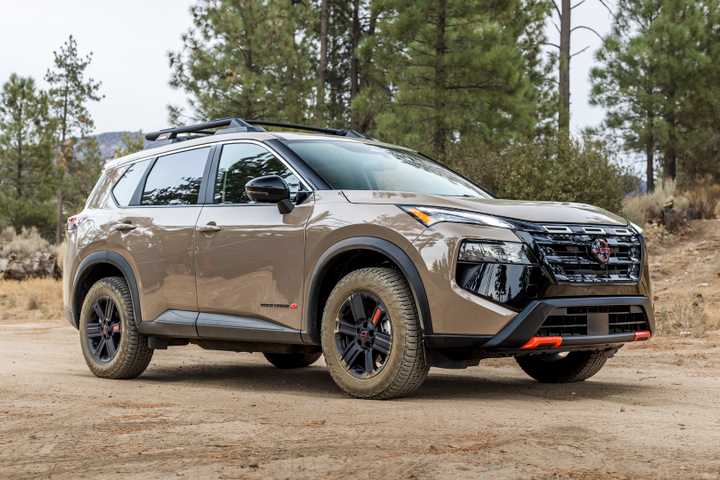
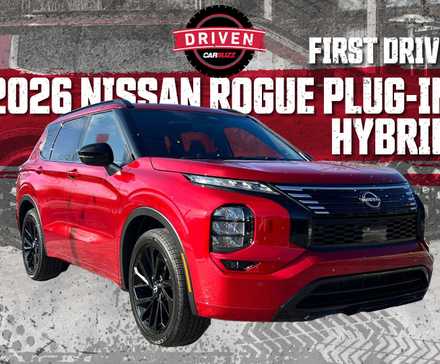
The oddball rebadge-of-a-rebadge Nissan Rogue Plug-In Hybrid now has official pricing information, and folks in the market for a three-row crossover with some electric range will be pleased. Thanks in part to its shared Mitsubishi Outlander PHEV parentage, the electrified Rogue starts at a relatively reasonable $45,990 for the base (but still well equipped) SL model. That said, the Nissan crossover is more expensive than the previous-model-year Mitsu, as well as the Toyota RAV4 Plug-In, so the Yokohama-based automaker may have an uphill battle ahead of it.

Base Trim Engine
VC-Turbo 1.5L ICE
Base Trim Transmission
2-speed CVT
Base Trim Drivetrain
Front-Wheel Drive
Base Trim Horsepower
201 HP @5600 RPM
Base Trim Torque
225 lb.-ft. @ 2800 RPM
Base Trim Fuel Economy (city/highway/combined)
30/37/33 MPG
Base Trim Battery Type
Lead acid battery
Infotainment & Features
7.5 /10
What You Pay And What You Get
The plug-in 2026 Rogue, which is a distinct vehicle from the regular internal-combustion car of the same name, comes standard with three-row seating, something that’s unavailable on its stablemate. In addition to the SL trim, the PHEV also offers a flagship Platinum model, but even the base car has a lot of equipment, including a 12.3-inch digital instrument cluster, 9.0-inch touchsceen with wireless Apple CarPlay and Android Auto, heated front seats, and lots of active safety equipment. All told, its $45,990 price ($47,485 with destination) isn’t terrible considering the stuff on offer.
If you go for the $49,990 Platinum ($51,485 with destination), you get genuine leather upholstery, heated outboard second-row seats, a premium Bose audio system, a panoramic moonroof, and a head-up display. Were it our money, we’d probably stick with the SL grade since it seems to offer just about everything the average driver needs at a lower price.
Related
2026 Nissan Rogue Plug-In Hybrid First Drive: The Superior Identical Twin
It’s nearly identical to the other Japanese SUV it’s based on – but its better in a few key areas.
In either case, the 2026 Nissan Rogue Plug-In Hybrid comes with dual-motor all-wheel drive, giving it 248 horsepower and 322 pound-feet of torque. The on-board 2.4-liter gasoline four-cylinder primarily runs to keep the battery charged, but it can directly power the wheels in very specific situations. Speaking of the battery, the Rogue PHEV can go an estimated 38 miles on a single charge, a number that lags behind the forthcoming 2026 RAV4 Plug-In’s 50 miles – although the Toyota is a smaller five-seater.
How About The Toyota And Mitsu Competition?
Neither of the Rogue’s primary competitors have released pricing for the 2026 model year. The 2025 RAV4 Plug-In (née Prime) had a starting price of $44,815 plus $1,450 destination, although its base trim had fabric trim, rather than the easy-clean leatherette of the Rogue SL. We think that prices for the plugged 2026 RAV4 will rise a bit compared to last year, meaning they could eclipse the Rogue Plug-In Hybrid if Toyota isn’t careful.
Meanwhile, the closely related Mitsubishi Outlander Plug-In Hybrid is supposed to get a facelift for the 2026 model year, expected to be revealed this month. When that happens, we presume pricing will rise a bit compared to the 2025 model’s $40,445 base, although it’s safe to bet the Mitsu will still be the least expensive offering of the three. Furthermore, the Outlander has a 10-year, 100,000-mile powertrain warranty and a five-year, 60,000-mile powertrain warranty, the best coverage in the industry and a fair reason why someone might pick it over the Nissan.
Related
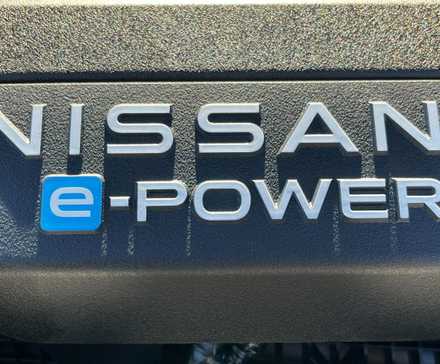
Nissan’s Other Rogue Hybrid Is Gunning For CR-V And RAV4
Nissan executive gives ballpark estimates for fuel economy and power.
Kia also fields two plug-in hybrids in the Rogue’s nebulous small-to-midsize segment: the five-seat, $40,490 Sportage and the seven-seat, $48,290 Sorento. Hyundai offers the Tucson Plug-In (a technical twin to the Sportage) for even less – $40,325. None of the Koreans can match the Nissan’s EV-only range, however, slotting in at 36 miles for the compacts and 32 miles for the Sorento.
Nissan itself will be providing the Rogue Plug-In Hybrid with some internal competition later this year, when it reveals the next-generation Rogue and its new E-Power hybrid system. Although not a plug-in, the E-Power will have a gasoline engine that operates purely as a generator for the battery and electric motors, theoretically allowing it to run much more efficiently since it doesn’t need to cope with the variable demands that a gas engine must contend with for propulsion.
Still, either crossover should help Nissan improve its financial position, giving today’s consumers two additional reasonably priced, efficient options. We’ve driven prototypes of the E-Power and production examples of the Rogue Plug-In and found them both to be very intriguing options.
Source: Nissan