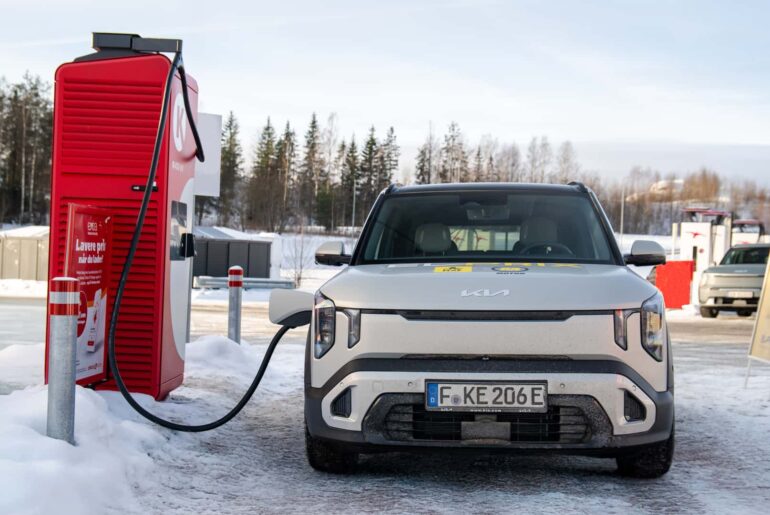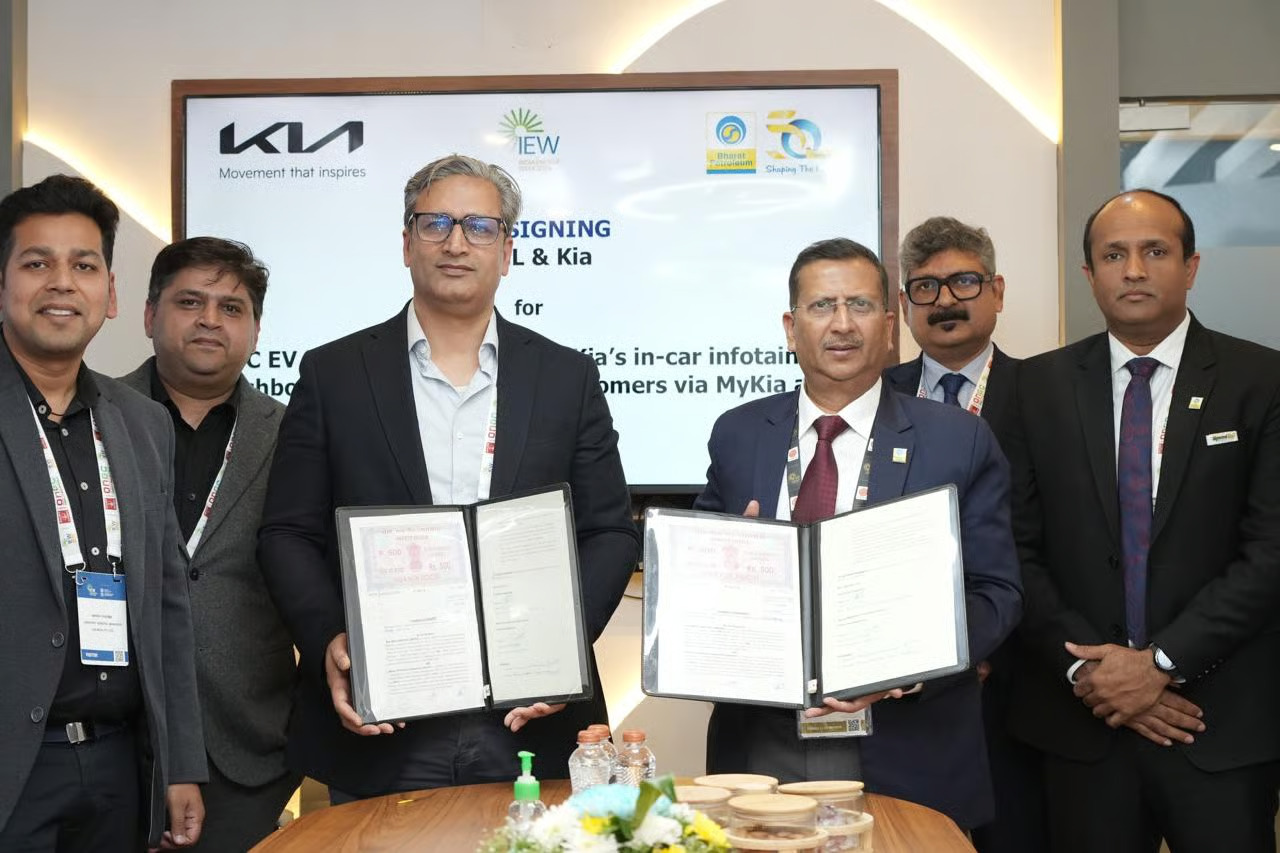
The two companies signed a Memorandum of Understanding (MoU) at India Energy Week 2026, which took place from 27 to 30 January. With the addition of the BPCL charging points, the K-Charge network will give Kia customers access to a total of over 15,000 public charging points across the country.
“Convenience and confidence are critical to EV adoption,” said Atul Sood, Senior Vice President, Sales & Marketing, Kia India. “Through this partnership with BPCL, we are making EV ownership more practical and stress-free for our customers by expanding charging access at scale. Strengthening the K-Charge network allows Kia EV customers to plan journeys with greater assurance, while supporting India’s broader transition to sustainable mobility.”
BPCL had set a target of establishing 7,000 charging stations by March 2025, but it has commissioned 6,500 charging stations so far. The company has set up fast charging stations along more than 120 highway corridors.
Kia is not a major player in India’s electric car market. The company sold 2,730 electric cars last year, accounting for just 1.5 per cent of the market’s total volume, which stood at 176,817 units. It offers an India-specific, locally manufactured compact three-row MPV called Carens Clavis EV, as
well as the EV6 and EV9 global models.
Despite local manufacturing and competitive pricing, the Carens Clavis EV has not found many takers. The EV6 and EV9 are inherently expensive for the Indian market, and as Kia imports them via the CBU route, heavy tariffs make them even more out of reach.
Local reports say Kia plans to launch a ‘Syros EV’ as its fourth electric model later this year. The company will derive it from the India-focused Syros small SUV, manufacture it locally, and position it below the Carens Clavis EV. It will likely use Exide Energy-sourced LFP cells in the Syros EV to further reduce costs and make the EV even more affordable.
autocarpro.in, linkedin.com, kia.com