QUICK SUMMARY
Ferrari has revealed a bold new interior for its first electric car, called the Luce.
Worked on by former Apple design boss Sir Jony Ive, the interior blends retro fonts and aluminium toggle switches with OLED displays, a touchscreen and even a key fob with an e-ink screen.
It’s time to rethink everything you thought you knew about modern car technology and interior design. That, plainly, is the mission statement projected by Ferrari, Sir Jony Ive and Marc Newson with the new Luce.
This is Ferrari’s first all-electric car – you’ll remember T3’s coverage of the EV drivetrain technology, called Elettrica, in late-2025 – and ahead of the exterior reveal in May we now know what the interior will look like. And it’s nothing short of extraordinary.
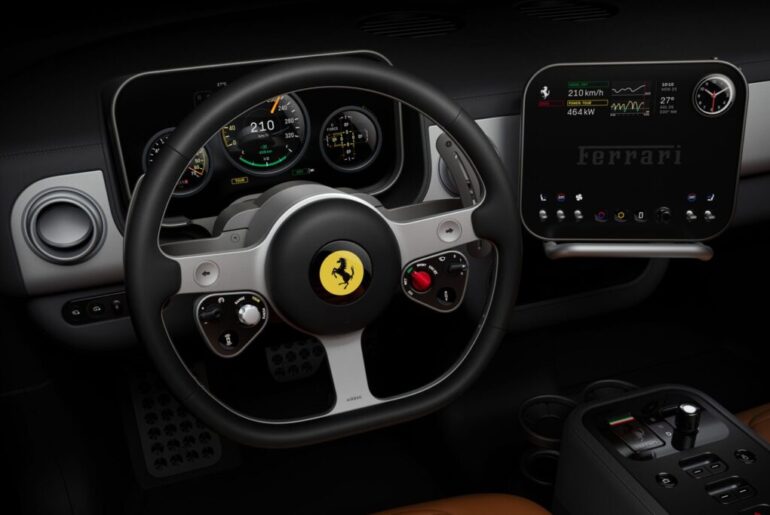
Designed with substantial input from LoveFrom, the Californian design agency headed by Ive and Newson, it’s completely devoid of the glossy black plastic every other car company is obsessed with, the Ferrari Luce’s cabin is one of leather, glass and aluminium.
You may like
(Image credit: Ferrari)
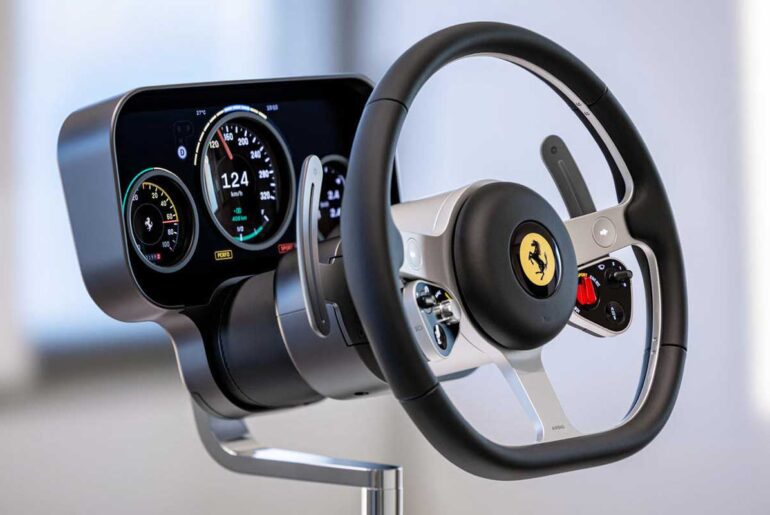
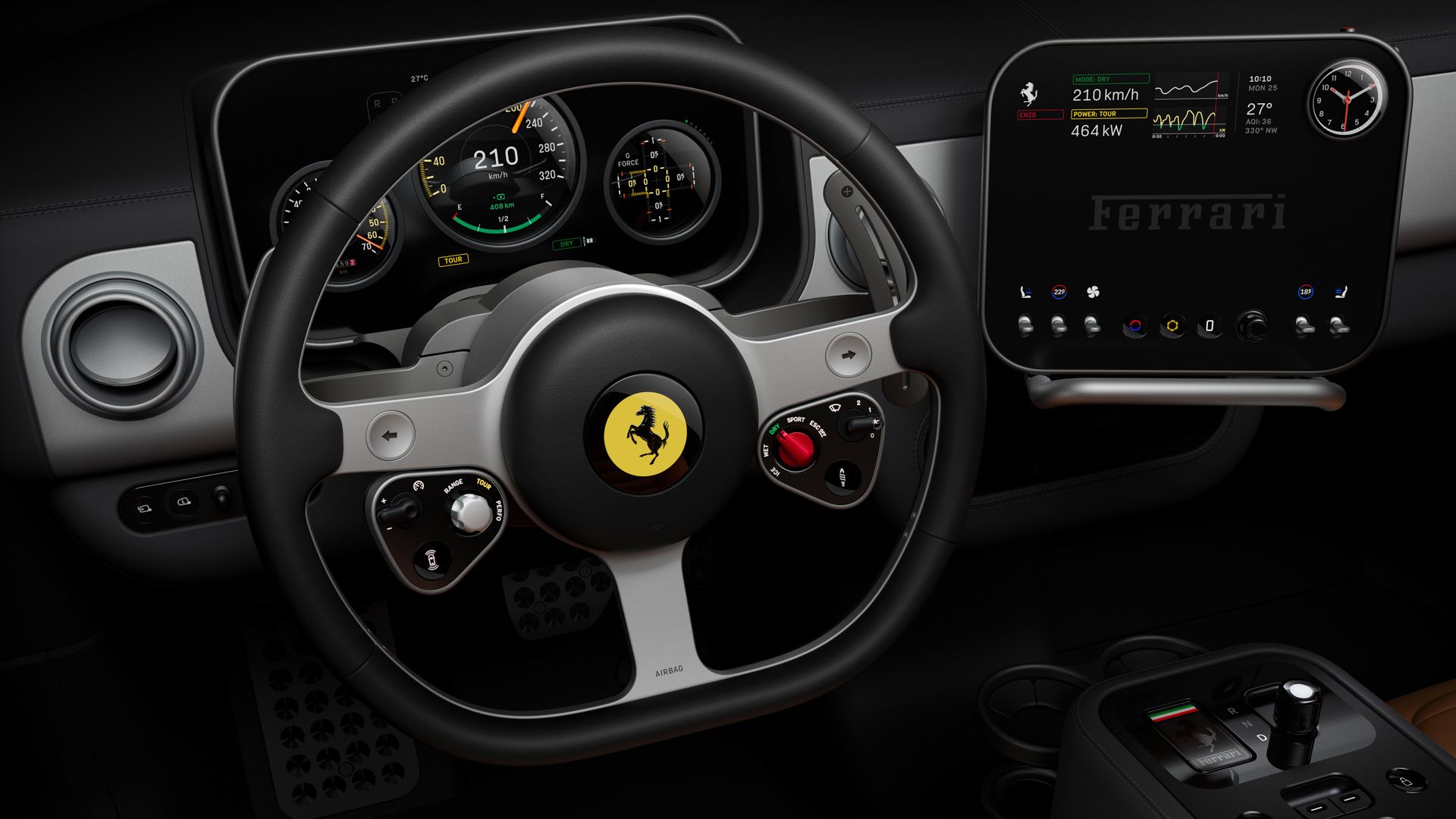
The steering wheel – inspired by that of Ive’s own Ferrari 250 GT Europa – has aluminium spokes and a thin leather rim. There are buttons for indicators, like on all other modern Ferraris, along with two modules housing switchgear for the Luce’s drive modes, wipers, suspension, cruise control and safety systems. None are touch-sensitive.
Behind the wheel are a pair of long, elegant shift paddles, also made from aluminium. Reminiscent of gear shifters, these are instead used to interact with the Luce’s clever torque delivery system. Although yet to be fully demonstrated by Ferrari, Luce drivers will be able to pull the right-hand ‘+’ paddle to increase motor torque, and pull the left-hand ‘-’ paddle to alter the regenerative braking system. The paddles use magnets to be as tactile as possible.
Sunk into the dashboard itself is the driver display. The shape, dial design, colours and font will immediately remind Ferrari fans of icons from the back catalogue, like the F355, 550 Maranello and F50. To my eyes, the speedometer and power font seems to have come directly from the F40, and that’s no bad thing. The dials blend old and new by sitting physical dials atop OLED displays, then using special lenses to create a parallax effect, giving a sense of depth when viewed from an angle.
(Image credit: Ferrari)
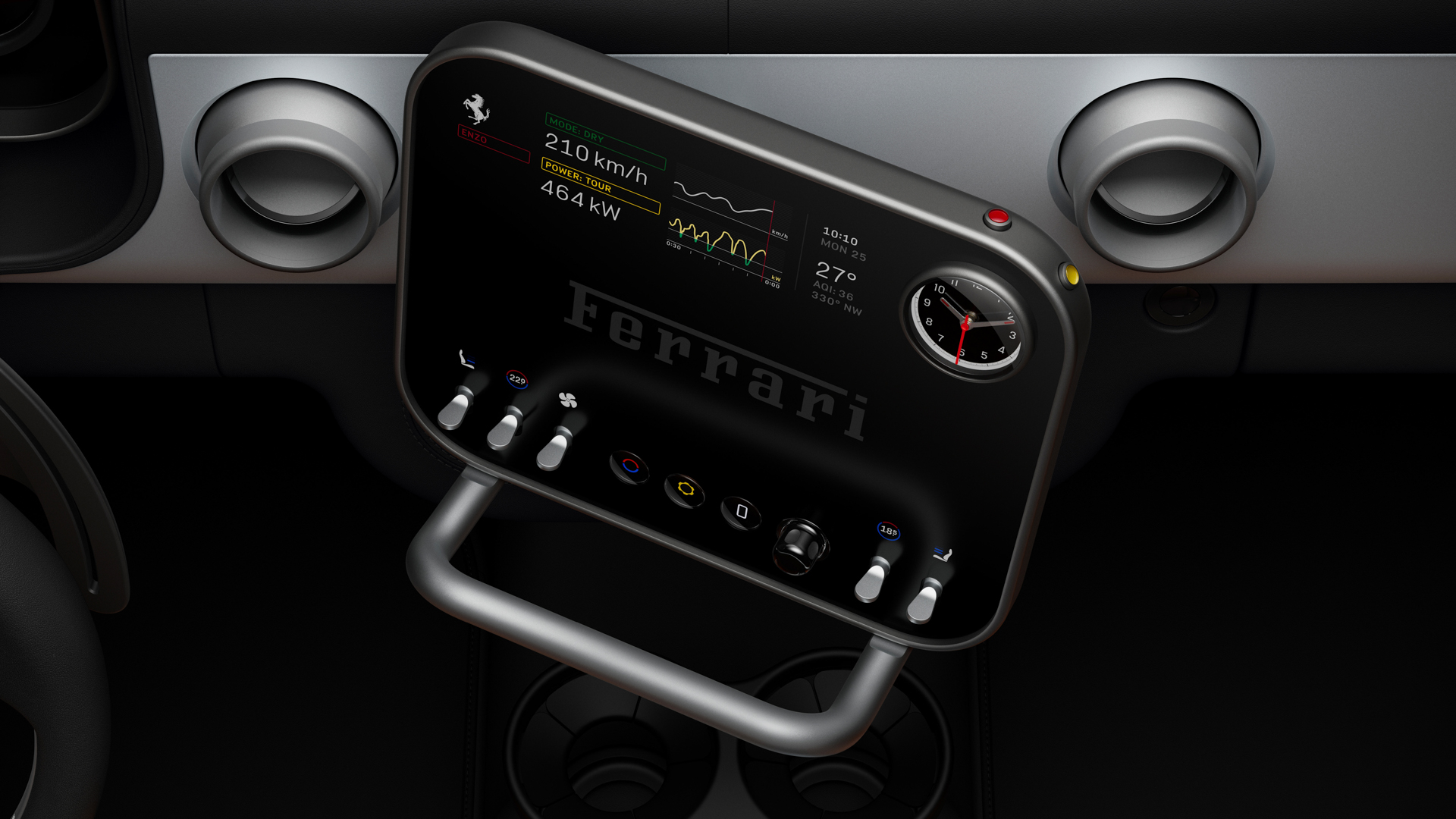
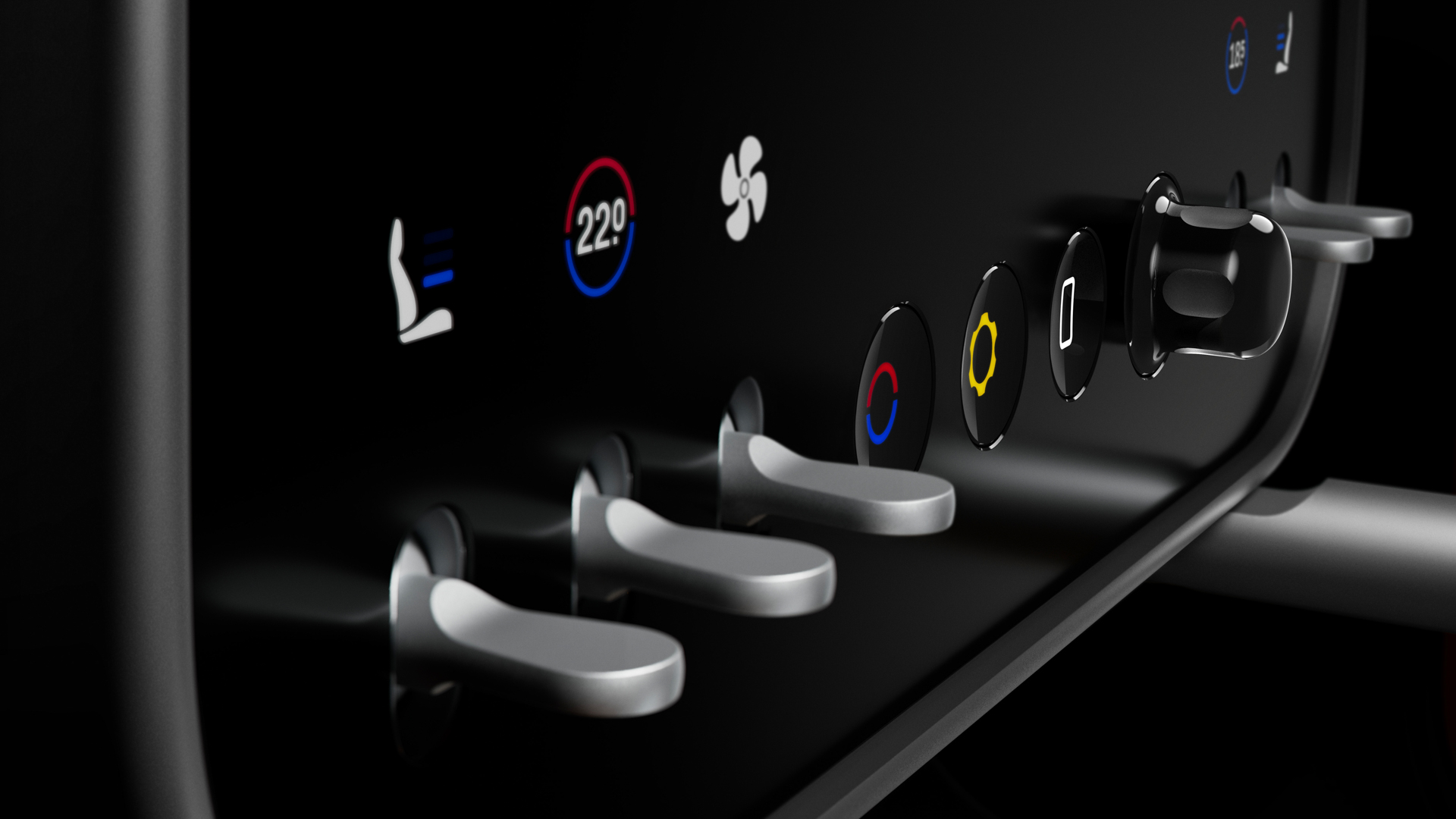
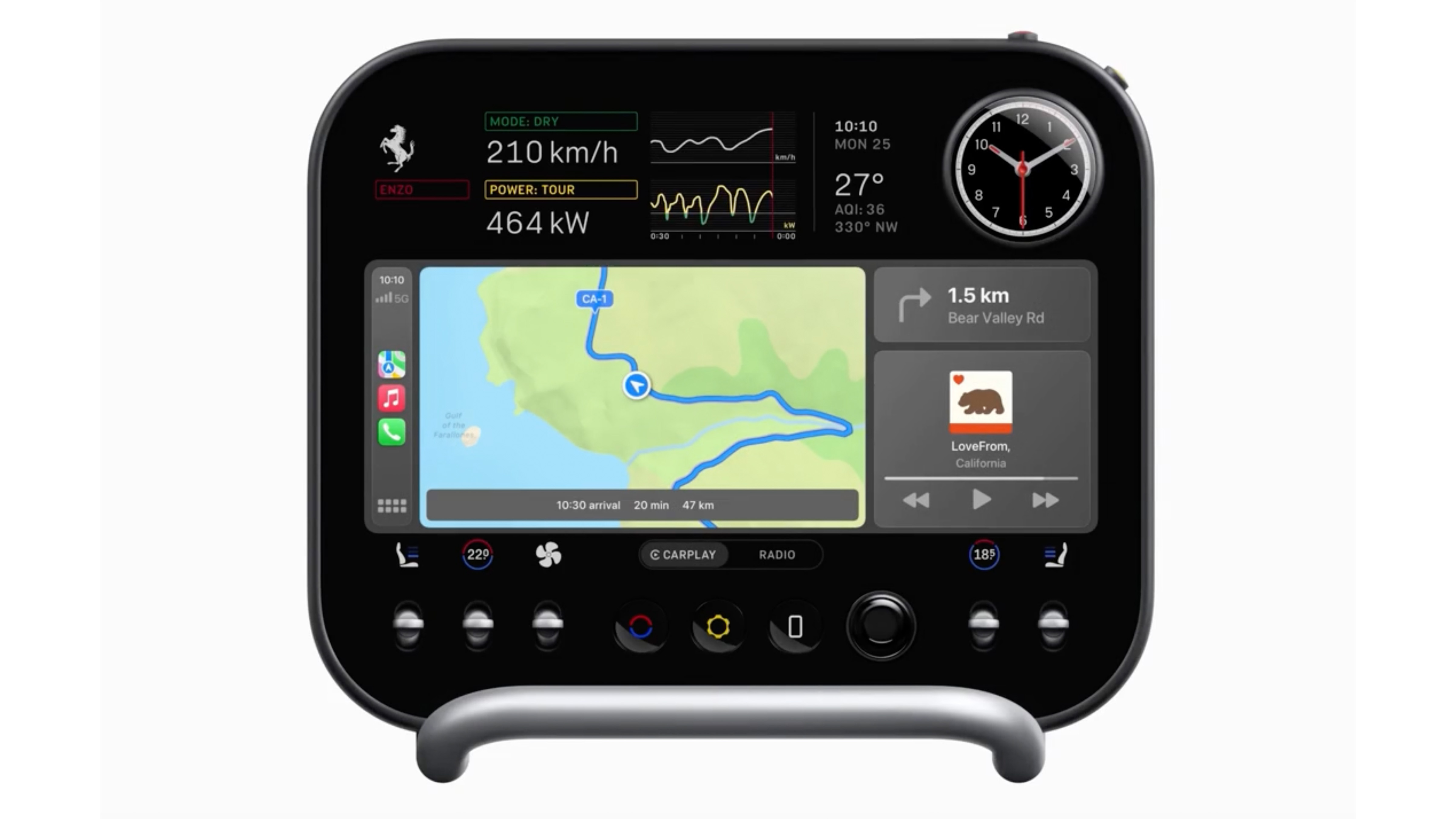
Shift your gaze to the centre of the Luce’s cabin, and you’ll be greeted by an iPad-like touchscreen. But, again, this is a far more considered approach than simply sticking a tablet to the dashboard. The centre section is indeed a touchscreen that can run Apple CarPlay (although, it appears, not CarPlay Ultra) and give access to more granular vehicle settings. But below that is a set of beautiful aluminium toggle switches for cabin temperature, seat heating and fan speed.
The top of the central screen includes a display for vehicle data – drive mode, power delivery, speed – and what Ferrari calls the multigraph. Like the speedometer, this also combines an OLED dial with an analogue hand to act as a clock, stopwatch or compass. It’s controlled by a pair of buttons on the side of the housing, and automatically displays a five-second timer when Launch Mode is activated.
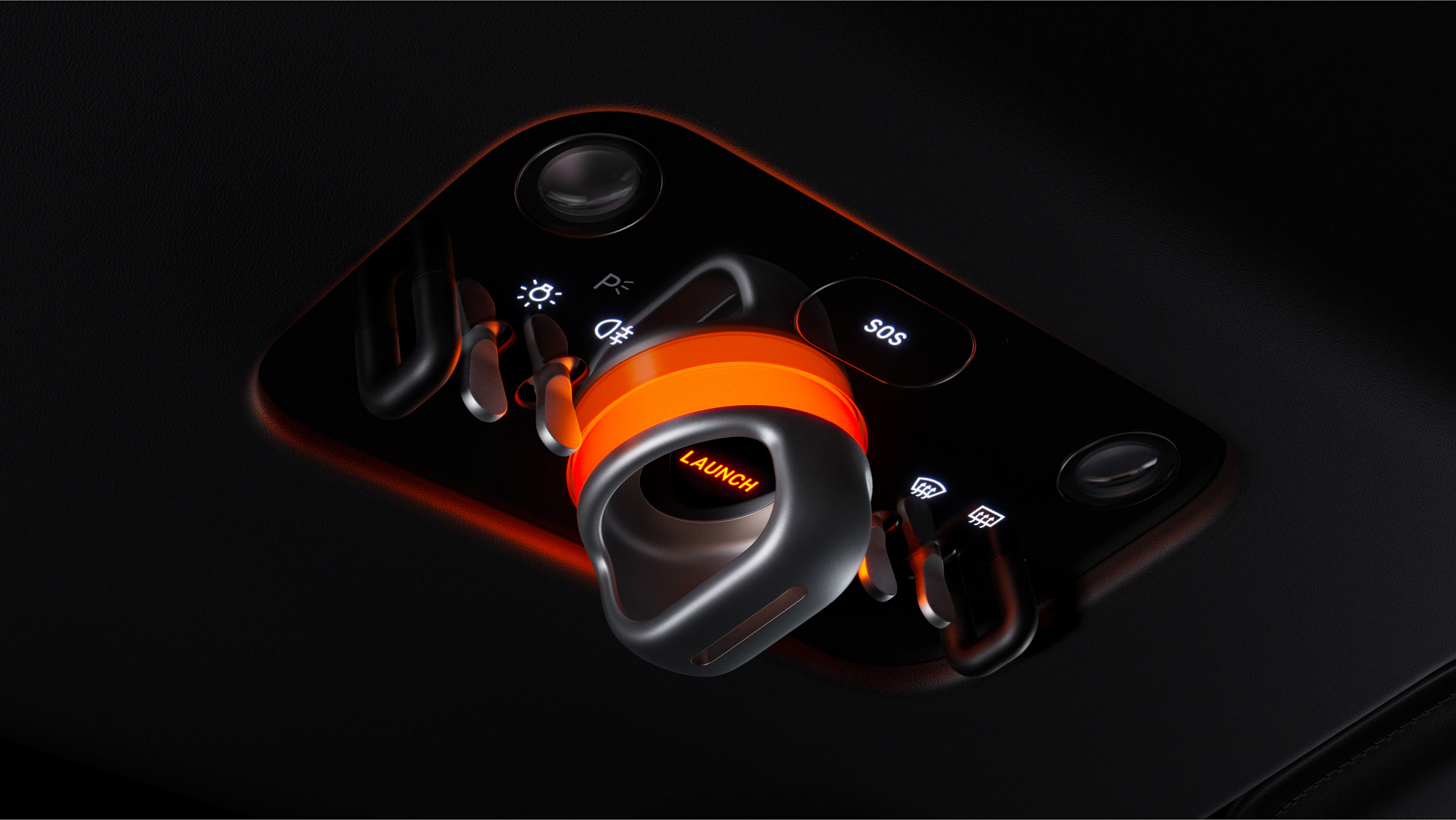
Which brings us neatly to the Luce’s roof-mounted switchgear. Like you’d find in a helicopter or a fighter jet, this panel included toggle switches for the lights and heated windscreen, plus a large aluminium handle that engages Launch Mode (and glows orange) with a pull.
(Image credit: Ferrari)
Next is the centre control, which sits between the two front seats and stretches rearwards to the passengers behind. Those in the back seats have access to their own air vents, climate controls and a display showing speed, drive mode and power delivery.
You may like
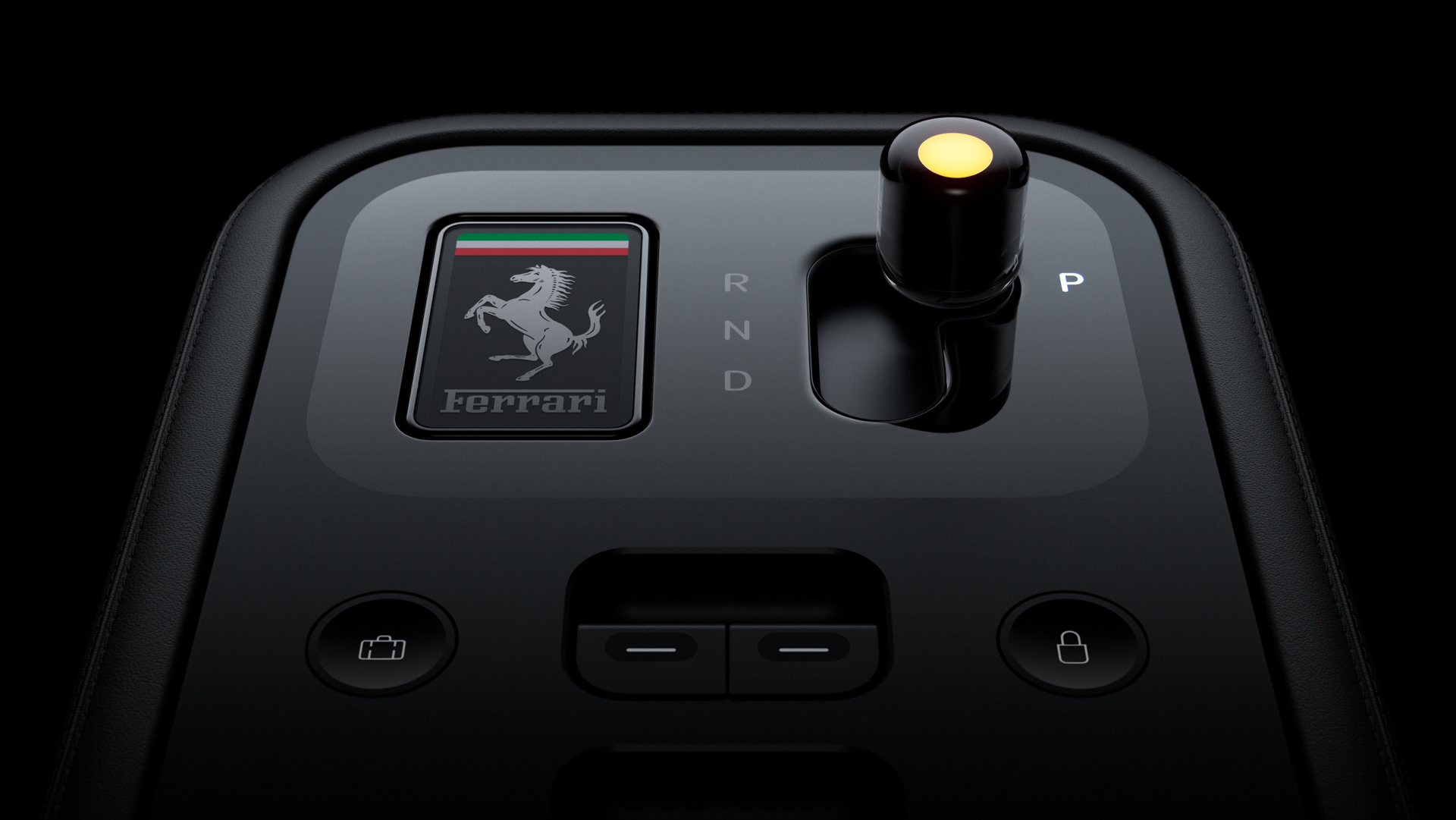
At the front, the console houses the Luce’s gear selector, which is unlocked and primed for action when the key fob is inserted into a slot beside it. The fob has the famous Ferrari logo on its front, but instead of being painted on this is actually an e-ink display. When inserted into the centre console, the yellow of the fob fades to black, then seemingly flows into the gear selector, which then glows yellow to show the car is ready to go.
(Image credit: Ferrari)
Make no mistake, this is a ground-up reimagination of how a modern car interior should work. It’s the reset that much of the industry badly needed, and proof that car controls don’t have to live buried within pages of touchscreen submenus. It’s also a beacon of hope for electric sports and supercars – proof, seemingly, that even a Ferrari without an engine can still be an event.
Add all that lovely switchgear to Ferrari’s clever, gearbox-like torque delivery tech, plus a sound generation system it has yet to fully explain, beyond likening it to the amplifier of an electric guitar – and the Luce is shaping up to be the most interesting new car of 2026.
(Image credit: Ferrari)
Want more? The exterior (plus, hopefully, the sound, performance and price) will be revealed in May.
Today’s best EV Chargers deals