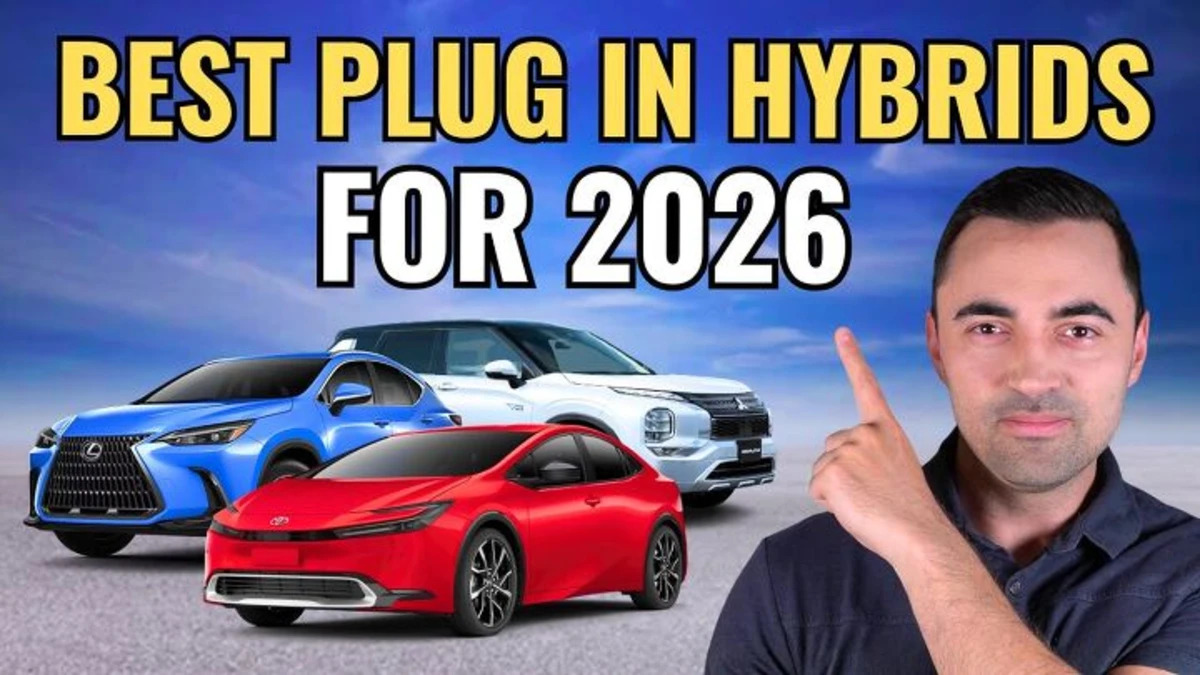
Best plug-in hybrid cars and SUVs you can buy in 2026. Comparing the best plug-in hybrid cars and crossover SUVs on the market that have amazing reliability, safety, efficiency, and value. If you are buying a new plug-in hybrid SUV, make sure to watch this comparison review.
The AutoGuide Creators Series tells stories and amplifies creators from the car world, including family life, car buying advice, commuting tips and car culture.
What are the best plug-in hybrid vehicles you can buy? That’s what we’re going to find out.
Welcome to Car Help Corner, where we help you, the consumer, master the process of car buying and ownership. Today I’m going to share the best plug-in hybrid vehicles you can buy for 2026-models that offer the best mix of performance, safety, reliability, and value.
If you’re ready to ditch gas for shorter trips but you’re not quite ready to go fully electric-and you still want the backup of a gas engine for longer drives-these are the plug-in hybrids worth considering right now.
We’ll start with the good options and work our way up to the best of the best near the end.
Best PHEV #7 & #8: Hyundai Tucson PHEV and Kia Sportage PHEV
First up are the Hyundai Tucson Plug-in Hybrid and the Kia Sportage Plug-in Hybrid. These two are mechanically identical, which is why I’m grouping them together.
They’ve been around for a few years now and have proven to be well-designed, well-built vehicles. The battery is large enough to deliver roughly 32 miles (50 km) of electric-only range when fully charged. After that, they switch to hybrid mode, where the gas engine provides smooth, quiet performance.
They’re practical SUVs with lots of interior space, well-finished cabins, and class-leading features and technology. They also score well for safety, and reliability for this generation has been fairly solid so far.
So why are they at the bottom of this list?
Even though Hyundai and Kia make a good hybrid system, these models aren’t as fuel-efficient as some competitors when operating in hybrid mode. They also don’t have the long-term hybrid reliability reputation of companies that have been building hybrids for decades.
I’m also not a fan of the small 1.6-liter turbocharged engine in these applications, especially when you’re thinking about out-of-warranty repair costs down the road.
Finally, they’re expensive-because you typically can only get the plug-in versions in fully loaded top trims. The extra $5,000 or so you’ll spend may not be worth it compared to the regular hybrid versions, which are nearly as good in most real-world situations.
Overall, these are good SUVs-but there are better choices.
Best PHEV #6: Kia Niro Plug-in Hybrid
Next is the Kia Niro Plug-in Hybrid, which is a bit of a hidden gem in Kia’s lineup-and honestly, it’s one of the best vehicles Kia makes.
It has a better reliability reputation than most other Kia models, largely because the Niro has been around for a long time. Its hybrid system is also simpler and more straightforward than the one used in Kia and Hyundai’s larger SUVs.
It uses a naturally aspirated 1.6-liter engine, an electric motor, a traditional six-speed automatic, and a large hybrid battery. When charged, it can travel about 32 miles (50 km) on electric power.
Even in hybrid mode, fuel economy is excellent-so it saves you money either way. The plug-in version also adds about 41 horsepower over the regular hybrid, so performance is respectable.
The Niro is front-wheel drive only and smaller than the SUVs on this list, but for buyers who don’t need huge space, it’s a strong value. It delivers great features at a noticeably lower price, and it’s an excellent choice for anyone looking for a more affordable plug-in hybrid.
Best PHEV #5: Mitsubishi Outlander Plug-in Hybrid (and Nissan Rogue PHEV)
Next is a vehicle that’s been a pioneer in the plug-in hybrid segment: the Mitsubishi Outlander Plug-in Hybrid.
Mitsubishi’s lineup is generally hard to recommend, but the Outlander PHEV is the exception-and easily the best vehicle the company makes.
Mitsubishi has been using this plug-in system since 2013. It pairs a 2.4-liter four-cylinder engine with two electric motors. When fully charged, it can travel around 40 miles (just over 60 km) on electric power before switching to hybrid operation.
It delivers strong power, a smooth and refined driving experience, and it has proven to be reliable and long-lasting. One major bonus is Mitsubishi’s warranty: a 10-year powertrain warranty plus 10-year coverage on the hybrid system and battery.
The Outlander itself is comfortable, well-designed, and practical, and while pricing can climb, these are often easier to negotiate than many other plug-in hybrids.
If you’re worried about Mitsubishi’s smaller dealer network, there’s also good news for 2026: Mitsubishi’s partner company Nissan is now offering a version of this same vehicle, called the Nissan Rogue Plug-in Hybrid. It’s essentially the same vehicle, but with the benefit of Nissan’s larger dealer and service network.
If you want a plug-in hybrid SUV, both of these are absolutely worth a look.
Best Home EV Charger for Plug-In Vehicles
Before we continue, if you’re considering any plug-in vehicle, you should also consider installing a Level 2 home EV charger.
Yes, you can charge using a regular outlet, but that can take several hours. With a Level 2 charger, you can often charge a plug-in hybrid in as little as one to two hours.
There are a lot of chargers on the market, so if you want a recommendation, the one I use at home is the Emporia Level 2 EV Charger. I’ve been using the Emporia unit for about a year to charge EVs and plug-in hybrids, and it’s been excellent.
It’s well-made, well-priced, available with either J1772 or NACS connectors, and it’s both UL and Energy Star certified. The app is also very good, allowing you to monitor and manage charging to save time and money. The Pro model adds features like home energy monitoring and load management, which can help eliminate the need for a costly electrical panel upgrade.
If you want a strong all-around option, the Emporia is a great choice.
Best PHEV #3 & #4: Lexus NX 450h+ and Lexus RX 450h+
Now that we’ve covered the good options, it’s time for the best plug-in hybrids you can buy without hesitation.
In the number three spot are the best choices for buyers who want a luxury plug-in hybrid SUV: the Lexus NX 450h+ and Lexus RX 450h+.
These are mechanically similar, with the main differences being size and price. Lexus is part of Toyota-the company that invented modern hybrids decades ago-so they know exactly what they’re doing.
Both use a naturally aspirated 2.5-liter engine, Toyota’s planetary gear eCVT, electric motors, and a large hybrid battery. Electric range is around 32 miles (50 km), and fuel economy in hybrid mode is excellent. With over 300 horsepower, performance is also very strong.
Most importantly, this hybrid system is known for being extremely reliable and durable. Both models are made in Japan and are among the longest-lasting luxury vehicles on the market.
If you need more space, go RX. If you want something smaller and less expensive, the NX is a great option. Either way, if you can afford a luxury plug-in hybrid, there are no better choices than these two.
Best PHEV #2: Toyota RAV4 Plug-in Hybrid
If you don’t need the luxury badge, you can save a lot of money with the next vehicle-which is essentially the best plug-in hybrid SUV you can buy right now: the Toyota RAV4 Plug-in Hybrid.
The RAV4 Hybrid is already one of the best hybrid SUVs on the market, and the plug-in version is just as strong. It uses the same basic system found in the Lexus models: a naturally aspirated 2.5-liter engine, electric motors, and a large battery.
It produces roughly 324 horsepower, and when charged, it can travel around 50 miles (80 km) on electric power. In terms of electric range, fuel economy, and performance, the RAV4 is one of the strongest plug-in hybrids available.
It’s also one of the most reliable, thanks to Toyota’s proven hybrid engineering. It’s made in Japan, has a spacious interior, plenty of features, and class-leading safety tech.
Yes, it can get pricey-especially in higher trims-but if you want a plug-in hybrid SUV, this is the one to beat.
Best PHEV #1: Toyota Prius Plug-in Hybrid
But if you don’t need an SUV, there’s one plug-in hybrid that’s an even better value-and it’s my number one pick: the Toyota Prius Plug-in Hybrid.
Like the RAV4, the Prius is available as both a hybrid and a plug-in hybrid, using essentially the same proven system. Compared to the RAV4, horsepower is lower-around 220 horsepower-because it uses a smaller 2.0-liter engine, but it’s still more than enough for a vehicle this size.
In every other way, the Prius is excellent: strong electric range, even better fuel economy in hybrid mode, and the same made-in-Japan quality and long-term reliability.
The drawbacks are mainly practical: it’s a smaller vehicle, so interior space isn’t huge, visibility and ground clearance aren’t great, and the plug-in version is front-wheel drive only.
But if those aren’t dealbreakers, you’re getting many of the same benefits as the RAV4 Plug-in Hybrid at a much lower price. For the money, there’s no better plug-in hybrid than the Prius. In fact, in many cases, it makes more sense than a full EV.
It’s a phenomenal vehicle and an easy recommendation.
So there you have it. I hope you found this helpful. If you did, make sure to like, subscribe, and hit the hype button.
And if you’re planning to purchase a vehicle and you live in Ontario, remember that OMVIC is the vehicle sales regulator responsible for administering and enforcing the rules dealerships must follow. To learn more about your consumer protection rights, visit OMVIC’s website.
And if you need additional car-buying advice, recommendations, or help getting a great deal on your next new car purchase, make sure to visit carhelpcan.com.
Thanks so much for watching, and I’ll see you next time.
Become an AutoGuide insider. Get the latest from the automotive world first by subscribing to our newsletter here.