Carmakers have been trying to predict the future since the beginning of time. Buick is considered a pioneer, introducing the Y-Job in 1938, widely regarded as the first concept car ever built. In the decades that followed, all brands peered into their crystal balls to imagine the cars of tomorrow, some with remarkable accuracy, others wildly removed from the reality that followed.
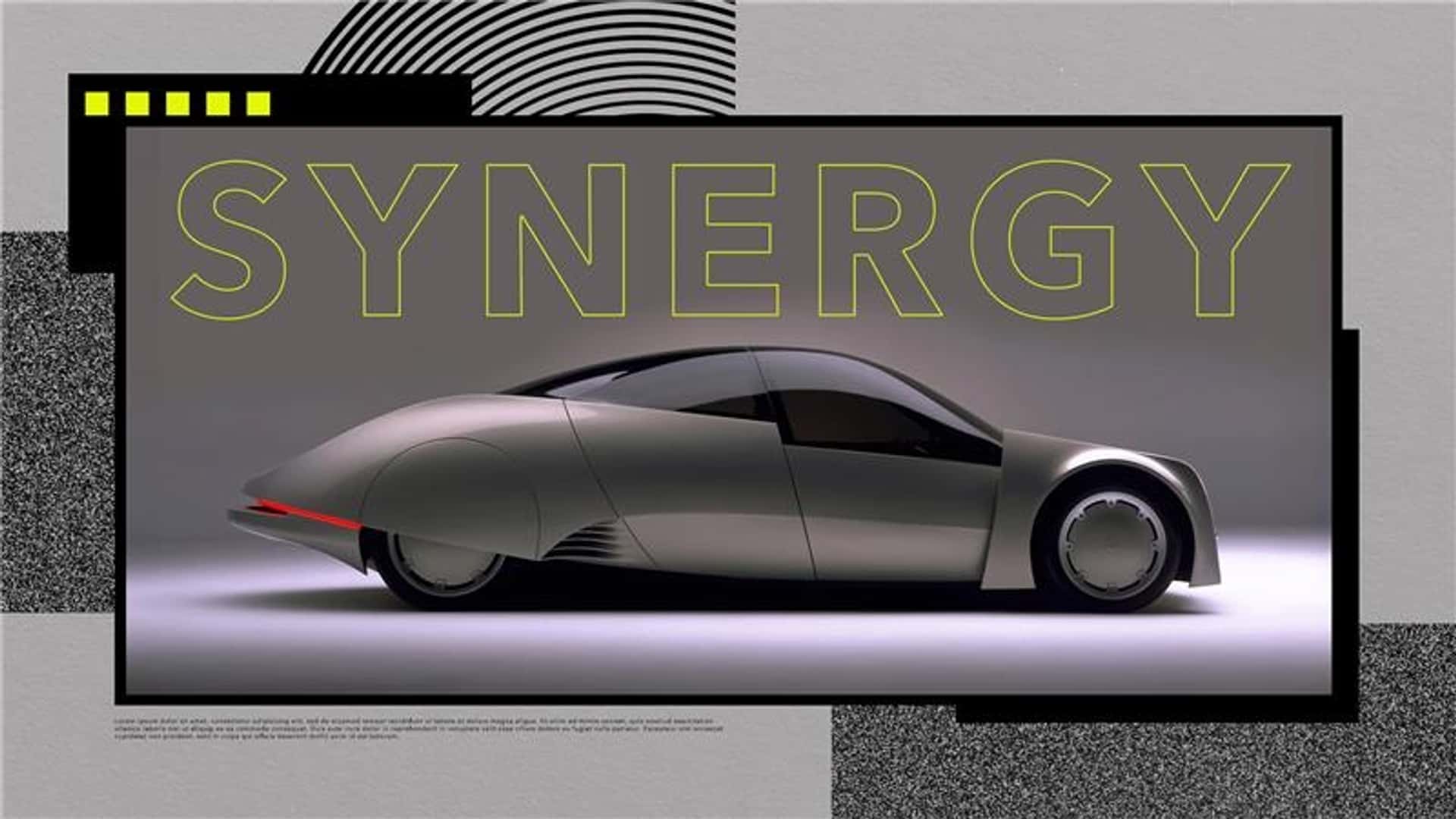
This brings us to the Ford Synergy. It still looks as if it traveled back from the future, despite being a 30-year-old concept. While the styling remains outlandish even by 2026 standards, the technology it showcased back then is still very much relevant. Envisioned as a family car for the year 2010, the wacky concept is a six-seater with an ultra-slippery body and a range-extending engine.
With a drag coefficient of just 0.20, it’s nearly as sleek as the most aerodynamic production vehicles ever made. Yes, the Synergy was purely a concept car that allowed Ford to go wild without worrying about regulations. Nevertheless, matching the Mercedes EQS a quarter of a century earlier was no easy feat, given the technology available in the early 1990s.

Photo by: Ford
We’ll be blunt: it’s certainly not the prettiest Ford ever created, especially the front end with its fin-shaped fenders. However, the concept wasn’t designed to win beauty contests, but to glide through the air as smoothly as possible. Much like the 1986 Volkswagen Scooter featured in a previous episode of our “Concept We Forgot” series, the Synergy was all about efficiency.
At the 1996 Detroit Auto Show, Ford put the concept on stage and highlighted its hybrid powertrain, albeit with an unexpected twist. The Synergy was technically an EV with a range-extending combustion engine, as the ICE didn’t drive the wheels. Instead, it served as a generator powering four electric motors, one at each wheel. It was well ahead of its time, considering the BMW i3 REx didn’t arrive until 2013.
The slipstream body concealed a 1.0-liter engine mounted at the rear and a flywheel installed up front. The latter could capture excess engine and braking energy and use the stored juice to power the vehicle during acceleration or while climbing steep hills. Effectively, the Synergy featured regenerative braking, something we now take for granted in hybrids and EVs.
Photo by: Ford
Horsepower figures were never released, but the car didn’t need beefy motors to get around. That’s because it weighed just 2,200 pounds thanks to its aluminum body. At the time, Ford said the Synergy was about 1,100 lbs lighter than a mid-size sedan.
The lightweight panels alone shaved off 400 lbs compared to a traditional steel body. That aluminum diet also allowed Ford’s engineers to downsize other components, such as the engine, flywheel, radiator, and brakes, cutting an additional 300 lbs.
When the concept broke cover, late Ford Chairman and CEO Alex Trotman made it clear the Synergy wasn’t feasible for production: “This is very much a stretch exercise, especially when it comes to making this advanced technology affordable.”
The 30-year-old concept did more than predict range-extending EVs. It also featured side cameras instead of traditional door mirrors, an all-screen interface, and literally no buttons or switches. Conventional switchgear wasn’t needed, as the Synergy relied on voice controls to access 18 different functions.
9
Source: Ford
Ford even fitted solar roof panels to harvest energy from the sun and power a fan to cool the cabin while the car was parked. Tesla may have popularized the yoke, but this concept had one back in 1996. The steering “wheel” was connected to a center-mounted cantilevered arm, allowing the car to be easily configured for both left- and right-hand-drive markets.
The tech-laden concept also featured a head-up display projecting information onto a glass panel directly in the driver’s line of sight. That said, it wasn’t entirely groundbreaking, as production cars had been using HUDs since the late 1980s. Adjustable pedals, automatically retracting rear headrests, and an interior layout designed to accommodate side airbags rounded out the futuristic cabin.
The Synergy concept got a lot right three decades ago, right down to the rear light bar that automakers can’t seem to get enough of today. It may have had a face only a mother could love, but there’s no denying how accurately it previewed today’s tech-heavy cars and the rise of extended-range electric vehicles.
While the Synergy was left on the proverbial cutting room floor, a production Ford EREV is on the way. The next-generation F-150 Lightning will be launched later this decade as a range-extending electric truck with over 700 miles of combined range.
We want your opinion!
What would you like to see on Motor1.com?
– The Motor1.com Team