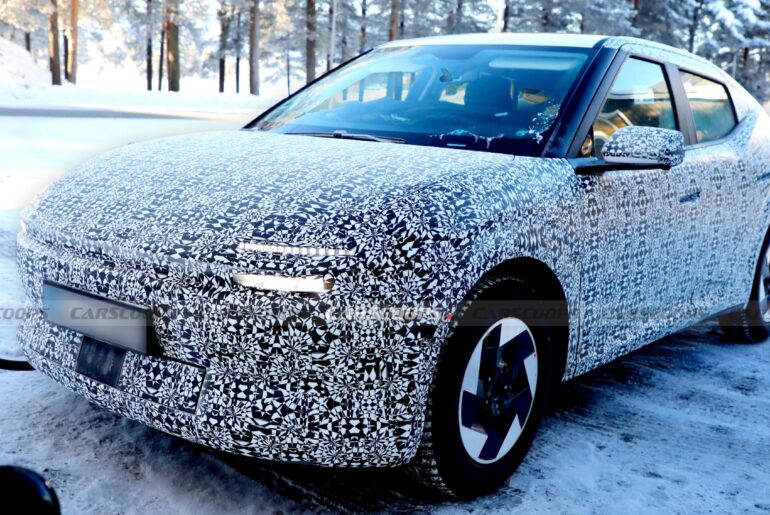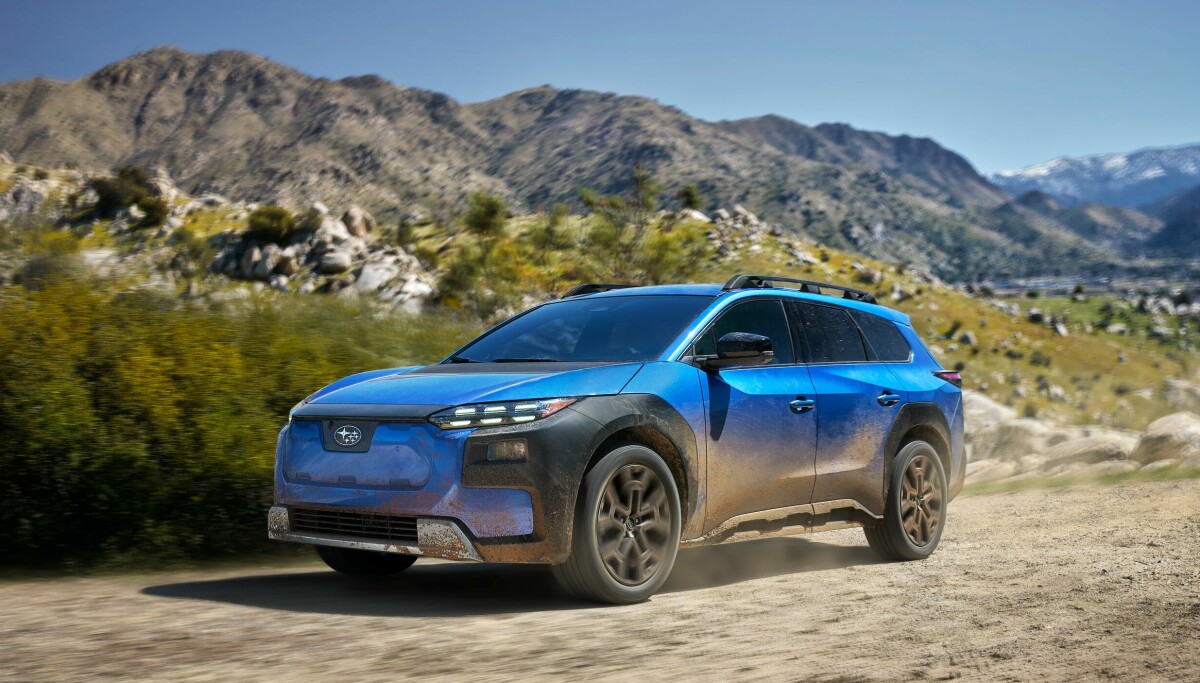
When Subaru’s E-Outback rolled off the assembly line at its Gunma Yajima Plant in early February, it represented more than just another electric vehicle (EV) entering a crowded market. The event marked the culmination of a carefully orchestrated manufacturing transformation – one that signals how established carmakers are adapting their production infrastructure to accommodate the uncertain trajectory of electrification demand.
The Japanese manufacturer has spent the past six months retrofitting its 550,000 sq.m Yajima facility to handle battery EVs without abandoning its core competencies. What sets this development apart is not the EV itself but rather the production philosophy underpinning it. Instead of building a dedicated EV factory, Subaru has created what it terms a mixed-model production line, where electric, hybrid and internal combustion vehicles flow through the same assembly sequence.
This approach reflects a pragmatic assessment of market realities. While governments push electrification mandates and legacy manufacturers pour billions into EV development, consumer adoption remains geographically fragmented and economically uncertain. Mixed-model production allows Subaru to hedge against this volatility, adjusting output ratios as market conditions shift without stranding capital in single-purpose facilities.
Subaru’s long experience with mixed production, particularly its ability to manufacture multiple models simultaneously at relatively low volumes, positions the carmaker well for this transition
The Yajima plant already manufactures the Legacy, Outback, Impreza, Crosstrek and Forester models across its 327,000 sq.m of building space. The facility employs roughly 2,800 workers who have cultivated expertise in what Subaru calls monozukuri, a Japanese manufacturing philosophy emphasising craftsmanship and continuous improvement. Integrating BEV production into this existing system required modifications that began in August 2025 and concluded on schedule in January 2026.
Collaboration with Toyota deepens after two decades
The E-Outback emerges from a partnership that began modestly in 2005 and has steadily expanded in scope and ambition. Subaru and Toyota initially collaborated on contract manufacturing and vehicle supply agreements before progressing to joint development of the BRZ and 86 sports cars. The relationship deepened substantially in 2019 when both companies agreed to jointly develop a BEV-dedicated platform and electric SUV models.
That agreement, announced as the automotive industry confronted what executives termed a once-in-a-century transformation, committed both manufacturers to combining Subaru’s all-wheel drive technologies with Toyota’s electrification capabilities. The partnership has since evolved to encompass development, production and supply chain integration, with Toyota increasing its equity stake in Subaru to above 20 per cent, effectively making Subaru a subsidiary whilst maintaining brand independence.
The E-Outback represents the second model in Subaru’s global BEV lineup, following the Solterra which Toyota manufactures at its own facilities. This production arrangement illustrates the partnership’s flexibility. Where the Solterra shares its eTNGA platform and factory with Toyota’s bZ4X, the E-Outback will be built entirely within Subaru’s manufacturing ecosystem, albeit using jointly developed technologies.
Japanese carmakers look to increase imports of US built vehicles back to Japan
Japanese OEMs are increasingly sourcing vehicles from overseas plants for sale at home, reflecting shifting trade rules, cost pressures and manufacturing strategies. From India and Thailand to potential US imports, the trend highlights changing global production logic.
Both companies marked their 20th anniversary of collaboration in 2025, a relationship that has weathered industry upheaval and proven mutually beneficial. For Subaru, access to Toyota’s electrification expertise and component supply chain reduces development costs and accelerates time to market. For Toyota, Subaru’s specialised all-wheel drive systems and relatively small production volumes offer opportunities to experiment with technologies that can later scale across Toyota’s global operations.
Manufacturing flexibility becomes strategic imperative
The decision to pursue mixed-model production rather than dedicated EV assembly reflects broader industry trends. As manufacturers grapple with uncertain electrification timelines, the ability to adjust production ratios between powertrains has become strategically vital. Fixed automation designed for single product types requires substantial capital investment and extended depreciation periods, creating financial risk if demand projections prove inaccurate.
Subaru’s approach allows the company to scale EV production incrementally whilst maintaining conventional vehicle output. This matters particularly for a manufacturer of Subaru’s size, which produced slightly over one million vehicles globally in 2016 and has maintained its position as the world’s largest maker of all-wheel drive vehicles despite being the smallest major Japanese carmaker. The company’s profitability depends on efficient capital allocation and the ability to respond quickly to market signals.
Mixed-model lines demand sophisticated sequencing and work balancing to prevent bottlenecks when vehicles with substantially different assembly requirements move through the same stations. Automotive manufacturers have been developing these capabilities for decades, but the addition of electric powertrains introduces new complexities. Battery packs require different handling procedures than fuel tanks, electric drive units demand distinct assembly processes from transmissions, and the absence of exhaust systems alters workflow at multiple stations.
Subaru’s long experience with mixed production, particularly its ability to manufacture multiple models simultaneously at relatively low volumes, positions the carmaker well for this transition. The Yajima plant’s workforce has developed the cross-training and process flexibility that mixed-model assembly demands, skills that now extend to integrating EVs into established workflows.
The facility upgrades also reflect lessons learned from other manufacturers’ electrification efforts. Several legacy carmakers initially pursued dedicated EV factories, only to face utilisation challenges when demand failed to meet projections. Volkswagen’s Zwickau plant, converted entirely to EV production, has experienced periodic production adjustments as the company recalibrates its EV strategy. Ford’s Rouge Electric Vehicle Center similarly faces capacity questions as the company scales back some electrification targets.
The flexible assembly line: How vehicle production learned to hedge its bets
Market uncertainty has forced manufacturers to abandon fixed production lines. Honda, BMW and Volkswagen are investing billions in systems that can switch between combustion, hybrid and electric vehicles by the hour.
European market arrival planned for summer
The E-Outback is scheduled to reach UK and European markets during summer 2026, though Subaru has not yet disclosed detailed specifications, pricing or final homologation data. German subsidiary statements indicate the vehicle will deliver 280 kW through an all-wheel drive system powered by dual electric motors, with a 74.7 kWh battery providing preliminary range estimates exceeding 450 kilometres under WLTP testing.
The model designation varies by market. What Europeans will know as the E-Outback appears in North America as the Trailseeker EV, maintaining Subaru’s regional naming conventions whilst sharing underlying platforms and powertrains. This marketing approach allows Subaru to leverage brand recognition in markets where the Outback nameplate carries strong associations with capability and reliability.
Ground clearance of 21 centimetres and towing capacity reaching 1.5 tonnes position the E-Outback for more demanding use cases than the Solterra, which despite sharing nearly identical technology targets road-focused buyers. This differentiation suggests Subaru intends to maintain its identity as a maker of vehicles emphasising outdoor utility and all-weather capability, characteristics that have defined the brand’s appeal even as powertrains evolve.
Register now: Digitalisation – Smarter automation
This livestream will provide a reality check on smart factory tech – what’s truly delivering on the shopfloor and where automation is finally paying off.
The European launch carries particular significance given Subaru’s regulatory challenges in that market. Analysts at Dataforce calculated that Subaru recorded average fleet emissions of 169.9 grams per kilometre in the EU during 2025, compared with a regulatory target of 91.3 grams per kilometre. This nearly 79 gram gap represents the highest exceedance among all manufacturers, creating substantial financial exposure to penalties unless the company rapidly increases zero-emission vehicle sales. It also highlights the disparity between divergent vehicle manufacturers – and perhaps regions – balancing output, time-to-market and flexibile production against sustainability considerations.
Strategic positioning amid industry transformation
Subaru’s electrification trajectory reflects the cautious approach of a manufacturer with limited resources navigating uncertain market conditions. Rather than committing to aggressive EV production targets that might prove unsustainable, the company has opted for manufacturing flexibility that preserves options whilst developing necessary capabilities.
This strategy contrasts with larger competitors who have announced comprehensive electrification programmes backed by tens of billions in investment. Volkswagen, General Motors and Ford have each committed to massive EV production capacity expansions, accepting the financial risk that demand will materialise as projected. Subaru lacks the scale to absorb similar risks, making its partnership with Toyota and focus on manufacturing flexibility essential to remaining competitive.
Flexible powertrain strategies gain momentum
Interestingly, Ford recently pivoted the focus of its Tennessee and Ohio factories from pure EVs to hybrid and hydrogen output – a change which suggests that pure-EV-play is – at least in the US, and to some extent the EU – being de-emphasised in favour of both flexible vehicle formats and energy considerations – falling in line with regional demands.
The Yajima plant’s mixed-model capability will prove its value not through immediate production volumes but rather through long-term adaptability. As battery costs decline, charging infrastructure expands and consumer preferences evolve, Subaru can adjust its production mix accordingly without major capital reinvestment. Should electrification proceed more slowly than anticipated, the carmaker maintains conventional powertrain production without stranded assets.
For context, European emissions regulations continue tightening, potentially forcing accelerated electrification regardless of market readiness. Meanwhile, Chinese manufacturers with dedicated EV platforms and vertically integrated supply chains are expanding globally, bringing competitive pressure that established manufacturers must address. The automotive industry’s transformation may ultimately reward those who moved decisively rather than incrementally, though that outcome is far from predetermined.
For now, Subaru has achieved its immediate objective: integrating EV production into existing manufacturing operations whilst preserving the flexibility to respond as conditions change. The E-Outback’s arrival in European showrooms this summer will test whether this strategy resonates with consumers who must ultimately decide the pace of electrification.