https://speedme.ru/en/posts/id29219-doshin-and-nissan-shatai-to-mass-produce-retrofitted-electric-trucks
DOSHIN and Nissan Shatai to mass produce retrofitted electric trucks
Mass production of retrofitted electric trucks by DOSHIN and Nissan Shatai
DOSHIN and Nissan Shatai to mass produce retrofitted electric trucks
Japanese logistics company DOSHIN and Nissan Shatai Group sign a deal to convert diesel trucks to electric, aiming to cut costs and emissions in heavy transport.
2026-02-09T04:19:21+03:00
2026-02-09T04:19:21+03:00
2026-02-09T04:19:21+03:00
Japanese logistics company DOSHIN and Nissan Shatai Group have signed a cooperation agreement aimed at launching mass production of heavy-duty electric trucks using retrofit technology. This initiative focuses not on creating new models, but on comprehensively converting existing diesel vehicles into full-fledged electric vehicles.Under the agreement, DOSHIN will provide a production facility, while Nissan Shatai’s subsidiary, Auto Works Kyoto, will offer engineering support, production technologies, and a quality control system. The basic contract was signed in late December 2025, with serial production scheduled to begin in 2026.Electrifying heavy commercial transport remains one of the industry’s most challenging tasks due to the high cost of new EV trucks and the demands for range and reliability. Retrofitting significantly reduces costs and accelerates the shift to electric power without requiring a full fleet replacement, which is particularly relevant for Japan and other countries with strict environmental regulations.For logistics companies, this approach means lowering emissions and operational expenses without needing to purchase new vehicles. For Nissan, it represents an opportunity to establish a foothold in the promising niche of commercial transport electrification, without waiting for mass demand for new heavy-duty EV models.Upgrading heavy trucks appears to be a much more realistic electrification scenario than attempting to immediately replace entire fleets with new EVs. If the DOSHIN and Nissan Shatai project demonstrates consistent quality and durability, this model could quickly spread beyond Japan.
retrofitted electric trucks, heavy-duty EV trucks, DOSHIN, Nissan Shatai, commercial transport electrification, electric vehicle conversion, logistics, Japan, environmental regulations
2026
news
© A. Krivonosov
Japanese logistics company DOSHIN and Nissan Shatai Group sign a deal to convert diesel trucks to electric, aiming to cut costs and emissions in heavy transport.

Michael Powers, Editor
04:19 09-02-2026
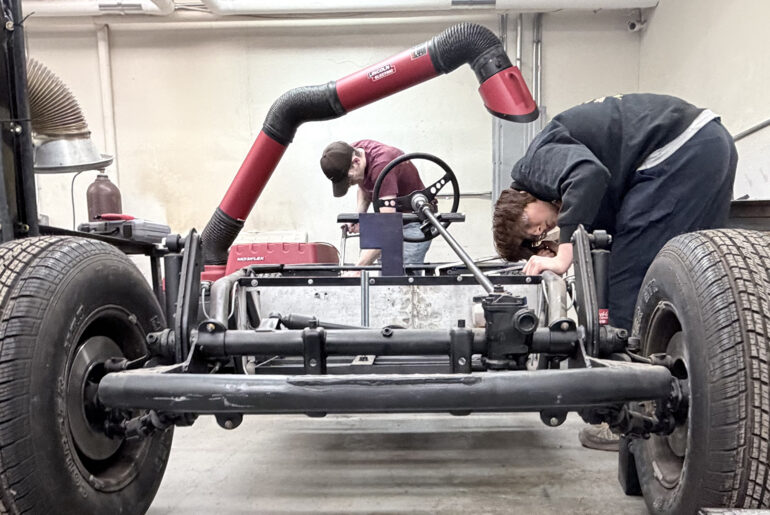
Japanese logistics company DOSHIN and Nissan Shatai Group have signed a cooperation agreement aimed at launching mass production of heavy-duty electric trucks using retrofit technology. This initiative focuses not on creating new models, but on comprehensively converting existing diesel vehicles into full-fledged electric vehicles.
Under the agreement, DOSHIN will provide a production facility, while Nissan Shatai’s subsidiary, Auto Works Kyoto, will offer engineering support, production technologies, and a quality control system. The basic contract was signed in late December 2025, with serial production scheduled to begin in 2026.
Electrifying heavy commercial transport remains one of the industry’s most challenging tasks due to the high cost of new EV trucks and the demands for range and reliability. Retrofitting significantly reduces costs and accelerates the shift to electric power without requiring a full fleet replacement, which is particularly relevant for Japan and other countries with strict environmental regulations.
For logistics companies, this approach means lowering emissions and operational expenses without needing to purchase new vehicles. For Nissan, it represents an opportunity to establish a foothold in the promising niche of commercial transport electrification, without waiting for mass demand for new heavy-duty EV models.
Upgrading heavy trucks appears to be a much more realistic electrification scenario than attempting to immediately replace entire fleets with new EVs. If the DOSHIN and Nissan Shatai project demonstrates consistent quality and durability, this model could quickly spread beyond Japan.