While tariff complications and EV profitability will continue to weigh on bottom lines, this automaker is still driving strong results.
While the U.S. electric vehicle (EV) industry lost some steam and tariff complications made investors nervous, General Motors (GM +1.17%) managed to drive through the obstacle course of issues last year with ease.
The company topped earnings estimates for the fourth quarter, reached its highest U.S. market share since 2015, increased its dividend 20% and authorized a new $6 billion share repurchase program — not a bad day’s work. GM’s tariff and EV profitability problem isn’t going away, however. Here’s a closer look at how the automaker can mitigate some of the pressure for investors.
EV profitability pain
Detroit auto rivals GM and Ford Motor Company (F +0.58%) both felt pain from EV profitability, changes to emissions regulations, and the removal of some EV incentives, and that caused decision makers to rethink production capacity and locations. Ford made big headlines with its decision to effectively discontinue the F-150 Lightning in its current form, among other adjustments, that culminated in a $19.5 billion special charge to pivot away from EVs in the near term.
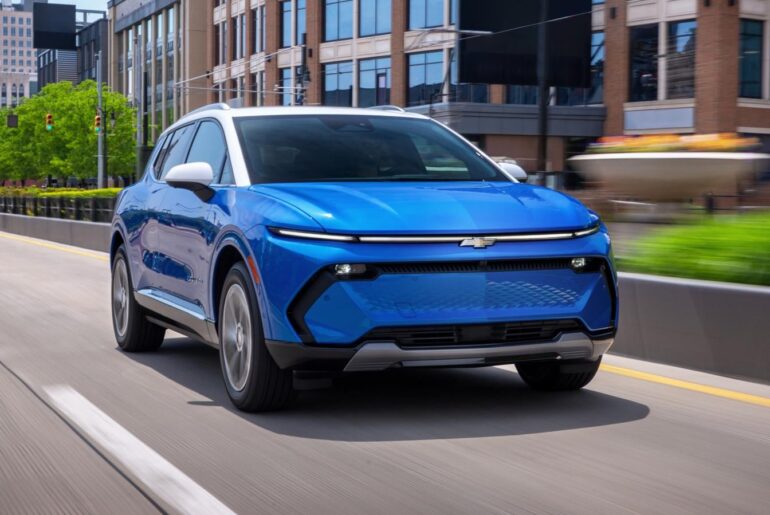
GM wasn’t able to escape the EV pain either, as more than $7 billion in charges related to scaling back EV production hit the automaker’s net income, driving a $3.3 billion loss during the fourth quarter. Special charges did not impact adjusted earnings, which are the figures Wall Street estimates.

Image source: Getty Images.
GM expects EV volume to most likely be down for the full year, but despite the market losing steam, the automaker is expecting to cut EV losses by $1 billion to $1.5 billion in 2026. “We think we’re well-positioned in this period of time where the ramp will be a bit slower because the incentives are gone. We’re well-positioned to take cost out, and I think we’ll be moving to that profitability quicker than many people think,” GM CEO Mary Barra said Jan. 27 on CNBC.

Today’s Change
(1.17%) $0.97
Current Price
$84.28
Key Data Points
Market Cap
$76B
Day’s Range
$82.64 – $84.69
52wk Range
$41.60 – $87.62
Volume
281K
Avg Vol
9M
Gross Margin
6.27%
Dividend Yield
0.68%
Pain now; gain later
While GM does a balancing act between its sales mix of EVs and internal combustion engine (ICE) vehicles, it also has to juggle massive decisions because of tariffs. One example is GM moving production of its Buick compact crossover from China to Kansas. Moves like this will cost GM about $1 billion in the near term, but are expected to pay off by mitigating tariff costs down the road.
When the book was closed on GM’s 2025, the company’s total tariff costs checked in below initial expectations of $3.5 billion to $4.5 billion. In fact, management said it was able to offset more than 40% of its tariff bill through cost-reduction initiatives and other adjustments. Those initiatives will continue to gain traction and should drive GM’s tariff costs lower this year than in 2025.
Ultimately, for investors, while tariff and EV restructuring costs will remain a pain for the company’s bottom line, the automaker has proven capable of driving through the crash course of obstacles to deliver impressive adjusted earnings, significant cash flow, and a more balanced road ahead between more profitable ICE vehicles and the future of EVs. GM’s growth should be sustainable and profitable, making 2026 another strong year.