Factorial Energy is taking a major step toward bringing solid-state batteries to American roads.
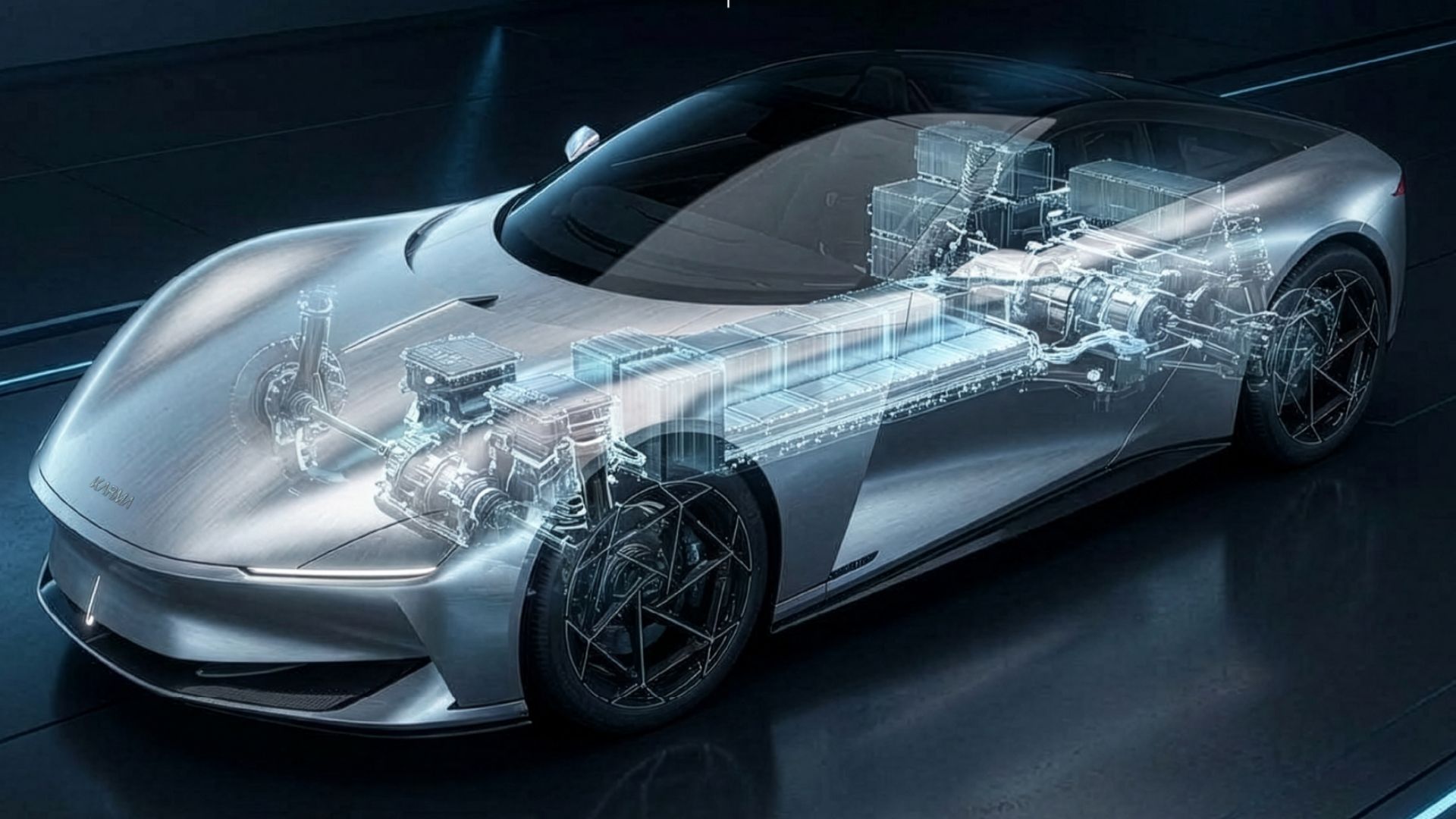
On February 5, the US-based battery developer announced the launch of its first commercial solid-state battery program in the United States. The program will integrate Factorial’s FEST (Factorial Electrolyte System Technology) batteries into Karma Automotive’s ultra-luxury electric vehicles.
The collaboration will debut with the Karma Kaveya, an all-electric super-coupe. The Kaveya promises over 1,000 horsepower, 1,270 lb-ft of torque, more than 250 miles of range, and a 0-60 mph time under 3 seconds. The vehicle is scheduled for a late 2027 launch in the US.
The batteries will allow Karma to validate solid-state technology in real-world passenger vehicles while accelerating domestic EV battery innovation.
Solid-state technology moves toward real-world use
The luxury EV firm had delayed the Kaveya launch in 2025 due to challenges in delivering a premium driving experience. “In 2025, we delayed launch because we did not yet see a clear path to fully delivering the uncompromising driving experience that should be expected from an American ultra-luxury vehicle company,” stated Karma’s president and CEO, Marques McCammon.
He added, “Now through the partnership with Factorial and the integration of FEST, we cannot only deliver that experience, but also open a pathway to stronger, more stable electrified drive systems for Karma owners and the broader industry.”
Factorial has been developing solid-state technology for years and has already demonstrated its capabilities in testing. Last September, Mercedes-Benz drove a modified EQS equipped with its solid-state cells for over 745 miles (1,200 km) without stopping to recharge. Mercedes called the batteries “a true game-changer.”
Advantages of FEST batteries
The FEST quasi-solid-state cells are designed to improve range, reduce weight, and simplify production. The batteries offer 500 to 600+ miles of range while cutting battery weight by roughly 40% compared to traditional lithium-ion cells.
Crucially, FEST cells can be produced using up to 80% of existing lithium-ion manufacturing equipment. This reduces the need for entirely new production lines, enabling faster scale-up of commercial programs like Karma’s. Factorial says this makes the technology ready for broad adoption while supporting domestic manufacturing.
“Launching our first U.S. passenger-vehicle program with Karma is a meaningful milestone for Factorial,” highlighted Siyu Huang, CEO of Factorial. “FEST was built to scale, and this milestone not only highlights the energy and performance solid-state technology can deliver but also underscores the global leadership of U.S. technology innovators.”
A step toward next-gen American EVs
The partnership combines Karma’s fully US-based engineering, vehicle design, and production with Factorial’s American-developed battery technology. Together, the companies aim to strengthen the US electric vehicle ecosystem and accelerate the transition to next-generation battery tech.
The battery maker also announced plans to list on Nasdaq through a business merger with Cartesian Growth Corporation III. The company intends to use the funds to expand production and scale up solid-state battery programs, ensuring that US innovations remain at the forefront of EV technology.