
Listen to this article
Estimated 5 minutes
The audio version of this article is generated by AI-based technology. Mispronunciations can occur. We are working with our partners to continually review and improve the results.
Ibrahim Zawawi thinks the federal government’s decision to bring back electric vehicle (EV) rebates might be enough to push him to buy one when he gets his next vehicle.
“I like the idea of electric vehicle, especially for pollution,” said Zawawi, one of several people who shared his views with CBC on a downtown street in Windsor, Ont. — the heart of Canada’s automotive industry.
“It helps a lot and the rebate is very motivating. That’s very encouraging. Oil, gas go up, go down. I expect like it will be … more economical.”
Ottawa announced Thursday it will be offering Canadian drivers $5,000 to buy a new EV and $2,500 toward plug-in hybrids. The program, which launches in two weeks, will be part of a new auto strategy that comes with tariff relief for automakers and more EV charging stations.
Canada is also scrapping its EV mandates requiring 60 per cent of all new cars to be electric by 2030 and 100 per cent by 2035.
Susan Andrykew still isn’t sold on what EVs can handle, like extreme cold weather, but says the rebate forces her to now strongly consider it.
“I think definitely put an even playing field on other with the other vehicles,” the Windsor resident said following Thursday’s announcement by the prime minister. “When you get free money, you get free money.”
Ali Shah says he still doesn’t think the rebate is enough to convert him into electrification for his next vehicle purchase.
LISTEN | EV incentives on the way back in auto strategy:
Windsor Morning7:58EV incentives coming back, EV mandates going away in federal auto strategy to be announced today
E-V incentives for car buyers will make a comeback. And EV mandates for vehicle sales are going away. Details will be announced in the new federal auto strategy later today. Windsor Morning host Amy Dodge spoke to automotive engineering professor Peter Frise about what to expect.
“I just don’t think the infrastructure we have for electric vehicles is readily available enough, like charging pumps and the expense, the technology we have on battery powered engines,” said the Windsor resident.
“I just don’t think is there yet for me to be incentivized to go purchase something which has innate risk. I much prefer still to this day combustible engines. I think I need a little bit more trust … in the battery technology.”
Auto expert, union applaud feds
Sam Fiorani with U.S.-based AutoForecast Solutions believes Canada’s lane-change on automotive electrification sets the country up well for the future.
“With the recent pushes from the U.S., it has spurred Canada to return the favour, as it would be with the U.S. tariffs and onshoring of a lot of production,” he said.
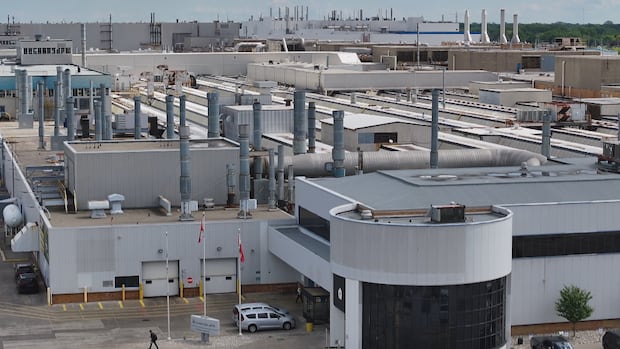
And as for the Windsor, Ont., region specifically, Fiorani predicts it could boost local vehicle production and employment.
“The battery plants, the regional minerals, all these things come into the Windsor area and could help boost employment, increase production of vehicles, particularly the Windsor plants, but also other Ontario plants and [possibly] lure more production from imports right now to the area.”
There’s a possibility of new factories from overseas companies, he suggested.
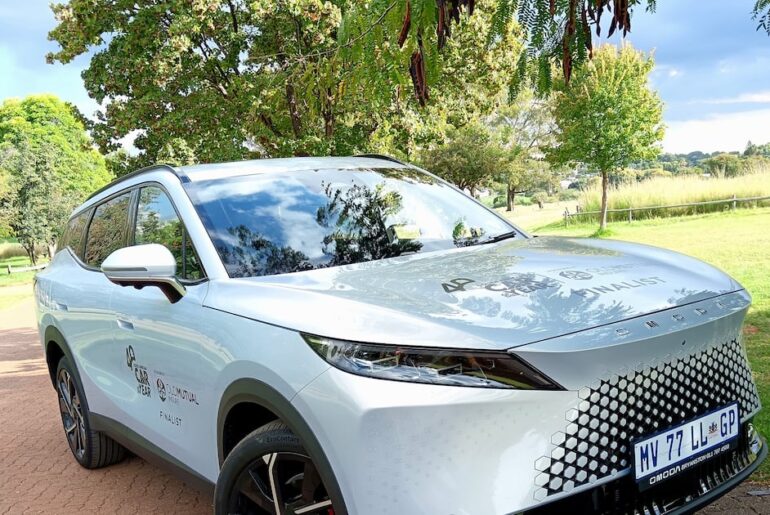
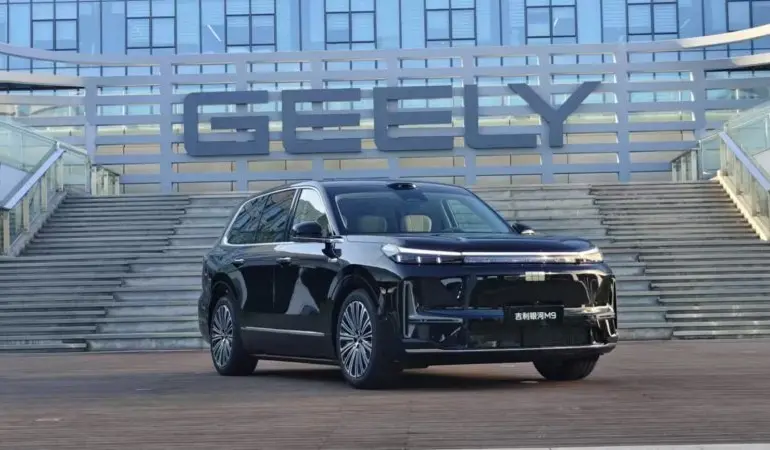
“Luring them in with incentives, providing in the case of the recently announced a deal with China, it brings in some new players into the area so they can establish a base and establish a market for their products.”
 John D’Agnolo is the president of Unifor Local 200, which represents Ford workers in Windsor-Essex. (Pratyush Dayal/CBC)
John D’Agnolo is the president of Unifor Local 200 in Windsor — representing approximately 2,000 workers at Ford.
He says Thursday’s news from Ottawa around EVs and the government’s new auto strategy — that remains in the works — were a long time coming.
“We’ve been asking for this for years since we’ve lost it, to be quite frank with you,” he told CBC News.
“It’ll create a lot of jobs for communities wherever they they put them. I’m tired of seeing cars that are being sold here and … there’s no employment. So it’s very important.”
The auto strategy also includes stronger greenhouse gas emission standards for vehicle models in years 2027-32, a move Carney said would give the industry “flexibility,” to achieve that through hybrids, EVs or more efficient internal combustion engine vehicles.
But it wasn’t met with applause across the board: Conservative shadow ministers Raquel Dancho and Kyle Seeback accused Carney of not going far enough to support domestic autoworkers.
Lana Payne, president of Unifor — which represents thousands of auto workers in Windsor — said the union was happy to see Canadian counter-tariffs on U.S. light vehicles continue, and the strengthening of tariff relief measures.
But Payne said the union is disappointed that Canada’s counter-tariff program still doesn’t apply to heavy-duty trucks, and it’s concerned by the recent Canada-China deal to bring a limited number of Chinese EVs into the country on a yearly basis.
There’s also a $1.5-billion fund for new EV charging infrastructure and the government is expected to release an electricity strategy in the coming weeks that will aim to double grid capacity and making electricity more reliable.
Tariff relief for automakers is also a central part of the plan to help keep automaker from moving south at the urging of U.S. President Donald Trump.
If Trump insists on auto tariffs during the CUSMA review, which begins in July, Carney says they’ll look at rewarding automakers who sell cars in Canada.