February 4, 2026
By Karan Singh

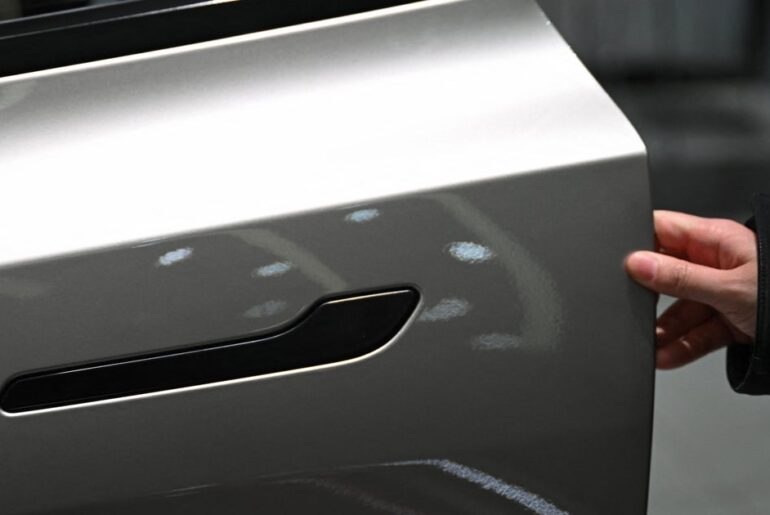
On February 3rd, 2026, China officially finalized a new national safety standard that bans hidden electronic-only door handles. This design feature was pioneered and popularized by Tesla, leading to aerodynamic savings critical for EV range.
The new mandate, issued by the Ministry of Industry and Information Technology (MIIT), requires all passenger vehicles to be equipped with external door handles that provide a mechanical release.
The Ban, Explained
The new regulation addresses safety concerns following several high-profile accidents where electronic handles failed to operate after a crash or power loss, trapping occupants inside.
There are several new key requirements under the updated standard, beginning with mechanical functionality. Every door (except the tailgate) must have an exterior handle with a mechanical release function that operates even after a total power failure or battery thermal event.
In addition, the exterior handles must provide a recessed hand-operating space no smaller than 60mm wide (2.4 inches), 20mm tall (0.8 inches), and 25mm (1 inch) deep. The new mechanical requirements and space requirements will take effect on January 1st, 2027, for all newly approved car models.
Existing models that have already been approved will be granted a two-year grace period to adjust their designs, with MIIT requiring compliance by January 1st, 2029.
Tesla’s Proactive Redesign
Tesla has already been preparing for these changes. In September 2025, Tesla’s Chief Designer, Franz von Holzhausen, confirmed that the company’s design and engineering teams were already working on a compliant redesign of its door handles.
Von Holzhausen described a “really good solution” currently in development that combines electronic and manual release mechanisms into a single, more intuitive control. This redesign is intended to prevent panic situations in which occupants or bystanders struggle to locate hidden mechanical latches during emergencies.
What This Means for the Model 3 & Model Y
Given China’s status as the world’s largest EV market, Tesla is expected to prioritize these updates and changes for the Indo-Pacific region first. We expect redesigned door handles for the Model 3 and Model Y to be introduced in the Chinese market first, well before the mandated date.
While its current lineup is approved up until 2029, we could see Tesla roll out the updated door handle design before then, as it’s also facing pressure in North America. By getting ahead of the mandated change, Tesla could avoid headlines for failing to meet upcoming standards.
With the upcoming discontinuation of the Model S and Model X, Tesla has fewer changes to make, as the Model S and Model X door handles also didn’t meet the upcoming regulations. It’s interesting to consider whether these regulations played a role in the discontinuation of those models, as Tesla likely didn’t want to spend additional time and money on redesigning those models and the iconic door handles on the Model S.
While Tesla will have to redesign its door handle, the upcoming handles are expected to be just as sleek and efficient.
Global Changes
While the ban is currently exclusive to China, other jurisdictions, including Europe and North America, may soon follow suit. Tesla is likely to find it more cost-effective to implement the redesign across the entire global fleet rather than maintaining separate door-handle designs for different regions.
Ordering a New Tesla?
Use our referral code and get 3 months free of FSD or $1,000 off your new Tesla.
February 4, 2026
By Karan Singh
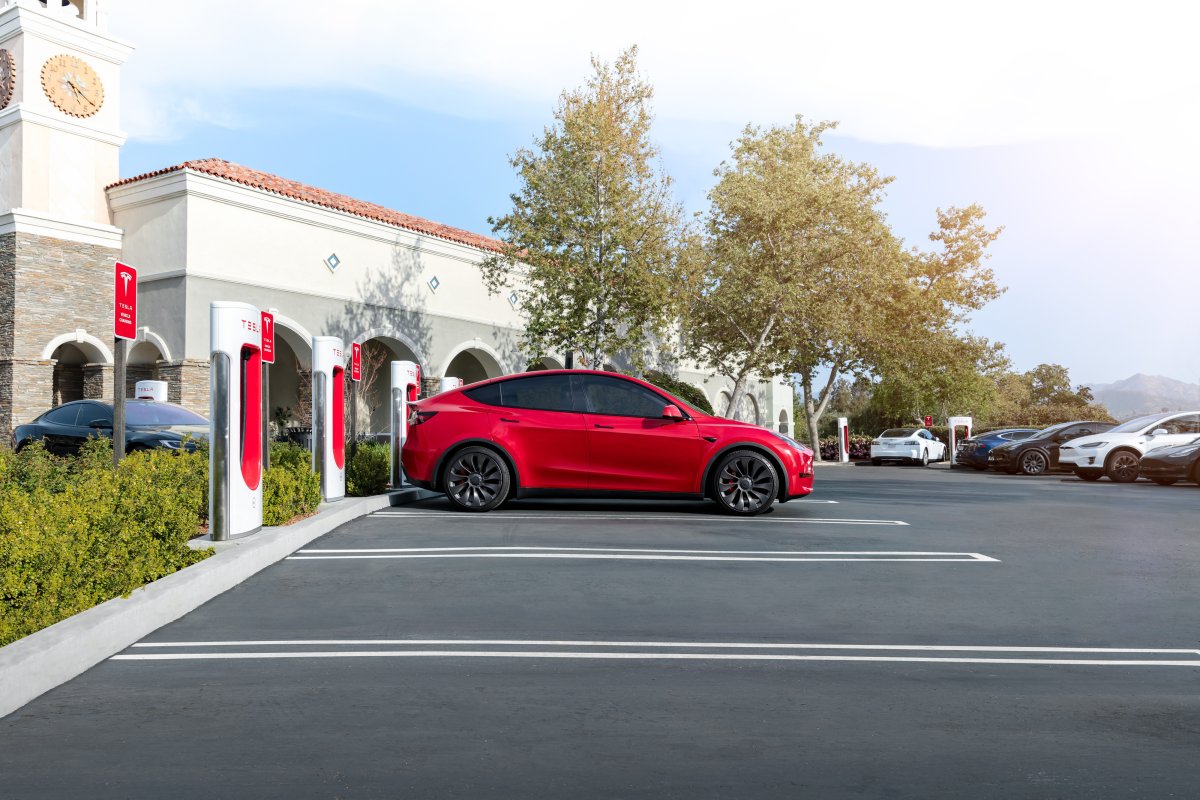
Following its Q4 2025 Earnings Call, Tesla has announced the winners of another Supercharger Voting round. While Tesla is expanding Supercharger sites around the world, they’re moving just as quickly on charging features themselves.
This quarter, Tesla introduced new features, including centralized payment kiosks for new sites, 3D Supercharger maps in-vehicle, the Charging Passport, and a batch of UI and naming updates for Supercharger sites to make it easier to identify which Wawa in Michigan you’re navigating to.
There was also the introduction of Fleet Charge Cards in Europe, Dynamic Supercharger Pricing, Live Availability for Google Maps, and Accessible Handles for new V4 sites, to round off the list.
With all that said, let’s take a look at one of the longest lists of winners we’ve seen in a while.
North America
🇨🇦 Rocky Mountain House, Alberta
🇨🇦 New Glasgow, Nova Scotia
🇨🇦 Summerside, Prince Edward Island
🇨🇦 Lac-Jacques-Cartier, Quebec
🇺🇸 Pinetop-Lakeside, Arizona
🇺🇸 Harrison, Arkansas
🇺🇸 Gualala, California
🇺🇸 Winter Park, Colorado
🇺🇸 Key Largo, Florida
🇺🇸 Waycross, Georgia
🇺🇸 Rexburg, Idaho
🇺🇸 Clear Lake, Iowa
🇺🇸 Clovis, New Mexico
🇺🇸 Portage Township, Michigan
🇺🇸 West Glacier, Montana
🇺🇸 Atoka, Oklahoma
🇺🇸 Kerrville, Texas
🇺🇸 Heber, Utah
🇺🇸 Rhinelander, Wisconsin
🇲🇽 Colombia, Mexico
Europe & Middle East
🇨🇿 Trutnov, Czech Republic
🇪🇪 Laagri alevik, Estonia
🇬🇷 Kavala, Greece
🇭🇺 Keszthely, Hungary
🇮🇹 Ravenna, Italy
🇱🇹 Šiauliai, Lithuania
🇹🇷 Odunpazarı, Turkey
🇵🇱 Mrągowo, Poland
🇵🇹 Castro Verde, Portugal
🇸🇰 Žilina, Slovakia
Asia-Pacific
🇦🇺 Geraldton, Australia
🇳🇿 Lake Tekapo, New Zealand
🇯🇵 Kushiro, Japan
🇲🇾 Tanah Rata, Malaysia
🇰🇷 Tongyeong-si, South Korea
Supercharging Voting Q1 2026
With the Q4 winners announced and 2025 announcements wrapping up, Tesla has opened voting for the next quarter, as usual. Owners get this opportunity to influence just where another Supercharger site might be built.
There are over a thousand locations to choose from across the globe. Users can vote on up to five locations, whether they’re local to you or in an area you know could benefit from a Supercharger, like a key rural route or Supercharger desert in an urban center.
How to Vote
To participate in this quarter’s vote, you’ll want to visit the Tesla Supercharger Voting page and sign in to your Tesla account.
The most popular sites are displayed on the leaderboard, and you can also make recommendations for new locations in future voting cycles.
Tesla will announce the winners of the Q1 vote at the end of the quarter.
February 3, 2026
By Karan Singh
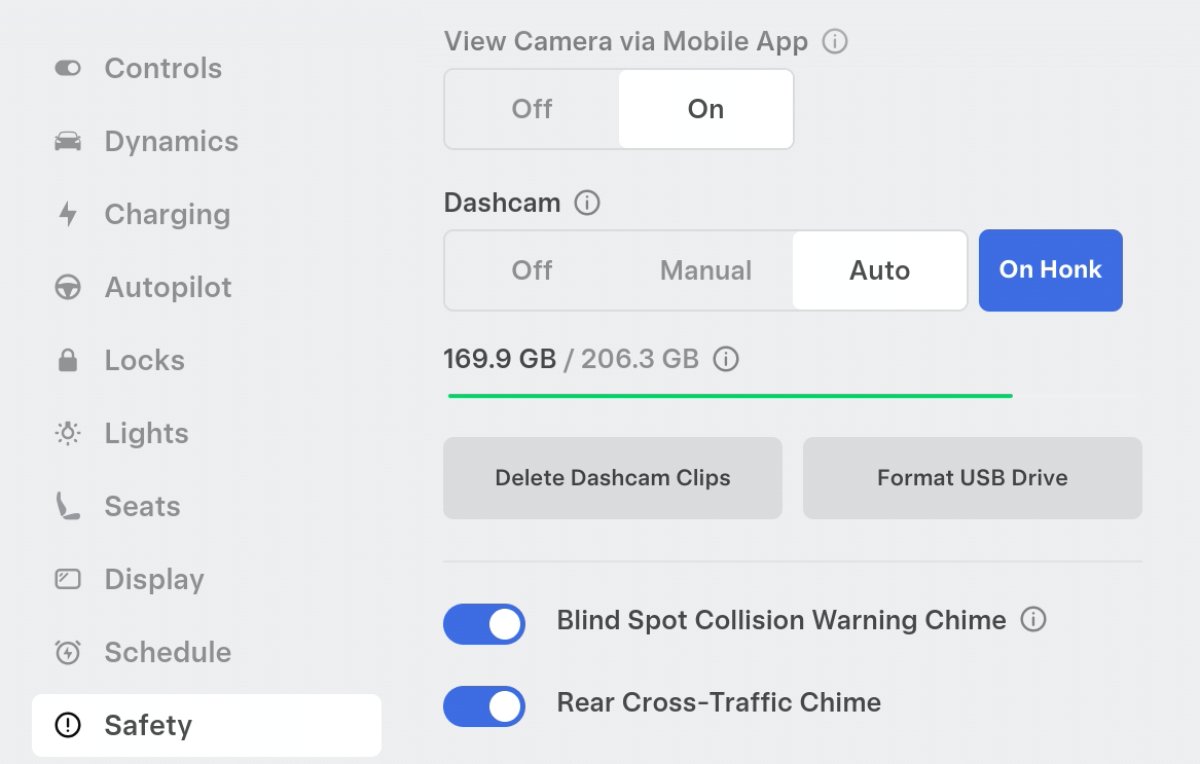
One of the longest-standing frustrations of Tesla’s Dashcam feature is the arbitrary one-hour limit on rolling dashcam footage. Regardless of the USB drive plugged into your vehicle, whether it’s a 128GB flash drive or a 2TB SSD, the vehicle only retains the last 60 minutes of driving before overwriting it.
That means if you forget to save footage within the hour, it’ll get overwritten with new footage. What’s worse is that the vehicle records any time it’s awake, meaning that even after you park, the vehicle is still recording and overwriting data.
That is finally changing, according to the release notes for an upcoming software update in China. Tesla’s Dashcam feature will now support dynamic recording durations.
How Dynamic Recording Works
Instead of a hard cap of one hour, your vehicle will now look at the total storage capacity of your connected USB drive and scale the Recent Clips buffer accordingly.
The updated logic follows these benchmarks: With a 128GB drive, you’ll now retain up to 3 hours of rolling footage, based on available storage space (with saved Dashcam/Sentry footage counting against it, primarily). With a 1TB Drive (or larger), you’ll now have up to 24 hours of rolling footage.
This change allows users to retain video for much longer before it is overwritten. Even for smaller USB drives, the 3-hour limit is a significant increase over the previous 1-hour limit for rolling footage.
Release Notes
The translated release notes in the update state:
Dashcam Dynamic Recording Duration The dashcam dynamically adjusts the recording duration based on the available storage capacity of the connected USB drive. For example, with a 128 GB USB drive, the maximum recording duration is approximately 3 hours; with a 1 TB or larger USB drive, it can reach up to 24 hours. This ensures that as much video as possible is retained for review before it gets overwritten.
Advantages
It also offers a distinct advantage for owners who use larger drives. Up until now, larger drives have meant you could keep more saved footage, but most of the drive still went unused. Now, the vehicle will take advantage of the larger drive and overwrite data less frequently.
For owners on long road trips or dealing with incidents that weren’t immediately noticed, this 3x-24x increase in retention is a significant upgrade. If you notice damage to your vehicle, even up to 24 hours later, you may still be able to see footage of the incident.
While 1TB drives will be able to hold up to 24 hours of recording, they must meet Tesla’s sustained write speed requirements of at least 4 MB/s to prevent footage corruption, so you’ll want to invest in a quality SSD that’s also capable of enduring hot and cold conditions as they happen in your region. We love the Samsung T7 SSD drives, available in 1TB and 2TB capacities.
The “Why” Behind the Change
Historically, Tesla limited dashcam storage to 60 minutes, likely due to a mix of privacy regulations (particularly in Europe) and processor overhead for managing large file structures on slow USB sticks.
However, as the majority of the fleet transitions to AI4 and AMD Ryzen MCUs, more cars than ever are capable of managing significantly higher data throughput. By linking retention to drive size, Tesla is finally rewarding owners who invest in high-end SSDs over the basic drive included in your Tesla.
Supported Vehicles
It’s not clear yet which vehicles or regions will support the dynamic recording duration feature.
Legacy Intel Atom owners may not be able to benefit from the full length of changes to Dynamic Recordings, but we’ll keep a close eye on this feature and let you know what to expect once it begins rolling out to users.
Release Date
The feature just started rolling out to employees in China. It may take a few weeks for this feature to roll out for Chinese users. However, we expect this feature, along with the new custom Automations feature, to roll out to other regions in a future Tesla update.