When the VW Bus (the T1 model) went into production in 1950 at a Volkswagen plant in West Germany, it completely changed the way people looked at cars. Promoted as a multi-use machine with a simple styling, a roomy interior, and rear-wheel-drive, the microbus – affectionately called the "Bulli" – has quickly become the perfect companion for home, work, and play.
For over seven decades, the VW Bus has provided countless options for use, from people hauler to platform vehicle to holiday vehicle and camping trailer, defying its simple technical components and affordable price. People simply loved to customize it and adapt it to their own needs.
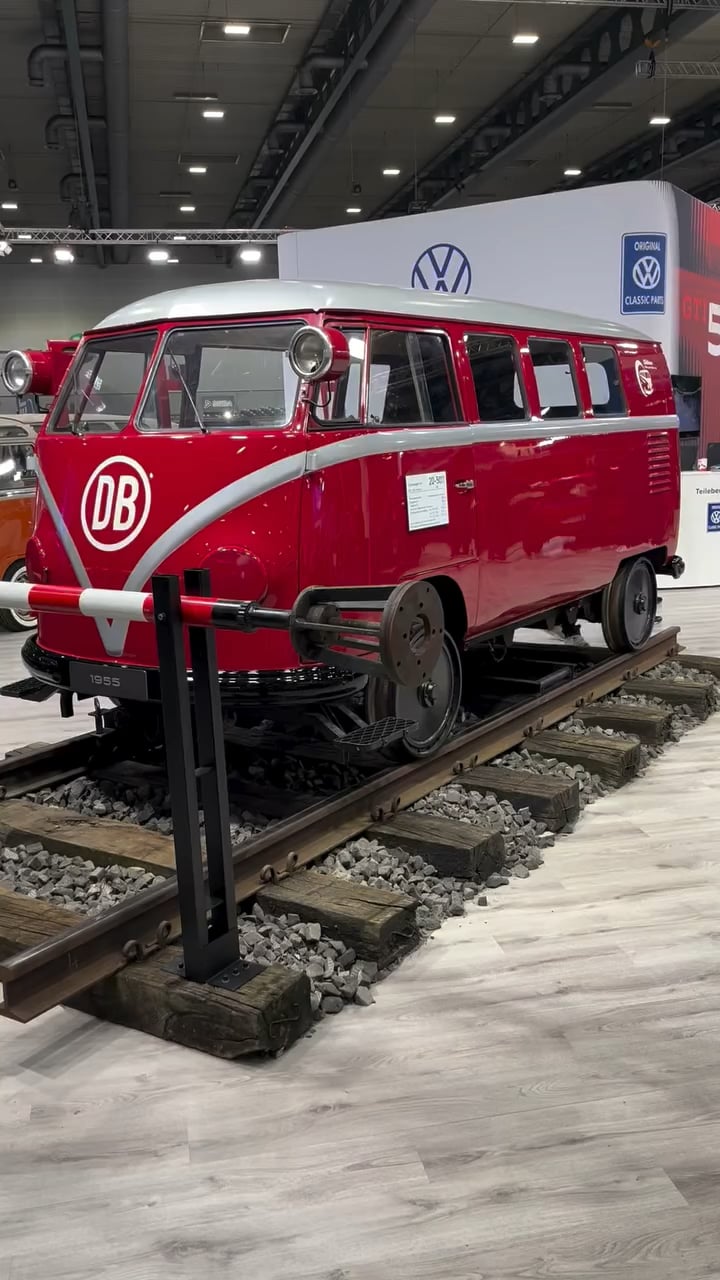
Perhaps one of the less-known uses for the VW Bulli was that of a rail bus. It might sound unbelievable, but the original T1 bus was indeed converted into a vehicle for the tracks. It happened in 1955 and was one of the most stylish self-propelled railway vehicles in history, providing a very unique way to take a VW Microbus trip.
Also known as the Klv-20, which stands for "small car with combustion engine" in railway German, the VW Transporter-based railbus was developed in the early 1950s and combined the original Kombi (T1) bus with a railway chassis. To be more precise, the design came to life in 1954, when the Deutsche Bundesbahn (German Federal Railway) was in need of new compact service vehicles for its railways and, instead of building new models from the ground up, it commissioned a Volkswagen Transporter that could travel on rails.
The Deutsche Bundesbahn tapped two manufacturers to build the Klv-20, namely Martin Beilhack in Rosenheim and Waggon & Maschinenbau GmbH based in Donauwörth. They each built 15 units over the course of the next year, with each Bulli for the rails combining a VW T1 van body with a 28-hp Volkswagen industrial engine and rail chassis and running gear.
The vehicle has no steering wheel or rear-view mirror and boasts a special hydraulic turning mechanism that makes it easy for a single individual to lift up the rail car and turn it around 180 degrees so it can return to its point of origin without driving in reverse. A few modifications have been made to the exterior as well to better meet rail regulations. As such, the original van's round headlights and break lights were removed and replaced by two white lights mounted higher up next to the classic split windshield and a single red taillight.
The VW Bulli rail buses remained in service until the 1970s and were mainly used at rail and signal maintenance depots for inspection and repair jobs. Out of the 30 units built in total, only a handful are still in existence today, and one of them has been recently unearthed by the Volkswagen Commercial Vehicles Oldtimer (VWNO) department and showcased during its International VW Bus Day in June.
This restored model, vehicle number 20-5011, was built by Beilhack and is one of just a few units still operational today. It was initially used by the railway depot in Plattling/Bavaria and then by the signaling department as a rail car for inspection and repair trips. Like most of its siblings, it was retired from service in the 1970s. It then traveled to the Palatinate region in southwest Germany, and in 1988, it was acquired by a railway collector in Hesse. This particular Klv-20 is currently part of the Volkswagen Commercial Vehicles Oldtimer collection of classic vehicles in Hanover.
The experts at Volkswagen took this 1955 Bulli rail bus on its first trip since the restoration this past spring. It was a joy ride on the picturesque 'draisine' track in Lengenfeld unterm Stein, a small village in Central Germany.
"It was a moving experience for our team to put the Klv-20 back into service," commented Tobias Twele of VWNO. "There aren’t many versions of the Bulli that we haven't seen or driven – but this rail bus is a new one for us! That's why it was a very emotional moment for everyone when we drove across the 24-meter-high viaduct with the team for the first time."
An original sales brochure that was received by the team with the Klv-20 includes a description of the unusual vehicle provided by the Beilhack company. It details the specifications of the converted bus, mentioning that it measures approx. 4,100 mm (13.5 feet) in length and 1,750 mm (6 feet) in width. It is powered by a four-stroke gas boxer engine mated to a four-speed manual transmission and can reach a top speed of 70 kph (43 mph). A pair of lateral oscillating axles send power to the wheels while stopping power is ensured by a pedal-activated oil-hydraulic shoe brake system. Speaking of the wheels, the brochure says they are made of steel and measure 550 mm (23 inches) in diameter.
The interior of the vehicle features three upholstered benches: a two-seat one in the driver's cab and two with three seats in the passenger compartment. True to its multi-use nature, the rail bus can also be used for hauling cargo by simply removing the two benches in the rear.
This classic Volkswagen T1 Klv-20 rail car is a beautiful piece of industrial and transport history, one that demonstrates the incredible versatility of the legendary VW bus and shows why the vehicle has found a special place in the hearts of so many.
Video credit: Johannes Huebner / oldtimerflash
Text credit: autoevolution.com
Photo credit in comments: VW Commercial Vehicles
by MikeHeu
![Just a casual one of five [2020 Lotus Exige 430 Cup JPS edition] out on the road.](https://www.evshift.com/wp-content/uploads/2026/02/rdr869kb2ghg1-770x515.jpeg "Just a casual one of five [2020 Lotus Exige 430 Cup JPS edition] out on the road.")