Support CleanTechnica’s work through a Substack subscription or on Stripe.
Or support our Kickstarter campaign!

The Chicago Auto Show will return to McCormick Place from February 7 to 16, 2026, with a lineup that underscores the show’s evolving role in the US auto market: less about global debuts and more about consumer-ready vehicles, electrification pathways, and hands-on engagement.
The small ratio of pure EVs to hybrids and internal combustion engine vehicles (the acronym for them has taken an ominous, perverted meaning, so I am temporarily pausing its use). As the industry continues to recalibrate expectations around electric vehicles, the vehicles at the Chicago show, for this writer, function as a checkpoint for what automakers are actually prepared to sell, demonstrate, and support in the near term.
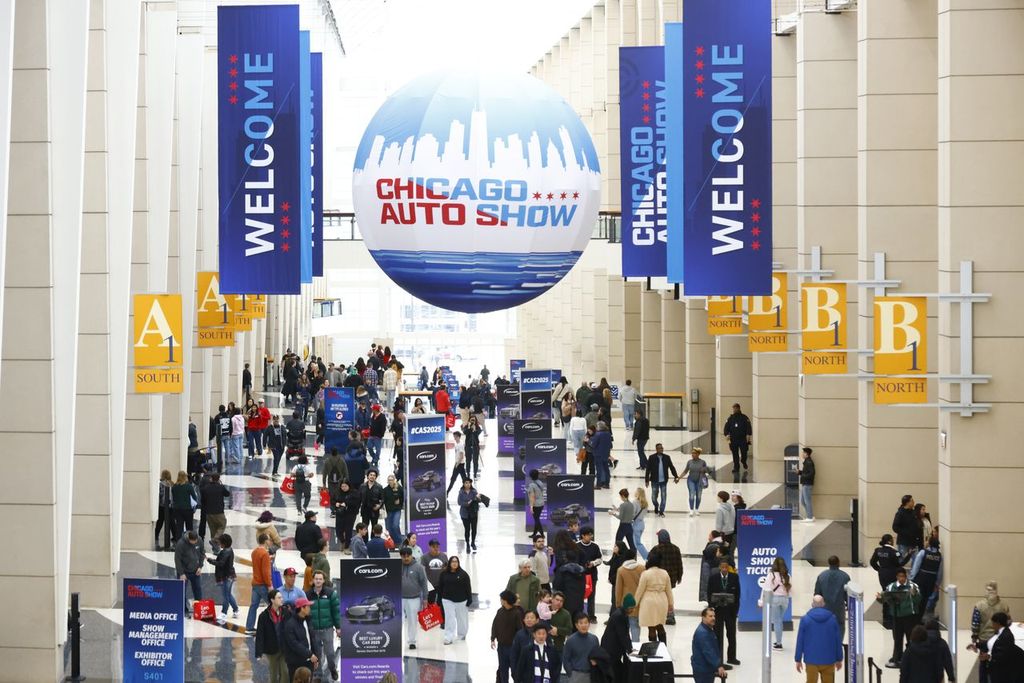
That shift was already evident in 2025, when the EV presence on the show floor skewed heavily toward production models and late-stage rollouts rather than concept vehicles. Crossovers, SUVs, and pickups dominated, reflecting both Midwest buyer preferences and the broader direction of the US market. Many Japanese, Korean, German, and Vietnamese brands with both pure EVs and hybrids of whatever mix are part of this year’s show. American automakers with limited EV pipelines (except frontrunner Chevrolet) are in, but have more cautious strategies maintaining a low profile.
CleanTechnica will be covering the event on the last two days, coming in from Singapore Space Week and the Singapore Airshow from February 2 to 5.
Will Chicago drive electric?
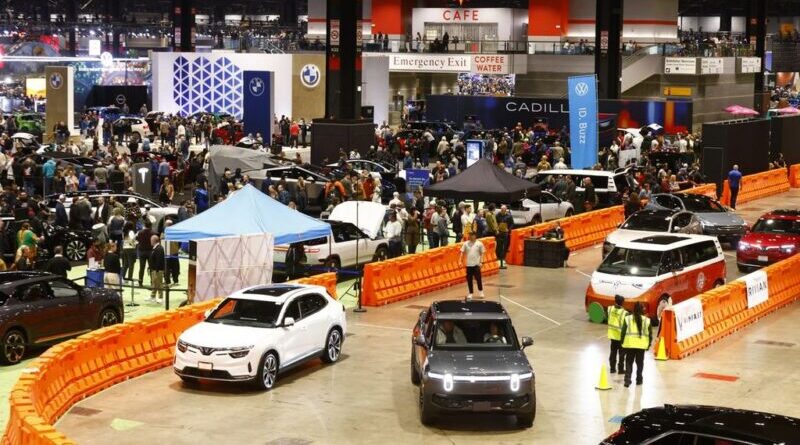
A central feature of the show since it returned post-pandemic has been the “Chicago Drives Electric” indoor test track, which has grown into one of the show’s most influential attractions. Unlike static displays, participation in the test track requires manufacturers to commit vehicles, staff, and operational resources, signaling a degree of confidence in both product readiness and consumer reception.
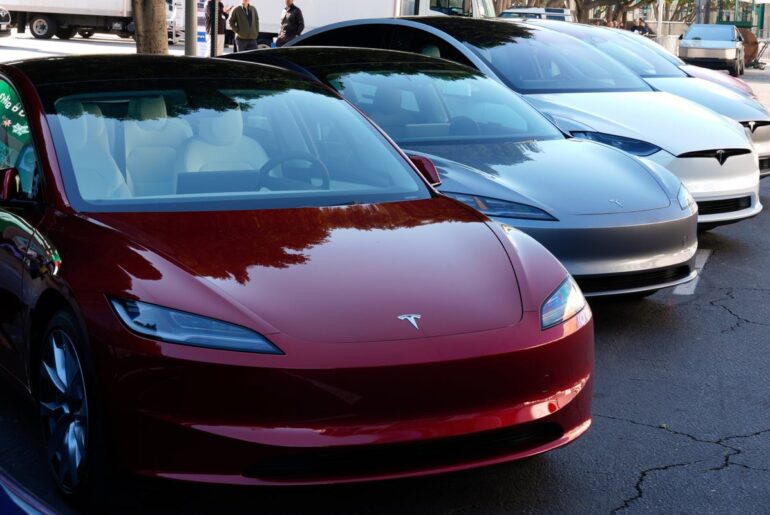
Manufacturers confirmed for outdoor test drives include Alfa Romeo, Dodge, Ford, Jeep, Ram, Subaru, Tesla, and Toyota. Tesla’s participation is notable given the company’s longstanding absence from traditional auto show displays, suggesting a continued willingness to engage consumers through test-drive programs rather than exhibit booths.
Chicago Auto Show General Manager Jennifer Morand said the expansion of indoor and outdoor driving experiences reflects changing consumer expectations. Organizers are increasingly prioritizing opportunities for visitors to interact directly with vehicles, rather than relying on display stands or press-driven unveilings.
The Stellantis portfolio will include the Jeep Recon, a trail-rated battery-electric SUV positioned as a zero-emission counterpart to Jeep’s traditional off-road offerings. Stellantis says the Recon will deliver up to 650 horsepower and an estimated all-electric range of up to 250 miles, placing it squarely in the emerging electric off-road segment. Also confirmed is the Dodge Charger Daytona, a 670-horsepower, four-door electric vehicle that represents Dodge’s most aggressive step yet into full electrification. The compact Fiat 500e will also be on display, shown in its Giorgio Armani Collector’s Edition form, highlighting Stellantis’ limited but continued presence in small urban EVs.
In addition to those battery-electric models, Stellantis will showcase several electrified vehicles that fall short of full BEV classification but remain central to its near-term strategy. The Ram 1500 REV, described by the company as a range-extended electric pickup, combines a 92-kWh battery with an onboard generator and targets a total driving range of up to 690 miles. Jeep will also feature the Wrangler 4xe Rubicon Sunchaser Concept, a plug-in hybrid interpretation of its best-selling off-road model, while Chrysler will bring the Pacifica Grizzly Peak concept, based on the plug-in hybrid Pacifica platform and reimagined as an overlanding vehicle.
Toyota will showcase a mostly hybrid lineup featuring the all-new 2026 RAV4, along with electrified models, including the Grand Highlander Hybrid, Tacoma TRD Pro, and various Crown and Camry models. The exhibit highlights include specialized SEMA vehicles (Camry GT-S, bZ Time Attack), and overlanding rigs including a Tacoma Hybrid in the Family Area. Strangely, the bZ (known elsewhere as the bz4X), Toyota’s only battery electric vehicle, isn’t on the official Toyota roster except for the bZ Time Attack, which is a for-competition only vehicle.
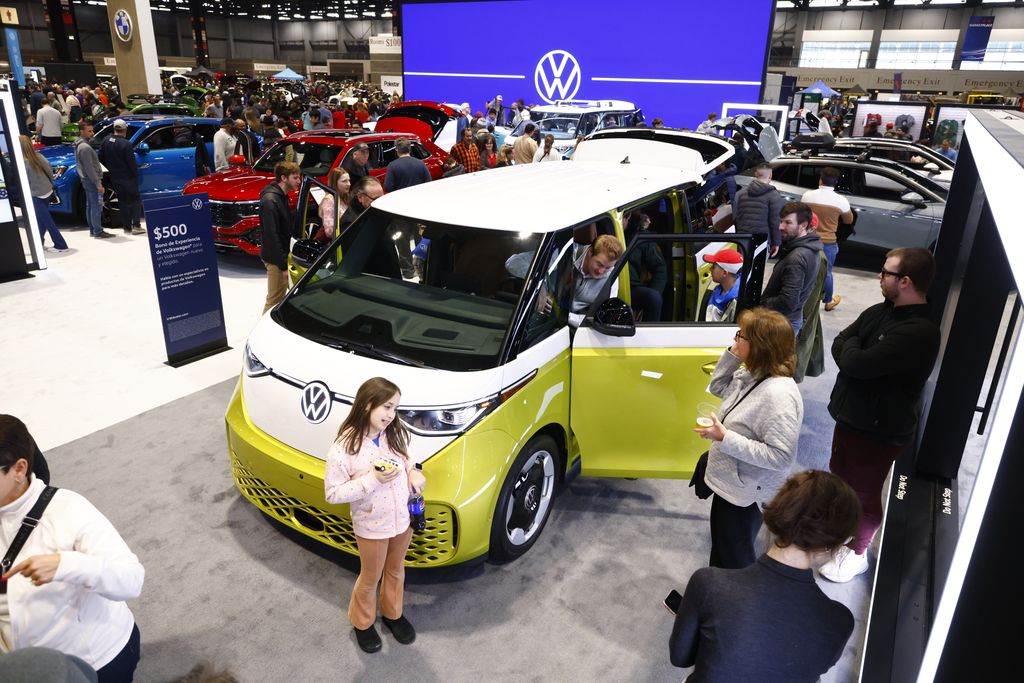
In 2025, VinFast displayed the VF 8 and VF 9 electric SUVs and made both available on the indoor test track, positioning the three-row VF 9 again as its flagship offering. The company is expected to maintain or expand its presence in 2026, with the VF 9 remaining central to its display, the VF 8 continuing as its higher-volume demonstrator, and the possibility of introducing the smaller VF 7 as it evaluates demand in the compact electric SUV segment. Though in a difficult position in the US in terms of sales, VinFast is not giving up on North America.
More support this year
Beyond automakers, the 2026 Chicago Auto Show continues to attract significant institutional and corporate support, particularly around its electrification programming. Sponsors for the upcoming show include Cars.com and ComEd as premier partners, joined by official sponsors Sim Drive and Drive Chicago. Additional support comes from the US Army and Mattress Firm as star sponsors, with Renewal by Andersen and Britax listed as supporting sponsors.
ComEd’s role is particularly notable in the context of electric vehicles. The Illinois utility returns as the presenting sponsor of Chicago Drives Electric and will maintain an onsite presence adjacent to the EV test track, offering educational resources aimed at helping consumers navigate EV ownership. ComEd will also display an electric school bus in the Family Zone and an electrified utility bucket truck at its booth, reinforcing the growing link between EV adoption and grid infrastructure.
Cars.com, a Chicago-based automotive marketplace, will continue its long-standing partnership with the show as a premier sponsor and official map sponsor, with branding throughout the venue and within the EV test track area. The company will also highlight its “Best of Vehicles” awards for 2026 and, in partnership with Britax, feature a Best Family Vehicle display in the show’s Family Zone.
Other sponsor activations include Drive Chicago’s Supercar Gallery, which will showcase rare and high-performance vehicles from brands such as Aston Martin, Bentley, Lamborghini, and McLaren, and Sim Drive’s racing simulators in the Family Zone. While these exhibits are not directly tied to electrification, they reflect the show’s broader emphasis on interactive experiences rather than static displays.
As the Chicago Auto Show enters its 118th year, its identity within the global auto show circuit continues to diverge from traditional debut-focused events. The mix of battery-electric vehicles, hybrids, range-extended trucks, and conventional models scheduled for 2026 reflects a market still in flux, shaped as much by infrastructure readiness and pricing pressures as by long-term emissions targets.
Support CleanTechnica via Kickstarter
Sign up for CleanTechnica’s Weekly Substack for Zach and Scott’s in-depth analyses and high level summaries, sign up for our daily newsletter, and follow us on Google News!
Advertisement
Have a tip for CleanTechnica? Want to advertise? Want to suggest a guest for our CleanTech Talk podcast? Contact us here.
Sign up for our daily newsletter for 15 new cleantech stories a day. Or sign up for our weekly one on top stories of the week if daily is too frequent.
CleanTechnica uses affiliate links. See our policy here.
CleanTechnica’s Comment Policy
![A Tesla model 3 is pictured inside a showroom in Taipei, Taiwan on July 31. [REUTERS/YONHAP]](https://www.evshift.com/wp-content/uploads/2026/02/1770190118_a359974e-c601-4795-8714-58b8970d1150-770x515.jpg "Imported car sales jump 37.6 percent in January on strong EV demand")