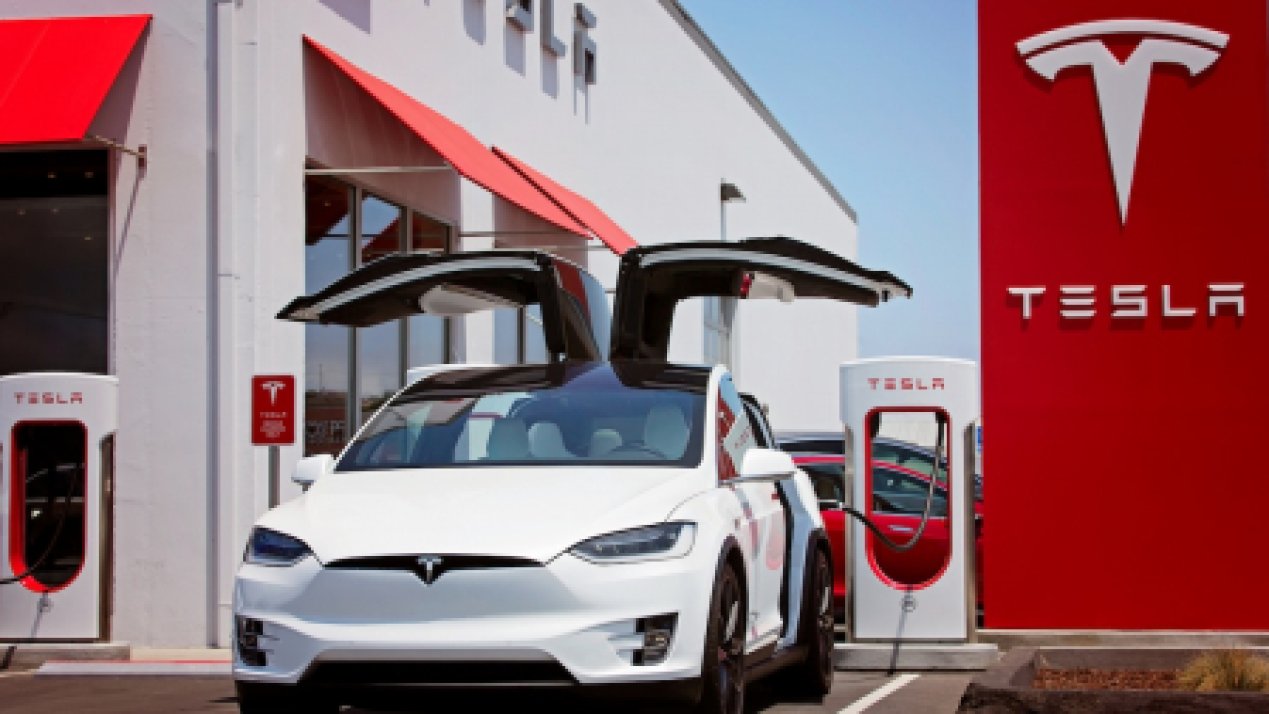
Tesla reported a 46% decline in net profit for 2025 as vehicle sales fell and the company accelerated a strategic pivot toward artificial intelligence, robotics and autonomous systems, according to financial results released on Jan. 27. Net income totaled US$3.79 billion for the year, while revenue declined 3% to US$94.83 billion.
The results mark the first annual revenue contraction in Tesla’s history and underscore mounting pressure on its core automotive business, which accounts for roughly two-thirds of total revenue. Automotive revenue fell 11% year on year, reflecting weaker demand, intensifying price competition—particularly from Chinese manufacturers led by BYD—and reputational and market risks linked to the political involvement of CEO Elon Musk.
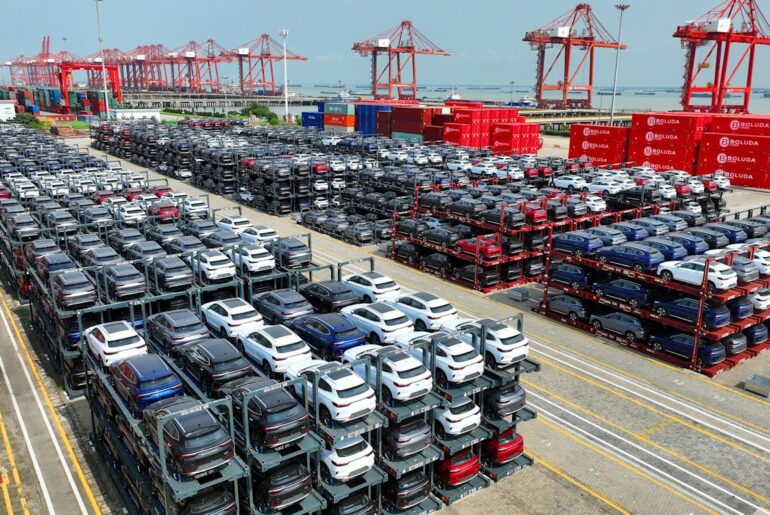
BYD led global electric vehicle sales in 2025 after delivering 4.6 million vehicles, up 7.7% from 2024, surpassing Tesla in total volume. Battery electric vehicles accounted for more than 2.25 million units, with a similar number of plug-in hybrids supporting sales across multiple price segments. The performance lifted BYD’s Hong Kong-listed shares by as much as 2.3% at the start of 2026, despite tighter incentives and increased discounting in China’s EV market.
Tesla is expected to report about 1.6 million deliveries for 2025, implying a second consecutive annual decline. Production adjustments for an updated Model Y, heightened competition from Chinese automakers and softer global demand weighed on volumes, prompting the introduction of lower-priced models in the United States. The company also faces potential pressure from the planned expiration of US federal EV incentives.
Tesla said the earnings decline came during what it described as a period of structural transition. “It has been a pivotal year for Tesla, as we expanded our mission and continued our transition from a hardware-focused company to a physical artificial intelligence company,” the company said in its investor letter.
Despite the weaker results, Tesla shares rose nearly 3% in after-hours trading. Bloomberg reported that the market reaction was muted, with options pricing implying expected post-earnings moves of up to 5% in either direction.
Tesla ended the year with revenue of US$94.83 billion, down from US$97.69 billion in 2024. The company attributed the decline primarily to lower vehicle deliveries, which outweighed growth in other segments, including energy storage and services. Management acknowledged that the automotive business remains under pressure due to aggressive pricing competition and slowing demand in key markets.
In communications with investors, Tesla highlighted advances in autonomous driving and robotics as central to its long-term growth strategy. “We laid the foundation for Tesla’s future by advancing Full Self-Driving (FSD), launching our Robotaxi service, beginning installation of Cybercab production lines and refining the design of Optimus, which is ready for production, while expanding our AI training infrastructure,” the company said.
Tesla did not provide operational or revenue metrics for its Robotaxi service, which it said has moved from testing into early deployment. The company also confirmed that it has begun installing production lines for Cybercab, a vehicle designed specifically for autonomous ride-hailing, and that its Optimus humanoid robot has reached a stage it considers “ready for production,” without offering a commercialization timeline.
The company plans to spend more than US$2 billion in 2026 on factory-line reorganization, more than double last year’s capital expenditure and nearly twice Wall Street expectations. “This year we will increase investment in the infrastructure needed to support clean energy, transportation and autonomous robots,” Tesla said, citing plans to launch six new production lines across vehicles, robotics, energy storage and battery manufacturing.
The company plans to spend more than US$2 billion in 2026 on factory-line reorganization, more than double last year’s capital expenditure and nearly twice Wall Street expectations. “This year we will increase investment in the infrastructure needed to support clean energy, transportation and autonomous robots,” Tesla said, citing plans to launch six new production lines across vehicles, robotics, energy storage and battery manufacturing.
Tesla, headquartered in Austin, Texas, operates manufacturing facilities in the United States, China and Europe. While it did not provide regional sales breakdowns, the company acknowledged intensifying competition from Chinese EV makers, particularly in price-sensitive segments.
Tesla did not issue formal guidance for 2026 vehicle deliveries or earnings, saying additional updates on production capacity, autonomous deployment and robotics commercialization would be provided in future quarterly reports.
Diverging performance among EV makers in Europe, where Tesla registrations fell 20.2% in December while BYD registrations surged 229.7%. Although overall EV sales in Europe rose about 30% in 2025 to a record level, Tesla’s regional sales declined sharply, contributing to BYD overtaking Tesla in global EV volumes.