Honda’s entry into our electric two-wheeler market has been measured so far, with products like the Activa e: and QC1 highlighting both the brand’s intent and some early limitations. That said, the Japanese manufacturer continues to work on a wider range of electric offerings, and recent patent filings that have surfaced online point to a new electric motorcycle aimed at the entry-level commuter segment.
Uses simple backbone frame with conventional componentsFeatures two removable battery packsHonda electric motorcycle: All we know so farFeatures commuter styling and hardware
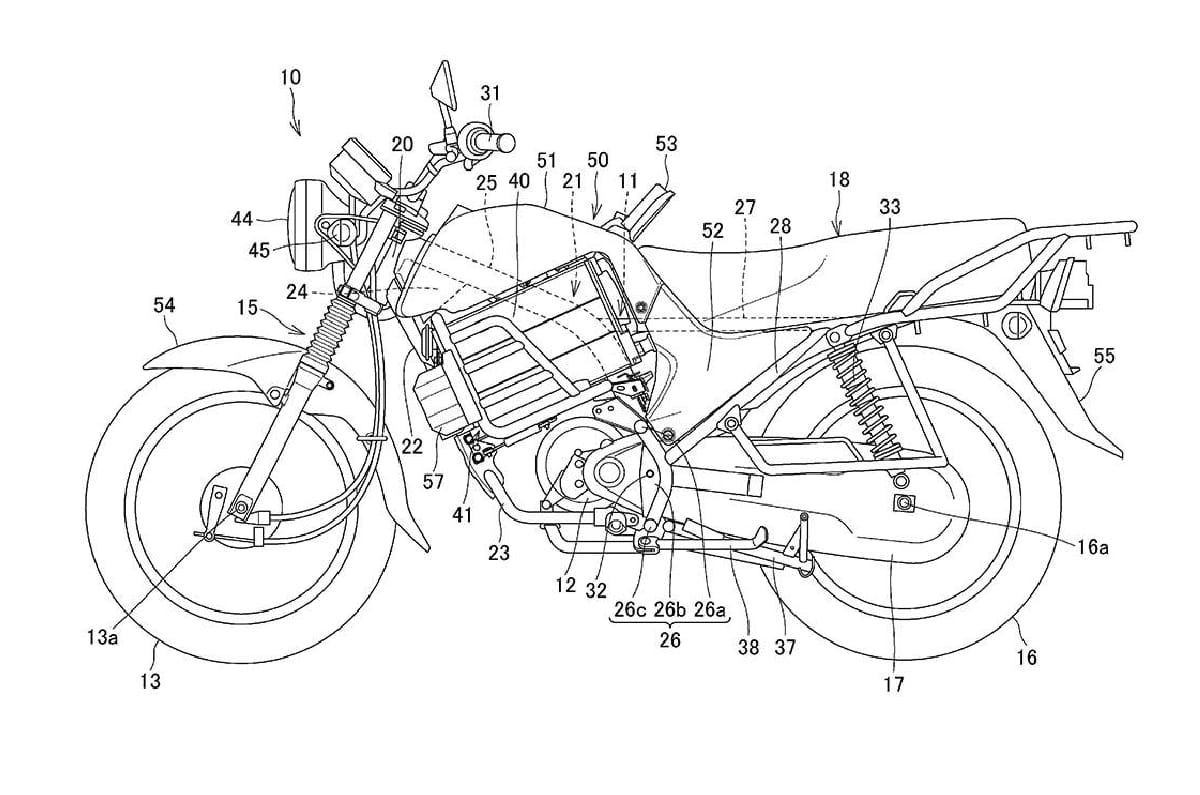
At first glance, the patent images reveal a motorcycle designed with simplicity as a core principle. The bike features drum brakes at both ends, a conventional telescopic front fork, and twin rear shock absorbers, all built around what appears to be a basic backbone frame. The overall silhouette, along with elements like the round headlamp, is reminiscent of older Honda commuter motorcycles from its earlier partnerships – particularly of models such as the Hero Honda CD Dawn.
Where it differs significantly, however, is in its powertrain. The motorcycle shown in the patent uses an electric motor paired with removable battery packs. This isn’t the first time Honda has explored a similar concept on a commuter motorcycle. Last year, patent images of an electric motorcycle based on the Honda Shine 100 platform surfaced online, also featuring removable batteries. This is an area Honda continues to invest in, expanding its battery-swapping infrastructure, which currently supports swappable batteries for the Activa e:. Since these batteries come in a standardised size, it’s possible that this motorcycle could use a similar setup, potentially offering a total capacity of around 3kWh (1.5kWh per battery).
The patent images also show a slightly offset, round instrument cluster, along with what appears to be a secondary display mounted on top of the fuel tank area, likely intended to show battery charge.
While little else is known at this stage, the motorcycle’s design and hardware suggest that it will be aimed squarely at everyday commuting, prioritising ease of use and practicality over performance. It will also be interesting to see how Honda differentiates this product from the previously seen Shine-based electric motorcycle, or if this signals a strategy of offering multiple electric models with overlapping capabilities, much like you’d see with a petrol-powered lineup.
It’s worth noting that a patent filing does not confirm production. However, given Honda’s stated focus on developing localised electric products for India, there’s a reasonable chance that this motorcycle could eventually make it into the brand’s future EV portfolio.
Source: Australian Motorcycle News