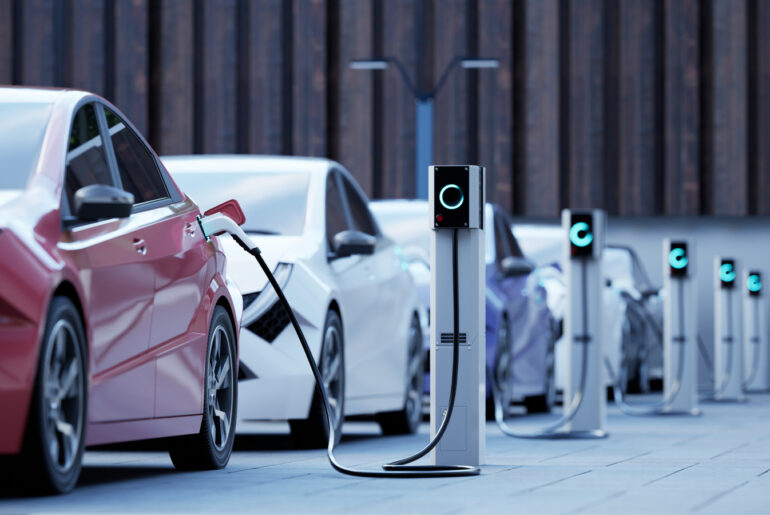
Weakening the 2035 EV target to allow combustion cars sends a harmful signal that will divert investment away from electrification at a time when Europe needs to catch up with Chinese EV manufacturers. Furthermore, although the Impact Assessment (IA) does not directly model the final proposal, it clearly demonstrates that weakening CO₂ standards would have negative consequences for macroeconomic trends and social costs.
Even with 100% zero-emission vehicle (ZEV) sales by 2035, the IA baseline shows that only 83% of the car fleet would be zero-emission by 2050, which falls short of full decarbonisation. T&E previous analysis suggests that this figure could be even lower, at 73%. The IA indicates that permitting 10% ICE sales post-2035 would result in approximately 23 million additional ICEs on EU roads by 2050, confirming that any weakening of CO₂ targets would jeopardise the EU’s climate objectives.
The IA also shows that more ICEs would increase system costs and energy demand. ICEs lead to higher fuel spending due to lower efficiency, resulting in a higher total cost of ownership, particularly for second-hand buyers. As operating costs rise, this has a greater impact on lower-income households, for whom the same absolute cost changes represent a larger proportion of income. While electricity demand would be slightly reduced, this would be offset by higher demand for liquid fuels, since ICE vehicles are around three times less efficient than BEVs. The Commission assumes rising oil prices and sharply falling battery costs, confirming that BEVs are the lowest-cost option across segments, even under scenarios with higher electricity and battery prices.
The IA’s assumption of limited CO₂ impacts relies on optimistic expectations about the availability of alternative fuels. In reality, alternative fuel availability for cars is likely to be much lower due to strong competition from harder-to-electrify sectors, i.e aviation and maritime. This would lead to higher emissions, as the remaining combustion car fleet would be powered by fossil fuels unless alternative fuels were diverted from the aviation and shipping sectors.
The IA’s findings suggest that strong CO₂ standards are critical to driving economies of scale and innovation in the long term. In contrast, the IA indicates that regulatory flexibility weakens ZEV investment signals, erodes EU competitiveness — particularly in relation to China — and results in slight GDP losses. The battery sector is particularly affected, as weaker EU demand undermines economies of scale and learning effects.
Therefore, by slowing electrification, regulatory flexibilities risk worsening affordability, increasing energy demand and fuel import exposure, and undermining Europe’s industrial competitiveness at a time when global competition in clean technologies is intensifying.
For further information in the annex, download the pdf