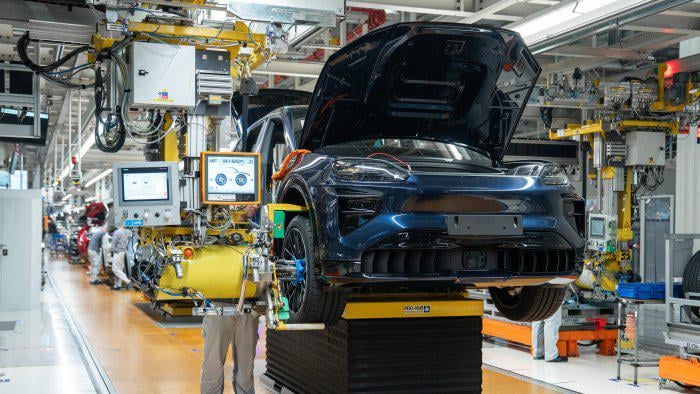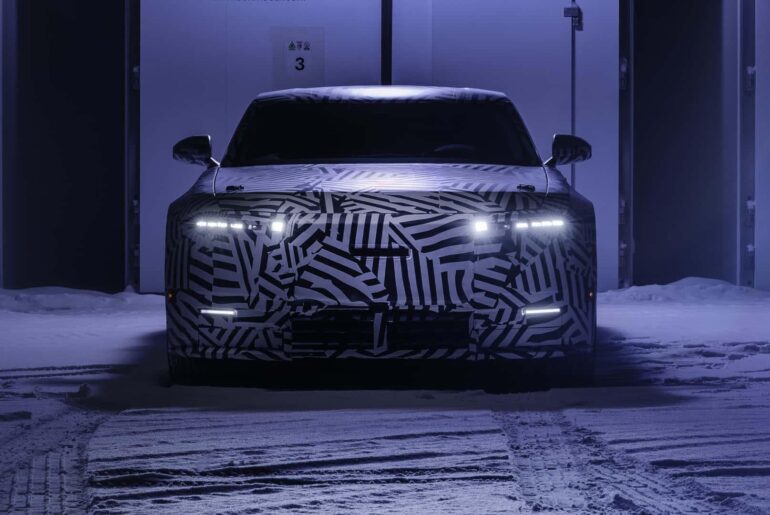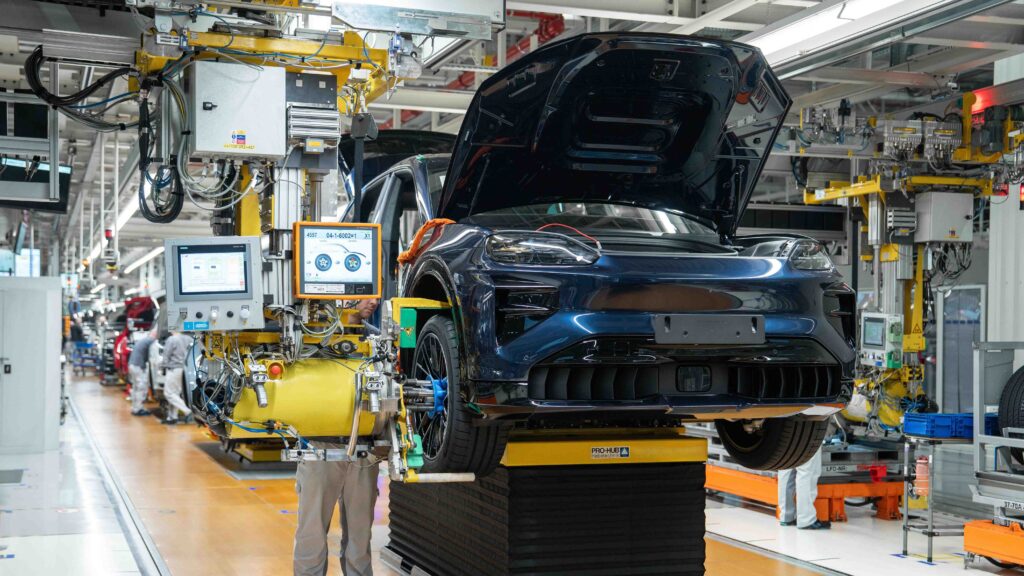
Porsche announced on Monday that production of the fully electric Cayenne SUV has begun at Volkswagen Group‘s factory in Bratislava.
It is the luxury brand’s third model offered with a battery electric (BEV) powertrain, following the Taycan sedan in 2019 and the Macan SUV in 2024.
The company unveiled the battery electric SUV for the first time at the ‘Icons of Porsche‘ festival, which took place in Dubai in mid-November.
Deliveries are scheduled to take place by the end of summer.
Introduced in 2002 with internal combustion engines, the Porsche Cayenne hybrid version arrived in 2023.
It is available in the standard, S and Turbo variants, similar to the gasoline-powered version.
Production
The new Cayenne Electric is being produced at Volkswagen Group‘s factory in Bratislava, Slovakia — where the company produces battery, gas and hybrid models, while also featuring an automated body shop.
The multi-brand site is located in the Devínska Nová Ves district, where VW has produced vehicles since 1992.
The plant currently accommodates production of eight different models, which include the Audi Q7 and Volkswagen Touareg SUVs.
“This gives us the flexibility we need to reliably provide the highest quality, state-of-the-art technology and to meet individual customer requirements for every market worldwide,” Albrecht Reimold, Member of Porsche‘s Executive Board for Production and Logistics, stated.
As highlighted by Reimold, the model’s battery modules are “developed in-house” and produced at the Porsche Smart Battery Shop in Horná Streda, around 100 kilometres northeast of Bratislava.
Specs
The Cayenne Electric is equipped with a 113 kWh battery with high energy density and large pouch cells.
With a WLTP range of between 574-642 km (356-399 miles), the SUV is built with an 800‑volt architecture enabling fast charging.
The flagship Cayenne Turbo variant delivers up to 850 kW (1,156 hp), making it the most powerful Porsche production model ever.
The new Cayenne Electric is priced from €105,200 ($124,200) in Germany, its domestic market, with the Turbo trim available priced from €165,500 ($195,500).
The gasoline-powered version of the Cayenne starts from €101,500 ($119,900), while the E-Hybrid’s pricing begins nearly €11,000 ($13,000) higher.
Future EV Lineup
Earlier on Monday, Bloomberg reported that Porsche was considering shelving the planned fully electric versions of the 718 Boxster and Cayman sports-car line, in an effort to cut costs.
Last year, the company ended production of the ICE-powered 718, previously a relatively affordable entry into Porsche ownership, as the model was priced from around €70,000.
The company said it planned to bring back the model as a fully electric vehicle this year.
According to people familiar with the matter, the brand is battling with budget constraints from slumping sales in China and import tariffs in the US, alongside rising development expenses and delays.
While recently appointed CEO Michael Leiters has not made a final decision, the move reflects broader challenges from Porsche’s EV strategy.
The company might pivot back toward combustion-engine and hybrid models while aiming to restore profitability after a low point in 2025.
Late last month, Porsche appointed Tobias Sühlmann as its new Design Chief, replacing Michael Mauer after twenty-two years in the role.