In 1989, Elon Musk had just turned 18.
It was not until 12 years after 1989 that China officially included electric vehicles as a major project in the national R & D plan.
However, on February 10, 1989, Ye Wengui from Wenzhou had developed an electric vehicle that could travel 200 kilometers after an eight – hour charge and drove it up the highest mountain in Wenzhou.
The Richest Man in Qitaihe
In Qitaihe, a coal – mining city located in the center of the eastern urban agglomeration of Heilongjiang Province, some people still remember Ye Wengui, a educated youth from Wenzhou.
In 1969, 19 – year – old Ye Wengui went to a small mountain village in Qitaihe to support the border areas with a group of his comrades. When he returned home nine years later, he had become the “richest man” in Qitaihe.
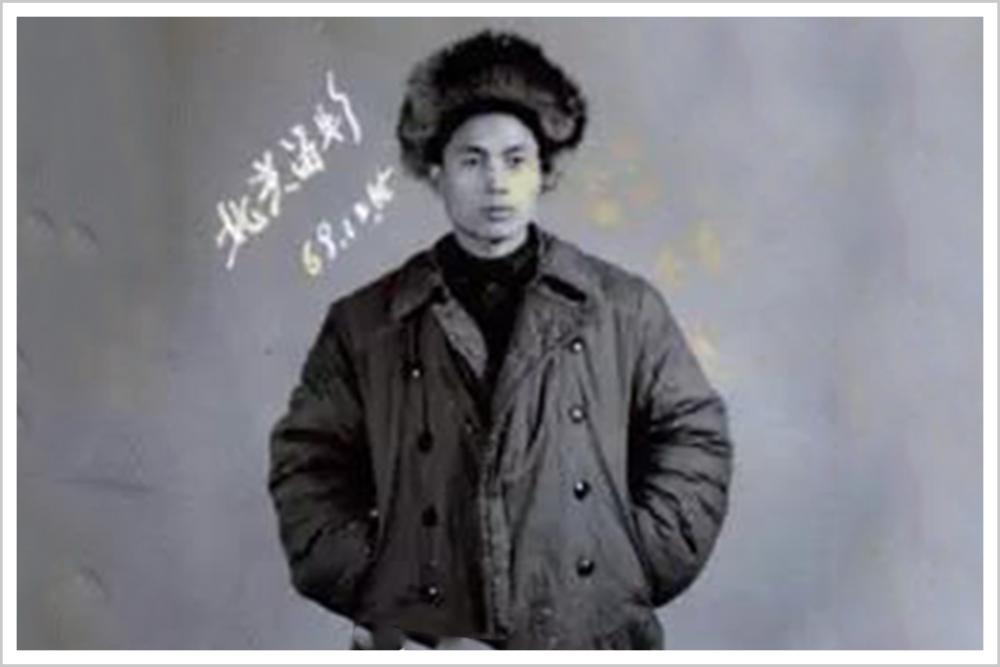
Ye Wengui in 1969
He built four brick – tile houses, which were the largest in Qitaihe;
He wore a twenty – five – jewel Plum Blossom watch. There were only two such watches in the whole city, and the price of one watch was equivalent to an ordinary person’s annual salary;
When he left, he had sixty or seventy thousand yuan in his pocket. In 1978, this was a huge amount of money.
Where did the money come from?
It came from the blood of Zhejiang merchants and his shrewd mind.
After Ye Wengui went to the countryside, he was arranged to work in the Qitaihe Mining Bureau. The mining bureau had tens of thousands of workers, and all the coal shovel handles used by the workers were bought from other places. This gave him the opportunity to make money. He then contacted several educated youths, bought wood lathes and saws from his hometown Wenzhou, and set up a shovel handle factory.
At that time, this was quite a risky move and even a political mistake. However, Ye Wengui used a win – win model for both individuals and the collective to win the tacit approval of the production brigade: Every educated youth who worked in the factory and couldn’t do farm work had to pay two yuan to the production team every day.
It was also from then on that Ye Wengui became obsessed with technological innovation. At first, the shovel handle factory relied on manual rounding, and the daily output of 100 shovels was already in short supply, but Ye Wengui was not satisfied.
Based on the working principle of a pencil sharpener, he designed a similar machine. After the large logs transported from the mountain were cut into squares with a fire saw and then put into the machine, round shovel handles would come out when pulled out.
After the improvement of the tools, the daily output of shovel handles soared directly from 100 to 1000, and they could sell for 800 yuan a day.
With the high output, the local market could not absorb all the products. Ye Wengui then expanded the sales channels and sold the shovel handles to Shanxi Province.
There was no road from the village to the station, and transportation was inconvenient. He then hired someone to build a six – kilometer mountain – winding road leading to the main road and named the road sign “Xiaojinxiang Station” after his hometown.
Ye Wengui’s partner Zhang Zhongda said that this brought great changes and shocks to the local area:
Roosters cost one yuan each, and they could eat them every day.
Before that, in this poor village of 50 households, educated youths could earn at most twenty cents a day, and villagers could only have meat three times a year.
In 1993, Qitaihe City officially named this place Jinxiang Village. A group of young Zhejiang people left the mark of their hometown in the far – away white mountains and black waters in such a unique way.
For a Bottle of Moutai Every Day
In 1978, Ye Wengui ended his nine – year life in Northeast China and returned to Wenzhou, where he was arranged to work.
However, after working in the Civil Affairs Bureau of Wencheng County for less than a year, he gave up his iron – rice – bowl job and returned to Jinxiang Town, Cangnan County, which was already the economic core town of Wenzhou at that time, and started a factory again. The reason was:
The salary in the Civil Affairs Bureau was only enough for smoking, but I had to drink a bottle of Moutai every day, which cost eleven yuan and seventy cents.
At that time, the processing of badges and nameplates in Jinxiang was booming, but there was no supporting aluminum rolling mill. All processing workshops had to roll aluminum plates into semi – finished products in other places and then transport them back to the town.
Ye Wengui then opened an aluminum rolling mill. As soon as the factory opened, the business was so good that customers had to queue up. He recovered the investment cost in only four months and quickly accumulated more than 200,000 yuan in funds.
After the success of the aluminum rolling mill, Ye Wengui continued to fill the industrial gaps in Jinxiang.
At that time, many people in Jinxiang were still producing plastic document jackets and folders, but the heat – sealing machines they used had low power and could not press large – sized products. Ye Wengui then independently developed a high – frequency heat – sealing machine with high frequency and established a high – power high – frequency heat – sealing machine factory. The business was also booming as soon as it opened.
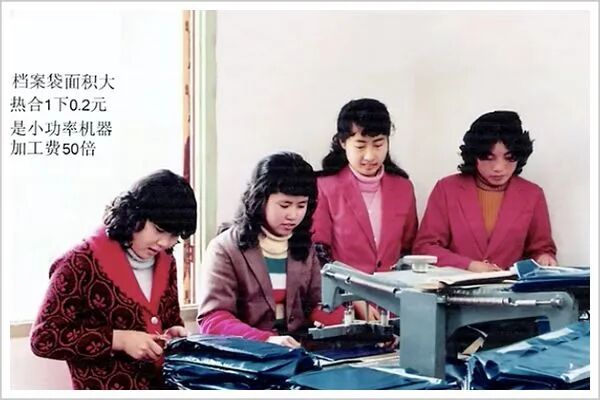
With the high – power heat – sealing machine, the factory could process more products with high heat – sealing requirements, and the efficiency was quickly improved. Even after opening four branches in succession, the demand still could not be met. Ye Wengui then transformed into selling machines and made even more profits.
Another business in Jinxiang was that it monopolized the national meal tickets, and there was a gap: the raw material for production, PVC film, had to be purchased from other places. Ye Wengui, who had succeeded in the aluminum rolling mill and the heat – sealing machine factory, then came up with a new idea of establishing a plastic film factory.
At the beginning of 1984, Ye Wengui officially built his film factory. The products were mainly supplied to local enterprises for making plastic tickets, playing cards, and blister packaging. Through this factory, Ye Wengui also pushed his technological innovation to a higher level. He pieced things together and not only independently designed the production line but also achieved amazing efficiency.
The production line could produce 170 meters per minute, and the film thickness was 0.025 millimeters.
At that time, the domestic production line could only produce 34 meters per minute, and the thinnest it could reach was 0.075 millimeters. Even the German production line could only produce 150 meters per minute.
Relying on its unique high – efficiency, Ye Wengui’s factory soon became the dominant one in the market. Two years after putting into production, the output value reached 4 million yuan. “Making money was like printing money.”
A New – Type Entrepreneur Who Couldn’t Be an Official
After that, Ye Wengui also established a packaging materials factory, a battery factory, and a microcomputer instrument factory, and each factory was a success. The business was so good that it made others jealous.
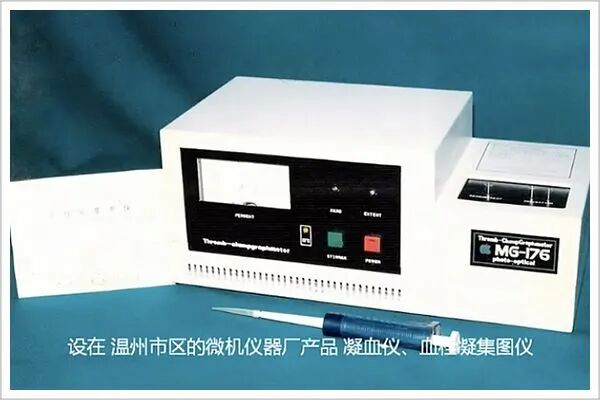
At that time, “ten – thousand – yuan household” was still a synonym for getting rich, but Ye Wengui already had tens of millions of assets.
Moreover, he had a habit of not using checks for any amount, but withdrawing cash. Some people said that every time he came out of the bank, Ye Wengui had to carry a sack filled with bundles of banknotes.
Ye Wengui was bold, but the people in his hometown were even bolder.
In May 1984, the front page of People’s Daily published a piece of news: Ye Wengui, a professional household in family – run industry from Jinxiang Town, Cangnan County, Wenzhou City, Zhejiang Province was promoted by the county government to be the deputy head of Jinxiang District.
In the recollection of Hu Wanli, the then – secretary of the Cangnan County Party Committee, it was a very bold move to let a non – Party self – employed individual become an official at that time, and there were almost no precedents across the country.
The purpose of doing this was to further drive the rural economic development and revitalize the family – run industry through Ye Wengui.
However, Ye Wengui obviously didn’t fit in well with the officialdom. For example, he was extremely annoyed by attending meetings. He often requested: Just give me the materials to read, and I won’t go to the meeting.
After his short and unpleasant official career ended, Ye Wengui returned to the entrepreneurial life he loved. In his own words: “There is endless money to be made, endless factories to be established, and endless debts to be repaid.”
After getting back into business again, Ye Wengui was still as energetic as ever and even became the most popular person in Wenzhou.
In the mid – 1980s, Ye Wengui was featured in People’s Daily twice, and his deeds were reported by major media. In 1985, Fei Xiaotong, the vice – chairman of the National Committee of the Chinese People’s Political Consultative Conference and a famous sociologist, visited Wenzhou. After walking around Ye Wengui’s factory three times, he said that Ye Wengui was “a new – type entrepreneur”. Bob Hui, a Canadian electromechanical professor, came to China from afar to visit Ye Wengui and sighed: “I can’t imagine there being a person like you in the Chinese countryside.”
Dong Fureng, the then – director of the Institute of Economics of the Chinese Academy of Social Sciences, once communicated with Ye Wengui in Wenzhou and discussed the issue of unequal wealth distribution. Ye Wengui said that the high – income people could be regulated by taxation, and a small number of the first – rich people could not turn the world upside down, just like the Monkey King could not escape from the palm of the Buddha.
The Central Party School even invited Ye Wengui to give a lecture. He refused on the grounds that he was not a Party member and finally agreed after being persuaded by Dong Chaocai, the secretary of the Wenzhou Municipal Party Committee. In the winter of 1986, Ye Wengui began to give lectures to provincial – level leading cadres on the topic of “Practices and Experiences in Running Private Enterprises”. He told everyone “Private entrepreneurs are not capitalists.” His lecture notes of tens of thousands of words were published as teaching materials by the Central Party School across the country.
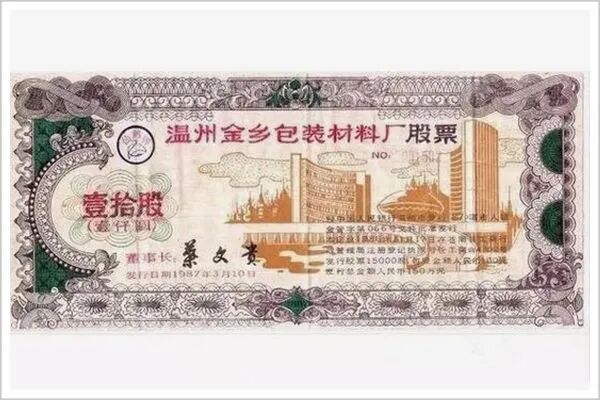
At the peak of his business, Ye Wengui’s Jinxiang Packaging Materials Factory even issued stocks with a face value of 1,000 yuan. This was also one of the earliest private enterprises in China to issue stocks.
In 1987, 100 outstanding farmer – entrepreneurs were selected across the country, but only 99 of them went to Beijing to receive the awards. Ye Wengui, the only winner from Wenzhou, was absent.
At this time, he had already devoted himself to a legend of car – making and had no time or interest in receiving the award for outstanding farmer – entrepreneur. And Li Shufu, a Zhejiang businessman who was later regarded as a crazy car – maker, didn’t even dare to think about car – making at that time.
World – Class Electric Vehicles
Many years later, Ye Wengui recalled the reason for his car – making like this: At that time, there were 10 car factories in Taiwan, China, and 6 on the Chinese mainland. But none of these 16 factories had a brand of its own made by the Chinese. I thought it was so pitiful.
In addition to the desire to create a Chinese – owned brand, Ye Wengui also came up with a way out: Foreign enterprises were already too strong in gasoline – powered vehicles, and they were not environmentally friendly. Electric vehicles were pollution – free, and there was no particularly successful one in the world. If we could make one, there would be great opportunities.
Perhaps he was too confident and optimistic about the success of electric vehicles. Without sufficient investigation and research and without fully considering the R & D and capital investment, Ye Wengui whole – heartedly embarked on his dream of making electric vehicles.
Ye Wengui, who only graduated from junior high school, had read all the available books on automobile motors and machinery at that time. In the early summer of 1988, he rented a suite in the best overseas Chinese hotel in Wenzhou and began to recruit talents. Experts and technical personnel from industries such as aerospace, shipbuilding, and metallurgy were invited to come to Wenzhou one after another.
Less than a year later, after working around the clock at full capacity, on February 10, 1989, on a cold spring night, Ye Wengui and three colleagues drove the first electric vehicle they made up the mountain.
On the highest peak in Wenzhou called “Snow Mountain”, Ye Wengui was so excited that he drank while enjoying the night view.
On this day, the most beautiful night view in Wenzhou belonged to Ye Wengui.
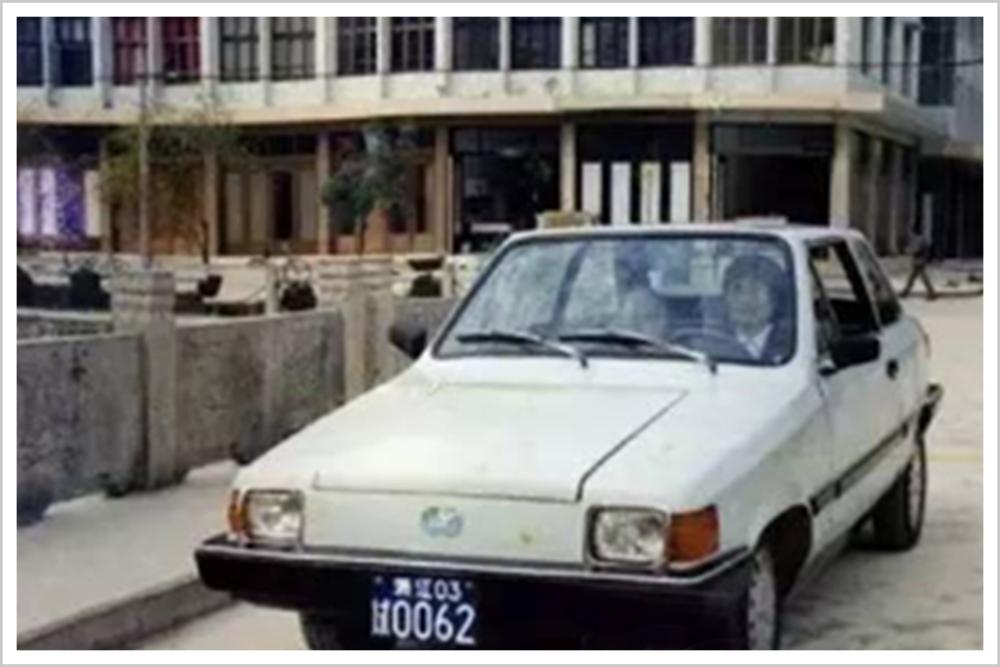
The test vehicle “Ye Feng” developed by Ye Wengui
It only took six months from R & D to getting on the road. This white car named “Ye Feng” could travel 200 kilometers after an eight – hour charge. It was at the world – leading level at that time.
Having reached the world – class level in his first car – making attempt, Ye Wengui was even more confident and bold.
Subsequently, he specially went to the United States to investigate electric vehicle technology and found a crisis: The short battery life and poor endurance of pure electric vehicles had gradually become the consensus among electric vehicle researchers in various countries.
After returning to China, Ye Wengui adjusted the R & D direction from electric to hybrid.
He acquired 25 mu of land in the Longwan Economic Development Zone in Wenzhou and invited experts from multiple universities and research institutions to conduct joint development. Manufacturing a car requires thousands of parts. Some are difficult to purchase, and some are not even available for sale. However, Ye W